


Most candidates lose this question in the first 15 seconds. They start too far back, pile on details, and never make it clear what they actually accomplished.
When an interviewer asks you to describe a time you solved a problem, they want proof, not just personality. In 2026, strong answers are short, clear, and tied to tangible results. That makes this one of the most important problem-solving interview questions to practice.
Key Takeaways
- Focus on your impact: Interviewers prioritize your individual decision-making process over the problem itself, so center your answer on the specific actions you took.
- Master the STAR method: Use the Situation, Task, Action, and Result framework to keep your story structured, ensuring the ‘Action’ portion consumes the majority of your response.
- Prioritize measurable results: Quantify your outcomes whenever possible to provide concrete evidence of your success, such as percentage improvements or time saved.
- Align with the role: Select examples that mirror the core responsibilities found in the job description to demonstrate that your problem-solving skills are directly transferable.
What interviewers want from your problem-solving story
This question tests more than just your ability to find a solution. It evaluates how you approach a complex problem, your decision-making process under pressure, and whether you take ownership when something goes wrong.
Because many employers now use structured interviews and scorecards, your answer may get rated on a few points at once. The interviewer is listening for the context of the problem, your specific role, your judgment, and your ability to handle ambiguity to reach an outcome. That is why vague stories rarely work.
A good story has four traits. It is recent, tied to work or school, clear about your part, and easy to measure. It also requires you to demonstrate success in identifying the core issue clearly. If you can say what changed after your actions, you already have a stronger answer than most candidates.
This question sits inside the wider group of behavioral interview questions. Your answer should sound like evidence from your past, not a promise about what you might do. These stories are a great way to showcase your transferable skills in a professional setting.
Your best examples often hide in plain sight among common workplace challenges. Look at times you fixed a delay, caught an error, handled a complaint, improved a process, or helped a team avoid a larger issue. If you use CareerScribeAI’s AI Resume Builder, review your quantified bullets first. Numbers on your resume often become your best interview stories.
If your strongest example centers on tension between people, keep the focus on the fix, not the friction. CareerScribeAI’s guide to answering conflict resolution questions with the STAR method can help you keep that balance.
Use the STAR method, but keep it human
The STAR method still works in 2026 because it gives interviewers a clean path through your story. It also helps in video interviews, where long answers feel even longer. Using the STAR method provides a structured framework that elevates your storytelling, ensuring your narrative remains both engaging and concise.
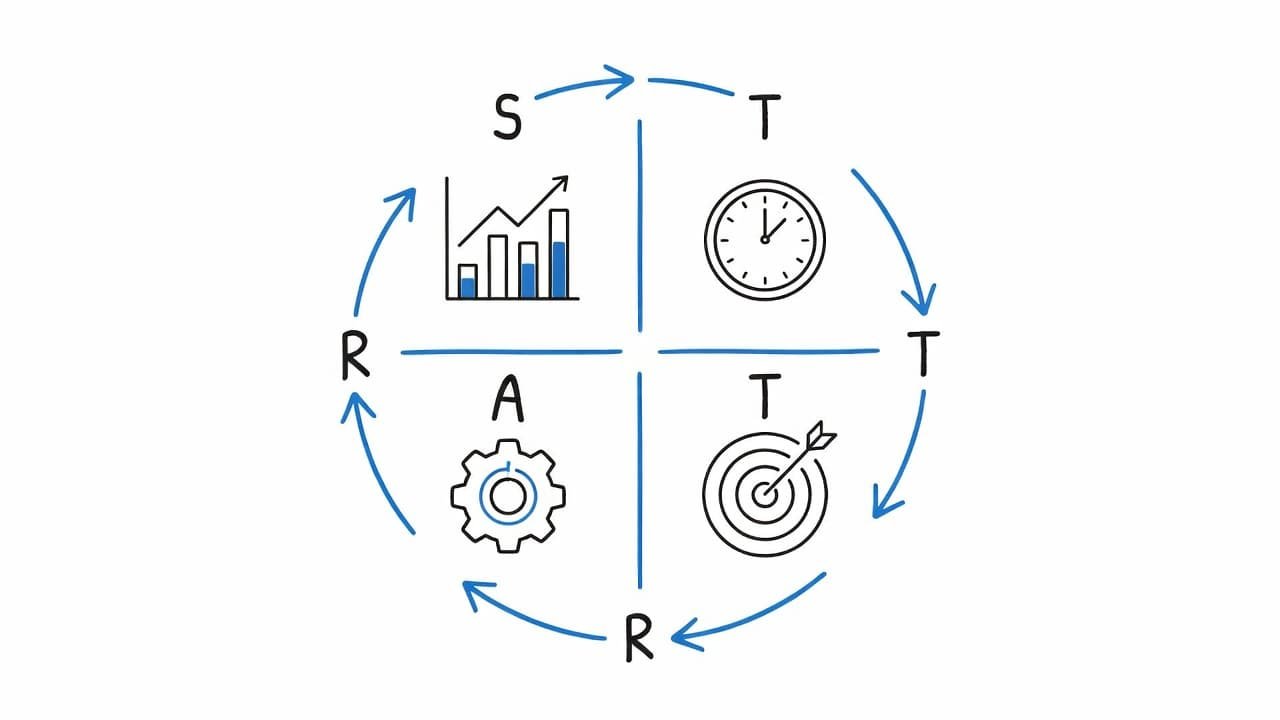
Most people know the letters, but they still miss the balance. Your Action section should carry the answer. If half your time goes to background, the interviewer still does not know how you solve problems.
Spend most of your answer on what you did, why you chose it, and what happened next.
A simple split works well for the situation task action result framework:
- Situation should take one or two sentences. Set the scene and say why the problem mattered.
- Task should name your role. Make it clear what you needed to solve.
- Action should take most of your time. Walk through the steps you took, focusing on gathering information and your process for prioritization. Use “I” more than “we.”
- Result should close the story with impact. Providing specific examples leads to a measurable result that interviewers value.
In practice, that means about 60 to 90 seconds total, or roughly 150 to 200 words. Recorded and panel interviews still reward concise answers, because interviewers are often taking notes. If you need help rehearsing for that format, CareerScribeAI has advice on how to structure panel interview answers.
A smart 2026 prep habit is to match your stories to the job post. If the role mentions operations, customer support, analysis, or cross-team work, choose a story that mirrors that need. When you describe your Action, emphasize data-driven decision making to show you rely on facts. CareerScribeAI’s Interview Prep Tools can help turn a job description into likely behavioral questions, while the Cover Letter Generator can surface achievements you may have forgotten to use out loud.
Keep your wording plain. Say what broke, what you noticed, what you tried, and what improved. That direct style sounds more confident than a polished speech.
A sample answer, plus the mistakes to avoid
When preparing your own story, it helps to look at effective sample answers to understand the level of detail required. Here is a strong example of how to frame your response:
“At my last company, support tickets about duplicate invoices jumped after a billing update. I owned the weekly reporting, so I had to find the cause before month-end close. I reviewed ticket patterns, compared the new invoice rules with the old setup, and found that one customer tag triggered the same charge twice. I pulled a sample group, confirmed the error with finance, and suggested a temporary filter while engineering built a full fix. I also wrote a short QA checklist for future billing changes. Within a week, duplicate invoice tickets dropped by 78 percent, month-end closed on time, and the team used the checklist on later releases.”
This response is effective because it highlights sound judgment rather than individual heroics. The speaker applied root cause analysis to identify the origin of the error and demonstrated structured reasoning by collaborating across departments. Strong candidates often discuss the tradeoffs they considered or how their analytical thinking helped them resolve the complex problem at hand, ensuring that the temporary solution did not create new issues.
If you lack a major quantitative metric, focus on qualitative results. You can mention time saved, errors reduced, customers retained, rework avoided, or a deadline met. A clear, measurable result always strengthens your narrative.
Several common mistakes weaken your response when answering these types of interview questions:
- Candidates often fail to provide specific examples, choosing instead to speak in vague generalities.
- You may pick a story where the real hero was the team, leaving your own individual contribution fuzzy.
- Some spend too long describing the problem and rush through the actual steps taken.
- A few candidates choose a minor issue with no real stakes, which makes the answer forgettable.
- Many end with “it worked out” instead of showing how they achieved a specific, measurable result.
For another example of turning a hard moment into a clean story, this interview answer walkthrough follows these same principles for creating high-impact sample answers.
Frequently Asked Questions
How long should my answer to this question be?
You should aim for a total duration of 60 to 90 seconds, which typically translates to 150 to 200 words. Keeping your response concise ensures you remain engaging and allows the interviewer to document your core contributions clearly.
What should I do if I don’t have a quantitative result?
Focus on qualitative outcomes such as errors reduced, time saved, team friction avoided, or a critical deadline successfully met. A clear, logical impact is just as valuable as a hard number if it demonstrates how your actions directly benefited the organization.
Should I use ‘I’ or ‘we’ when describing my actions?
Use ‘I’ consistently throughout the story, especially when detailing the ‘Action’ phase. While it is acceptable to acknowledge team effort, interviewers are evaluating your individual judgment and leadership, so your specific contributions must remain the focus.
Final thoughts
A strong answer when you need to describe a time you solved a problem does one job well. It provides the interviewer with a short, believable story that highlights your leadership capacity and your ability to implement creative solutions when facing complex workplace challenges.
Choose one real example, shape it with the STAR method, and keep the focus on your specific actions. If you can communicate the situation clearly in under 90 seconds, supported by a clear, measurable result, you will sound prepared, credible, and ready for the role.