
Every line on a resume competes for limited attention. A focused hobbies and interests resume section can help a recent graduate or career changer.
A well-chosen activity can offer credible evidence of professional skills, including strategic thinking, when it genuinely demonstrates them.
Recruiters scan for fit, and an optional section should make that judgment easier. However, a vague list of “reading, travel, and music” spends space without helping your case.
Choose activities with a clear connection to the role, then describe them honestly and briefly. Your goal is to add one useful dimension to your candidacy, not to write a personal profile.
When a hobbies and interests resume section earns its space
Personal interests are optional, even in 2026. Include them when they demonstrate transferable skills, reinforce a professional direction, or make a sparse resume more complete. Soft skills are persuasive only when tied to observable responsibilities or results.
They are often useful for a recent graduate, a career changer, or anyone whose extracurricular activities provide evidence missing elsewhere. Experienced candidates with strong results, certifications, and relevant projects rarely need this section. Omit it if an interest does not support the application or pushes more important information onto a second page.
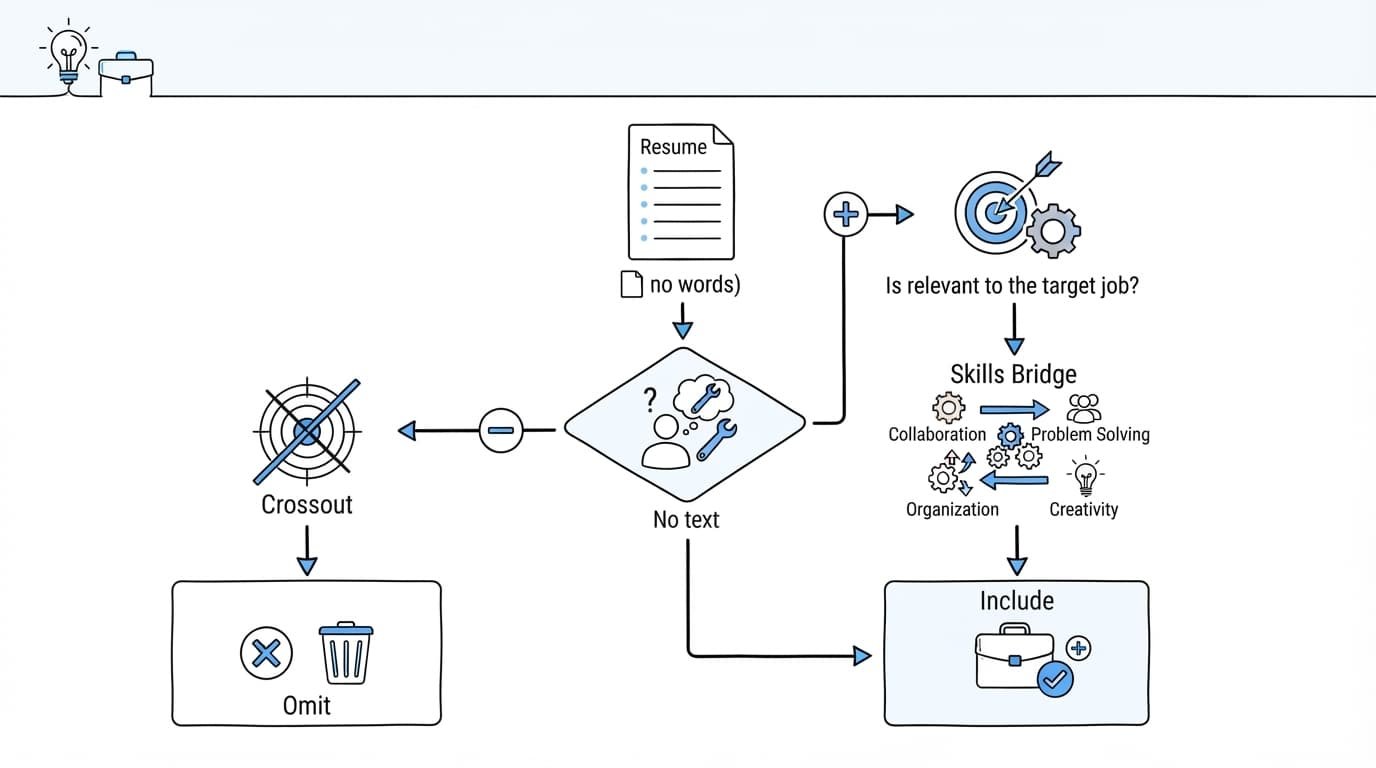
Use a fast relevance test
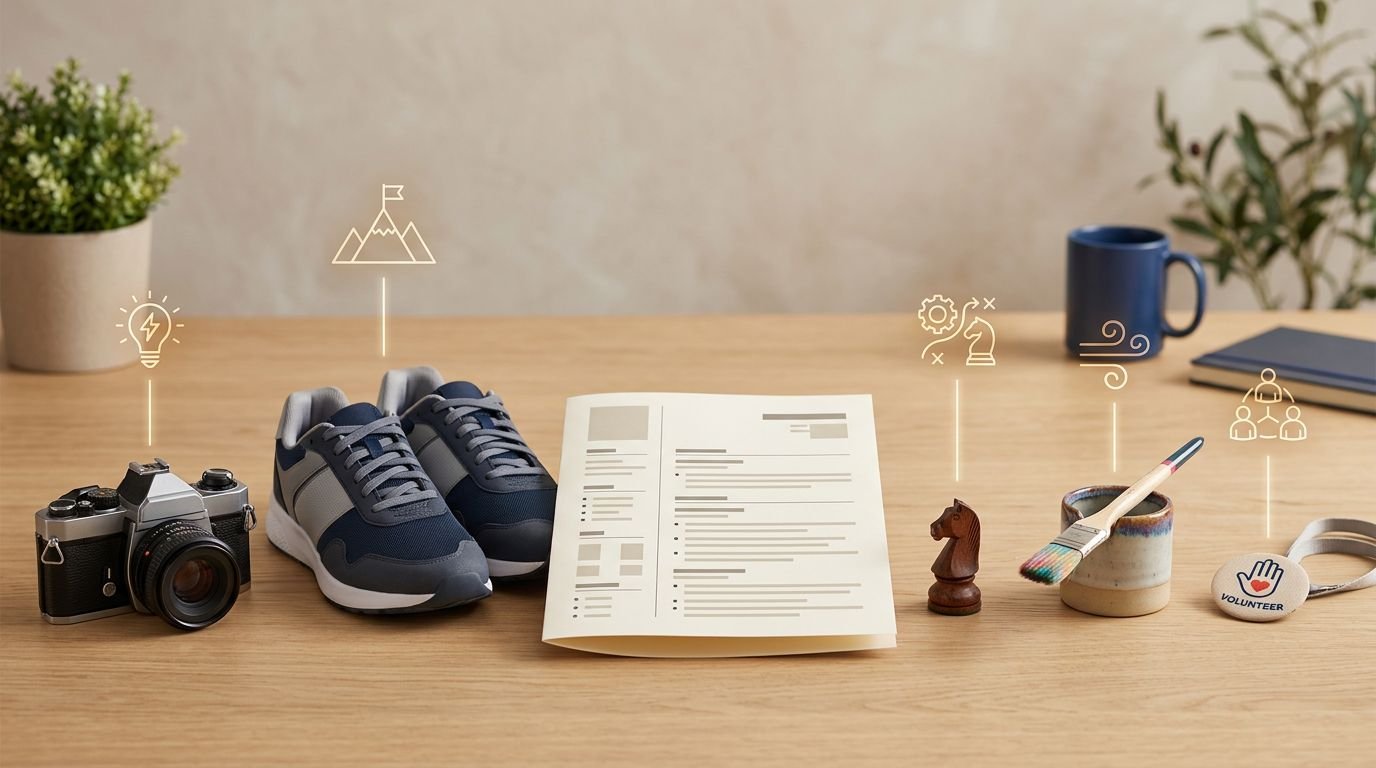
Before you add an activity, identify proof: an output, responsibility, achievement, or regular commitment. A photographer who manages a portfolio has more to offer than a bare “photography” label. Regular volunteer work or weekly coaching of team sports can demonstrate communication, planning, and leadership skills. That evidence matters only when those duties are real.
Sustained planning or prioritization can demonstrate strategic thinking. Foreign languages belong in a dedicated Languages section when language proficiency is a formal qualification.
One meaningful detail often beats a crowded list.
A hobby belongs on a resume only when a hiring manager sees evidence the rest of the resume does not provide.
Tailor personal interests to the job description
Begin with the job description. Check whether it calls for foreign languages, then mark repeated skills, tools, and work styles. Look for observable company culture signals on the employer’s careers page, such as community programs, product demos, or employee-led groups.
Do this after matching the main work experience bullets, not before; that shows strategic thinking about evidence, not keyword chasing.
Connect an activity to a requirement
A hobbies section should complement, not duplicate, your employment history. Match each item to a capability the role actually needs, and identify the transferable skills your evidence demonstrates:
- Creative hobbies such as photography can support content planning and visual judgment, especially when an online portfolio shows your work.
- In junior software roles, an open-source contribution or small coded app can demonstrate technical skills, problem-solving, and continuous learning outside class.
- For customer-facing work, volunteer event coordination or team coaching can show service, communication, and accountability.
Don’t reverse-engineer a personality to match vague culture claims. If you can’t talk through the activity in an interview, leave it out. To compare verified experience against a posting, customize your resume with AI responsibly, and keep every suggestion tied to something you did.
Format a hobbies and interests resume section for ATS
Place the interests section near the bottom, after work experience, education, skills, and relevant projects. In a simple resume format, use a plain heading such as “Interests” or “Additional Information.” A one-line list or two short bullet points is enough.
Keep it readable for ATS
An applicant tracking system parses headings and text into a candidate record, but it can’t turn a casual interest into evidence of a missing qualification. Use a standard heading, left-aligned text, and simple bullets. Avoid text boxes, tables, columns, icons, charts, and critical details in headers or footers.
The U.S. Department of Labor’s 2026 resume guide also advises job seekers to repeat role keywords within real achievement statements. Follow the requested file type, and use PDF or DOCX when the posting does not state a preference. Review Indeed’s ATS resume formatting guidance before you upload.
Add details you can discuss
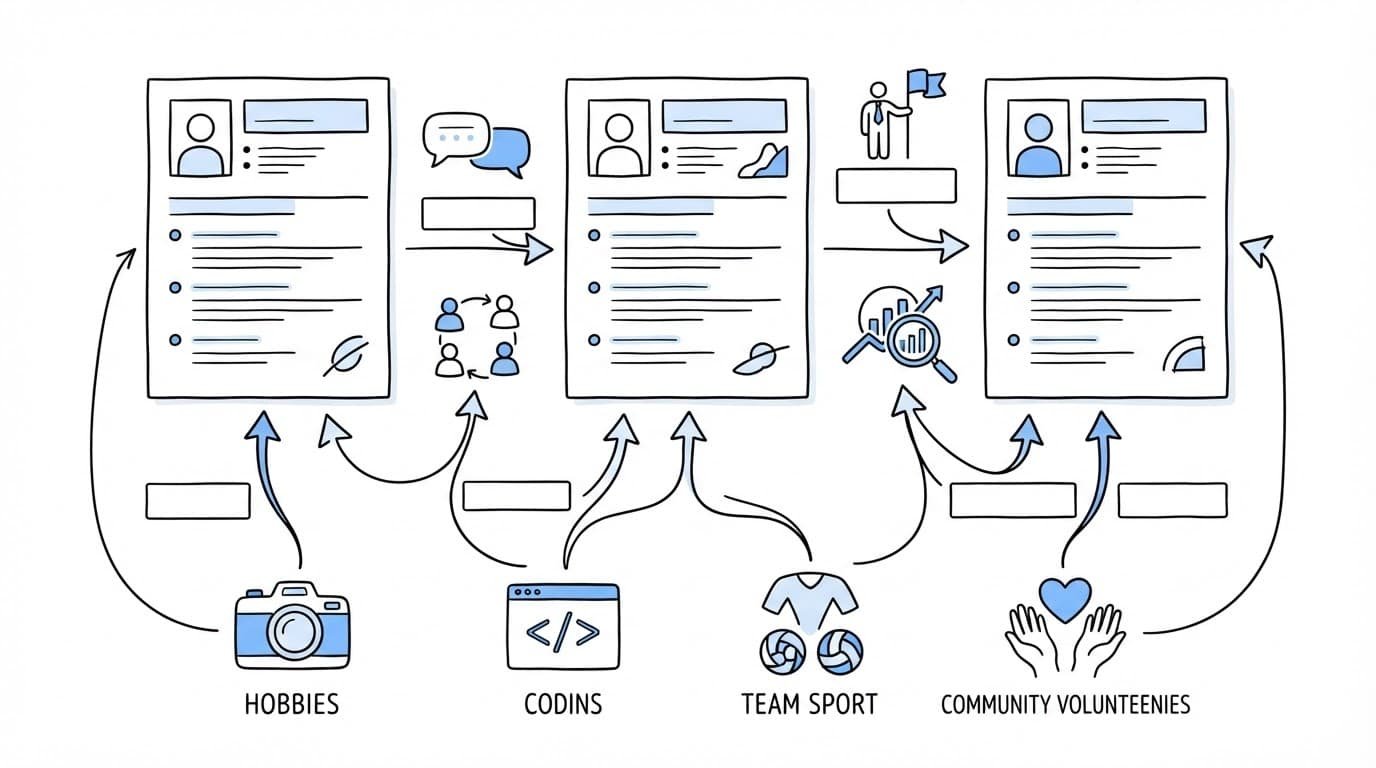
Strong entries name an output, commitment, or responsibility. “Open-source coding, Python documentation contributor” shows technical skills more clearly than “coding.” “Community gardening, organize monthly volunteer shifts” gives more context than “gardening.” A project with a defined outcome can demonstrate problem-solving and strategic thinking.
Creative hobbies, community roles, team sports, and personal projects can all work. Yet if you hold a formal volunteering position, list it under Volunteer Experience, where it can carry dates and achievement bullets. Formal proficiency in foreign languages normally belongs in a dedicated Languages section, unless the language activity is presented as an interest.
Mistakes that weaken an interests section
Avoid filler and sensitive topics
A hobbies and interests section fails when it becomes filler. Skip generic pastimes such as watching television, broad claims such as “social media,” and political or religious affiliations. Also avoid high-risk activities when they have no relevance or could distract from job readiness.
Private details and unsupported claims rarely improve a hiring decision. If you’re rebuilding a designed template, Resume.io’s 2026 ATS format guide offers a basic compatibility check.
Never use an interest as a substitute for required qualifications. A personal project can support an entry-level application, but a hiring manager still needs relevant skills, results, and credentials.
Be ready to explain every entry
A recruiter may use an unusual interest to start a conversation, so prepare for interview questions about it. Give a 30-second explanation that names the activity, your responsibility, and the skill it developed.
Keep the same story consistent across your resume and cover letter. CareerScribeAI’s AI Resume Builder workflow can check alignment with a job posting. Its Cover Letter Generator and Interview Prep Tools can help you prepare the proof behind each selected activity.
Frequently Asked Questions
Should I include hobbies and interests on every resume?
No. Include them only when they demonstrate transferable skills, support your professional direction, or add useful evidence to a sparse resume. Experienced candidates with strong results and relevant projects can usually omit this section.
What hobbies look good on a resume?
The strongest choices are activities connected to the role and supported by observable responsibilities or results. Open-source coding, volunteer coordination, photography with a portfolio, and team coaching can all work when they reflect skills the employer needs.
Where should hobbies and interests appear on a resume?
Place the section near the bottom, after work experience, education, skills, and relevant projects. Use a standard heading such as “Interests” or “Additional Information,” with a one-line list or two short bullets.
How detailed should a hobbies and interests section be?
Keep it brief, but add a useful detail such as an output, responsibility, achievement, or regular commitment. “Community gardening, organize monthly volunteer shifts” gives stronger evidence than simply writing “gardening.”
Should languages be listed as hobbies and interests?
Formal language proficiency normally belongs in a dedicated Languages section because it may be a job qualification. You can mention language learning as an interest only when it is presented as a personal activity rather than a verified proficiency.
Final takeaway
A tight interests section can show the human judgment and strategic thinking behind a keyword-matched resume, especially when formal experience is limited. It works only when every entry is relevant, concrete, and easy to explain.
Keep job requirements and achievements at the center. Then use hobbies and interests to give a hiring manager one more credible reason to remember you while reinforcing transferable skills.