
A strong student athlete resume doesn’t ask employers to admire your sport. It shows them how your athletic background prepares you to do the job.
Practices, travel, competition, coursework, and team responsibilities require discipline many entry-level candidates haven’t had to prove yet. The key is to translate sports-only language into evidence employers understand. A useful student-athlete resume sample identifies the work behind an achievement. It describes the action and connects it to a role-relevant result. The student-athlete resume examples that follow use that approach.
Key Takeaways
- Translate athletic responsibilities into workplace evidence by showing the action, context, and result.
- Quantify only achievements and responsibilities you can support, such as team size, events coordinated, athletes mentored, or training hours.
- Use a reverse-chronological format with clear sections for education, experience, athletic experience, skills, and relevant projects.
- Tailor each student athlete resume to the job description by matching real examples to the role’s required skills.
- Prepare STAR stories for major resume claims so you can explain your contributions clearly in an interview.
What a student athlete resume must prove
Recruiters don’t need a season recap. They need evidence that you can meet deadlines, work with different personalities, respond to feedback, and deliver under pressure. A strong student athlete resume should present athletic experience as evidence of workplace behavior, not just participation.
University career centers often advise athletes to translate athletic responsibilities into employer-relevant evidence. For example, the University of Iowa’s resume guidance recommends measurable bullet points and clear action verbs that show what you contributed.
Turn athletic duties into workplace contributions
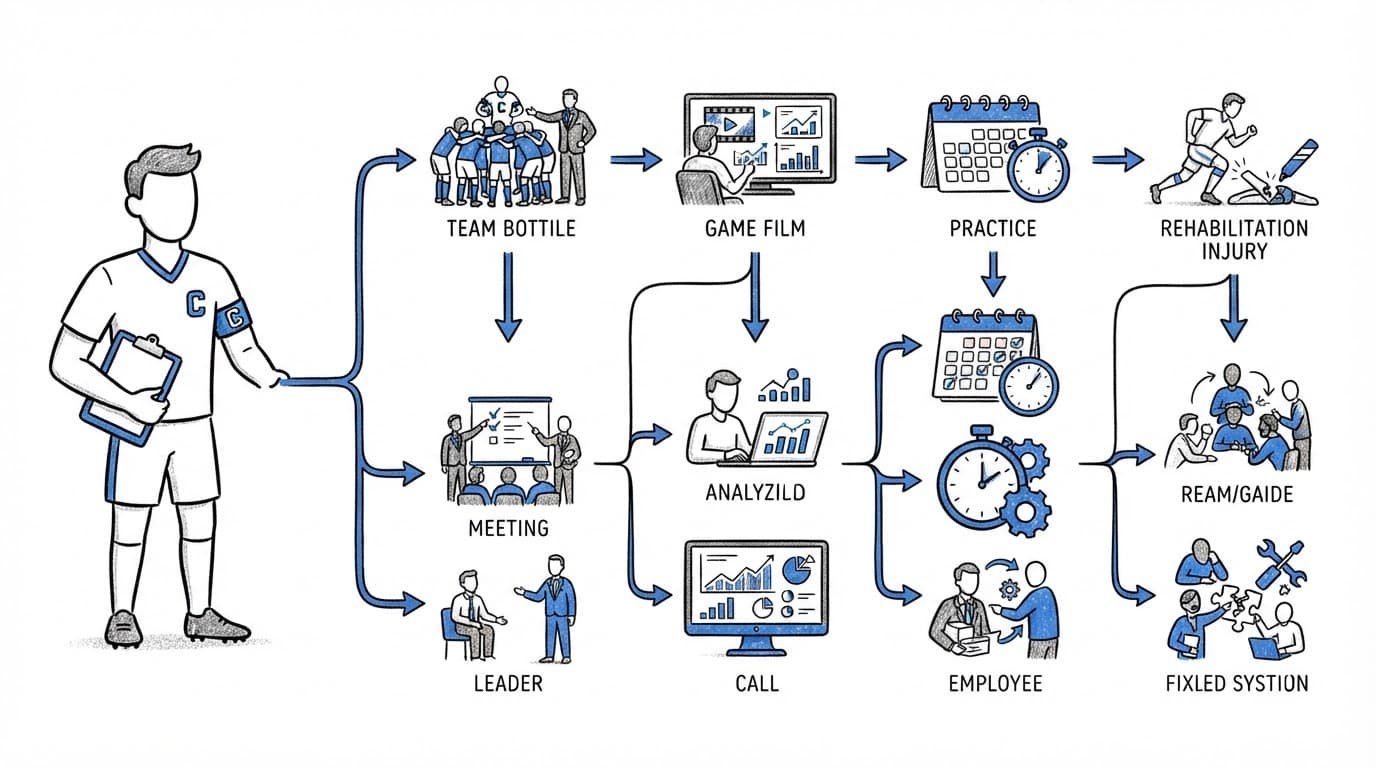
Show transferable skills for athletes by pairing each athletic responsibility with a clear action, context, or result.
- A team captain can describe organizing peer accountability, communicating practice expectations, and mentoring newer teammates. These actions demonstrate leadership skills and communication skills.
- A player who reviewed game film can describe coordinating with coaches and teammates, analyzing performance patterns, and adjusting a strategy. This shows team collaboration and problem-solving.
- An athlete balancing travel with an academic schedule can describe managing competing deadlines across fixed weekly commitments.
- A teammate returning after a difficult loss or injury can describe applying feedback, maintaining focus, and adapting a plan. This demonstrates coachability without claiming a specific outcome.
Quantify only what you can support
Numbers make a resume more concrete, but they must be true. Use facts you can explain in an interview, such as team size, events coordinated, athletes mentored, practice hours, fundraising totals, academic awards, or improvement against a recorded benchmark.
For example, a student athlete resume can use language like:
- “Coordinated communication and peer support for a 24-member varsity roster.”
- “Reviewed opponent footage with coaches and teammates to identify recurring defensive patterns and inform practice adjustments.”
- “Managed 15-plus weekly training hours, travel commitments, and a full course load through consistent time management.”
These bullets show specific contributions without claiming revenue growth or business results you didn’t own.
Athletic statistics matter when they show a responsibility, process, scope, improvement, or outcome connected to the role you want.
Use a reverse-chronological format
For most college students and recent graduates, this format is the clearest choice for a student athlete resume. For a resume for college athletes, put your most recent experience first. That might be work experience, an internship, a campus role, or collegiate sports.
A student athlete resume can include these sections:
- Contact information and a LinkedIn profile, if it’s current.
- A brief professional summary tailored to the role.
- Education, including GPA and academic honors when they strengthen your application.
- Experience, with employment, campus leadership, and athletics in separate or combined sections, depending on which structure shows the strongest evidence.
- A resume skills section, plus honors, certifications, and relevant projects.
List athlete resume skills such as scheduling, performance analysis, communication, and leadership only when bullets or examples elsewhere support them. Use a student-athlete resume sample to model the section order, then customize each section with your own evidence.
Give athletics a professional home
List your sport under “Athletic Experience” when it carries real responsibility. Include the institution, role, dates, and two to four employer-focused bullets.
On a student athlete resume, don’t reduce meaningful captaincy, mentoring, or travel coordination to one line. A line such as “Member, Track and Field Team” doesn’t show equipment management or committee work. Those details give athletic experience weight and can fill the evidence gap when traditional work experience is limited.
Keep the design plain. A clean resume template can provide a starting point, but your content and evidence must be customized.
Consistent headings, readable fonts, standard bullet formatting, and a current LinkedIn URL help recruiters and an applicant tracking system scan your information. Formatting improves scanability, but it won’t secure an interview by itself.
Tailor each student athlete resume to the job
One resume rarely fits every opening. Tailor your student athlete resume to each target role. Read the job description closely, then mark repeated skills and responsibilities. A sales role may stress relationship building and goals, which could connect to recruiting teammates or tracking team targets. An operations role may emphasize coordination, accuracy, and problem-solving, reflected in travel or equipment logistics. Marketing roles may value research, communication, and campaign support, which can draw on event promotion or audience feedback.
Penn Career Services recommends using strong resume action verbs and showing relevant transferable skills instead of relying on passive phrases such as “helped” or “worked with.”
Match evidence, not buzzwords
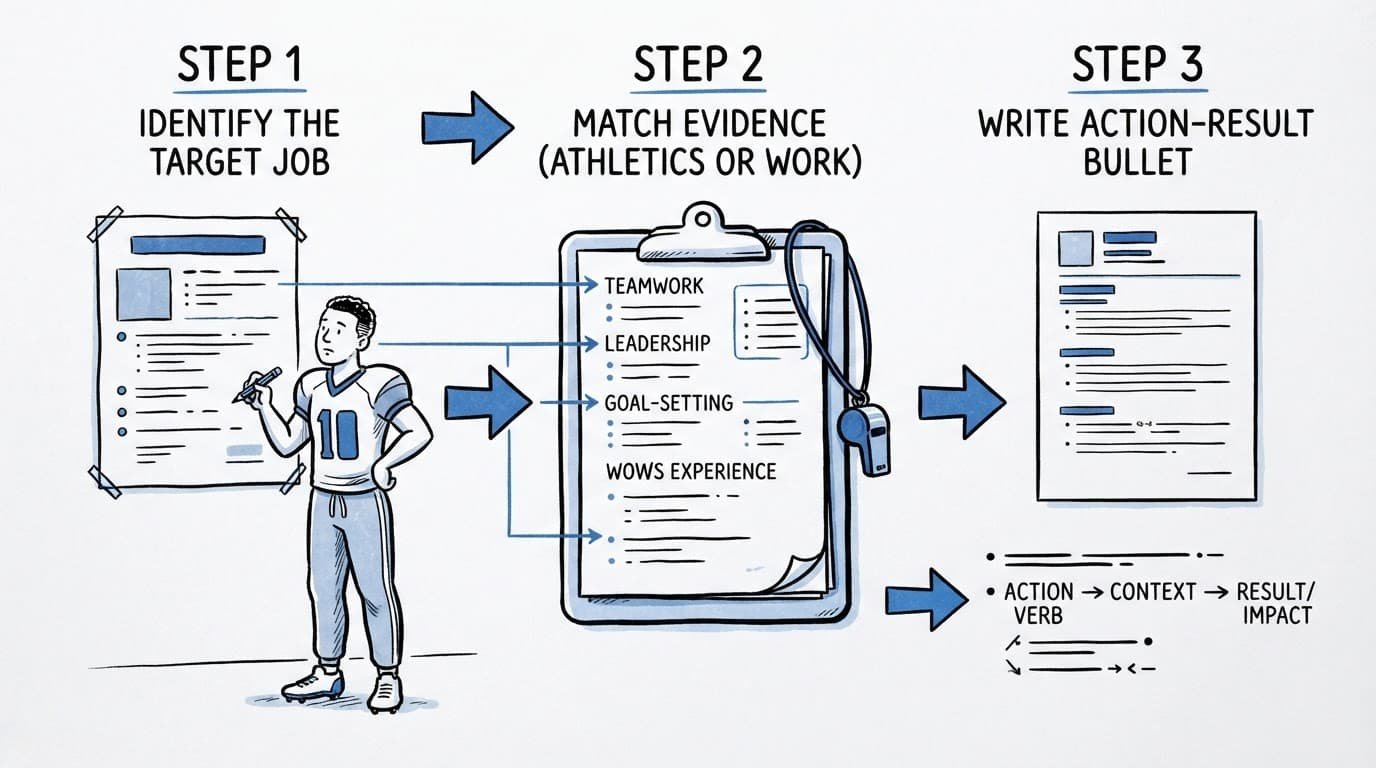
If a posting asks for “project coordination,” don’t copy the phrase unless your experience supports it. Identify the requirement, choose a real athletic or nonathletic example, describe your action, and state a defensible outcome.
A soccer team captain applying for an operations internship might show leadership skills by managing schedules, communicating travel updates, coordinating equipment, and keeping teammates aligned. A basketball player applying for sales could highlight team collaboration through goal tracking, peer communication, and responding to coaching. A track athlete seeking an analyst role can discuss performance logs, race data, and pattern recognition when reviewing results or addressing a training gap.
For an additional check, AI resume tailoring without exaggeration can help you compare the job description with your real experience. Carry that evidence into your student athlete resume, cover letter, and interview stories.
Build a better bullet
Use this sequence: strong verb, responsibility, context, and outcome.
“Led weekly peer check-ins for a 20-member team, surfaced scheduling conflicts early, and communicated adjustments to coaches and teammates.”
The action is clear, the scope is credible, and the workplace value is easy to spot.
Build experience when you have no formal job history
Even when formal work experience is limited, athletics shouldn’t be your only source of evidence. A focused student athlete resume can also include class projects, student organizations, volunteer work, tutoring, campus employment, and certifications that support your target role. Keep the same clean resume template as you add relevant projects, jobs, or certifications, but tailor each version to the role.
A professional summary can connect these pieces in two or three lines. Mention time management when competing commitments support that claim. For example: “Business student and varsity athlete with experience coordinating team communications, analyzing performance data, and managing competing deadlines with time management. Seeking an entry-level operations role.”
Prepare for the interview behind the resume
Strong resume writing keeps every claim ready for discussion. Each student athlete resume bullet may invite a follow-up question.
Prepare a short STAR story for each major claim. Cover the situation, task, action, and result. Explain what you did, not only what the team achieved.
CareerScribeAI’s job-description workflow includes an AI Resume Builder, Cover Letter Generator, and Interview Prep Tools to help you identify role requirements and practice relevant examples.
Frequently Asked Questions
Should I include athletics on my resume?
Yes, especially when your sport involved leadership, mentoring, travel coordination, performance analysis, or other meaningful responsibilities. List it under Athletic Experience and focus on contributions rather than simply naming the team.
How can I write a student athlete resume with no formal work experience?
Include athletics alongside class projects, student organizations, volunteer work, tutoring, campus employment, and relevant certifications. Choose examples that demonstrate skills connected to the job you want.
What skills should a student athlete list on a resume?
Useful skills may include time management, communication, leadership, scheduling, performance analysis, collaboration, and problem-solving. Only list skills that your experience bullets or examples clearly support.
Should I use statistics on my student athlete resume?
Use numbers when they accurately show scope, responsibility, improvement, or an outcome you can explain. Examples include team size, training hours, events coordinated, athletes mentored, or documented performance benchmarks.
Should I customize my student athlete resume for every job?
Yes, because different roles prioritize different evidence. Compare the job description with your real athletic, academic, and work experience, then emphasize the examples that best match the position.
Make Your Athletic Experience Count
Your sport doesn’t need to match the industry for it to matter. A focused student athlete resume shows how you organized, communicated, analyzed, improved, and followed through when the stakes were real.
Write each bullet so a hiring manager can picture you doing similar work on their team. Clear evidence beats generic confidence every time.