


When you see a not selected job application status, the employer usually isn’t moving your application forward for that opening. The label doesn’t explain why, and an automated portal update can sometimes conflict with direct communication.
If you’ve already received an offer, contact the employer before treating the status as a decline. Otherwise, focus on what you can learn and improve, starting with the message’s source.
Key Takeaways
- A portal status records an outcome, but rarely explains the hiring decision.
- An unexpected decline after an offer needs direct clarification.
- A decline alone isn’t feedback, so request one specific improvement.
What a “Not Selected” Job Application Status Means
Automated status versus direct rejection
An applicant tracking system (ATS) records application stages. A “not selected” label usually means your application has stopped progressing. However, the label alone doesn’t show whether a recruiter reviewed your resume or an initial screening rule affected your application. A rejection email may identify the decision stage when the portal label doesn’t.
Direct rejection messages may say “your application is no longer under consideration” or “your application was considered but you were not selected.”
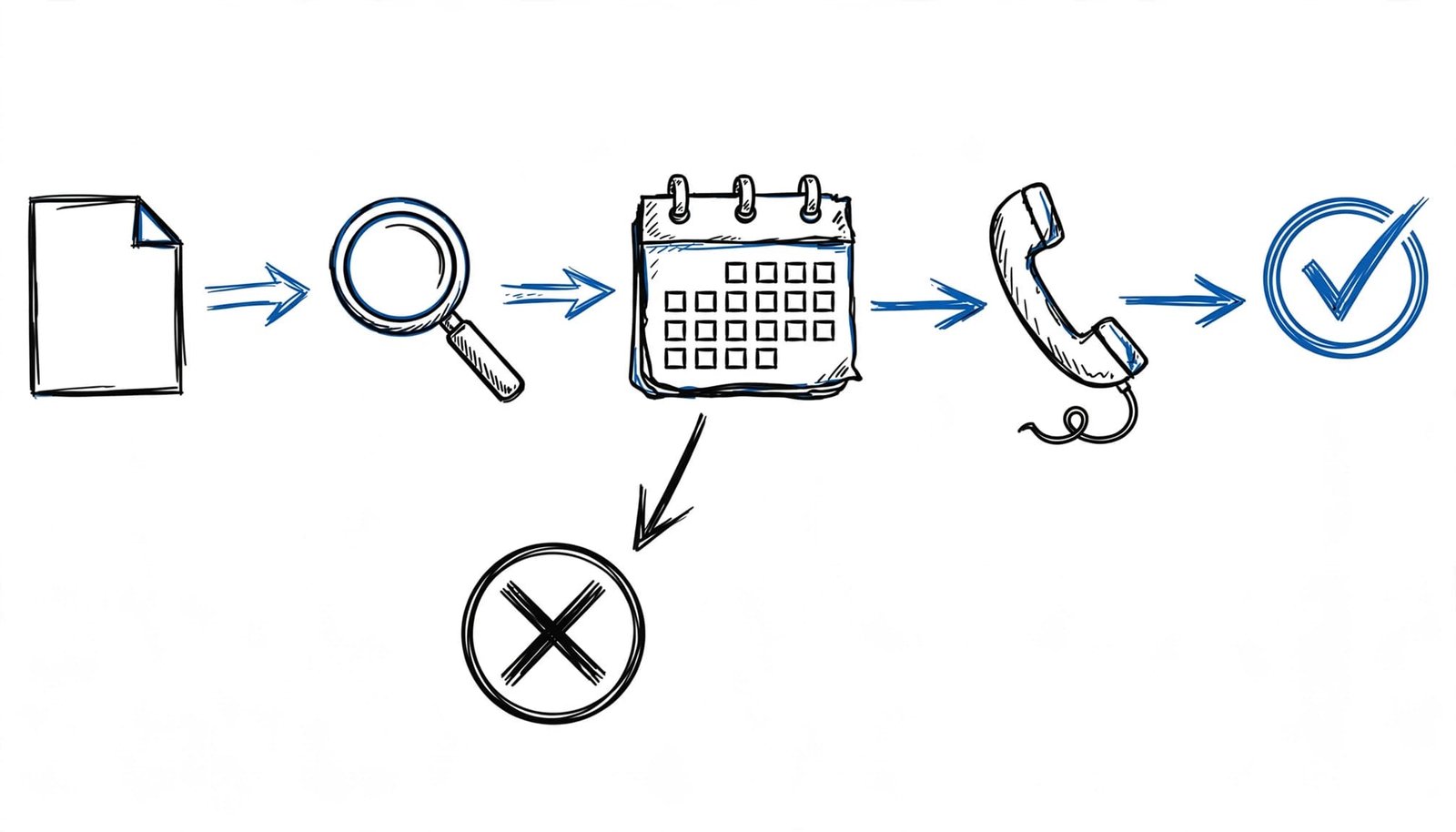
When the status appears after an offer
On sites such as Indeed, an automated “not selected by employer” message can follow administrative changes, including closing a listing or moving candidates between stages. This can happen even after an offer, but don’t assume every unexpected message is harmless.
Call the employer on the next business day. Explain that the portal message conflicts with your offer and ask the hiring team to confirm whether the offer remains active.
Why Qualified Applicants Aren’t Selected
Resume, experience and communication issues
BAHS’s staffing checklist flags outdated resumes, typos, applications that don’t match the job description, and whether they clearly show relevant soft skills. It also notes slow recruiter responses, unexplained employment gaps and unprofessional public social media content.
The checklist notes a preference for at least five years of professional experience. That threshold concerns its placements, not every agency or entry-level opening.
Use these points as review prompts, not proof of why an employer rejected you. A career gap, for example, doesn’t establish that you lack relevant skills.
Company needs and competing candidates
Hiring decisions reflect job requirements, company needs, perceived cultural fit and competing applicants’ qualifications. An internal candidate or employee referral may have an advantage because the employer already knows their work.
Employers generally don’t owe applicants an explanation, and most won’t provide enough detail for you to know why you were not selected. A recruitment agency may receive fuller feedback because employers need it to refine future matches. In some academic or public-sector hiring processes, a search committee compares shortlisted applicants against stated criteria.
Still, requesting constructive criticism is reasonable. Binghamton University’s guidance on requesting feedback recommends a polite, professional approach.
What to Do After a Job Rejection
Once you’ve established that the decision is final, follow a short sequence.
- Save the decision and update your records. Note whether the rejection happened before screening, after an interview or at the final stage.
- Send a brief thank you email within a day or two. Mention where and when you met the interviewer, then express interest in suitable future openings.
- Ask one focused feedback question. Request a skill or interview answer you could strengthen, rather than asking the employer to justify its decision.
A positive reply can leave a good impression and keep you in mind for another role or as a backup candidate. Indeed’s rejection-response guidance also recommends thanking the interviewer and expressing continued interest.
You can adapt this reply:
Thank you for the opportunity to interview and learn about the team’s priorities. Although I’m disappointed, I appreciated our conversation and would welcome consideration for future openings. If you’re able to share one skill or interview answer I could strengthen, I’d appreciate your feedback. Thank you again for your time.
If nobody responds, continue your search rather than repeatedly requesting an explanation.
Review Your Application Before Applying Again

Compare your resume with the posting’s requirements. Make relevant experience easy to find, correct dates and typos, and describe achievements with evidence. Use the employer’s terminology when it accurately describes your skills.
At CareerScribeAI.com, our AI Resume Builder helps you organize and tailor that information. Our Cover Letter Generator can help connect your experience to the opening.
If interviews are the sticking point, use our Interview Prep Tools to practice role-relevant questions. Structure behavioral answers with STAR: Situation, Task, Action and Result. Keep every application claim accurate.
Frequently Asked Questions
Does “not selected” mean my resume was never read?
No. The status doesn’t reveal who reviewed your application or how the decision happened. Don’t infer an automated rejection from the label alone.
Can I apply to the same company again?
Yes, when another opening fits your qualifications. A decline for one position doesn’t automatically rule out future consideration.
What if I was rejected for an internal position?
Ask the hiring manager for development feedback and the requirements for future openings. Being considered a strong candidate doesn’t guarantee selection.
Keep the Decision in Perspective
A “not selected” status describes one hiring outcome. It doesn’t define your worth or character, and qualified applicants regularly face rejection.
Clarify conflicting messages, request useful feedback and improve what you can control. Keep your job search moving without treating an unexplained decision as a complete assessment of your abilities.