


“Application Received” means the employer’s system has your job application. It confirms delivery, but it doesn’t prove a recruiter has read your resume or selected you for an interview.
An unchanged status can feel discouraging, especially when you’re waiting for a role you want. This job application status is only an early signal, so separate what it confirms from later hiring steps.
Key Takeaways
- “Received” usually confirms successful submission, not human review.
- Status labels vary by employer, even when companies use the same software.
- Keep checking messages and applying elsewhere while you wait.
The Meaning of “Application Received”
Receipt doesn’t confirm review
“Application Received” or “Received Submission” is usually an early, automatic acknowledgment. Your application has entered the employer’s applicant tracking system (ATS), but screening may not have started.
However, the reverse is also possible. Some systems require a hiring manager to change statuses manually. Therefore, your application can still say “received” after someone has opened it.
Employers configure Workday, iCIMS, Greenhouse, and Taleo differently. A label at one company won’t necessarily mean the same thing elsewhere.
What it means in Workday
Surety Systems’ Workday application status guide lists frequently used application status codes: AS for Application Submitted, AR for Application Received, UR for Under Review, IP for In Progress, and CM for Completed.
In Workday, “In Progress” generally means the hiring department or an automated system is reviewing the submitted application. It can appear a few days to a few weeks after submission.
Neither AR nor IP guarantees an interview. Likewise, “Completed” shouldn’t automatically be read as “hired.”
How Job Application Statuses Progress
The broad sequence is receipt, processing, then a positive or negative decision, a framework also described by Quora contributors. Portals often divide those stages into more detailed labels.
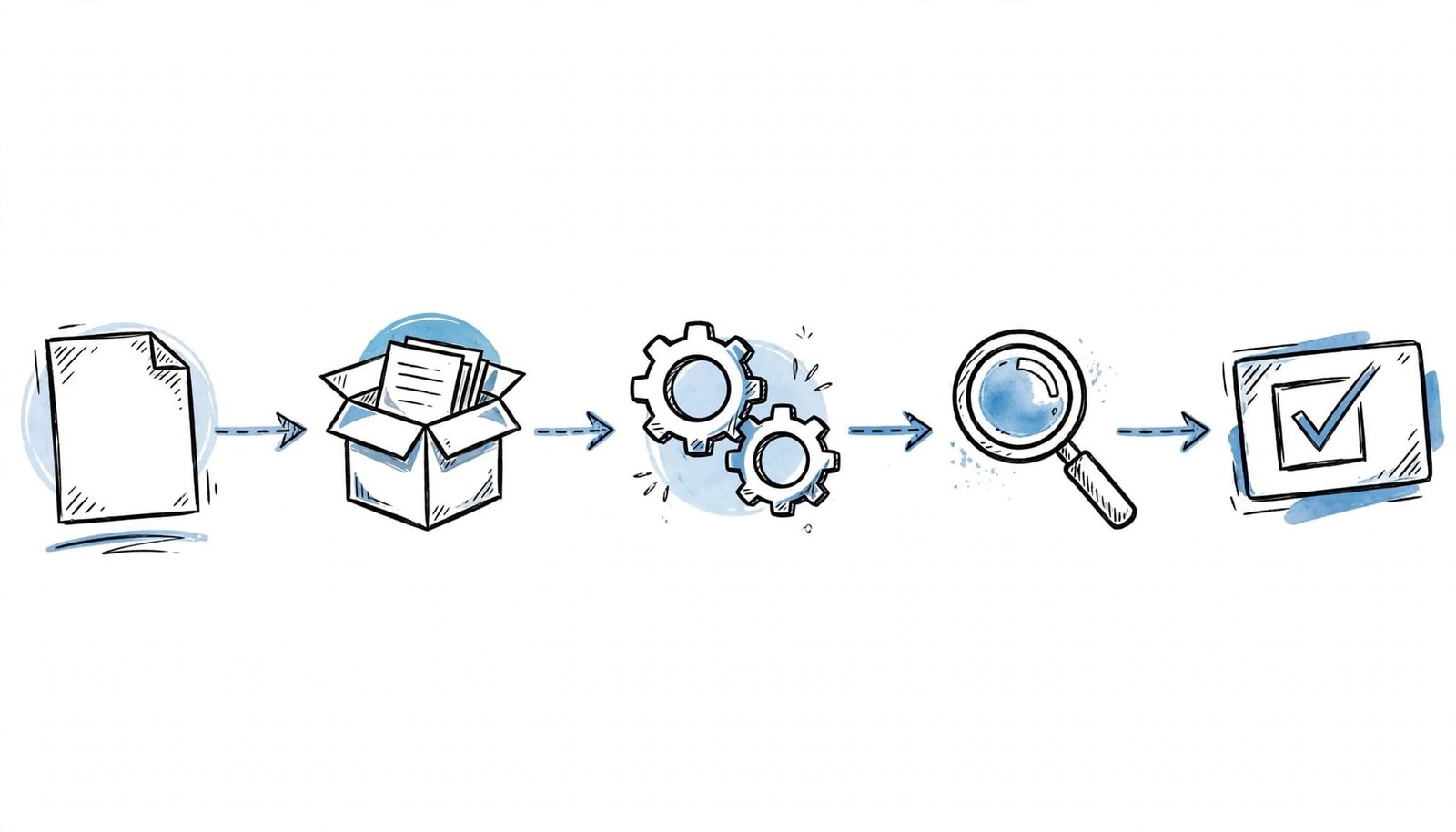
These labels describe typical stages, not a universal order.
| Status | What it usually means | Your next action |
|---|---|---|
| Application Submitted | You completed the submission step. | Save the confirmation. |
| Application Received | The employer’s system has your application. | Watch for messages. |
| In Progress / In Process | Screening or another hiring step is underway. | Complete any requested tasks. |
| Under Review / Under Consideration | A recruiter or hiring team has your application in its review workflow. | Stay available for contact. |
| Incomplete Application | Required information is missing, possibly a third reference. | Supply the missing item. |
| Assessment / Screening | The employer requests a test or initial screening. | Meet the stated deadline. |
| Interview Scheduled / Interviewing | An interview is planned or interviews are underway. | Prepare for the conversation. |
| Offer / Hired | An offer has been issued or hiring is complete. | Review the terms and onboarding instructions. |
| Withdrawn | Your candidacy has been removed, usually at your request. | Follow up if that’s unexpected. |
| Rejected / Not Selected / No Longer Under Consideration | Your application isn’t moving forward; “for future consideration” may refer to later openings. | Focus on other opportunities. |
| Position Filled / Position Closed | Recruitment for the opening has ended. | Continue your search. |
“Under Review” doesn’t mean someone is reading your file at that exact moment. Also, not every employer displays every stage.
How Long Should You Wait Before Following Up?
Allow for the hiring timeline
There’s no universal deadline for leaving the received stage. A few days without movement gives you little information about your chances.
According to Indeed’s explanation of HR status progress, “in progress” can last several weeks because of applicant volume and the documents hiring managers must review.
If the job posting includes a review window, use that timeline. Otherwise, a brief follow-up after roughly one to two weeks is a reasonable approach, not an employer response guarantee.
Check messages before contacting the employer
Check application status in the candidate portal, and monitor your email, including spam and junk folders. Employers may contact you directly without updating the status.
Save the confirmation email, job title, requisition number, and submission date. A portal record marked “received” is stronger evidence of submission than a saved draft.
If you have a recruiting contact and the employer permits inquiries, send a short message:
Hello, I’m following up on my application for [job title], submitted on [date]. I’m still interested and would appreciate any update on next steps.
Avoid repeated messages or submitting duplicate applications simply because the label hasn’t changed.

Keep Your Job Search Moving
At CareerScribeAI, our Application Tracker lets you organize applications by stage and set follow-up reminders. Record employer messages separately, because your own tracking board doesn’t replace the employer’s portal.
For upcoming applications, our AI Resume Builder and Cover Letter Generator help tailor your materials to the opening. Meanwhile, our Interview Prep Tools generate job-specific practice questions and STAR answer frameworks: Situation, Task, Action, Result.
Preparing while you wait keeps your search moving without treating an acknowledgment as a hiring decision.
Frequently Asked Questions
Does “received” mean my application is complete?
Not necessarily. LawInsider’s legal definition ties receipt to supplying all required elements, but job portals use the phrase differently. A submitted application can still need additional documents.
Does an unchanged status mean rejection?
No. Recruiting teams may need days or weeks, and some employers update portals infrequently. Treat a rejection message or explicit negative status as clearer information than silence.
Treat Receipt as Confirmation, Not a Decision
“Application Received” confirms that your application reached the employer’s system. It doesn’t reveal your ranking or promise an interview.
Keep your confirmation records, monitor messages, and follow up once when appropriate. Continue pursuing other roles until you have a firm outcome.