


An apprenticeship shows that you can learn on the job, follow safety rules, take direction, and build hands-on experience. This apprenticeship experience demonstrates reliability, safety awareness, coachability, and readiness for the trade industry, even with limited formal employment. Your apprenticeship resume should make that evidence easy to find.
The right placement depends on the program’s actual structure, not the word apprenticeship in its title. Use work experience for paid, hands-on training, education for classroom-led instruction, and certifications for short safety courses. For example, an electrical apprentice may have supervised exposure to electrical systems without working independently. Make the training dates, sponsor, and duties easy for hiring managers to verify.
Key Takeaways
- Place apprenticeship training under Work Experience when it involved paid, supervised hands-on duties; use Education for classroom-led pre-apprenticeship programs and Certifications for stand-alone safety courses.
- Write specific bullet points that show completed tasks, tools, safety procedures, technical skills, and measurable responsibilities rather than vague claims about what you learned.
- Translate non-trade experience, school projects, volunteer work, and community activities into relevant evidence of teamwork, attendance, communication, problem-solving, and follow-through.
- Tailor each one-page resume to the apprenticeship opening, use standard headings and readable dates, and include only skills and certifications you can verify and discuss honestly.
- Follow union, employer, and state program instructions because application requirements can vary, even when you bring a conventional resume.
Apprenticeship Resume Sections: Where Training Belongs
Choose a section that fits the apprenticeship’s structure and shows your hard skills. Don’t bury months of site work under general education.
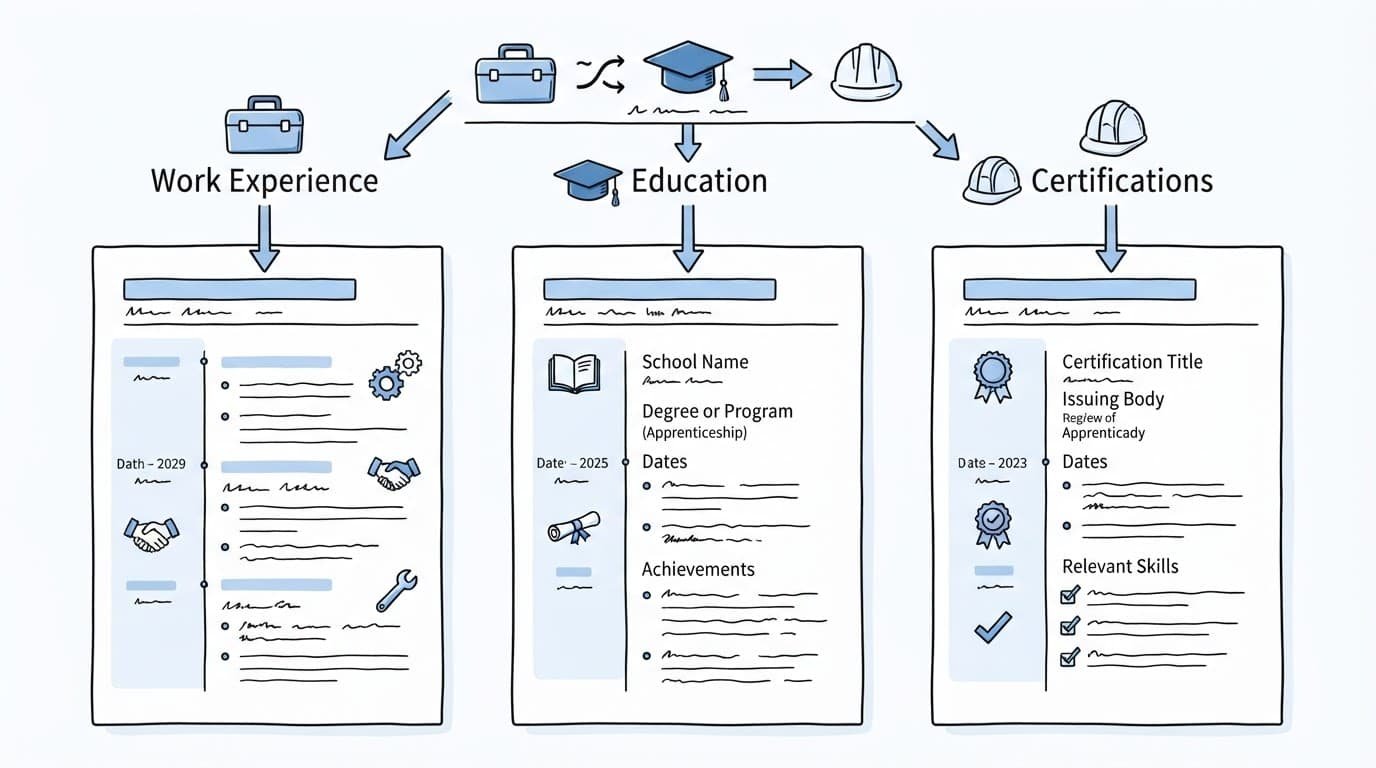
Keep the format to one page for a skilled trades resume. A simple resume template can help organize it, but it can’t replace specific resume bullet points.
Put paid hands-on training under work experience
List an apprenticeship in Work Experience when you performed regular job duties for an employer or sponsor. This applies even if you worked under close supervision.
Use the same format as any other role:
Electrical Apprentice | Registered Apprenticeship Program | City, State | Month Year to Present
For an active program, use Month Year to Present. For a completed apprenticeship, show the completion date and measurable accomplishments when available.
Then add bullets that describe work you actually completed. Strong action verbs help readers see your contribution quickly.
Documenting hands-on experience makes the entry stronger and distinguishes apprenticeship experience from classroom exposure.
- Installed conduit and pulled wire for electrical systems under a licensed electrician’s supervision.
- Read electrical systems diagrams and identified required components before assigned tasks.
- Used blueprint reading skills to follow assigned layouts, kept work areas clear, and followed site safety procedures.
- Used power tools according to supervisor instruction and site rules.
Keep apprentice skills tied to completed tasks, not observations. If you observed a task but didn’t complete it, write “assisted with” or “shadowed” instead.
Put classroom-led programs under education
Use the Education section if your pre-apprenticeship program focused on coursework, labs, and trade foundations rather than paid employment. Include the school or provider, completion date, and relevant coursework that supports the role.
For example:
Pre-Apprenticeship Certificate, Construction Trades
Community College, City, State | Completed May 2026
Relevant coursework: Construction math, jobsite safety, electrical fundamentals
High school education can stay on an entry-level resume, especially if you recently graduated. Add strong grades only when they support your application, such as honor roll, technical coursework, or a relevant vocational pathway.
Classroom exposure shouldn’t be presented as paid employment.
Put short safety courses under certifications
List stand-alone credentials in a Certifications section. Safety certifications such as OSHA 10, CPR, first aid, forklift training, and trade-specific safety cards belong here when current and earned.
An apprenticeship is distinct from stand-alone safety credentials. Mention an OSHA safety certification only when you’ve earned it, never as a planned course.
Include the credential name, issuing organization, and completion or expiration date when applicable.
A safety certification supports your application, but it does not replace clear evidence that you can follow instructions and work responsibly.
Write Bullet Points That Prove You Are Ready
A job title alone rarely explains what you learned. Strong bullets show an action, task, tool or method, and result or responsibility. Connect each example to the work requested in the job description.
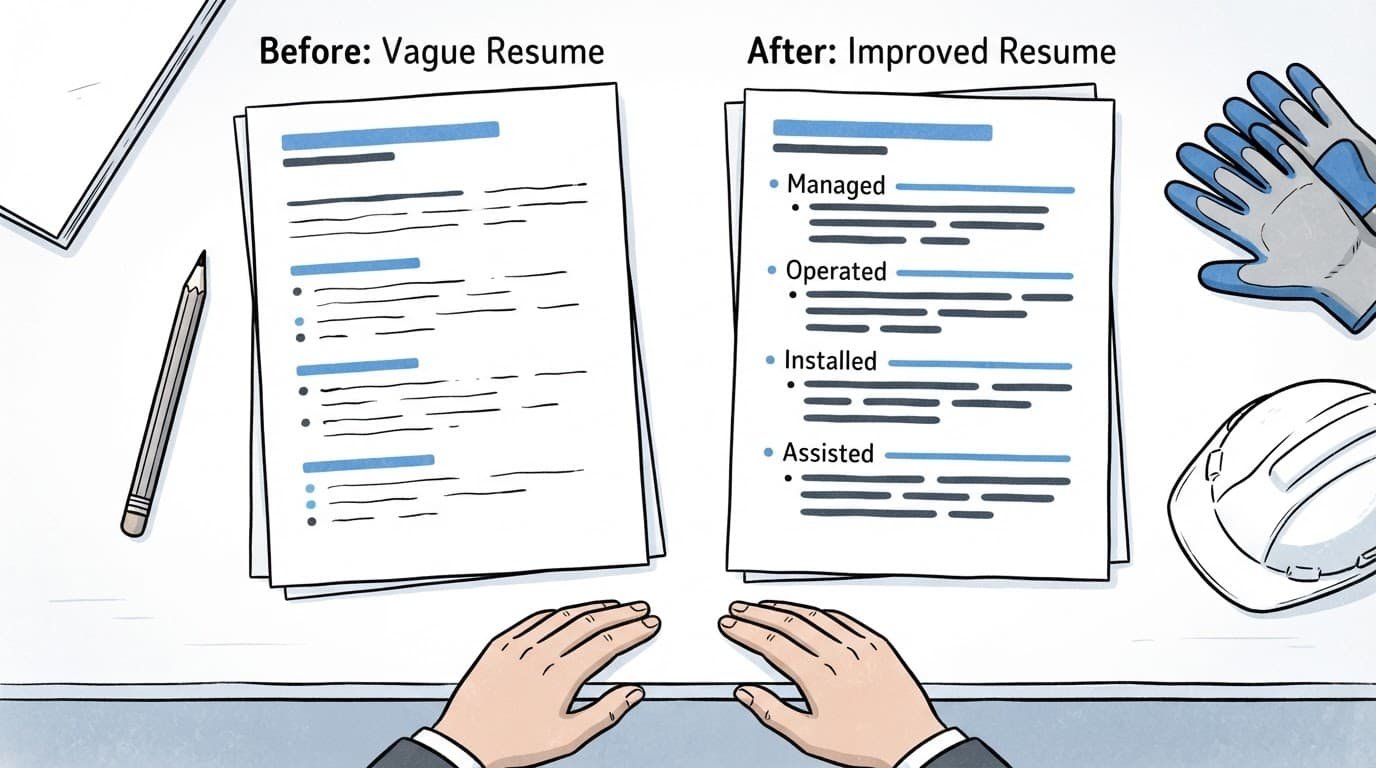
Replace vague descriptions with real tasks
Avoid bullets such as “Helped with construction work” or “Learned electrical skills.” They don’t tell hiring managers where you worked, what tools you used, or how you handled responsibility.
If your work experience is limited, you still have evidence to offer. Training, supervised practice, school projects, and community activities can show readiness without making you sound unqualified.
Choose details that are true and relevant:
- Measured and cut materials for framing tasks under lead carpenter direction, with cuts checked before installation.
- Applied time management by organizing tools and materials before each shift, keeping setup on schedule.
- Used problem-solving to flag a measurement mismatch before materials were installed.
- Documented apprenticeship accomplishments by recording completed training modules and submitting paperwork on time.
- Assisted with component installation for electrical systems under supervision, following diagrams and documenting completed connections.
- Read electrical systems diagrams and performed supervised checks, reporting unusual results before work continued.
- Completed a simulated conduit layout in a pre-apprenticeship program, gaining hands-on experience with measurements and safe tool use.
For technical apprenticeships, choose technical skills carefully, and mention hard skills only when you can discuss them in an interview. Blueprint reading, basic measurements, hand tools, power tools, wiring methods, equipment maintenance, and construction math are useful examples.
Translate non-trade work into transferable skills
No formal work history doesn’t mean you have no evidence to offer. A retail, warehouse, restaurant, military, school, or community background can show habits that matter on a jobsite.
These backgrounds can provide evidence of customer service, safety habits, attendance, and teamwork without pretending they are trade employment. These soft skills can also show communication and coachability when you’re learning under supervision.
Community builds, school projects, and event work may count as volunteer experience and demonstrate teamwork and follow-through.
- Completed a community storage project through volunteer experience, assembling 12 units and meeting the event deadline.
Keep the connection direct. “Completed closing tasks accurately during busy shifts” is stronger than “Reliable team player” without supporting evidence.
Tailor the Resume for the Apprenticeship Opening
Compare your skilled trades resume with each posting, then mirror its honest language. Identify qualifications repeated in the job description, such as mechanical aptitude, construction experience, a valid driver’s license, or safety certifications. Add electrical systems knowledge when the opening specifically requests it. Use language common in the trade industry, but only when it accurately describes your background. Link transferable skills from prior roles to the hard skills and technical skills requested.
Start from a clean resume template, then customize the content for each opening. Use standard headings such as Experience, Education, Skills, and Certifications. Keep dates readable and use plain text, not graphics or tables. This structure helps hiring managers scan details and lets an applicant tracking system read them correctly. Avoid text boxes and unusual fonts.
A short professional summary can fit a current apprentice, a completed apprentice, or a career changer:
Construction candidate with safety-focused training, reliable attendance, and relevant training gained through prior roles. Seeking an electrical apprentice role to apply these strengths while continuing to develop field knowledge.
For a more tailored draft, CareerScribeAI’s AI Resume Builder can compare your resume with a posting or help identify missing details. Its Cover Letter Generator and Interview Prep Tools can help you prepare the rest of the application.
Union and Non-Union Applications Need Different Preparation
Employer-sponsored programs often use a conventional resume and online application, while union routes may follow a different application process. The federal Apprenticeship Job Finder lists openings where employers accept direct applications.
Union apprenticeship routes can require a different application process. A local union may request an application form, aptitude test, interview, transcripts, license records, proof of age, or an osha safety certification. List safety certifications only if you’ve earned them and kept them current. Some applicants build relationships through a union hall or contractor before a formal selection period begins. Confirm dates and selection instructions with the union hall, since requirements vary by local.
Bring a clean one-page resume anyway. It gives an organizer, contractor, or interviewer a quick record of your employment history, training, licenses, and contact details. However, follow every local instruction over generic resume advice.
State-supported programs can also point job seekers toward approved routes. Colorado’s apprenticeship guidance for career seekers shows that opportunities extend beyond construction and the trade industry into fields such as healthcare, IT, education, and hospitality. Check each program’s current requirements before applying.
Frequently Asked Questions
Should an apprenticeship go under work experience or education?
List it under Work Experience when it included paid, regular, hands-on duties for an employer or sponsor. Use Education when the program primarily involved classroom instruction, labs, and trade foundations without paid employment.
How should I describe an apprenticeship on my resume?
Include the job title, sponsor or employer, location, dates, and bullets describing tasks you actually completed. Mention tools, safety procedures, technical skills, and measurable responsibilities, using “assisted with” or “shadowed” when you only supported or observed a task.
Can I include an apprenticeship that is still in progress?
Yes. Show the start date followed by “Present” and include an expected completion date when relevant. Focus the bullet points on supervised work and training you have already completed.
What if I have little or no formal work experience?
Include supervised practice, school projects, volunteer work, community builds, and non-trade roles that demonstrate safety habits, teamwork, attendance, communication, and follow-through. Keep the connection to the apprenticeship direct without presenting classroom exposure or unrelated work as trade employment.
Should safety certifications be listed with my apprenticeship?
List stand-alone credentials such as OSHA 10, CPR, first aid, forklift training, or trade-specific safety cards in a Certifications section. Include the issuing organization and completion or expiration date when applicable, and mention only certifications you have earned and kept current.
Make Your Training Easy to Verify
A strong apprenticeship resume should be easy to verify before you submit it. Confirm clear dates, sponsor or employer information, truthful resume bullet points, relevant apprentice skills, safety certifications, and measurable apprenticeship accomplishments where available.
For a completed apprenticeship, list the finished training and results. Current apprentices should include their expected completion date, while candidates with limited work experience can present supervised hands-on experience honestly. A skilled trades resume should make relevant technical skills easy for hiring managers to assess, such as work involving electrical systems.
Keep it focused on the role you want next. The resume should show that you are prepared to learn, work safely, and contribute on day one.