


Startup founders and hiring managers scan for evidence that you can make progress with limited time, shifting priorities, and incomplete information. A strong startup resume proves that you create measurable results and business outcomes, including revenue growth when relevant, not only that you held a title.
You don’t need prior startup experience to compete. You need to translate your work into ownership, speed, customer awareness, an agile mindset, and practical skills that fit the role.
What Makes a Startup Resume Different?
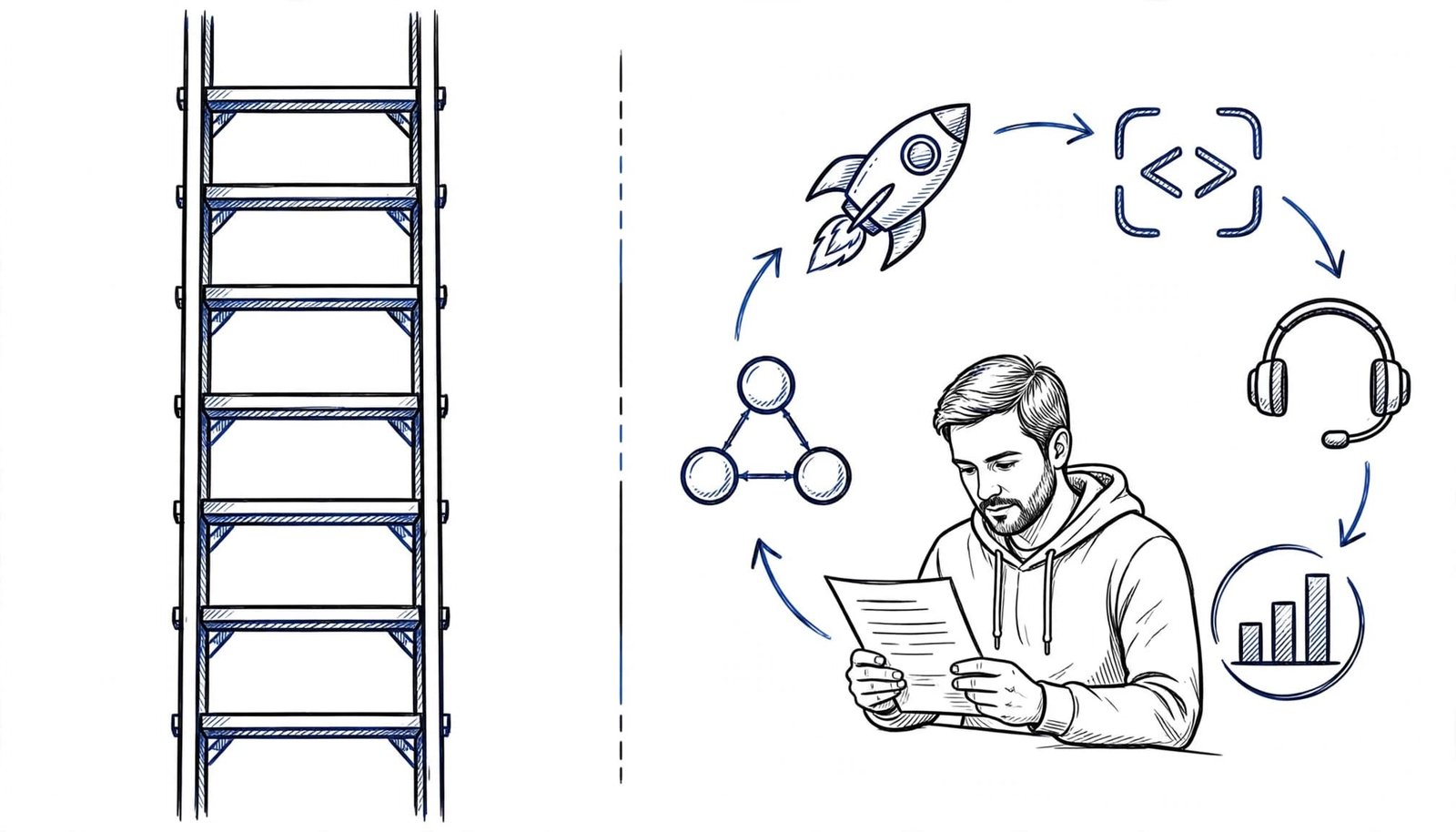
Large companies often separate responsibilities across departments. Startups need people who can own a goal, make decisions, and work across functions. These expectations reflect startup culture, where experimentation, comfort with change, and a growth mindset matter.
Show ownership and range
Founders and hiring managers want credible examples of initiative. In your work experience section, use action verbs to introduce moments when you identified a problem, proposed a solution, and delivered an outcome.
For example, a digital marketing specialist might write: “Partnered with sales to launch a webinar series that generated 420 qualified leads.” That line shows collaboration with cross-functional teams, execution, and a clear business result.
Avoid broad soft skills such as “team player” or “self-starter” unless a bullet proves them. Your work experience section should demonstrate an agile mindset through real decisions and outcomes.
Translate corporate experience into startup value
Corporate candidates can frame established processes as startup-ready accomplishments. Emphasize projects where you reduced delay, improved a customer experience, tested an idea, or took responsibility beyond your job description.
A startup resume earns attention when each bullet connects your work to an outcome the business could see.
Build a Startup Resume Around Quantified Impact
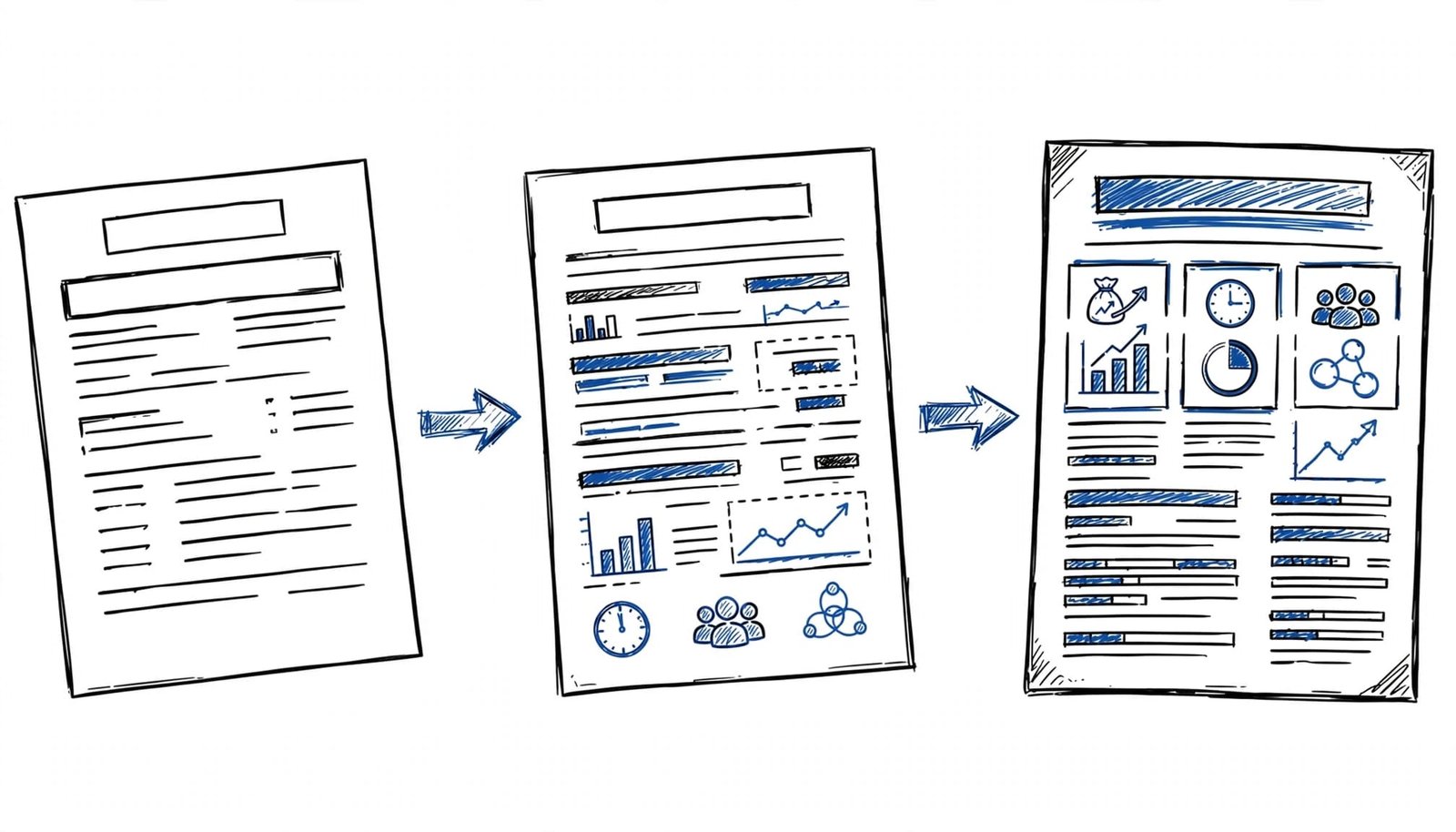
Responsibilities explain your scope. Numbers show what changed because of your work. Use metrics you can explain honestly in an interview, especially when building a startup resume.
Turn duties into achievement bullets
In your work experience section, convert duties into achievement bullets with action verbs. Start each bullet with a direct verb, then state what you did and the result. “Managed social media” gives little context. “Increased organic LinkedIn engagement 38% in six months by building a weekly founder-led content calendar” gives a hiring manager a useful story.
Good action verbs include led, built, launched, analyzed, reduced, redesigned, automated, negotiated, and improved. Choose the verb that accurately reflects your contribution.
Next, pair those action verbs with metrics that make the result clear. Measurable outcomes should also show the hard skills or systems behind your work.
Use metrics that match the role
Revenue growth is useful, but it isn’t the only proof of quantified impact. Use figures connected to your function:
- Growth roles can cite conversion rate, qualified leads, retention, traffic, or user acquisition.
- Product and engineering candidates can cite adoption, uptime, release time, bugs resolved, or support tickets reduced. Name the tech stack behind those results.
- Operations candidates can show operational experience through hours saved, costs reduced, cycle time, fulfillment volume, or process accuracy.
Instead of listing soft skills, prove collaboration or communication through a measurable result.
A complete ATS resume guide also recommends using measurable outcomes such as time, cost, users, growth, and output rather than listing routine duties.
Write the Sections Startup Recruiters Read First
Keep the document focused on the target role. A one-page resume often works for early-career candidates, while experienced applicants may need a second page for relevant leadership or technical depth.
Use a resume summary
A two- or three-line resume summary is useful when it makes your fit obvious. A professional summary should name your specialty, years of relevant experience, strongest tools, and one or two results.
For a growth role: “Growth marketer with five years of B2B SaaS experience, including paid acquisition and lifecycle campaigns. Increased trial-to-paid conversion by 14% through onboarding tests and behavioral segmentation.”
Make sure hiring managers can see how the summary matches the role. Review your resume summary against the target posting, then connect its claims to your work experience section with specific results and action verbs.
Skip a generic resume objective that only states what you want. The employer needs a quick reason to keep reading.
Include hard skills, projects, and portfolios
Mirror the role’s real requirements without copying a keyword list. For technical, product, or SaaS roles, show your relevant tech stack. For data, product management, design, engineering, or digital marketing roles, name platforms, methods, and analytics tools you can use.
Side projects can close an experience gap. Choose side projects that demonstrate relevant skills, then describe their outcomes with action verbs. Link to a GitHub repository, portfolio, case study, newsletter, or launched product with clear portfolio links when relevant.
Treat soft skills such as collaboration, communication, and adaptability as claims that need supporting evidence, not as unsupported list items.
CareerScribeAI’s AI resume and cover letter tools can compare your experience with a specific posting, surface missing terms, and help refine claims without inventing qualifications.
Make Your Startup Resume ATS-Friendly
Many startups use applicant tracking systems, especially when hiring volume grows. Formatting that looks impressive but parses poorly can hide your strongest experience.
Use a clean, readable layout
Use one column, standard section headings, and familiar fonts such as Arial, Calibri, Helvetica, Georgia, or Times New Roman. A simple, ATS-friendly resume format keeps your experience easy to scan. Put contact details in the document body, not only in a header or footer.
Use clear bullets that begin with action verbs and show outcomes. Keep the design simple, with consistent spacing and readable text.
Avoid tables, text boxes, icons, skill bars, graphics, and columns in the submitted version. An ATS resume format guide recommends standard headings and 10 to 12-point body text for reliable parsing.
Tailor keywords truthfully for every application
Read the job description twice. Pull out the job title, tools, hard skills, methods, customer type, business goals, and repeated language. Include goals such as revenue growth only when they accurately describe your work.
Place the most relevant terms in your resume summary and work experience section. Use matching action verbs in clear bullets that explain what you did and what changed.
Place the role’s specialty or business context near the top in a professional summary. Qualities such as collaboration are useful soft skills, but support them with evidence rather than replacing role-specific terms.
A product manager applying to a B2B SaaS startup might feature roadmap prioritization, user research, SQL, retention, A/B testing, and the relevant tech stack if those skills are real. Save the file as DOCX when the application doesn’t specify a format, or use a text-based PDF when requested.
CareerScribeAI’s ATS-friendly resume templates provide clean headings and standard structure, so your content stays easy for both software and people to scan.
Key Takeaways for Your Startup Resume
- Lead your work experience section with achievement bullets and action verbs. Prove ownership, speed, business awareness, and soft skills through outcomes.
- Quantify results with relevant measures such as users, conversion, time saved, revenue growth, or reliability.
- Feature relevant hard skills and side projects with proof of what you built or improved, including measurable results for roles such as digital marketing.
- Tailor each version to the job description, and refine your resume summary for the role while keeping every claim accurate.
- Use simple formatting that applicant tracking systems can read.
Frequently Asked Questions
Should I include a cover letter for a startup job?
Include one when the application asks for it or when your background needs context, such as a career change. Keep it brief and connect two or three resume achievements to the startup’s stated needs. A tailored Cover Letter Generator can help organize that connection, but review every detail before sending.
How should I prepare for startup interviews?
Expect questions about ambiguous projects, tradeoffs, mistakes, and times you took on multiple hats. Build STAR stories from the same achievements on your resume. Use a concrete situation and result to show soft skills such as communication, collaboration, judgment, or adaptability. CareerScribeAI’s AI interview practice tips can help you rehearse role-specific answers without memorizing a script.
Put Evidence Before Job Titles
A startup resume works when it makes your next contribution feel believable. Show the work you owned, the result you produced, and the tools you used while handling changing priorities with an agile mindset.
When your resume summary and supporting bullets tell the same story, precise action verbs can connect ownership to results. Soft skills become credible through the decisions, collaboration, and outcomes you demonstrate, making your resume more than a record of past jobs. It becomes evidence of readiness.