


For job seekers, a resume may earn a screening pass, but it rarely proves how you work. A resume portfolio gives a hiring manager concise evidence of your work experience, including decisions, constraints, results, and your contribution.
Keep applications practical. Submit a clean PDF resume, then link to a focused online portfolio from its header and LinkedIn profile, where you build your professional network. The two assets have different jobs, and both should use consistent, role-specific language for the role you want.
What a Resume Portfolio Should Do
A strong resume portfolio adds proof without repeating your work history. It helps a hiring manager move from “this candidate says they can do it” to “this candidate has done comparable work.”
Keep the resume and portfolio separate
Your resume should remain easy for applicant tracking systems to parse. Use standard headings, simple fonts, and text-based bullet points. Keep the PDF resume text-first, and avoid putting charts, screenshots, or elaborate columns inside it.
Indeed’s ATS resume formatting guidance recommends clear section labels and job-description keywords. Put your portfolio URL near your contact details, but don’t rely on the link for information the resume must communicate.
Select proof that supports the target role
Choose three to five focused work samples that match the job description and substantiate your work experience. Each project page should help a hiring manager answer four questions: What was the problem? What did you own? What actions did you take? What changed afterward? This approach also helps creative professionals present evidence beyond a list of skills.
Include a brief professional summary, selected skills, resume, and contact details. You can also add client reviews or supervisor endorsements when they provide useful context and help establish professional competence. Indeed’s list of career portfolio elements is a useful check before you publish.
Build a Resume Portfolio Around One Job Target
Start with a job description, not a website template. Mark the required skills, recurring business problems, and tools named in the posting. Then select evidence that maps to the target role and helps a hiring manager review your resume portfolio quickly.

Create short, readable case studies
Keep each case study to one page or a short scrolling section. Use a clear visual layout that makes the key evidence easy to scan. Lead with the outcome, then show the process. Choose relevant work samples and project samples that support the role. A product redesign could include the user problem, research method, prototype decisions, accessibility considerations, and launch result.
Use numbers only when you can explain them. “Reduced checkout abandonment by 12%” is stronger when you identify the experiment, time period, and your role on the team.
Protect confidential work
Never upload proprietary dashboards, client lists, source code, customer data, or unreleased product screens without written permission. Instead, redact sensitive details, recreate a simplified visual, or describe the challenge in plain language.
State that an example is anonymized when needed. In a digital portfolio, you can present a simplified version without exposing protected information. If a project cannot be shared, include a short summary of its scope, methods, and outcome, then prepare to discuss it privately during an interview.
A case study can demonstrate judgment without exposing the confidential materials that informed it.
Resume Portfolio Examples for Designers, Engineers, and Writers
The evidence changes by role, but the format stays consistent: context, contribution, process, and outcome. These project samples give creative professionals and technical candidates a clear digital portfolio structure. Polished presentation can create a useful digital showcase, but it shouldn’t replace evidence of professional competence.
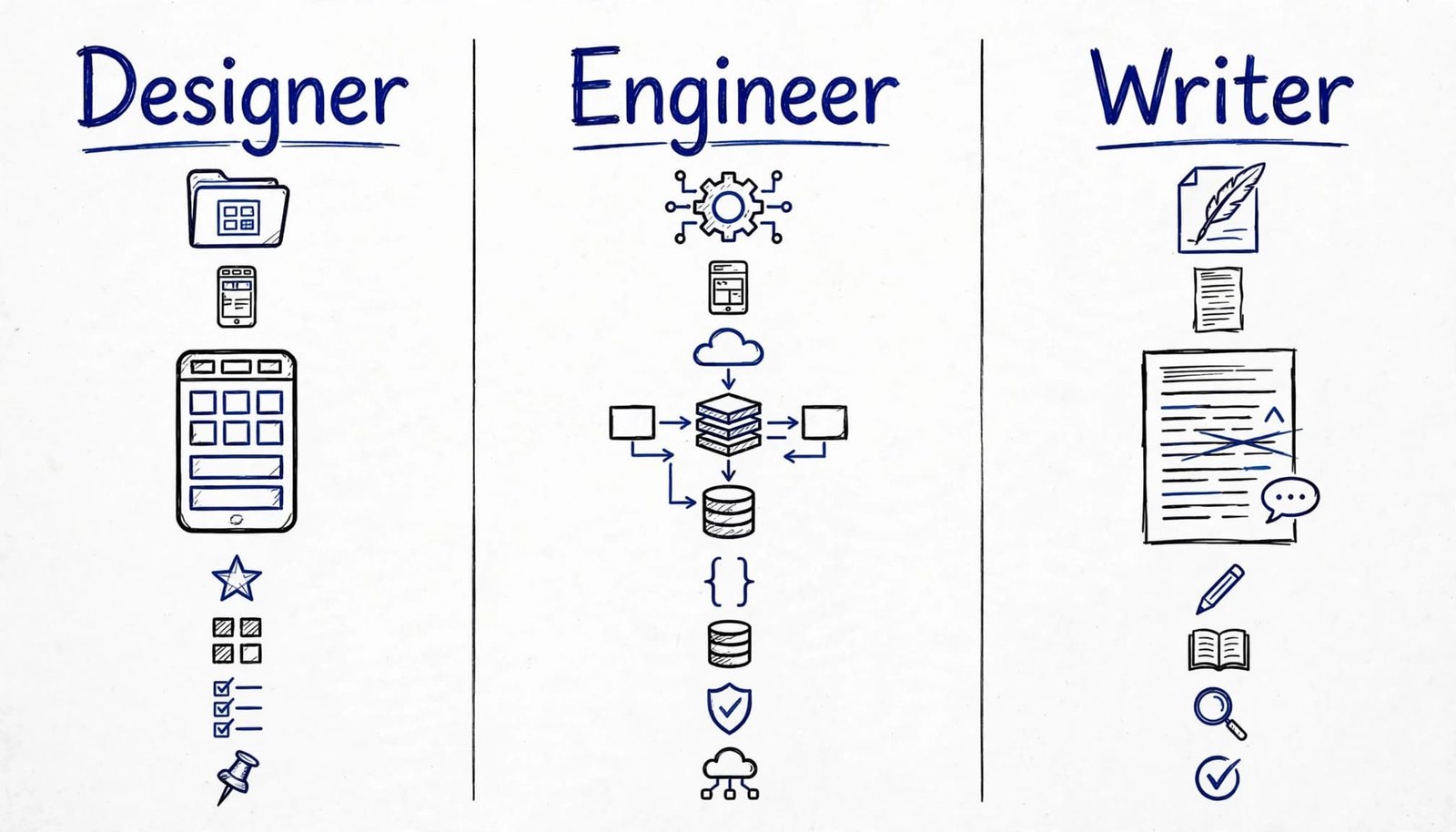
Product designers should show decisions
Show one or two complete product case studies rather than a gallery of polished screens. Explain the user need, constraints, research inputs, design-system choices, and how you collaborated with product and engineering.
A hiring manager wants to learn why you chose a direction and how you responded to feedback. Strong design skills matter, but visual layout alone shouldn’t carry the story. The same principle applies to graphic design work.
A prototype or final interface can help, but it shouldn’t carry the whole story.
Engineers and writers should foreground outcomes
Engineers can feature an architecture diagram, technical write-up, open-source contribution, or sanitized project summary. A software engineer should explain trade-offs, testing, reliability, performance, and ownership. Link to public code only when it reflects the quality you want reviewed.
The hiring manager should see what changed because of your work. Writers should include published clips or excerpts with a short note on audience, brief, editorial goal, and results. Content creators can explain search intent, distribution, or conversion goals. Technical writers can show documentation structure. Analysts and educators can use the same approach with a concise report, lesson plan, or data-storytelling sample. The Merit America portfolio guide includes examples for several non-design careers.
Publish Your Portfolio Without Hurting ATS Performance
A portfolio website gives job seekers an online portfolio that’s easy to review when a hiring manager has limited time. Wix, Squarespace, WordPress, and GitHub Pages can all work. Choose a website template you can update quickly, use clear navigation, and include basic technical optimization, including accessibility, mobile performance, and readable page structure. Test every link on mobile before publishing.
AI tools can speed up a first draft, but review every claim before publishing. At CareerScribeAI.com, the AI Resume Builder can import an existing resume and turn strong experience bullets into an ATS-friendly PDF or DOCX. Use its job description analysis to identify which projects deserve priority for each application.
Your resume portfolio should support the resume, not replace it; the resume builder can create a polished PDF resume. Keep the resume as the primary application document because applicant tracking systems may not read portfolio pages reliably. Use the same role-specific language across the resume, portfolio introduction, and cover letter, and add a shareable link to your professional network profile. CareerScribeAI’s Cover Letter Generator can carry one relevant project into a focused application letter; its Interview Prep Tools can help you practice explaining each case study with the STAR method.
Key Takeaways
- Keep your application resume text-first and ATS-friendly, then add a visible resume portfolio link.
- Choose a few relevant samples instead of displaying every project you’ve completed.
- Explain your contribution, constraints, process, and results clearly, so each project is easy for a hiring manager to scan.
- Redact or summarize confidential work rather than risking an NDA breach.
- Customize the resume portfolio for the role, just as you customize the resume.
FAQ
Can I combine my resume and portfolio in one document?
You can add one or two selected samples to a resume for creative roles. However, a separate portfolio website keeps your resume concise, easier to update, and less visually complex. Keep the resume as the primary application document, since applicant tracking systems may not read portfolio content reliably.
Do I need a portfolio if I am not a designer?
Yes, if you can show work that demonstrates your judgment. Creative professionals can show design skills through graphic design projects. Engineers can share technical explanations, writers can share clips, analysts can share sanitized reports, and content creators can share published pieces. This gives job seekers evidence that supports evaluation during the recruitment process, not decorative design alone.
Conclusion
A useful resume portfolio is selective, role-specific, and easy to scan. It pairs a clear resume with linked evidence on a portfolio website throughout the recruitment process.
Build the resume for the screening system, then build the portfolio for the hiring manager deciding whom to interview.