

An interview answer can be polished enough to hide the person who earned it. AI interview practice is most useful when it exposes gaps in your examples, builds speaking comfort, and preserves your own judgment.
An AI interview coach can support interview preparation without replacing your judgment. For career changers and non-native English speakers, it can help organize authentic experience without inventing claims. Start with the role and your actual work. Then use feedback to make those stories easier to tell under pressure.
Key Takeaways
- Build AI interview practice around the actual job description, your edited resume, and your transferable skills rather than generic prompts.
- Practice aloud in short, unpredictable mock interview rounds to improve pacing, clarity, follow-up responses, and comfort under pressure.
- Use STAR as flexible story cues grounded in real evidence, not as a script to memorize or a reason to invent claims.
- Protect personal and confidential information, review AI tool policies, and compare automated feedback with human judgment.
- Let AI strengthen your delivery while keeping your own experiences, decisions, and voice at the center.
Set Up Practice Around the Actual Role
Generic prompts produce generic answers. First, highlight the job description’s required skills, recurring responsibilities, and language about results, then compare them with your resume. During that resume review, make sure any AI skills on your resume describe work you actually did, and emphasize transferable skills rather than fabricated experience. Use the first round of mock interview practice to prioritize role-specific questions tied to those responsibilities. Add technical questions when technical ability is a stated requirement. That work lets you practice job interview questions instead of rehearsing an assortment of trivia.
Give AI Limited, Useful Material
Share the job posting and an edited resume with an AI interview coach. Ask it to use both sources to build relevant questions, or use a mock interview simulator that turns them into a role-relevant questioning flow. Remove home addresses, phone numbers, references, salary information, client names under NDA, and internal company data. AI can spot themes, but it may invent company facts or overstate your fit.
Use prompts that give the session a clear job:
- “Act as an AI interview coach for this role. Ask one question at a time and wait for my spoken answer.”
- “Challenge my answer with two realistic follow-up questions based on this job description. After each answer, provide real-time feedback on clarity, evidence, relevance, pace, and filler words.”
- “Give instant feedback on my response for clarity, evidence, relevance, pace, and filler words. Don’t rewrite it until I ask.”
Use AI Interview Practice as a Rehearsal Partner
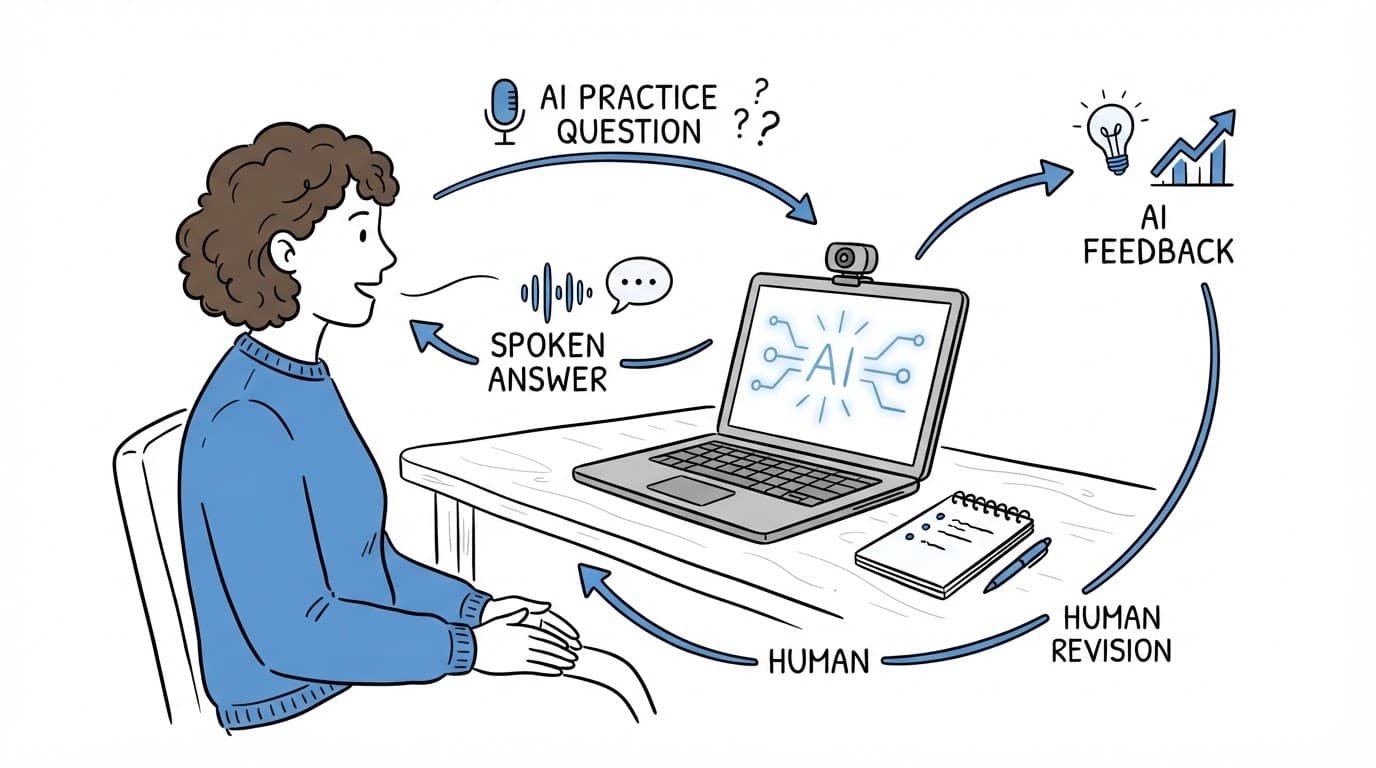
A 20-minute round of mock interview practice should create a little unpredictability. Treat it as an interview simulation led by an AI interview coach. Choose a quiet place, set a 20-minute timer, and answer aloud rather than typing polished paragraphs. Speech analysis reveals rushed endings, repeated phrases, and thin explanations. It can also show your speaking pace before a real interview.
Rehearse Aloud and Change the Conditions
Begin with no notes for the first answer. Then repeat the mock interview practice with four short cues: problem, action, result, lesson. In a later round, ask your AI interview coach to interrupt or question an assumption. Use a mock interview simulator to vary job interview question order and add follow-ups, including behavioral questions and situational questions.
That pressure matters because interviewers often move beyond their prepared list. Ask for real-time feedback during or just after the spoken round, then review instant feedback after each response. For progress tracking, record recurring issues across practice sessions and choose one correction for the next round. Fix a vague result or a filler habit, rather than chasing a perfect score.
Harvard’s guidance on AI interviews makes the same point: use feedback to improve your response, but don’t memorize it. For non-native English speakers, speech feedback can clarify pronunciation without requiring accent removal. Compare the tool’s scores with your confidence level, rather than treating either as a verdict.
A score can flag a pattern, but only you can judge whether an answer sounds honest and fits the room.
Turn STAR Stories Into Conversation
The STAR method keeps behavioral answers anchored in a real event, especially when answering behavioral questions. It also gives an AI interview coach enough answer structure to identify missing evidence.
Start With Evidence, Not a Paragraph
Situation names the context, Task clarifies your responsibility, Action describes your decisions, and Result shows what changed. Adobe’s STAR method guide offers a useful refresher before you begin practicing.
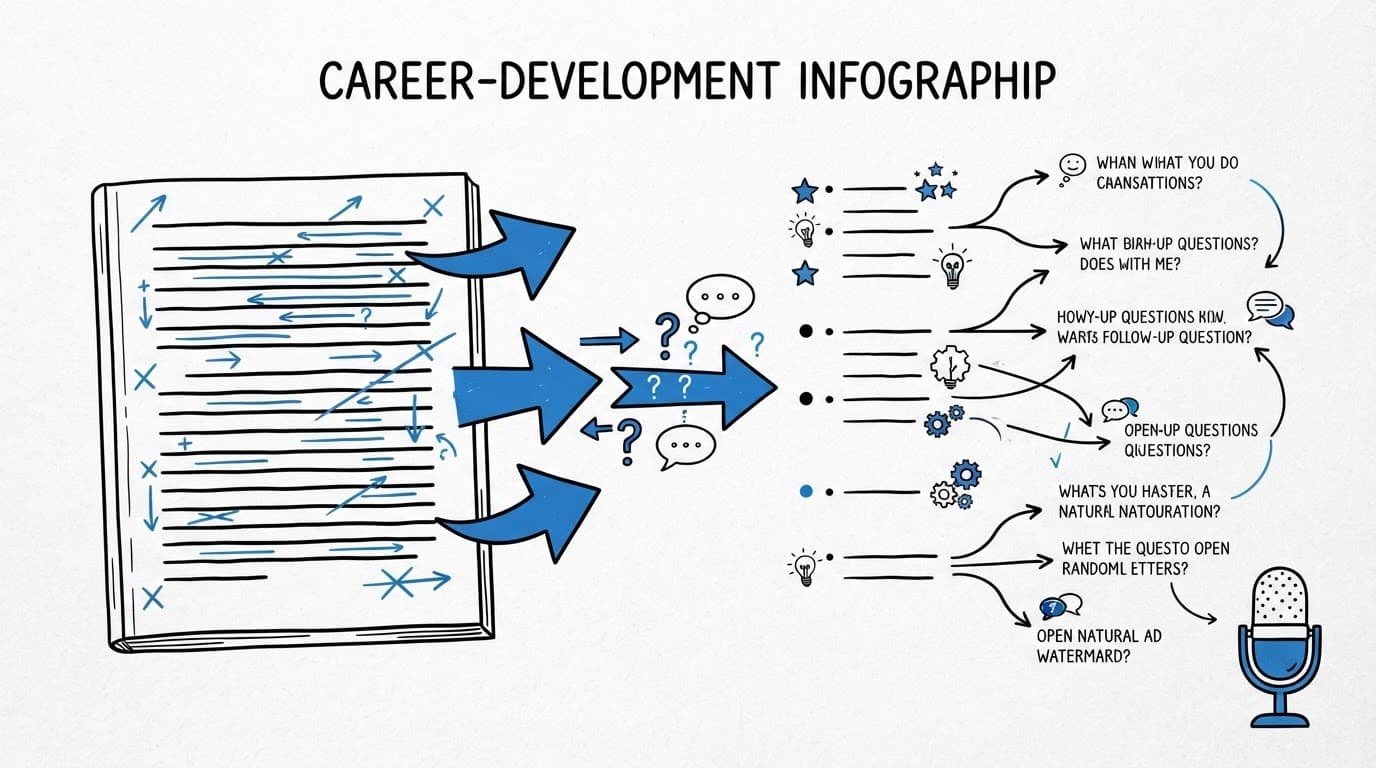
Instead of drafting a 150-word response, write one bullet for each STAR element. Include a number only when you can explain it. Then speak the story in your normal vocabulary.
Invite Detours and Follow-Up Questions
Follow-up questions separate a rehearsed answer from a conversation. Use a mock interview simulator for one round of mock interview practice. Let it introduce realistic detours, including situational questions. Ask the AI interview coach to probe decisions and consequences: “Why did you choose that option?”, “What would you change now?”, or “How did you handle resistance?”
Request instant feedback on your follow-up response, not a rewritten version of your story. Don’t rush to a new example or a memorized recital; aim for responsive workplace communication. Pause, connect the question to the example you already shared, and answer the part asked. If you need a moment, say, “Let me choose the most relevant example.”
Build an Opening and Questions That Fit the Role
Your opening needs a direction, not a life story. A concise present-past-future answer works as an elevator pitch. It links your current strengths, the experience that prepared you, and the work you want next.
Keep “Tell Me About Yourself” Focused
Keep the opening under about 90 seconds. Choose two points from your background that match the role. For career changers, focus on transferable strengths. Then give the interviewer a reason to ask more.
Rehearse that opening with mock interview practice before the actual meeting. Non-native English speakers can focus on clarity and delivery rather than memorizing every word. An AI interview coach can test whether it stays under 90 seconds and remains aligned with the role. A mock interview simulator can place it in a realistic question flow.
CareerScribeAI’s AI Resume Builder and Cover Letter Generator can help you check whether your documents feature the same themes. Its Interview Prep Tools can turn the job description into likely questions, while this guide to “tell me about yourself” helps you shape the opening.
Research Before You Ask for Answers
Start with company research using the employer’s public materials, recent announcements, leadership messages, and job description. AI-powered tools can summarize those sources, but check key facts against the company website.
Google’s interview preparation advice includes researching the company and preparing questions. Prepare two job interview questions. Ask how the team measures success in the first six months, and what problem the new hire should address first.
The answers can help you judge whether the role supports your career goals. Use them in your job search strategy to evaluate fit, not merely impress the interviewer. Those questions show attention without sounding performative.
Protect Your Information and Test With People
Before using AI-powered tools or a new platform, read its policies on recording retention, model training, and deletion. Treat resumes, interview recordings, and job materials as personal data. Redact anything you would not share with an unknown service.
Paid plans and free allowances vary, so test the experience with one short mock interview practice session before committing. A useful AI interview coach should let you control the pace and delete your work when needed. It should offer instant feedback during practice, with real-time feedback you can review for longer-term patterns.
Finally, practice with a trusted person before the real meeting. Speech analysis can help non-native English speakers notice pacing or pronunciation patterns and support clearer delivery, without making accent correction the goal. A human can judge warmth, clarity, and whether an answer lands naturally in workplace communication.
Frequently Asked Questions
How can AI interview practice help with interview preparation?
AI interview practice can create role-specific questions, simulate follow-ups, and identify patterns in clarity, pacing, evidence, and filler words. It works best as a rehearsal partner that supports your judgment rather than replacing it.
Should I memorize AI-generated interview answers?
No. Use AI feedback to improve your response, but keep short cues and speak in your normal vocabulary. Natural answers are easier to adapt when the interviewer asks an unexpected follow-up question.
What should I share with an AI interview coach?
Share the job posting and an edited resume, but remove addresses, phone numbers, references, salary information, confidential client details, and internal company data. Before using a tool, review its policies for recording retention, model training, and deletion.
How should I practice behavioral interview questions with AI?
Start with a real example and outline the Situation, Task, Action, and Result in brief cues. Then practice answering aloud while the AI asks realistic follow-up questions about your decisions, consequences, and what you would change.
Keep Your Own Voice in the Room
The strongest rehearsal leaves you with clearer stories, calmer delivery, and room to think. Practicing stories, listening, and responsive answers strengthens workplace communication beyond the interview. Your results, choices, and perspective should remain at the center.
Use the tool to rehearse, then step away from the screen and speak without it. The same approach can help non-native English speakers deliver clearly without erasing their identity. Natural answers survive follow-up questions because you understand the experience behind them.