

Part-time employers need fast answers to two questions: can you do the work, and can you cover the shift? Your resume should make both answers clear before a manager reaches the application form.
A strong part-time job resume highlights relevant proof, a dependable schedule, and concise experience instead of a long job history. If your background is limited, a targeted career objective can state the role you want and the shifts you can cover. That gives a retail manager, restaurant supervisor, or customer service lead a clear reason to interview you. Begin with one clean page, then tailor it to each opening.
Key Takeaways
- Make your target role, relevant skills, and accurate availability easy to find near the top of your resume.
- Choose a chronological format when you have previous jobs and a combination format when school, volunteer, caregiving, or freelance work provides stronger evidence.
- Support skills with action verbs, specific responsibilities, and measurable results instead of unsupported claims such as “reliable.”
- Tailor each resume to the job description, use familiar headings and standard formatting for ATS uploads, and follow the employer’s file instructions.
- Keep the document brief, truthful, easy to scan, and carefully proofread before applying.
What a Part-Time Job Resume Must Show
Full-time resumes may emphasize career progression over several years. A resume for a part-time job must show schedule fit and immediate value, even with limited employment history.
Put availability where it can be noticed
If the employer asks about shifts or weekend coverage, check the job description for evening, weekend, school-break, or coverage requirements. Add one factual line beneath the resume summary: “Available weekday evenings, Saturdays, and school breaks.” Change it for every job, and don’t promise hours you cannot keep. A vague “flexible” label is less useful than an honest schedule.
Don’t list unsupported soft skills such as reliability. An accurate schedule demonstrates reliability and time management while you balance work, school, family, or other commitments.
A local hiring manager may decide whom to call based on coverage needs, while an online employer may use availability questions in the application itself.
Place availability near the summary when it matters to the role, not in a crowded footer where it can be missed.
Choose a Resume Format That Supports Your Experience
Choose a resume format that matches the amount and type of evidence you can offer. Use a chronological format if you have previous jobs. Start with your current or most recent role, then give each employment history entry a title, employer, city and state, dates, and two or three bullets. This familiar format lets a hiring manager scan your work experience quickly.
Choose a combination format if you’re entry level or have limited documented roles. Lead with practical hard skills, then add school projects, volunteer work, caregiving, or freelance assignments to support your employment history. Include an education section when school projects or coursework strengthen the application. A brief career objective can connect these examples to the role.
A functional format can make employment history less clear, so it’s often weaker for online applications. A simple resume template with standard sections is easier to read and parse than an elaborate skills-led layout.
Build a Part-Time Job Resume Section by Section
Every line should help someone decide whether to schedule you.
Write a focused header and resume summary
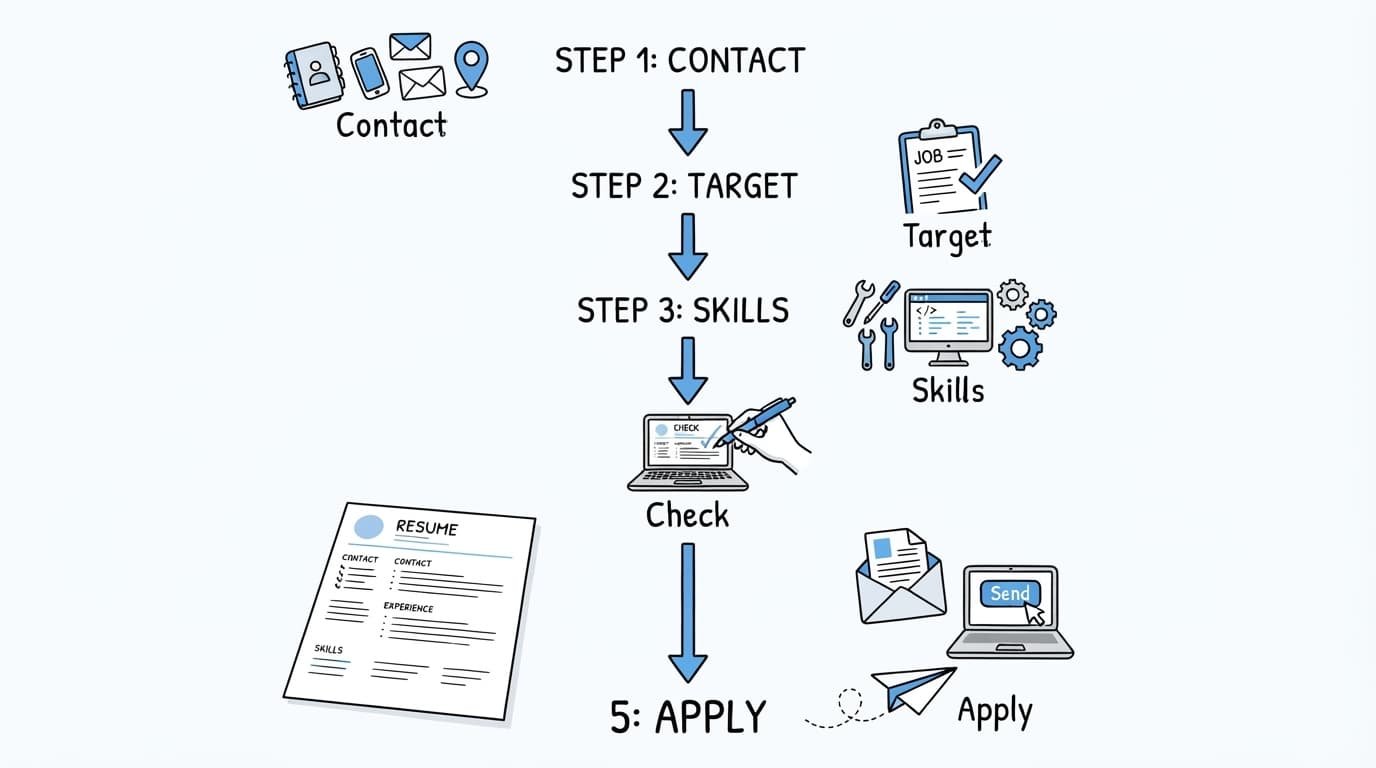
At the top, list your contact information: your name, city and state, phone number, and professional email address. Add LinkedIn only when it is current and supports the role. Leave off your street address, date of birth, photo, and unrelated social accounts.
Follow with two sentences that name the target role, relevant transferable skills, and availability. Use a career objective instead of the summary when you need to state a specific role. A resume objective describes the same concise alternative, so choose one introduction rather than stacking multiple openings.
For example: “Reliable high school student seeking a weekend retail sales associate role. Brings cash-handling practice from a school fundraiser and availability every Saturday.”
If your employment history is brief, use school or freelance examples to show relevant work experience. Place the education section nearby when school work supports the role.
Match skills with evidence
Pull skills directly from the job description when you can prove them. A cafe role may call for point-of-sale systems, food safety, teamwork, and opening shifts. List POS knowledge among your hard skills, while reliability and communication skills belong among your soft skills. A customer service role may need de-escalation, order entry, and clear communication.
Then support those terms with action verbs and results. Back time management and problem solving with a brief example, rather than listing either ability alone. The North Dakota State University guide to ATS also recommends action verbs and measurable results that quantify impact. Write “Processed 80 fundraiser orders in two hours” rather than “Helped at fundraiser.”
For each application, adjust the summary or career objective to reflect the role’s priorities and your availability.
Use School, Parenting, and Freelance Work as Proof
A resume without a formal employer can still show relevant work experience. Unpaid caregiving, school clubs, and freelance projects can demonstrate transferable skills, and a caregiving gap is easy to frame in a stay-at-home parent resume. Name the setting clearly, add dates, and describe work that required responsibility, service, organization, or job-related tools.
Present relevant nontraditional responsibilities alongside your employment history, especially when applying for entry level roles. These examples show soft skills through scheduling, communication, service, and organization:
- Coordinated daycare pickups, appointments, and household schedules for a family of five, applying time management and problem solving to resolve weekly conflicts before deadlines.
- Planned a campus club event for 60 attendees as volunteer work, tracked RSVP responses, and used communication skills to answer questions by email.
- Created social media posts for a local freelance client, met deadlines, and delivered measurable results by producing three posts per week.
Keep only examples that match the position. A hiring manager doesn’t need every class project, but a marketing assistant may value the social media example. Don’t inflate or misrepresent your formal employment history; label each setting honestly.
Tailor for ATS Filters and Local Hiring Managers
Online portals and walk-in applications need the same honest facts, but their presentation differs. For uploads screened by applicant tracking systems (ATS), use a simple one-column resume format. For an ATS upload, start with a plain resume template, familiar headings, and standard fonts. Keep contact information in ordinary document text, not icons or graphics. Avoid tables, text boxes, and headers. Follow the file type in the posting; if none is named, a .docx is usually the safest choice.
Next, tailor your resume summary or career objective to the posting, then mirror relevant terms from it in context. Indeed’s ATS-friendly resume guidance advises candidates to match exact job description keywords and use them in meaningful statements. Use action verbs to describe work experience, highlight hard skills, and show measurable results. A grocery opening that names “stocking” and “inventory” should show those words in a bullet only if you performed the work.

Bring a clean printed copy when a local business invites walk-ins. Greet the hiring manager, ask whether they are accepting applications, and attach a brief cover letter only when requested. CareerScribeAI’s AI Resume Builder can help compare your draft with a posting; its Cover Letter Generator and Interview Prep Tools can support the next steps.
A Final Checklist Before You Apply
Read your part-time job resume beside the job description, then confirm the following:
- Your contact information works, and your email sounds professional.
- Your resume summary names the role and gives accurate availability when relevant. If you prefer a career objective, choose it instead of the summary, and don’t repeat either as a resume objective.
- Your skills and relevant education section reflect the role without copying claims you can’t support.
- Your work experience and employment history include clear dates, specific responsibilities, strong verbs, and measurable results.
- The document is easy for a hiring manager to scan, uses one column, and follows the employer’s upload instructions.
Frequently Asked Questions
What should I include on a part-time job resume?
Include your contact information, a focused resume summary or career objective, relevant skills, work experience, education, and accurate availability when it matters to the role. Choose sections that show immediate value rather than listing every past activity.
How can I write a part-time resume with no formal work experience?
Use school projects, volunteer work, caregiving, freelance assignments, or community activities as evidence of transferable skills. Name each setting honestly, add dates, and describe responsibilities or results that match the position.
Where should I list my availability?
Place availability near the resume summary when the employer has specific evening, weekend, school-break, or coverage needs. Give an honest schedule, such as “Available weekday evenings, Saturdays, and school breaks,” instead of using a vague label like “flexible.”
What resume format is best for ATS applications?
Use a simple one-column resume with standard headings, familiar fonts, and ordinary document text for your contact information. Avoid tables, text boxes, icons, graphics, and headers, and follow the file type requested in the job posting.
A Resume That Earns the Next Conversation
A strong part-time resume stays brief and makes key proof easy to find: relevant abilities, dependable availability, and truthful evidence. Tailor those details to each opening, then carefully proofread names, dates, and numbers before you send it.
Your experience doesn’t need to come from a famous employer to be convincing. School, caregiving, freelance projects, and community activities can all show your value. Clear proof of reliability gives an employer a reason to call.