


Consulting work can disappear behind vague phrases such as “supported analysis” or “worked with clients.” Your consulting experience resume can serve as a management consultant resume. It must show the business problem, your contribution, and measurable results a hiring manager can picture.
Whether you are leaving a large firm, freelancing, or describing internal advisory work, choose clear evidence over vague labels. Let it make your problem solving visible. Start with projects that best match the role you want.
Key Takeaways
- Organize consulting experience around projects while keeping the consulting firm or freelance practice as the primary employer.
- Write resume bullets as compact case studies that show the business problem, your action, scope, and measurable result.
- Quantify impact with verified metrics such as cost savings, revenue opportunity, cycle-time reduction, adoption, team size, or project scale.
- Protect client confidentiality by describing relevant industry and business attributes without revealing names, proprietary data, or unsupported outcomes.
- Use a simple, ATS-friendly layout and tailor both your evidence and keywords to the target job description.
Build a consulting experience resume around projects
Put your employer, job title, location, and dates first. Then organize project-focused resume bullets beneath that role to show your range without making every engagement look like a separate job.
Keep the firm as the primary employer
If your experience spans consulting firms, list each employer once in reverse chronological order. Under each title, add concise project labels when they clarify your expertise, such as “Market-entry strategy, healthcare” or “Procurement transformation, manufacturing,” and use action verbs in the supporting resume bullets.
The University of Michigan’s resume guidance recommends reverse chronological order within each experience section. This format lets recruiters quickly see your progression, then scan the consulting projects most relevant to the opening.
Add sections that support your target role
A two- or three-line professional summary can help when changing industries or moving from consulting into an operating role. Follow it with a targeted skills section, work experience, education, and relevant certifications.
Choose hard skills such as modeling and research alongside soft skills such as communication and stakeholder influence. Match both groups to the job description rather than repeating every term.
For a business analyst or strategy consulting role, highlight consulting skills such as market research, financial analysis, financial modeling, and business strategy. For operations consulting, highlight project management and data analysis, then tailor both examples to the job description rather than repeating its terms.
Turn Client Work Into Persuasive Resume Bullet Points
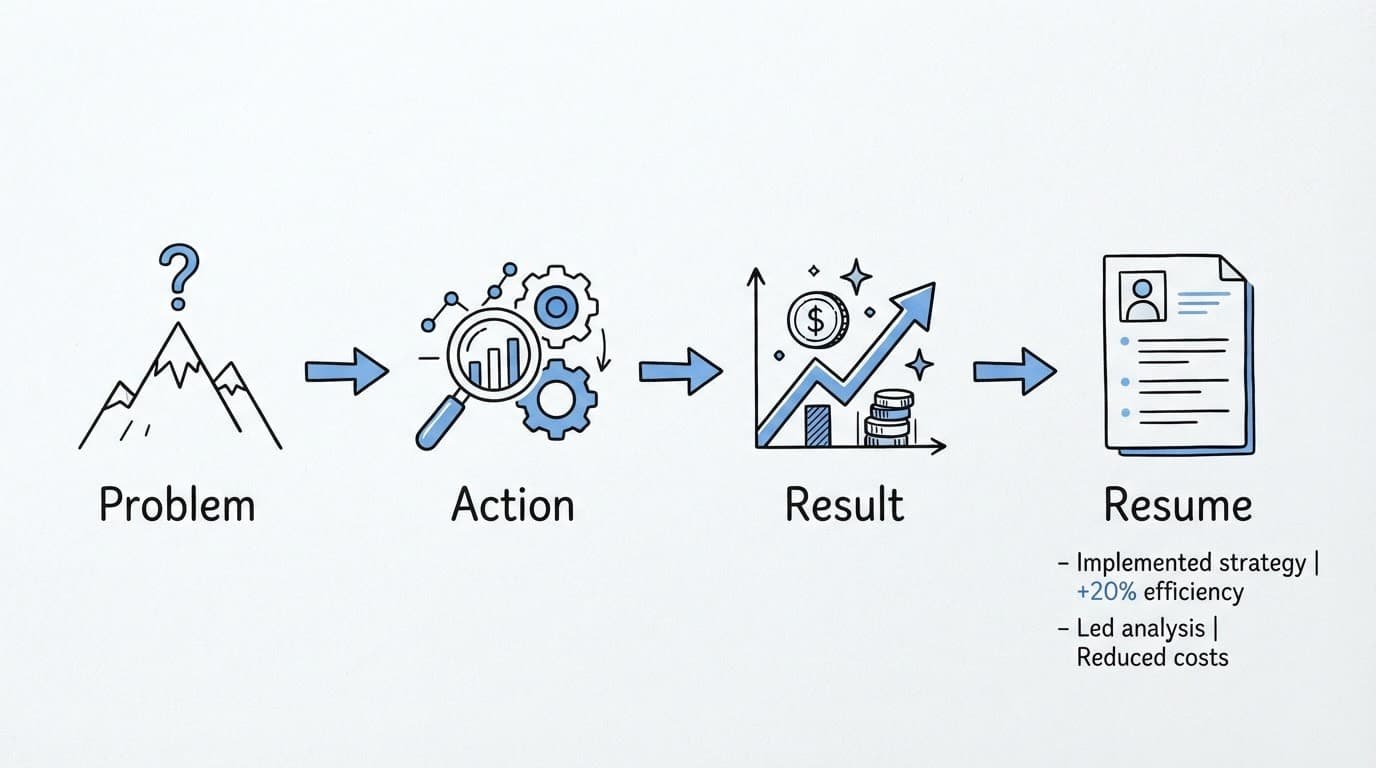
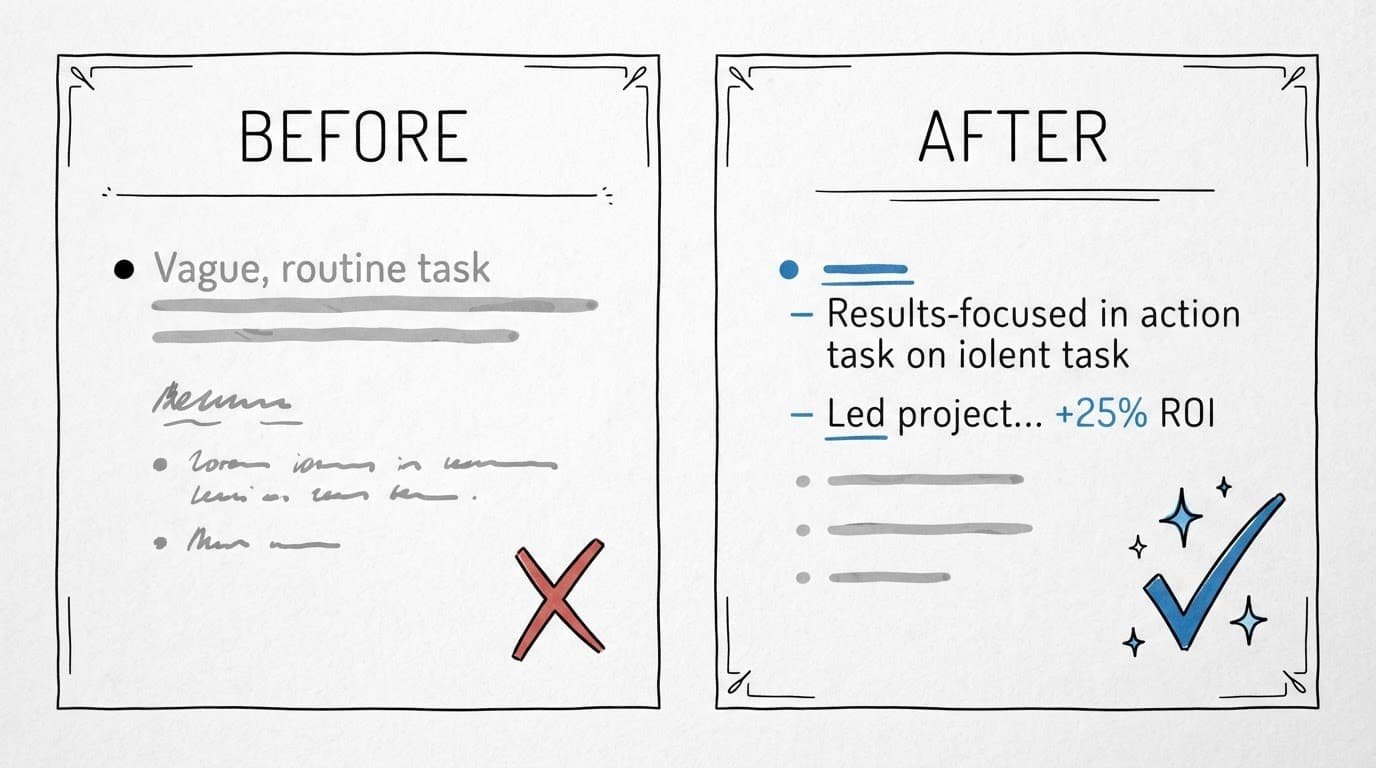
Use consulting resume examples to compare vague bullets with evidence-led alternatives. Strong consulting resume bullet points read like compact case studies. They explain what you analyzed, what you changed, and what the work produced for the client or internal stakeholder.
Write with a problem, action, result structure
Use action verbs to lead each bullet, then add the scope of your work and a defensible outcome. Useful options include analyzed, diagnosed, modeled, redesigned, negotiated, synthesized, and implemented.
A practical structure is:
[Action] [scope of work] to address [business problem], producing [measurable results].
For instance, replace “Supported a supply-chain project” with a truthful, evidence-led structure such as: “Mapped [number] distribution sites, identified [verified savings opportunity], and presented a phased rollout to executive sponsors.”
For financial modeling and data analysis engagements, identify the model or dataset examined and connect it to a decision or outcome. Numbers give a claim weight, but only when you can explain them in an interview. Keep a private record of the baseline, calculation, client approval, and your role in the result.
Quantify client impact without padding
Choose a measure that demonstrates quantitative impact for the engagement. Cost savings, revenue opportunity, cycle-time reduction, adoption rate, project budget, team size, or number of sites can all show scale.
Where relevant, client management can appear through stakeholder coordination, workshops led, or executive presentations. These details show how you managed the client relationship without overstating ownership. If confidentiality prevents sharing a dollar value, state the operational outcome. You might cite the number of workshops led, stakeholders interviewed, systems assessed, or markets analyzed. Avoid percentages without a baseline, and don’t claim a client outcome that occurred after your engagement ended unless you can verify it.
Protect confidentiality without weakening the story
Client confidentiality does not require empty resume bullets. An NDA changes the level of detail you can share. It doesn’t remove the need to show context, scope, and verified outcomes without revealing protected details.
Describe the client by relevant attributes
Do not name a client covered by an NDA or imply permission you don’t have. Instead, identify the industry, geography, ownership type, and business challenge when those details are safe to share.
“Private-equity-backed logistics provider” is more useful than “confidential client.” Pair that description with your contribution: “[Analyzed] [operational data] for a [industry descriptor] to support [decision], identifying [verified result].”
Never include unpublished financial results, proprietary product plans, customer data, or screenshots. The hiring manager should understand your work without seeing information that belongs to the client.
Separate freelance consulting from employment history
As a freelance consultant, list your practice or “Self-Employed” as the employer in your work experience. Include dates, a clear title, selected engagements, and personally owned responsibilities, including client management and project management. Choose engagements that support your target job, and show soft skills with safe examples such as stakeholder communication, facilitation, or relationship management.
When leaving a major consulting firm, keep the firm as one continuous employment record. Project subheadings can show specialization, while promotions, team leadership, executive communication, and workstream ownership demonstrate career growth and leadership experience.
Make your resume readable for ATS and people
A polished consulting experience resume still has to pass through applicant tracking systems before a recruiter reads it. Keep the design plain enough to parse, then make the content sharp enough to earn attention.
Match the job description without copying it
Use a single-column layout, standard headings such as work experience and professional summary, readable fonts, and straightforward dates. Good resume formatting also means avoiding tables, text boxes, graphics, and contact details in headers or footers. Indeed’s ATS resume format guidance also recommends clear headings and job-description keywords used in context.
Candidates can consult resume templates, but should choose simple designs that parse cleanly instead of copying decorative layouts.
Tailor the evidence and language of each bullet with action verbs, not only the skills list. A strategy role may value market assessment, financial modeling, and executive communication. An operations consulting role may prioritize implementation, process metrics, and cross-functional delivery.
AI can help compare a job description with your draft, but you remain responsible for every fact. The ATS-safe resume layout guide from CareerScribeAI offers practical formatting advice alongside its AI Resume Builder. Its Cover Letter Generator and Interview Prep Tools can help carry verified examples into applications and interviews, but check every suggestion against your facts.
Frequently Asked Questions
How should consulting experience appear on a resume?
List the consulting firm or freelance practice as the employer, followed by your title, location, and dates. Organize selected projects beneath that role to show relevant expertise without presenting every engagement as a separate job.
What should consulting resume bullet points include?
Strong bullets explain the business problem, what you did, the scope of your work, and the result. Lead with an action verb and include a verified metric whenever possible.
How can I quantify consulting impact without exaggerating?
Use defensible measures such as cost savings, revenue opportunity, cycle-time reduction, adoption rate, budget, team size, or number of sites. Keep records of the baseline, calculation, client approval, and your role so you can explain every figure in an interview.
How do I describe confidential client work?
Do not name an NDA-protected client or share proprietary information. Instead, describe safe attributes such as industry, geography, ownership type, and business challenge, then explain your contribution and verified operational outcome.
How can I make a consulting resume ATS-friendly?
Use a single-column layout, standard section headings, readable fonts, straightforward dates, and job-description keywords in context. Avoid tables, text boxes, graphics, and contact details in headers or footers, while keeping every claim accurate.
Final thought
Your strongest resume proves how you think and what changed because of your work. Clear project context, accurate metrics, and measurable results turn client impact into evidence.
Keep every claim truthful enough to explain under pressure. That discipline makes your experience more credible to both screening software and the person making the hiring decision.