

A recruiter can’t value experience they can’t understand in 10 seconds. During a military-to-civilian transition, this resume must translate responsibility, leadership, and technical work into business-relevant outcomes.
Service records document your career, but they aren’t resume copy to transfer word for word. Start with a civilian employer’s needs, then select evidence from your military experience that answers them and focuses your job search.
Key Takeaways
- Start with a specific civilian target role and tailor the resume to the recurring requirements in relevant job postings.
- Translate military titles, acronyms, and duties into recognizable civilian functions, then show scope, action, and measurable results.
- Use a clean, reverse-chronological or hybrid format with standard headings, ATS-friendly design, and focused bullets.
- Use TAP, SkillBridge, VA resources, and VR&E when eligible to strengthen resume development and the broader transition plan.
- Review every resume for clarity, accurate security clearance details, relevant keywords, consistent dates, and agreement with the matching cover letter.
Start Your Military Transition Resume With the Target Job
Effective resume writing starts by defining the target role at the beginning of your job search. Don’t write one generic document for every application. Choose a job title, study several postings for it, and compare their recurring requirements. Mark repeated terms such as “asset management,” “team leadership,” “network troubleshooting,” “quality control,” or “supply chain.”
Then build your resume around the requirements you can prove. For logistics operations, foreground scheduling, accountability, process improvement, personnel supervision, and equipment readiness as evidence of leadership skills. For IT, lead with technical skills, platforms, certifications, incident response, and systems administration. Show communication, teamwork, and adaptability through results, not as unsupported soft skills.
Use the job posting to guide your wording, and align each job application with a matching cover letter when both accurately reflect the posting:
- Translate military skills into accurate civilian language. Replace unit-specific titles with recognizable civilian functions instead of copying every military term.
- Spell out an acronym once only when it adds useful technical context.
- Move the strongest transferable skills into the summary statement and first bullets.
- Match terms from the posting only when they accurately describe your experience.
For example, the Army 92Y Unit Supply Specialist role is a military occupation specialty that can be presented as an “inventory and asset-control specialist.” The bullets should then explain inventory control, audit results, equipment accountability, training responsibilities, and process-improvement results.
Translate Military Experience Into Civilian Language
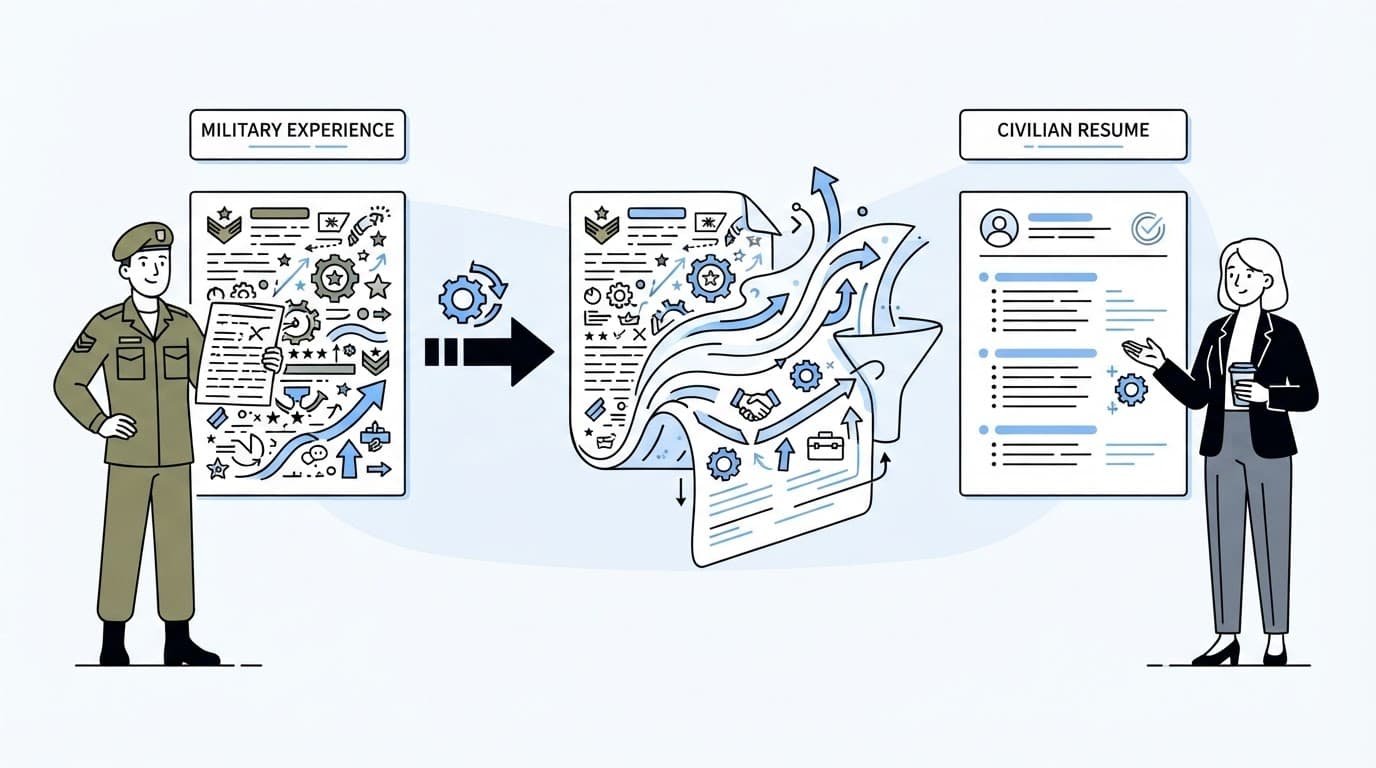
Rank shows progression, but it doesn’t tell a hiring manager what you did or the value you delivered. Put your military branch and rank in the employer line or a brief parenthetical. Lead each role with a title that describes its civilian function, such as operations supervisor, logistics coordinator, maintenance manager, training lead, or network support technician.
Your bullet points need scope, action, and result. Routine duties rarely separate one veteran resume from another. Show the size of the team, equipment portfolio, budget, project timeline, inspection standard, training load, or readiness goal you managed.
“Supervised personnel and maintained equipment” lacks context. A stronger bullet states, “Led a 12-person team maintaining 40 vehicles to regulated inspection standards, raising readiness to 98%.”
Numbers make responsibility easier to judge. Use accurate figures from evaluations, award citations, training records, hand receipts, project documents, or performance reports. If exact numbers aren’t available, describe the scale honestly, such as multi-site operations, shift coverage, regulated equipment, or cross-functional coordination.
List an active security clearance when it is relevant and disclosure rules allow it. State the clearance level and current status, but leave out classified missions, operational details, sensitive locations, and identifying information. Also include industry-recognized credentials, such as CompTIA certifications, PMP certification, CDL licenses, or technical coursework that validates your technical skills.
Use a Clean, ATS-Friendly Resume Format
A professional resume needs simple, ATS-friendly formatting. Applicant tracking systems often struggle with tables, text boxes, graphics, photos, unusual fonts, and dense paragraphs. Use a reverse-chronological format when your target role follows your service background. A hybrid format works better when changing fields or when your skills need a clearer bridge.
Keep most resumes to one page early in your career, or two pages for substantial technical, leadership, or specialized experience. Use clear headings, standard fonts, consistent dates, and three to five focused bullets under each relevant position.

A practical order is contact information, a targeted summary statement, skills, professional experience, education, and certifications. Skip photos, personal details, dense paragraphs, and a complete inventory of awards. Mention awards only when they prove performance, leadership, or technical achievement relevant to the role.
Federal applications follow different rules. They often require detailed work history, hours worked, supervisors, and other fields. Check the VA careers and employment hub and use the USAJOBS format when a posting requests it.
CareerScribeAI can speed up the tailoring stage. Its AI Resume Builder, Cover Letter Generator, and Interview Prep Tools help you compare your experience against a specific posting without replacing your final fact check.
Use Transition Programs Before You Separate
In 2026, transitioning military personnel should begin with the Transition Assistance Program (TAP). Start while you still have access to transition workshops and employment resources. Bring a draft resume to the workshop, then revise it after receiving feedback. The SkillBridge program can also provide recent civilian experience. Describe the work in business terms rather than presenting it only as a military assignment.
The VA education and training resources list TAP, SkillBridge, and career-related benefits in one place. Together, these resources support the broader military-to-civilian transition and can guide a focused job search. They may also help you explore connections with veteran-friendly employers, but no program guarantees placement. For broader career planning, VA’s Chapter 36 Personalized Career Planning and Guidance offers no-cost support that can include resume writing and interview preparation.
Veterans with service-connected disabilities should also review Veteran Readiness and Employment. VR&E may provide resume development and job-seeking support alongside employment and training services for eligible veterans.
Review Every Resume Before You Apply
Read the finished document as a hiring manager at a civilian employer would. If a term requires military knowledge, translate it or remove it.
Before submitting, check that you have:
- Used the target job title and relevant skills naturally.
- Replaced acronyms, jargon, and unexplained rank references.
- Used strong action verbs in the most important bullet points and quantified the responsibility or results they show.
- Demonstrated relevant soft skills through examples of communication, teamwork, or adaptability.
- Proofread dates, certification names, security clearance wording, level, and status, plus contact details. Don’t include sensitive information.
- Confirmed that the evidence in your matching cover letter agrees with the resume.
A tailored resume should make your experience feel familiar, not mysterious. Clear language gives employers a direct view of the responsibility you have already earned.
Frequently Asked Questions
How do I translate military experience into civilian resume language?
Replace unit-specific titles and acronyms with civilian functions that describe what you actually did. Focus each bullet on the scope of your responsibility, the action you took, and the result you achieved.
Should I use one resume for every civilian job application?
No. Start with a specific target role and tailor the summary, skills, and experience bullets to the requirements that appear repeatedly in relevant postings. Use keywords only when they accurately describe your experience.
How long should a military transition resume be?
Keep the resume to one page early in your career and use two pages when you have substantial technical, leadership, or specialized experience. Include only the experience and evidence most relevant to the target role.
What resume format works best for veterans?
A reverse-chronological format usually works well when the civilian role follows your military background. A hybrid format can provide a clearer bridge when you are changing fields or need to foreground transferable skills.
Should I include my security clearance on my resume?
Include an active security clearance when it is relevant to the target role and disclosure rules allow it. State the clearance level and current status, but do not include classified missions, sensitive locations, or identifying information.
Final Thoughts
Your military experience contains strong evidence of discipline, technical ability, and leadership. A strong military transition resume turns that evidence into outcomes a civilian employer can recognize.
Focus on the job you want, quantify your responsibility, and remove language that slows the reader down. The result is a resume that opens the door to a meaningful civilian career.