


Hiring managers can scan a healthcare resume in seconds, so job titles and routine duties rarely carry an application alone. Your resume needs to show the scale, quality, and safety of the care you provide.
A strong healthcare resume connects your daily work to patient outcomes, operational improvements, and the requirements of the role. It gives recruiters evidence that healthcare professionals can handle the caseload, follow protocols, and contribute to a high-performing care team.
Key Takeaways for a Stronger Application
- Lead with measurable results, such as patient volume, quality metrics, patient satisfaction, documentation accuracy, or safety improvements.
- Use the same clinical terms found in the job description when they match your real experience.
- Keep protected health information off your resume. Describe populations and outcomes without identifying any patient.
- Put certifications and licenses where recruiters can find them quickly.
- Choose a simple reverse-chronological format that applicant tracking systems can read without errors.
- Tailor every application, especially when applying to competitive hospital systems or specialty practices.
Build the Core Sections of Your Healthcare Resume
A clear structure lets the reader find your qualifications before they lose attention. Start with standard section headings, use consistent dates, and avoid graphics, text boxes, and columns that may not parse correctly. This structure works across roles, including allied health and health care administration.
Start with contact information and a focused summary
Place your name, phone number, professional email address, city and state, and LinkedIn URL at the top. You don’t need a full street address, photo, marital status, references, or the phrase “references available upon request.”
Follow with a two- or three-sentence professional summary. Skip the outdated objective statement. Instead, name your role, years of relevant experience, clinical setting, strongest credentials, and a result that fits the target position.
For example:
Registered Nurse with six years of telemetry and step-down experience in high-acuity hospital settings. BLS and ACLS certified, with a record of managing complex patient assignments, improving discharge education, and maintaining accurate electronic documentation.
This summary works because it gives the recruiter a clinical specialty, relevant qualifications, and evidence of performance without making inflated claims.
Present work history in reverse chronology
List your current or most recent job first. Include employer name, location, job title, and employment dates. Under each role, add three to six bullets that show work scope and outcomes.
Early-career candidates can include clinical experience from rotations, externships, practicums, volunteer patient care, or relevant coursework. More experienced professionals should prioritize the last 10 to 15 years, then shorten earlier roles unless they directly support the position.
Use specific clinical language where it belongs. An emergency department nurse might reference triage, medical terminology, EHR documentation, discharge education, telemetry, sepsis screening, or interdisciplinary rounds. A medical assistant could highlight vital signs, specimen handling, prior authorizations, referrals, and room turnover.
Find Clinical Impact Before You Write
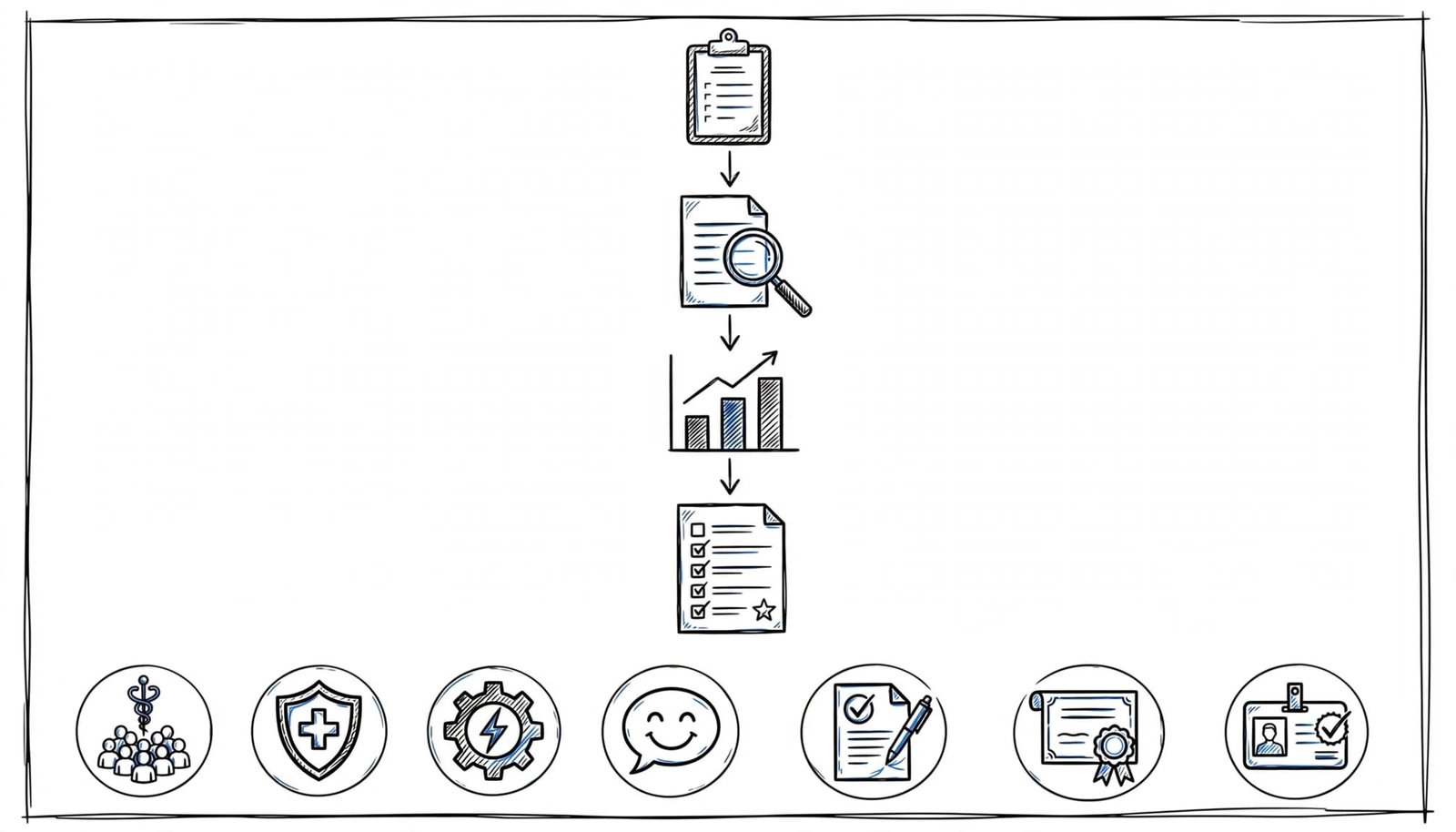
You probably have stronger evidence than you think. The problem is that healthcare work often happens through repeated tasks, and those tasks can feel difficult to quantify. Begin by reviewing schedules, quality reports, performance evaluations, audit feedback, and recognition notes.
Measure workload, efficiency, and accuracy
Numbers help recruiters understand the level of responsibility behind a title. Use figures you can verify or reasonably estimate from established records.
Useful measures include:
- Average patients seen or supported per shift, day, week, or month.
- Number of beds, providers, units, locations, or staff members supported.
- Documentation completion rates, charge capture accuracy, or chart-audit results.
- Reduced delays in check-in, rooming, discharge, prior authorization, or lab processing.
- Training volume, such as new hires precepted or team members trained on a workflow.
A patient care technician who writes “assisted nurses with patient care” leaves the scope unclear. “Provided mobility, hygiene, and vital signs support for 12 to 16 patients per shift on a 32-bed medical-surgical unit” gives a hiring manager a useful picture.
Show quality and safety without overstating credit
Quality metrics matter in every clinical setting because they help show how work supports patient outcomes. However, don’t claim sole credit for a team result. Use accurate wording such as “contributed to,” “supported,” “participated in,” or “helped implement” when the outcome came from a shared effort.
You may be able to reference improvements in fall prevention, medication reconciliation, infection-control adherence, patient education, readmissions, patient satisfaction, or documentation compliance. Connect your actions to the result without including protected information.
For example: “Participated in bedside shift-report adoption, helping the unit raise patient communication scores over two reporting periods.”
Never invent a percentage because it sounds impressive. If you don’t have the exact figure, state the verifiable action and scope instead: “Completed weekly chart audits for a 10-provider outpatient practice and shared findings with clinical leadership.”
A credible operational detail is more persuasive than a precise number you cannot support in an interview.
Turn Duties Into Resume Achievements
Duty-only bullets describe what nearly every qualified candidate does. Achievement bullets show how you performed the work, how much you handled, and what improved as a result.
Use an action, scope, and outcome formula
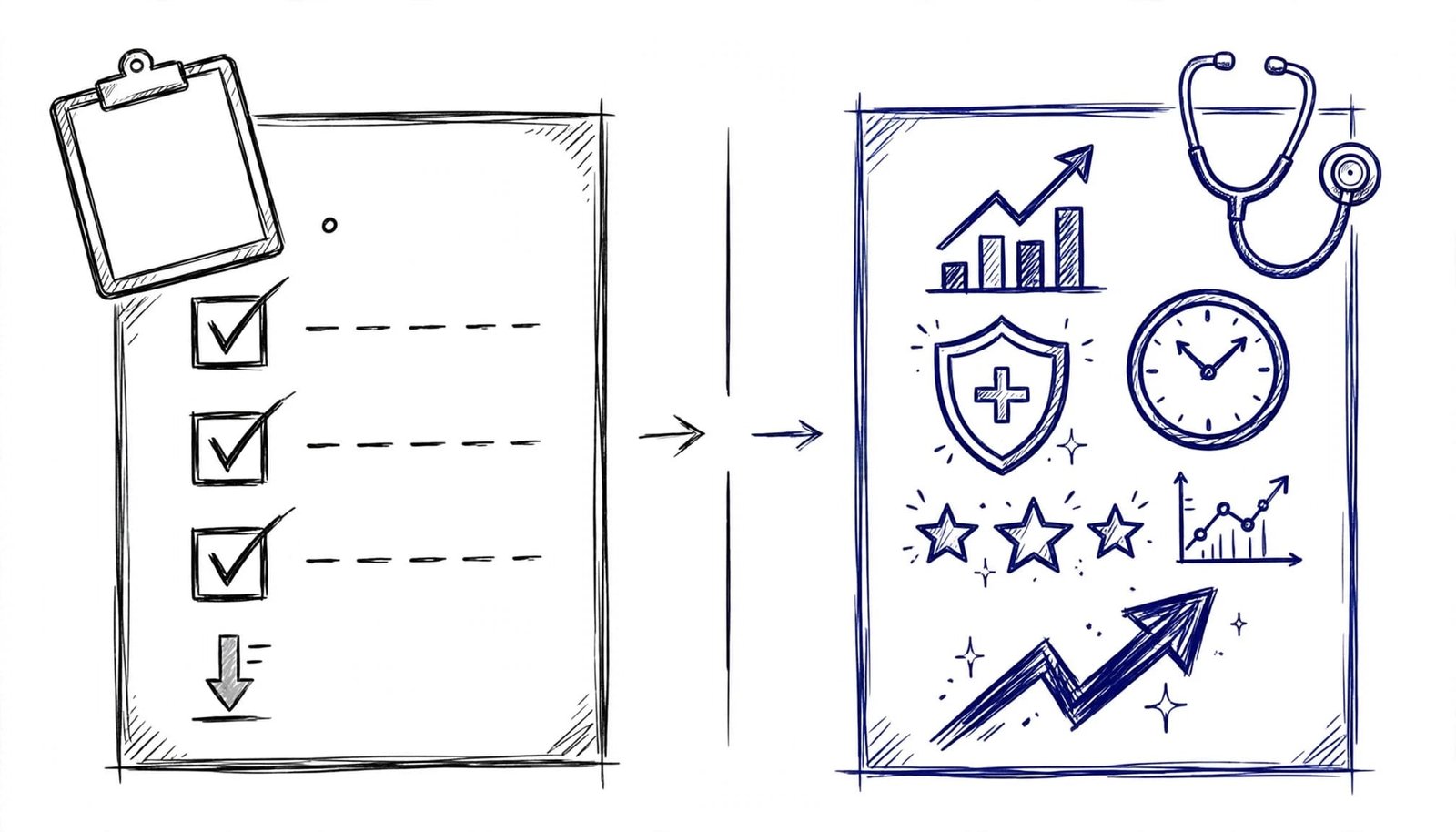
Build each bullet with a strong verb, the clinical task or project, meaningful scope, and the outcome. When reliable measures exist, connect accomplishments to quality metrics. This formula keeps bullets concise while giving recruiters evidence.
Action verb + responsibility + scale or method + outcome
Compare these examples:
| Duty-based bullet | Clinical-impact bullet |
|---|---|
| Responsible for patient education. | Delivered discharge education to medical-surgical patients and caregivers, using teach-back documentation to support safe transitions of care. |
| Managed appointment scheduling. | Coordinated scheduling, referrals, and prior authorizations for a multi-provider specialty clinic, reducing incomplete appointment documentation. |
| Helped with infection control. | Reinforced isolation precautions and PPE workflows during daily rounds, contributing to consistent unit compliance. |
| Entered patient information. | Maintained timely EHR documentation for high-volume outpatient visits while meeting internal chart-completion standards. |
The stronger version doesn’t need exaggerated language. It makes the work and its impact visible.
Choose action verbs that fit your role
Healthcare resumes benefit from verbs that show ownership and judgment. Use “assessed,” “coordinated,” “administered,” “monitored,” “educated,” “triaged,” “documented,” “reconciled,” “implemented,” “precepted,” or “collaborated.”
Avoid repeating “responsible for” at the start of every bullet. Also avoid vague claims like “excellent patient care” or “team player.” Prove those strengths with actions. A bullet about coordinating with pharmacy, social work, and physicians to close discharge barriers says far more than a soft-skills label.
Tailor a Healthcare Resume for Applicant Tracking Systems
Applicant tracking systems compare your application with the employer’s stated needs. They can’t evaluate experience that isn’t clearly described, even when you are qualified.
Match the job description honestly
Read the job description line by line. Circle required credentials, patient populations, clinical systems, care settings, and recurring responsibilities. Then reflect accurate matches in your professional summary, skills section, and work history.
For health care administration roles, include relevant administrative terms. Add specific language such as medical provider coordination when it accurately reflects your background.
If a posting asks for “care coordination,” don’t substitute a distant phrase such as “helped with discharge.” Write a truthful bullet that uses the employer’s language: “Coordinated discharge plans with nursing, case management, and family caregivers.”
CareerScribeAI’s AI Resume Builder and job-search toolkit can compare your resume with a specific job description, identify missing relevant terms, and tighten achievement statements. Treat its suggestions as a review step, then confirm every claim reflects your actual experience.
Keep the resume format easy to parse
Use standard headings such as “Professional Summary,” “Work Experience,” “Education,” “Licenses and Certifications,” and “Skills.” Choose a simple resume template, readable font, clear bullet points, and one consistent date style.
Submit the file type requested in the application. If the posting doesn’t specify, a PDF usually preserves spacing and layout. Keep a DOCX version ready because some employer portals request Word files or parse them more reliably.
Avoid tables, icons, photos, headers with important details, and skill-rating bars in the uploaded version. These choices may look polished but can separate keywords from the rest of your work history.
Separate Clinical Skills From Non-Clinical Strengths
A skills section helps a recruiter quickly confirm core qualifications, but it cannot replace experience-based bullets. Group skills so the reader sees both technical readiness and how you work with others.
List clinical and technical capabilities
Select hard skills that match the role rather than adding every tool or procedure you have encountered. Depending on your background, these may include EHR platforms, medication administration, phlebotomy, sterile technique, specimen collection, wound care, telemetry, triage, care planning, ICD-10 coding, insurance verification, or prior authorization. Allied health roles may also require specialty-specific technical capabilities.
Use the exact platform name when relevant. “Epic EHR” is stronger than “computer skills.” Similarly, “Cerner PowerChart” is more useful than “medical software.”
Include professional strengths with proof
Soft skills support safe care and reliable operations. Communication, prioritization, conflict resolution, cultural awareness, time management, and teamwork matter, especially in patient-facing roles.
Still, don’t fill your skills section with generic traits. Demonstrate them through evidence in your work history. For instance, a charge nurse can show leadership by describing staffing coordination, escalation support, or precepting new employees. A front-office coordinator can show communication through referral follow-up, patient scheduling support, and health care administration responsibilities.
Make Licenses, Certifications, and Education Easy to Verify
Put certifications and licenses in a dedicated section near the top if they are a condition of employment. This is especially important for registered nurses, allied health professionals, and roles with state-specific requirements.
Include complete credential details
List the license name, state, license number if you’re comfortable sharing it, and expiration date when appropriate. Add compact details that help a recruiter confirm eligibility.
For example:
- Registered Nurse, State of Texas, active through May 2028
- Basic Life Support, American Heart Association, expires August 2027
- Certified Medical Assistant, AAMA, active through January 2029
The American Heart Association’s BLS training covers CPR and AED skills for prehospital and in-facility environments. For roles requiring advanced emergency response credentials, review the organization’s ACLS course options and list the certification only after completion.
Keep education relevant and current
Include your degree, school, graduation year if recent, and honors that support your application. A new graduate may also list relevant clinical rotations with the unit type, specialty, and practical skills gained.
Experienced candidates can keep this section brief. Continuing education belongs on the resume when it relates directly to the target role, such as oncology, behavioral health, wound care, informatics, or population health.
Protect Privacy While Demonstrating Results
Healthcare hiring managers expect HIPAA compliance and a clear understanding of confidentiality. Never include patient names, dates of birth, medical record numbers, case narratives, photographs, or details that could identify a patient.
Use broad, accurate descriptions instead. Write “adult oncology patients,” “pediatric ambulatory population,” or “high-volume urban urgent care clinic.” You can name the unit, specialty, and outcome without disclosing protected health information.
Also protect your credibility. Before submitting, proofread carefully for identifying details, unsupported results, and inconsistent claims. Don’t report internal quality data if you were told it is confidential, and don’t claim clinical outcomes that you cannot explain. During an interview, you should be able to describe the context, your role, the action you took, and what changed.
CareerScribeAI’s career tools and tailored application support can also help turn approved details into a role-specific resume, cover letter, and interview stories. Use the Cover Letter Generator to address a career transition or employment gap, then practice outcome-focused examples with its Interview Prep Tools.
FAQ About Healthcare Resumes
How many pages should a healthcare resume be?
Most early-career and mid-career job seekers should aim for one page. Use two pages when you have 10 or more years of relevant experience, leadership responsibilities, specialty credentials, research, or significant clinical accomplishments. Keep your resume to two pages unless an employer requests a curriculum vitae.
Should I include clinical rotations if I have little experience?
Yes. Nursing students, recent graduates, and career changers should include relevant clinical experience. Name the facility type, unit or specialty, dates, and skills you performed under supervision. Focus on direct patient care, documentation, teamwork, and technologies that match the role.
What quality metrics belong on a healthcare resume?
Use verifiable measures that show your real scope and results. Patient caseload, chart-completion rates, audit scores, appointment volume, discharge turnaround, training participation, patient satisfaction trends, and safety initiatives are all useful when you can verify them.
Put Evidence Behind Every Clinical Claim
A healthcare resume earns attention when it turns daily responsibilities into clear proof of contribution. Start with a clean format, match the employer’s language, and show your role in patient care, quality, safety, and operational performance.
The strongest applications don’t rely on generic claims. They give hiring managers credible evidence that you can deliver clinical impact in their setting.