


The hardest interview questions often look harmless. Learning how to craft a strong greatest accomplishment interview answer is essential because this common prompt can stop even the most qualified candidates in their tracks. Many professionals struggle to move past the search for the perfect story, often finding it difficult to articulate their proudest accomplishment in a way that resonates with a hiring manager.
In 2026, employers want a brief proof case. They want to hear what you did, why it mattered, and how that success connects to the role you are seeking. Once you use that lens to frame your experience, your answer becomes much clearer and more impactful.
Key Takeaways
- Focus on relevance: Choose a story that aligns directly with the specific needs of the job description rather than the achievement that sounds most impressive in a vacuum.
- Use the STAR method: Structure your response into Situation, Task, Action, and Result to ensure your answer remains concise, logical, and evidence-based.
- Quantify your impact: Always conclude your story with measurable metrics, such as time saved, money earned, or improved efficiency, to provide tangible proof of your value.
- Define your individual role: While teamwork is important, prioritize your specific contributions to distinguish your personal impact from the collective success of your group.
- Keep it concise: Aim to deliver your entire story in under 90 seconds to maintain the interviewer’s engagement and ensure your key points are easily remembered.
Why hiring teams ask this question
This question is not about bragging. It is about judgment and is frequently used by hiring managers as one of the most important behavioral interview questions to assess candidate fit.
A hiring manager wants to see what you consider to be meaningful work. Do you talk about a flashy moment with no outcome, or do you choose a result that solved a problem, improved a process, or helped people? That choice says a lot about how you operate.
Your response also demonstrates whether you can explain your impact under pressure. A strong greatest accomplishment interview answer is concise, concrete, and relevant to the specific job description. It clearly defines your role, rather than just the collective win of your team. By including specific details, such as a measurable result or a key performance metric, you display the communication skills necessary to stand out. When you craft a well-structured greatest accomplishment interview answer, you effectively connect your past success to the needs of the company.
This approach aligns with the advice found in the Indeed guide to this interview question. Hiring managers are not asking for your life story. They want a clear example of how you think and what you can deliver.
This matters more now because early screens move fast, and interview notes often pass between recruiters, hiring managers, and panels. A vague answer gets lost in the shuffle. A sharp answer provides them with something easy to remember, such as reduced delays, better retention, or higher client satisfaction.
Use a simple framework and keep it under 90 seconds
Select one story that aligns perfectly with the job description. To structure your response effectively, utilize the STAR method, which breaks your narrative down into the four essential components of situation, task, action, and result.
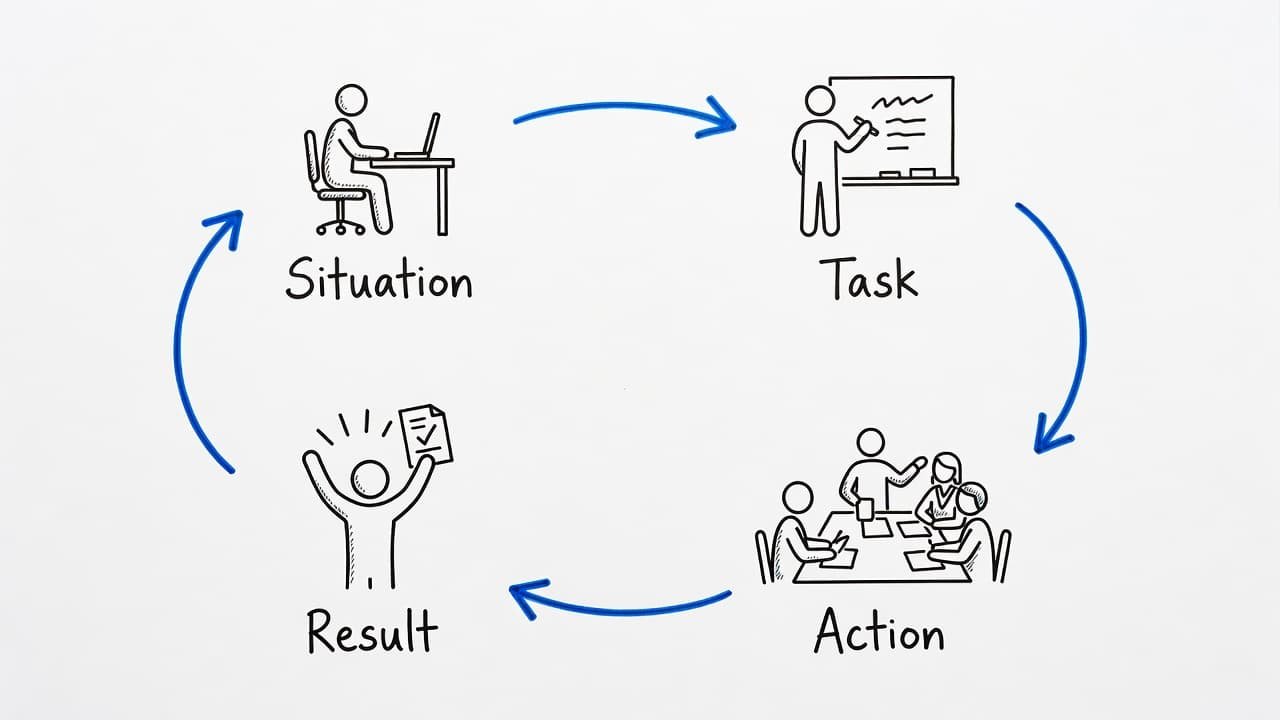
- Context: Start with the setting in one sentence. Name the job, project, or problem.
- Challenge: Describe the obstacle. Keep it short and real.
- Action: Focus on your specific steps. Use strong verbs and skip extra background.
- Result: End with the outcome. Add quantifiable results such as time saved, money earned, errors cut, or improved customer satisfaction.
The STAR method remains the gold standard for interview preparation because it keeps your answer organized and honest. If you are preparing for multiple interviewers, these expert tips for panel interviews reinforce the same rule: short, structured stories win because they help the team track your logic.
Choose the story that best fits the specific role, rather than the story that sounds most impressive on paper.
Selecting the right professional achievement is vital. If you are interviewing for a client-facing position, a story about resolving a difficult conflict often beats an unrelated academic award. If you are applying for operations, a narrative centered on process improvement will provide more relevant examples than a creative marketing campaign.
Finish with one line that points forward. You might say, “I want to bring that same process mindset here,” or “That project prepared me for the cross-team collaboration this role requires.” That last line turns a past win into a strong statement of present fit.
CareerScribeAI can help you identify your strongest stories. Its AI Resume Builder often surfaces the quantifiable results you might have forgotten. The Cover Letter Generator can reveal similar themes in your application, while the Interview Prep Tools help you transform those experiences into a concise, spoken answer. For recruiter calls, keep a shortened version ready because tips for answering phone interview questions emphasize the importance of quick, proof-based responses.
Sample answers for students, early-career hires, and managers
Many candidates worry they do not have a story that is impactful enough. That fear is common, and this Reddit discussion about greatest achievement answers shows how often people get stuck there. Your story does not need to be famous; it needs evidence. These narratives serve as relevant examples of your proudest accomplishment, showing recruiters that you can deliver value in any professional setting.
If you’re a student or early in your career
A student can leverage class projects, internships, or volunteer work to showcase transferable skills if the example demonstrates personal ownership.
- “My best accomplishment was leading a four-person capstone project that had fallen behind. I reorganized the work into weekly targets, took over client updates, and built the final dashboard. We finished on time, earned the top grade in the course, and the client adopted part of our model.”
- “In my internship, I noticed repeat support tickets were taking too long. I created a simple response library and updated the tagging rules with my supervisor. Within six weeks, average response time dropped by 18 percent, and the team kept using the system after I left.”
If you have limited experience, choose stories that highlight your initiative. Employers forgive small scale, but they do not forgive vagueness.
If you’re mid-career or leading people
More experienced candidates need to show scope, judgment, and the ability to drive results through others. Use these stories to demonstrate your leadership potential and your ability to thrive when overcoming challenges.
- “My greatest accomplishment was rebuilding our new-hire onboarding after turnover spiked. I mapped the first 30 days, trained team leads on check-ins, and added a skills tracker. After two quarters, first-year retention improved by 22 percent, and ramp time dropped by three weeks.”
- “As a department manager, I inherited a reporting process that took two days each month. I worked with finance and IT to automate the data pull, then retrained the team on review steps. Reporting time fell to three hours, and leaders got cleaner numbers before decision meetings.”
Use these as models, not scripts. Match your example to the job post. The same match and proof approach also helps when answering why should we hire you, as both that question and your greatest accomplishment interview answer test how well you connect past results to future value.
If you want to hear the pacing of a strong response, this video example of accomplishment answers can help you practice your delivery.
Common weak answers and how to fix them
A quick comparison makes the patterns of successful candidates easier to spot. When preparing your answer, use the STAR method to ensure your response highlights your problem-solving skills and demonstrates a strong work ethic.
| Weak approach | Strong approach |
|---|---|
| Tells a long backstory | Gets to the problem fast |
| Uses “we” for everything | Makes your individual role clear |
| Ends with effort | Ends with a quantifiable result |
| Sounds impressive but unrelated | Aligns with the target role and company culture |
The goal is not to sound grand. The goal is to sound credible. By connecting your example to the core values of the organization, you show the interviewer that you are not just a high achiever, but a great fit for the team.
Also, avoid choosing a personal milestone unless it clearly supports the job requirements. Running a marathon is an impressive feat, but it usually loses to a professional or academic example that showcases a measurable impact on a project or goal. Keep one full version of your story for live interviews and one shorter version for phone screens. Then, use the STAR method to practice until your narrative sounds natural, conversational, and authentic rather than scripted or memorized.
Frequently Asked Questions
Can I use a personal achievement, like running a marathon, as my answer?
It is generally best to stick to professional or academic examples that directly translate to the workplace. While personal milestones show discipline, they rarely demonstrate the specific problem-solving and technical skills an employer needs to see for the role.
What if I don’t have a major accomplishment to share?
Focus on small-scale initiatives where you took ownership and saw a positive change, such as fixing a broken process or improving team organization. Employers value initiative and measurable improvement more than the perceived “grandeur” of the project.
How much time should I spend on the context of my story?
Keep your context and background information to a single, opening sentence that sets the scene. The majority of your time should be spent detailing the actions you took and the quantifiable results you achieved.
Conclusion
Crafting a strong greatest accomplishment interview answer does not have to be a complicated process. By picking one focused story, detailing your specific actions, and concluding with measurable results, you provide the hiring team with the evidence they need.
As you prepare, remember that sharing relevant examples is the best way to demonstrate your skills within a professional workplace context. When you clearly connect your past successes to the needs of the position, you effectively prove your value to the company. Take the time to identify the proudest accomplishment that best aligns with the target role and use it to leave a lasting positive impression.