

A resume tells employers what you’ve done. An interview work portfolio lets them see how you think, solve problems, and communicate results.
The strongest portfolio is not a scrapbook of every assignment. It is a focused set of evidence that matches the role, supports your resume, and gives you clear stories to discuss in the room. Start by deciding what the interviewer should remember about you.
Key Takeaways
- Select work that proves the skills named in the job description.
- Build short case studies that show your role, decisions, and measurable outcomes.
- Remove confidential details, client data, and work you cannot discuss freely.
- Bring a digital version and a small, polished print backup when appropriate.
- Practice presenting each example in under two minutes.
Build an Interview Work Portfolio Around Evidence
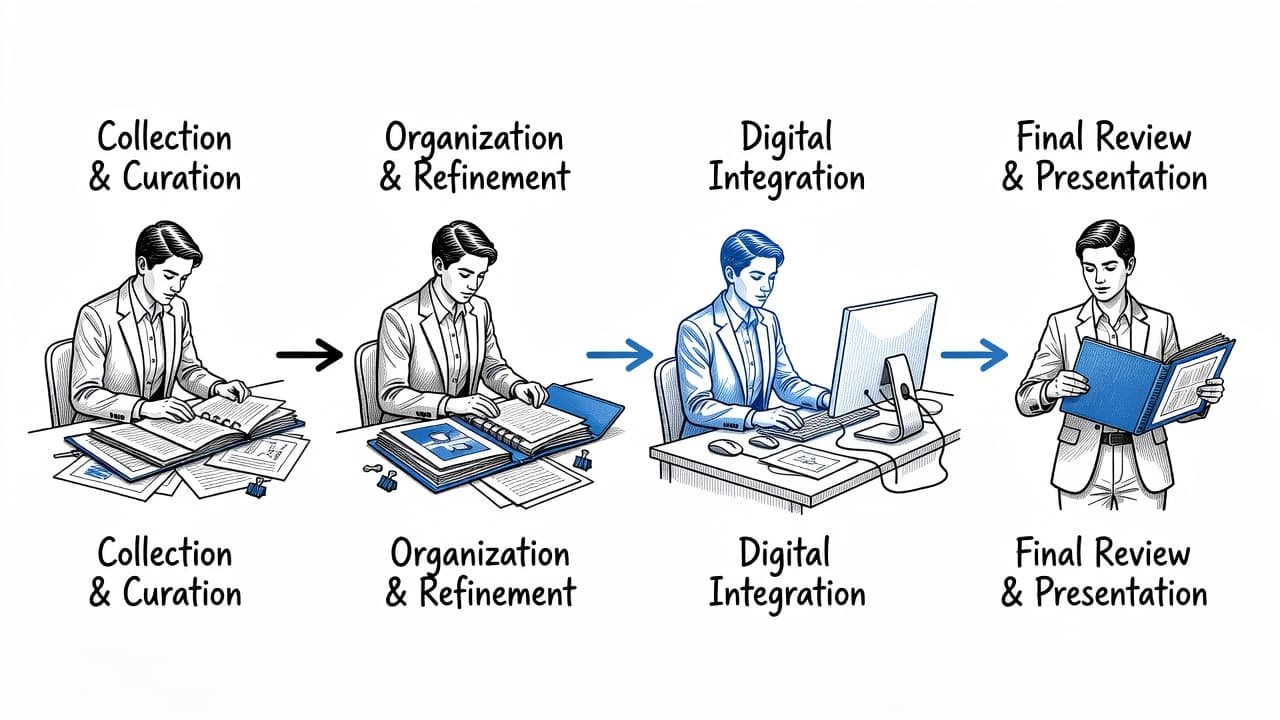
Choose six to eight pieces at most. A hiring manager should grasp your value quickly, not sort through 30 pages to find it. Review the job description, then highlight repeated skills, tools, responsibilities, and business goals.
For example, a marketing candidate might include a campaign brief, a content calendar, performance reporting, and a before-and-after landing-page example. A project manager could show a project plan, risk log, stakeholder update, and launch retrospective. Developers may include a GitHub project, architecture diagram, and short walkthrough video.
Each item should answer a hiring question:
- What problem did you work on?
- What did you personally own?
- What steps did you take?
- What changed because of your work?
- What would you do differently now?
Your interview work portfolio should support the same professional story as your resume. If the resume positions you as a data-driven operations professional, don’t fill the portfolio with unrelated college artwork or general certificates.
A polished result without context has limited interview value. Show the decision-making behind the work, not only the finished file.
When you cannot share a project, create a sanitized version. Replace client names, remove financial figures, blur private data, and explain the constraints in general terms. Never bring confidential documents to an interview without written permission.
Turn Projects Into Fast, Readable Case Studies
Give every portfolio piece a consistent one-page structure. This helps an interviewer scan the material while you speak, and it prevents the conversation from drifting into unnecessary background.
Use this format for each project:
- Context: State the organization type, goal, and challenge in two or three lines.
- Your role: Name your responsibilities, collaborators, and level of ownership.
- Actions: Describe the analysis, tools, process, or decisions that moved the work forward.
- Result: Include a real outcome, such as reduced turnaround time, higher conversion, fewer errors, or a completed launch.
- Reflection: Add one lesson that shows judgment and professional growth.
The Open University’s portfolio guidance recommends including your skills, methods, impact, and lessons learned. Those details turn a sample into proof of capability.
Use plain labels, readable fonts, and generous white space. Screenshots should be large enough to understand without forcing the interviewer to squint. If a project has many moving parts, include one visual summary and keep supporting material in an appendix or linked folder.
Numbers add weight, but only use figures you can explain. “Improved newsletter click-through rate by 18%” is useful if you can describe the test, audience, and measurement period. Avoid vague claims such as “helped increase engagement.”
Match the Format to the Interview
A digital portfolio works for most roles. Prepare a PDF that opens without an internet connection, plus a shareable link to a website, Google Drive folder, GitHub repository, Behance profile, or selected work samples. Test every link and file on a second device before the interview.
For in-person meetings, bring a slim folder or tablet. Print only the pieces that benefit from being viewed side by side, such as a design comparison, process map, or report excerpt. Keep a clean copy ready for the interviewer, but don’t pass it over immediately. Introduce the relevant sample when the conversation reaches that skill.
Indeed’s interview portfolio guide also recommends tailoring the collection to the role. That matters because a broad portfolio can make even strong work seem unfocused.
If you are changing careers, include one or two bridge projects. A teacher applying for learning-and-development roles might show a training plan, learner feedback summary, and instructional materials. The work should make the connection obvious.
Rehearse the Portfolio Presentation
Your materials can’t carry the interview alone. Practice a 60 to 90-second explanation for each project, then prepare a longer version for follow-up questions. Lead with the business problem, explain your contribution, and close with the result.
Use the STAR method for behavioral questions, but avoid reciting it like a script. Your portfolio can provide concrete prompts when an interviewer asks about conflict, deadlines, mistakes, leadership, or stakeholder communication.
CareerScribeAI’s AI Resume Builder and Cover Letter Generator can help you align your application materials with the same job requirements reflected in your samples. Then use the interview question prediction guide and Interview Prep Tools to rehearse questions based on the posting and your experience.
Before the meeting, run a final check:
- Confirm that every file opens and every link works.
- Remove duplicate pieces and outdated work.
- Prepare a brief explanation for sensitive or collaborative projects.
- Know which sample supports each major requirement in the job description.
Final Thoughts
A strong interview work portfolio makes your claims easier to trust because it shows evidence, context, and judgment. Select relevant projects, explain your contribution clearly, and rehearse the stories behind each result.
The goal is simple: leave the interviewer with a clear picture of the work you can do on their team.