

A promising conversation can fade fast when it ends with “Let’s keep in touch.” A timely follow-up email keeps the conversation active, and networking follow-up email templates can help turn that vague promise into a professional connection.
Reference one real detail to make the note warmer than cold outreach, then nurture the relationship for future career opportunities. Keep any request or offer modest, with one clear call to action.
Key Takeaways
- Send a personalized follow-up email within 24 to 48 hours, and reference one specific detail from your conversation.
- Keep your request modest with one clear call to action, whether you want to stay connected, request an informational interview, or continue a career conversation.
- Add value with a relevant resource, introduction, or update instead of turning the message into a sales pitch or immediate job request.
- If you receive no reply, wait 7 to 10 days and send one brief reminder before giving the contact space.
- Save contact details, conversation notes, and promised next steps in a database to make future networking outreach more personal and useful.
Send Your Follow-Up Email While the Conversation Is Fresh
Email the person within 24 to 48 hours after a networking event, conference, alumni gathering, coffee chat, or casual introduction. For this type of conversation, LinkedIn recommends sending a thank-you email within 24 hours and mentioning a few useful points from the conversation in its informational interview guide.
Use this follow-up email as the initial note, then give the person time to respond. If a later reminder is necessary, keep the follow-up message brief and tied to your earlier conversation.
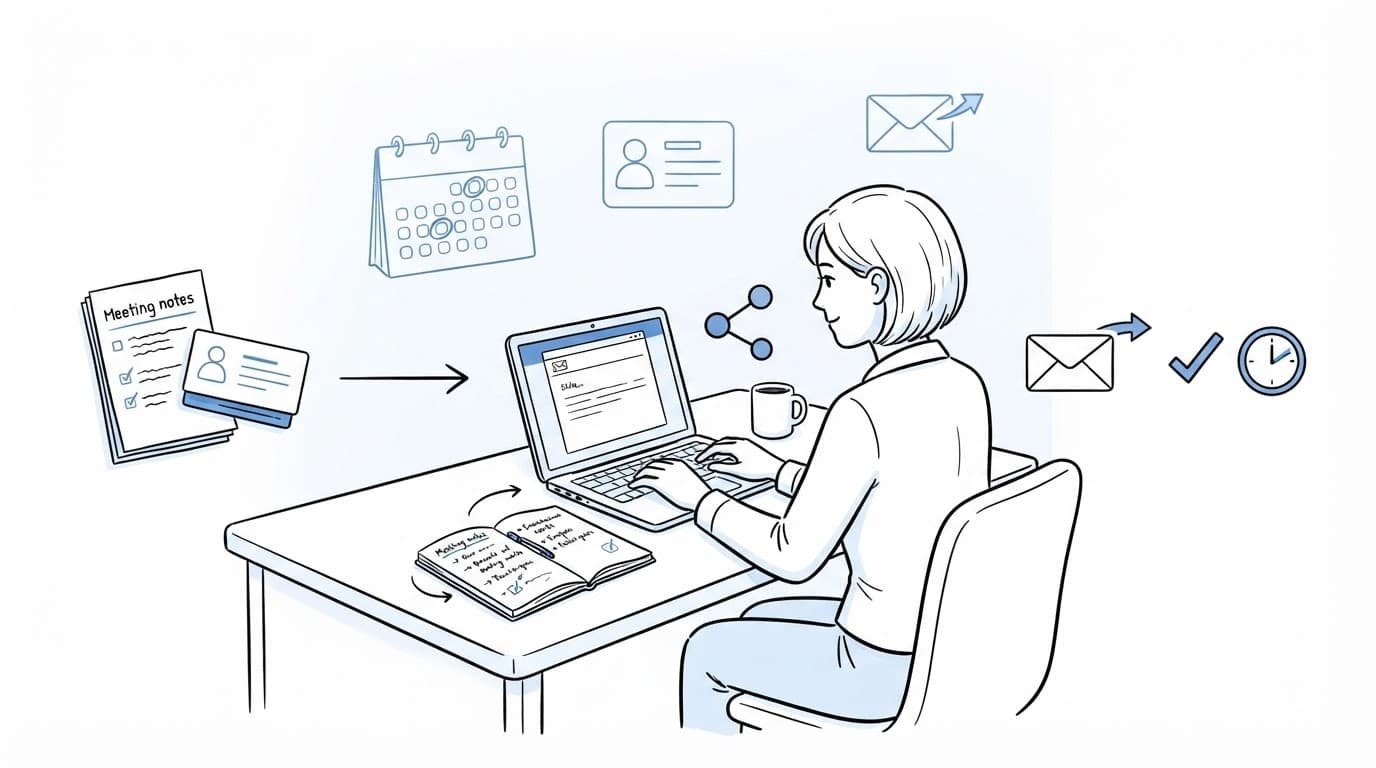
Before you write, capture three details in your notes:
- Where you met and what you discussed. That context helps build a professional relationship.
- A mutual connection, plus one insight, recommendation, or shared interest.
- A useful next step, such as reading an article, contacting someone, scheduling a next conversation, or applying for a role.
If you exchanged business cards, transfer each person’s name and notes into a record with their contact information. A simple database makes future outreach more personal and easier to manage.
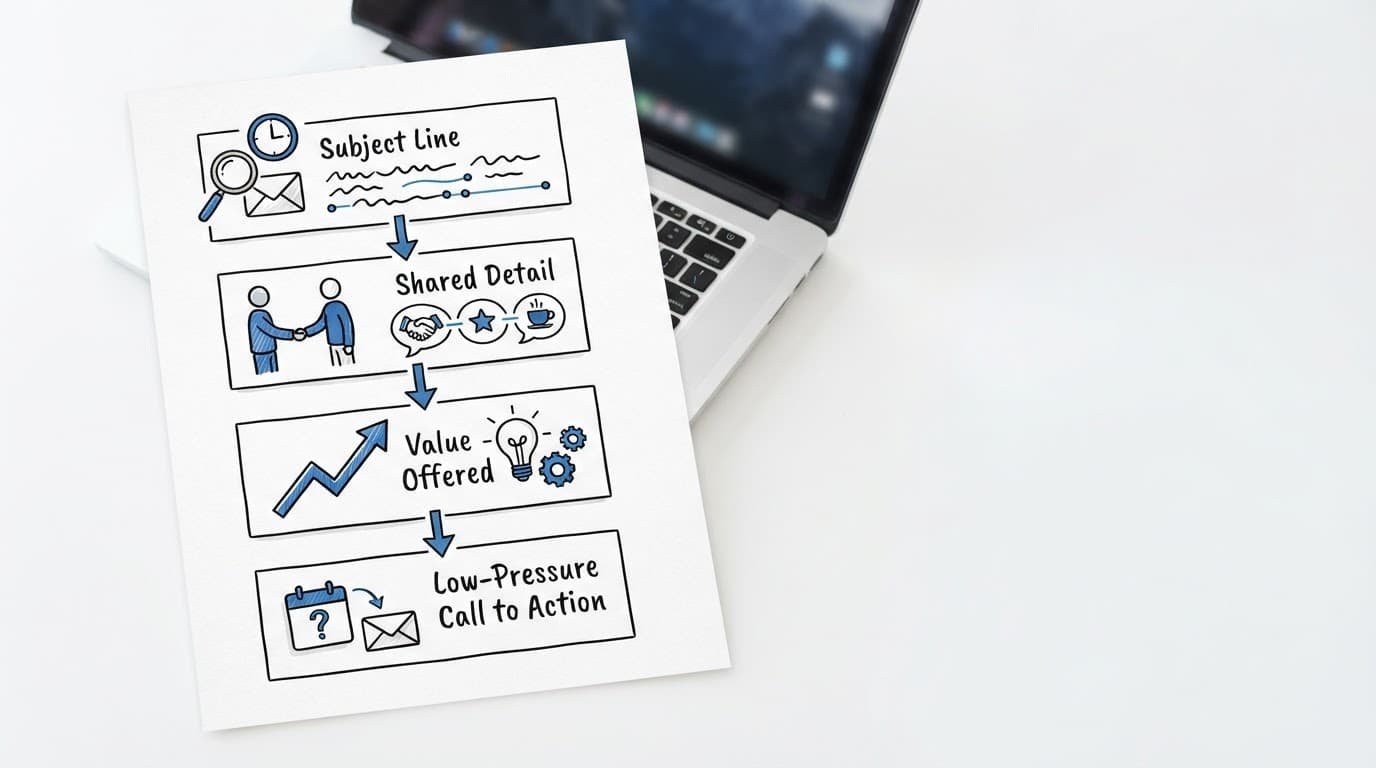
A subject line should identify the context without sounding formal or needy. Try “Great meeting you at [Event],” “Thank you for your advice on [Topic],” or “Following up on our [Industry] conversation.”
A memorable follow-up does not recap your whole conversation. It names one detail that proves you paid attention, so it doesn’t sound like cold outreach.
Networking Follow-Up Email Templates for New Contacts
These examples work because they lead with context, keep the focus on the other person, and avoid asking for a job too soon. They are adaptable email templates, not scripts, so adjust the details to fit the relationship.
A focused follow-up email can help you explore career opportunities without directly requesting a job. This approach prioritizes a professional relationship and feels warmer than cold outreach because it references a shared interaction.
After a networking event
Use this after meeting a peer, recruiter, or industry professional at an event. Choose a specific subject line that identifies the shared context.
Subject: Great meeting you at [Event Name]
Hi [Name],
It was great speaking with you at [Event Name] on [day]. I enjoyed hearing your perspective on [specific topic], especially your point about [detail from conversation].
I am exploring [target field or role], particularly commercial real estate, and appreciated your advice about [recommendation]. I will look into [resource, company, or action they mentioned].
I would be glad to stay in touch and follow your work at [Company].
Best,
[Your Name]
[LinkedIn profile URL]
Send this follow-up email while the conversation is still fresh. If a mutual connection introduced you, mention that person in the opening line. This note should feel personal, not like a sales pitch.
If you promised to share a resource, include it with one sentence about why it may be useful. Add your contact information and LinkedIn profile to the signature, then save the contact and conversation notes in a database.
For a later contact, adapt the same structure into a follow-up message by updating the shared context and reason for writing.
When you want an informational interview
Request a conversation only after explaining why you chose that person. Keep the request short and make it easy to decline. If a formal request feels too heavy, a brief coffee chat can be a natural alternative.
Subject: Request for a brief career conversation
Hi [Name],
We met at [Event], where you mentioned your work in [team, field, or specialty]. I am exploring [target field, such as commercial real estate] and would value your perspective on how you built your career in this area.
If you have 20 minutes in the next two weeks, may I ask you a few questions about your experience at [Company]? I am happy to work around your schedule.
Thank you for considering it,
[Your Name]
Focus on learning rather than openings. An informational interview request should ask about career paths, experience, and advice. LinkedIn’s advice on asking for informational interviews makes the same point.
Each note should have one clear call to action. A short, specific request is easier to answer and may improve your response rate. Make it easy to continue the conversation by including your contact information in the signature.
After the career conversation
A strong thank-you email shows that you heard their advice and intend to act on it. Keep this follow-up email specific, then name the action you will take.
Subject: Thank you for sharing your career advice
Hi [Name],
Thank you for taking time to speak with me today. Your explanation of [topic] gave me a clearer view of what employers look for in [field].
I also appreciated your suggestion to [action]. I plan to [your next step] this week.
Please let me know if I can ever return the favor. I hope we can stay connected.
Best,
[Your Name]
Add Value Without Turning the Note Into a Sales Pitch
Value doesn’t need to be a major favor. Send a relevant article, introduction, or timely update as a useful value add, rather than generic cold outreach. Keep it connected to the original conversation; the goal is a professional connection, not lead generation or a sales pitch.
For example, this follow-up email could say: “I found a market report on commercial real estate that reminded me of our conversation. I appreciated your perspective and thought you might find it useful.”
When a conversation uncovers career opportunities, act on the advice before asking for a referral. Send any introduction or resource through the person’s preferred channel, using the contact information they provided. Record the resource and promised next step in your database. Later, share the outcome in a follow-up message when reconnecting.
For targeted job-search outreach, CareerScribeAI’s job search networking strategies can help turn that discussion into targeted applications. Its AI Resume Builder can align your experience with the posting, while the Cover Letter Generator and Interview Prep Tools help you carry the same accurate examples into later stages.
Follow Up Once, Then Keep the Door Open
No reply doesn’t automatically mean disinterest. Your follow-up email may have arrived during a busy hiring cycle, after a networking event, during travel, or in a packed inbox. A contact in commercial real estate, for example, may be managing several interviews at once. Wait 7 to 10 days, then send one brief follow-up message. Make it a single reminder email, not a series of repeated messages.
Subject: Following up on my note
Hi [Name],
I wanted to follow up on my message below in case it got buried. I’d still appreciate the chance to hear about your experience in [field] during a brief coffee chat, if you have time.
If now is not a good time, I completely understand.
Best,
[Your Name]
Stop after that second email unless they invited further contact. Unlike cold outreach, a warm contact merits one personalized follow-up, but respectful persistence protects the professional relationship. You can maintain the connection by reconnecting on LinkedIn, commenting thoughtfully on posts, or sending a relevant update months later. Before sending another note, confirm the best channel using their contact information and record the last-contact date in a database. Keep your LinkedIn profile ready for review with these LinkedIn experience section examples.
Frequently Asked Questions
When should I send a networking follow-up email?
Send your follow-up email within 24 to 48 hours after meeting someone at an event, conference, alumni gathering, or coffee chat. The conversation will still be fresh, making it easier to reference a specific detail and create a personal connection.
What should I include in a networking follow-up email?
Mention where you met, one detail from the conversation, and a clear reason for writing. End with one modest call to action, such as staying in touch, sharing a resource, or requesting a brief career conversation.
Should I ask for a job in my first follow-up email?
Usually, it is better to focus on learning and building a professional relationship rather than asking for a job immediately. Show that you value the person’s experience, act on their advice, and let future career opportunities develop naturally.
How long should I wait before following up again?
Wait 7 to 10 days before sending one brief reminder if you have not received a reply. If there is still no response, stop emailing unless the person invited further contact, and consider reconnecting later through LinkedIn or a relevant update.
Make Every Follow-Up Easy to Answer
A strong follow-up email leaves the recipient with one simple decision: reply, take one next step, or stay connected. Adapt the email templates to the relationship. A contact may begin at a networking event, through business cards, or in commercial real estate.
Keep the note personal, and avoid turning a job request, referral request, and promotion into one sales pitch. Choose one clear call to action, and make replying easy with your contact information.
That personal approach beats cold outreach and keeps broader outreach genuine. Keep useful notes in a database to make reconnecting easier, then send a follow-up message when the timing feels right.