

Strong job leads often start with a short conversation, not a submitted application. Job search networking helps you understand the labour market, how teams hire, and where needs may be forming before roles appear online.
The goal is to build professional relationships that strengthen your professional network and support your career goals. Start by making it easy for people to share insight, not by putting them on the spot for an opening.
Key Takeaways
- Begin job search networking with curiosity and a small, respectful request for insight rather than asking directly for a job.
- Prepare for informational interviews by researching the person, company, and relevant labour market trends, then ask questions that invite practical experience.
- Grow your professional network through weak ties, industry groups, events, alumni communities, and volunteer work.
- Follow up within a day, share how the advice helped, and stay in touch occasionally without sending repeated or vague check-ins.
- Build relationships before you need them so your network can support continuous learning, career direction, and future job opportunities.
Networking Begins With Curiosity
Networking works when your first request is small, clear, and respectful. LinkedIn’s overview of networking in a job search notes that conversations can uncover hidden roles and improve referral chances.
Job seekers often hear that 70% to 80% of vacancies sit in the hidden job market. That figure varies by employer, industry, and conditions across the broader labour market. Still, many teams discuss hiring needs internally before posting a job, so informed relationships remain useful.
Start with the people who know your work
Make a contact list before you send messages. Include former colleagues, classmates, managers, clients, vendors, alumni, and people you met through volunteering.
Pay attention to weak ties, such as a former classmate or a colleague from another department. Close friends often know the same people and information that you do. These contacts move in different circles, so they may reveal changing demand across the labour market, along with teams, tools, or employers you haven’t considered.
Use a spreadsheet to track a few useful details. Review it regularly as part of continuous learning about roles, skills, and people:
- Their role, company, and how you know each other.
- The industry or skill area you want to ask about.
- The date you last spoke and one personal detail to remember.
- A possible reason to reconnect, such as a company project or shared interest.
Ask for an informed perspective
A message should show that you chose the person for a reason. Keep it under 100 words and make the time commitment clear.
Hi Jordan, I enjoyed working with you at Northstar. I’m exploring operations roles in health tech, and your move into that field caught my attention. Would you have 20 minutes next week to share what skills matter most on your team? I’m not asking for a job. I’d value your perspective.
This approach respects their time. It also gives them room to offer more help if they want to.
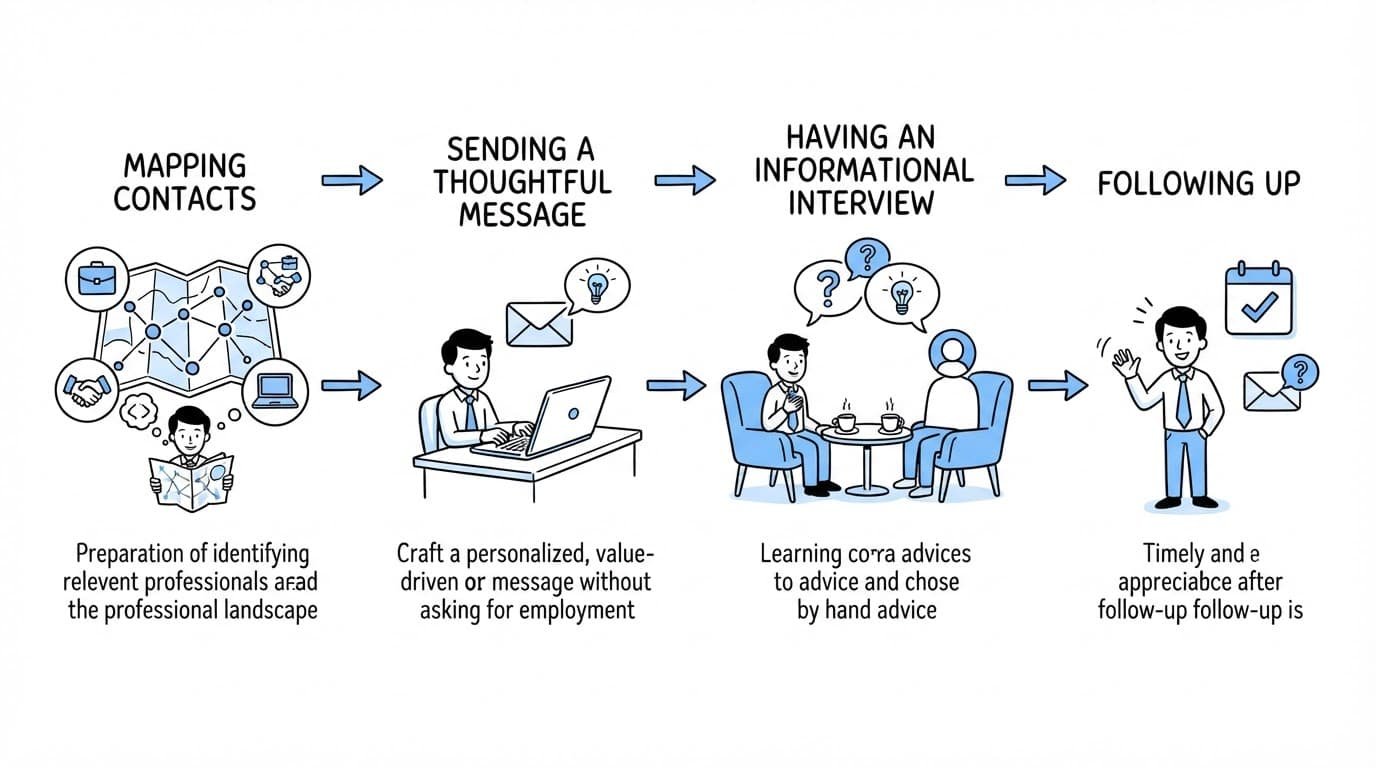
Use Informational Interviews to Learn, Not Pitch
Informational interviews work best when you arrive prepared and leave with a clearer view of the work. They support continuous learning, not a disguised pitch or interview.
Research first and ask sharper questions
Before an informational interview, spend 20 to 30 minutes reviewing the person’s LinkedIn profile, company site, recent news, and job descriptions at their employer. These sources show how the labour market shapes the skills employers emphasize. This informational interview preparation guide can help you prepare questions that move beyond public information.
Ask questions that invite experience, such as:
- “What does a strong first six months in this role look like?”
- “Which skills separate solid candidates from outstanding ones?”
- “What industry trends are affecting your team or field right now?”
Avoid asking, “Are you hiring?” during the first few minutes. It changes the conversation from a shared discussion into a transaction.
Close with a future-focused request
Near the end, summarize one useful point you heard. Then ask for direction, not a favor.
Try: “Your point about stakeholder management was helpful. Is there anyone else whose perspective would help me understand this work better?”
That question can lead to a warm introduction. If they mention an open position, respond with interest and ask about the team, timing, and application process. Let the job discussion emerge naturally.
A useful first conversation leaves the other person feeling that their experience was respected, not mined for an opening.
Find New Contacts Through Groups and Events
Your professional network can grow beyond people you already know by searching LinkedIn Groups and Meetup with your target job title, industry, or city. Professional associations, industry events, alumni association events, online panels, and volunteer projects offer low-pressure ways to meet people with shared interests. These weak ties can reveal job opportunities in the hidden job market and show how the labour market is changing.
The University of Kansas job-search guide also identifies networking events, job fairs, social media, and word of mouth as routes into unadvertised opportunities.
Use a simple three-step routine at each event:
- Pick two people or organizations to research before attending.
- Open with a brief elevator pitch about your focus, not a request for a job. Then ask about their work, recent project, or industry issue.
- Write a short note afterward, then send a personalized connection request within 24 hours.
Volunteer work can be especially useful when you’re changing careers. It supports career development through visible evidence of your skills, current references, and conversations with people who have seen how you contribute. It also supports continuous learning and helps you test your skills against current labour market needs.
Follow Up Without Becoming a Burden
A thoughtful follow-up turns one conversation into a professional relationship. Send a thank-you note within a day, using a networking follow-up email template to keep the message brief and personal. Mention one idea that stayed with you, then explain how you plan to use it.
For example: “Thank you for explaining how your team measures customer retention. I’m going to review my project examples with that outcome in mind.”
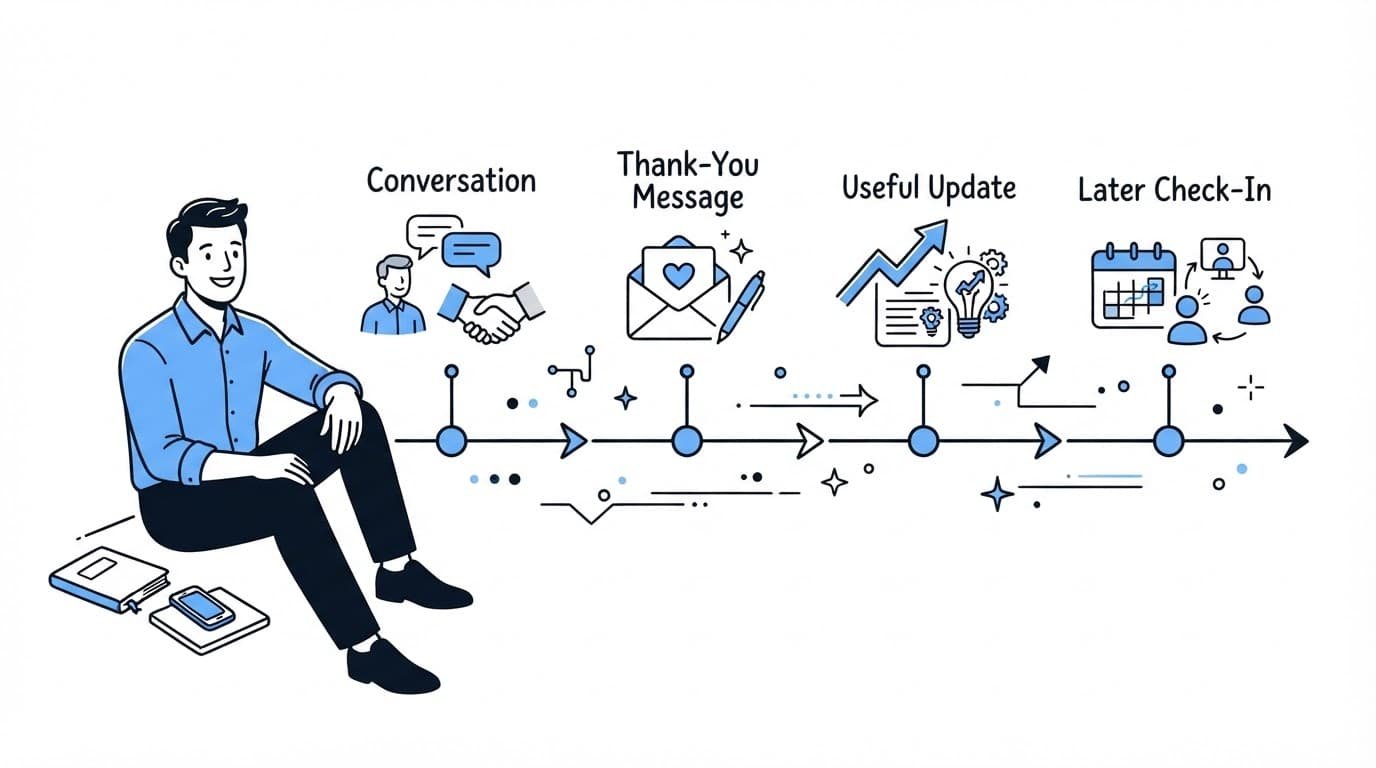
Wait four to six weeks before checking in again, unless you have a relevant update. Share a useful article, congratulate them on a milestone, or tell them how their advice helped. Don’t send repeated “just checking in” messages.
When a conversation points to a genuine role, consider its timing and demand in the labour market before starting job applications. Use CareerScribeAI’s job search setup guide to prepare role-specific materials. Tailor your resume, cover letters, and interview preparation to the role’s needs and language, including what hiring managers value. Its AI Resume Builder, Cover Letter Generator, and Interview Prep Tools can help you organize your experience, but every document and answer should remain accurate and sound like you.
Frequently Asked Questions
How do I network without asking for a job?
Ask for a specific perspective about a role, industry, skill, or team instead. Make the time commitment clear and explain why you chose that person, so the conversation feels useful rather than transactional.
What should I discuss in an informational interview?
Ask about the person’s experience, the skills that matter in their role, and changes affecting their team or field. Questions about success in the first six months can reveal practical expectations that job descriptions may not show.
Who should I include in my job search network?
Include former colleagues, classmates, managers, clients, alumni, vendors, and people you meet through groups or volunteering. Weak ties are especially useful because they may connect you with different industries, teams, and labour market information.
How often should I follow up with a networking contact?
Send a thank-you message within a day and mention one useful point from the conversation. Wait four to six weeks before checking in again unless you have a relevant update, such as sharing an article, congratulating them, or explaining how their advice helped.
Build the Relationship Before You Need It
The strongest job search network is built through attention, preparation, and consistent follow-through. Each short conversation can help you interpret the labour market as priorities and hiring needs change. It can also sharpen your career direction, clarify an employer’s needs, or lead to another introduction.
Keep your requests focused on learning. Over time, job search networking becomes less uncomfortable because people know you as someone who listens, follows through, and stays in touch. Staying curious supports continuous learning, while consistent follow-through builds a personal brand people trust.