


An award can prove your value faster than a broad claim about being hardworking. A focused awards and honors resume section provides hiring managers with concrete proof of your value, helping you stand out from competition.
The goal isn’t to list every certificate you’ve earned. Choose relevant career achievements that support the role you want and show a result worth discussing in an interview.
Key Takeaways
- Position relevant honors and awards directly near the work experience or education entry they support.
- Use the award’s official name, issuing organization, and date.
- Add concise context only when it highlights selectivity, scale, or relevant achievements.
- Prioritize recent professional success over older school recognition.
- Remove awards that don’t strengthen your qualifications for the target role.
How to Build an Awards and Honors Resume Section
Start by reviewing every award through the employer’s eyes. A hiring manager for a sales role will care more about a revenue award than a campus photography prize. For a recent graduate, academic awards carry more weight because work history is still limited.
Strong choices include company awards, such as employee of the month, competitive industry awards, scholarships, fellowships, honor society memberships, major certifications with honors, and community service recognition. If an award required selection from a large group, mention that fact when you can verify it.
Use a dedicated heading such as Awards & Honors, Recognition, or Professional Honors when you have two or more strong entries. Otherwise, place a single award under the job or degree where you earned it.
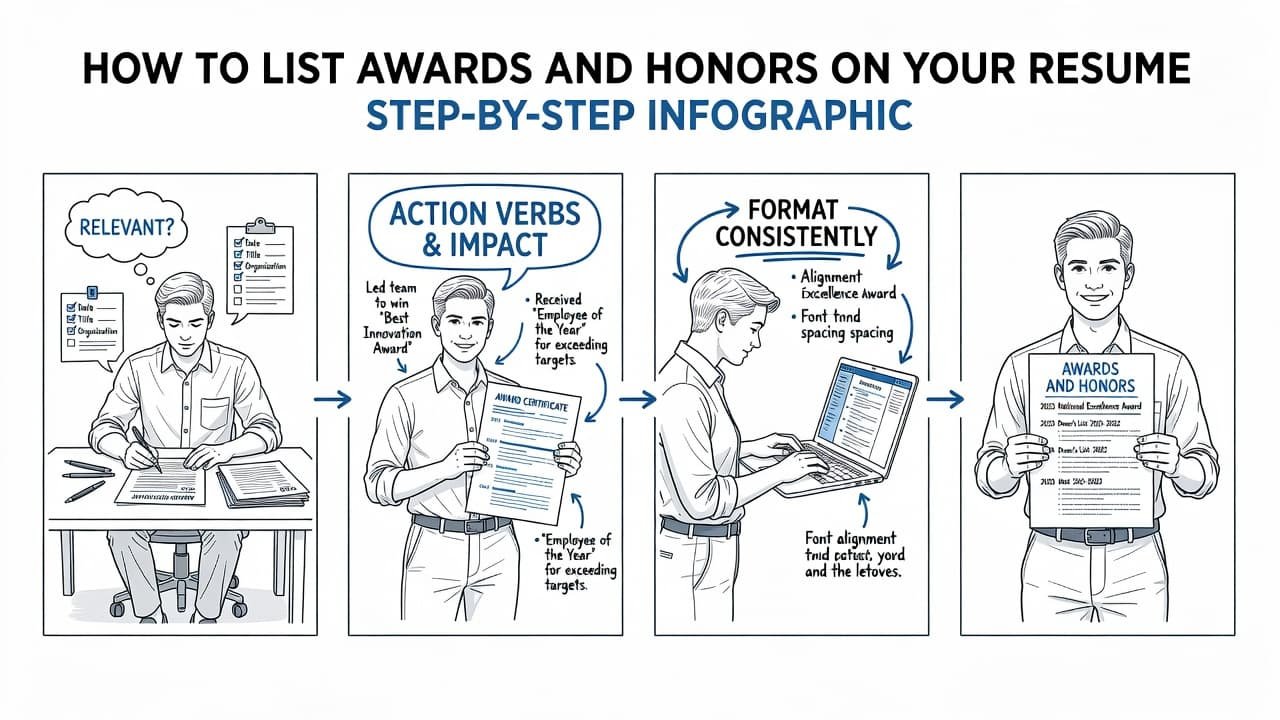
Before adding an entry, apply three filters:
- Is it relevant to the skills, industry, or standards in the job posting?
- Did you earn it within the past five to 10 years, or is it a major credential that remains meaningful?
- Can you explain what you did to earn it without exaggeration?
For example, a Fulbright U.S. Student Program grant can support applications in education, research, public service, and international work. The awards selection guidance from LockedIn AI also recommends using the award’s full official title, which helps recruiters understand its credibility.
A recognition entry earns its space when it helps a recruiter predict how you will perform in the role.
Where Awards and Honors Belong on a Resume
Location affects how much attention an award gets. Put the recognition beside the experience that gives it meaning. An “Employee of the Year” honor belongs under the role where you earned it, especially if that job matches your target position.
A separate awards section works best when you have multiple recognitions or leadership positions to feature without cluttering your education section. It also gives students room to feature academic honors, scholarships, research grants, and related distinctions.
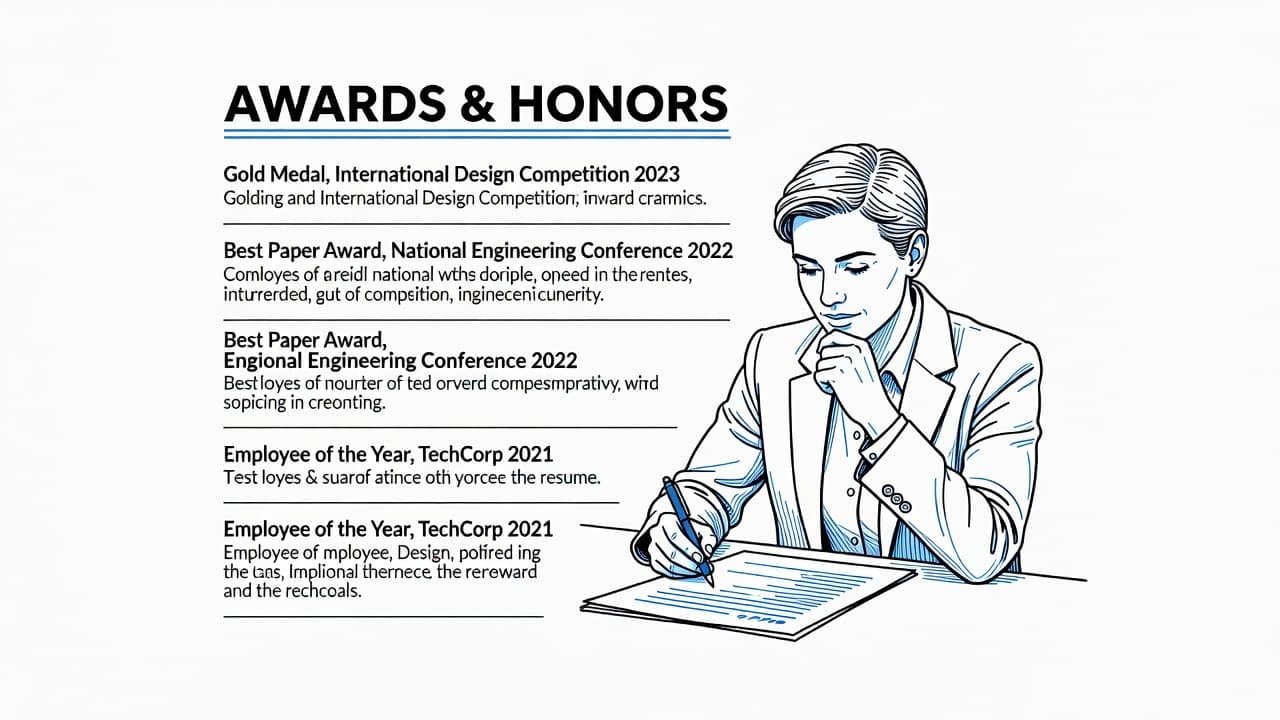
Use these placement rules:
| Your situation | Best location |
|---|---|
| One award tied to a job | Under that role in work experience |
| Dean’s list or scholarships | Under the education section |
| Several relevant distinctions | Dedicated Awards & Honors section |
| Award tied to a portfolio project | Project section or portfolio link |
A dedicated section should sit below Experience when professional recognition is your strongest evidence. However, put it below Education if your academic honors matter more than your short work history.
Avoid placing awards at the top of the page unless they are nationally recognized or central to the role. Most recruiters need to see your recent experience first. For additional examples of where awards can appear, review common resume award placement options.
Write Each Entry So Its Value Is Clear
Clean resume formatting keeps your accomplishments easy for recruiters to scan:
Fulbright U.S. Student Program | U.S. Department of State | 2025
Competitive grant supporting graduate study, research, or teaching abroad.
Use this structure when space allows:
Official award name | Issuing organization | Month and year
One short line explaining the achievement, selection criteria, or relevant outcome.
Don’t write a long acceptance speech. Instead, state what makes the recognition meaningful. Whether you are highlighting professional milestones or academic achievements, your description should be concise. For a team award, clarify your contribution only if you can do it accurately. “Member of the operations team recognized for reducing fulfillment errors” is more useful than “Won a prestigious company award.”
Numbers can add context, but only include figures you can confirm. By sharing quantified achievements, such as the total number of nominees or a measurable result tied to the recognition, you provide concrete proof of your success. The Resumly guide to meaningful award entries also supports pairing awards with concise context rather than leaving recruiters to guess.
Tailor Recognition for Applications and Interviews
Your resume should change when the job changes. Tailoring resume content effectively means keeping a master list of honors and awards, then selecting the two to five entries that best match each application. A customer service award can move up for a client facing job, while an academic research honor may fit an analyst or graduate program application for a recent graduate.
CareerScribeAI’s AI Resume Builder can help you format award entries consistently and tailor them to a job description. Its Cover Letter Generator can reinforce one relevant recognition with a brief accomplishment story, rather than repeating your entire resume.
Prepare to discuss every listed honor. Focus on the work behind it, the standard you met, and the skill you would bring to the new employer. Use this guide for preparing your greatest accomplishment interview story before interviews, then practice a direct 30 second answer regarding your career achievements using the platform’s Interview Prep Tools. For awards tied to specific projects, learn how to build an interview work portfolio that presents that evidence visually during the conversation.
Frequently Asked Questions
Should I include high school awards on a professional resume?
You should generally avoid including high school awards unless you are a recent college graduate with limited professional experience. As you progress in your career, prioritize recent professional recognition, major certifications, and collegiate achievements that match your target role.
How many awards should I list on my resume?
It is best to select the two to five most relevant awards that directly support the position you are applying for. Quality matters more than quantity, so ensure every listed honor provides concrete proof of the skills needed for the job.
Where should I put a single award on my resume?
A single award should be placed directly beside the work experience or education entry it supports. For instance, an employee of the month award belongs under that specific job, while a collegiate scholarship belongs under education.
Final Thoughts
Awards work best as proof, not decoration. Select recognition that matches the job, place it where recruiters expect it, and describe it with precise facts.
A strong awards and honors resume section turns past recognition into evidence of your next contribution.