

A career break does not scare employers as much as a vague cover letter does. If you are reentering the workforce in 2026, you need a clear explanation, recent evidence, and a tone that sounds steady, not defensive.
A strong return to work cover letter does not try to hide the gap. It puts the gap in context, then moves quickly to what you can do now. The sections below show how to write that kind of letter.
Key Takeaways
- Be brief and direct: Limit your explanation of a career break to one or two lines, ensuring the focus remains on your professional qualifications and readiness.
- Highlight current activity: Demonstrate you are up to date by citing recent certifications, volunteer work, freelance projects, or skill-refreshing courses completed during your break.
- Avoid defensive language: Focus on a factual, confident narrative rather than apologizing for your time away or providing extensive personal details.
- Align with the role: Tailor your letter to the specific job advertisement by mirroring key terms and providing measurable proof of how your past achievements solve the employer’s current problems.
What a return-to-work cover letter needs in 2026
Hiring teams move quickly in 2026. Many a job application passes through an applicant tracking system and structured review forms before a person sees them. A cover letter still matters because it explains what your resume cannot, especially when you are returning to the workforce after time away.
A good return to work letter is brief, specific, and current. Brief means half a page to one page. Specific means you name the role and match two or three job qualifications. Current means you show fresh activity, such as contract work, certifications, volunteer work, or updated software skills. That matches Indeed’s guide for returning to the workforce.
Because employers compare dozens of similar candidates, your letter should answer one silent question: why now, and why this role? That answer can be short. Still, it needs to sound deliberate.
This quick comparison keeps the letter on track.
| Include | Avoid |
|---|---|
| One short reason for the gap | A long personal story |
| Recent training or project work | An apology for time away |
| Measurable results from past roles | Vague claims about being hardworking |
| Clear links to the job ad | Repeating the resume summary |
The left column gives a hiring manager a reason to keep reading. The right column creates doubt because it sounds defensive or thin.
Before you draft the letter, make sure your resume tells the same story. CareerScribeAI’s AI Resume Builder can help you align your experience with the job post, tighten achievement bullets, and keep your language consistent. When your resume and letter match, the application feels more credible.
Explain employment gaps in two lines, not ten
Most employers do not need a full account of why you stepped away. They need a short, calm explanation and evidence that you are ready to return. When you are explaining a gap in employment, one or two lines usually beat a long paragraph. That aligns with USC’s advice on how to frame a career break in your cover letter.
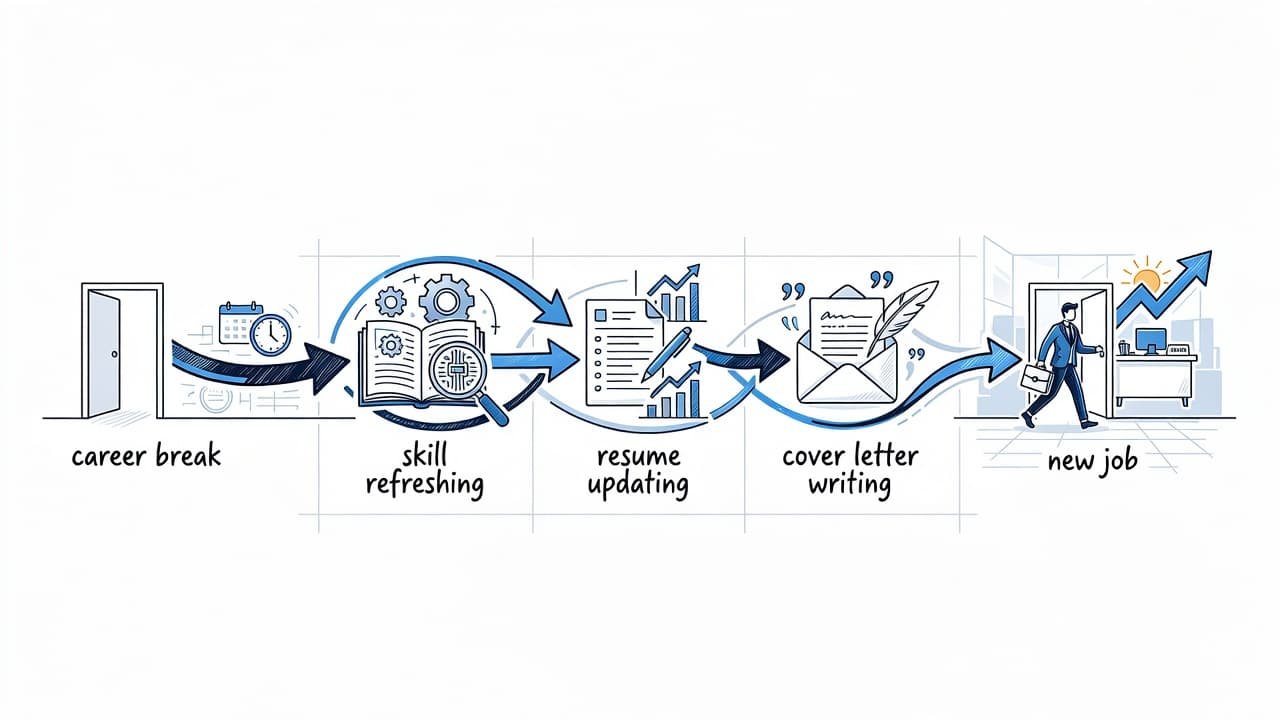
Your cover letter works best when it covers three points: the reason for the unemployment gap, the time period, and the bridge back to paid work. The bridge is the part many people skip, yet it matters most. Dates alone do not solve the hiring manager’s concern; recent action does.
If you are returning to the workforce after several years, clarify what has stayed the same in your field and how you refreshed your relevant skills. That shows good judgment. Whether you took courses, freelanced, volunteered, or served as a stay-at-home parent, acknowledge your activity. During these periods, many people develop soft skills like time management, which can be a valuable asset to highlight when it connects to the requirements of the job.
Keep the tone factual. You do not need medical details, family history, or apologies. If the break came from layoffs or a hard market, do not sound bitter. If you spent time away for caregiving, do not undersell your professional experience either. Managing complex schedules, budgets, or logistics provides evidence of your capability, which is exactly what employers look for when evaluating your qualifications.
After a two-year caregiving break, I completed a project coordination certificate and returned to the workforce through part-time nonprofit scheduling work.
That kind of line tells the truth and moves the conversation forward. It also fits iRelaunch’s guidance on cover letters after a break.
- Name one course, tool, or credential you finished to sharpen your skills.
- Mention freelance, contract, volunteer, or community work with a clear outcome.
- Refer to one result from your earlier career that matches the requirements of the new role.
A simple return-to-work letter structure that works
Most cover letter examples online are too generic. They sound polished, but they do not give a hiring manager a reason to choose you. A stronger return-to-work cover letter follows a simple cover letter template that keeps your message concise and impactful.
Use these four short parts:
- Open with the target role and your strongest fit for the position.
- Explain the break in one or two lines, then mention your bridge back into the industry.
- Add one or two accomplishments that match the role, highlighting quantifiable results you have achieved.
- Close with a confident, direct line about the value you will bring to the company or any available returner programs.
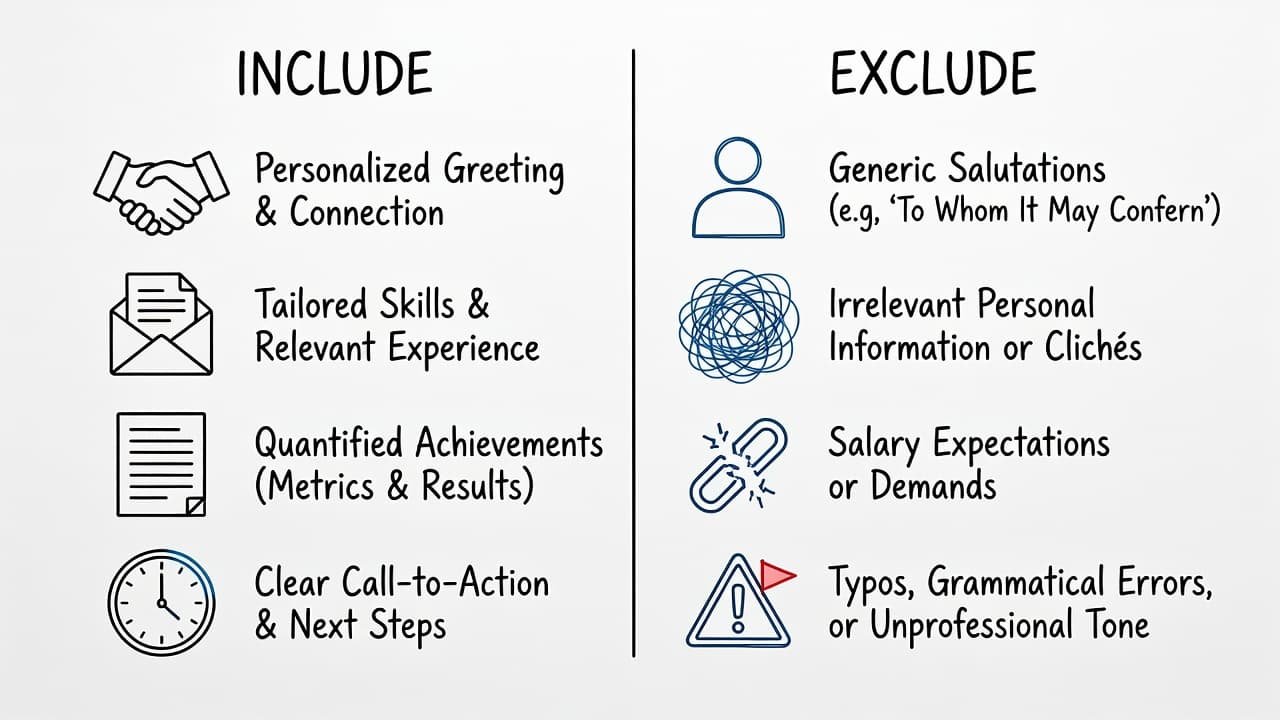
This structure keeps the focus on the employer, not your absence. It also gives you room to sound current, which matters in 2026 when many teams want quick evidence of readiness. Read the job post again before you send it. If the ad stresses client service, compliance, or project tracking, mirror those terms where they fit your real experience.
Dear Hiring Manager, I am applying for the Operations Coordinator role at Northline Health. I bring six years of scheduling, vendor coordination, and reporting experience in healthcare settings. After a caregiving break from 2023 to 2025, I completed current Excel training and supported operations for a local nonprofit. In my last full-time role, I reduced supply delays by 18 percent and improved invoice accuracy across three departments. I would welcome the chance to bring the same organized, service-focused approach to your team.
Edit hard after the first draft. Cut any sentence that repeats your resume. Remove weak openers such as “I am writing to express my interest.” Skip salary requirements unless the employer specifically asks for them. Replace soft claims with hard proof. Short, honest, job-focused writing beats a perfect-sounding story every time.
If you want a faster first version, CareerScribeAI’s Cover Letter Generator can turn a job post and your work history into a solid base draft. Then revise it until it sounds like you. Before interviews, the platform’s Interview Prep Tools can help you rehearse the same short gap explanation, which keeps your written story, your spoken answers, and your references aligned for a consistent professional narrative.
Frequently Asked Questions
Should I mention the specific reason for my career break?
You should provide a brief, professional summary of why you were away, such as for caregiving or personal development. You do not need to provide medical history or personal details, as the goal is to acknowledge the gap neutrally and shift the focus back to your professional capabilities.
How do I prove I am still current in my field?
Include specific examples of recent learning, such as completing online certifications, participating in industry webinars, or using new software tools relevant to your role. Mentioning any volunteer or contract work also serves as a strong ‘bridge’ that demonstrates your active engagement with your industry.
What if I don’t have recent professional experience?
Focus on transferable skills you utilized during your time away, such as project management, budgeting, or logistical coordination. Even if the work was unpaid or community-based, frame these experiences as professional accomplishments that directly relate to the job requirements.
Final thoughts
Career breaks are common, and today’s hiring managers understand that. Having a gap in employment rarely sinks an application, but a vague or overly complicated explanation certainly can.
Instead of dwelling on your time away, keep your focus on your professional experience and the relevant skills you bring to the table. By highlighting your transferable skills, you demonstrate how your background remains current and valuable for the modern market. When you emphasize these strengths while returning to the workforce, you shift the narrative from your absence to your potential. If you stay concise, frame your journey with confidence, and focus on what you offer today, your return to work cover letter will position you as a practical, low-risk hiring choice for 2026.