


Few interview questions feel heavier than “why should we hire you?” This interview question, like the “walk me through your resume” prompt, sounds simple but asks you to sum up your value under pressure.
In 2026, navigating the hiring process is more competitive, and that pressure is higher. Employers often form an opinion before the interview starts, based on your resume, LinkedIn, and how well your experience matches the role.
A strong answer doesn’t repeat your resume. As a candidate, you make a clear case for fit, proof, and likely impact.
Key Takeaways
- Use a concise 45-60 second answer with a three-part framework: start with role match using job description language, add specific proof from your experience, and end with projected impact on the employer.
- Highlight measurable results like time saved or errors reduced, tying strengths to evidence rather than listing generic traits like ‘hardworking’ or ‘team player’.
- Show you understand company needs, have done similar work well, can explain results plainly, and adapt to tools like AI while working collaboratively.
- Tailor your response to the specific role and avoid repeating your resume—make a clear case for fit, proof, and value to stand out in 2026’s competitive hiring.
What employers want to hear in 2026
Hiring managers aren’t looking for a speech. They want a short answer that shows you understand the job and can do it well.
That matters more now because hiring is selective, helping candidates stand out. Employers are using ATS tools to screen resumes, and many care more about proven skills than job titles alone. They also want signs that you’re thoughtful, reliable, and able to adapt to new tools, including AI where it fits the role.
A good “why should we hire you” answer highlights your key strengths by showing four things:
- You understand what the company needs right now.
- You have proof that you’ve done similar work well.
- You can explain your results in plain language.
- You can adapt, learn, and work well with others.
The best answers also show measurable impact. Numbers help, but they don’t have to be huge. Saving time, lifting customer satisfaction, reducing errors, or speeding up delivery all count.
Recent advice in The Interview Guys’ 2026 guide makes the same point: connect your answer to the employer’s problem, not to a generic list of strengths.
A hiring manager remembers proof, not adjectives.
Avoiding common mistakes is crucial, so if your answer sounds like “I’m hardworking, motivated, and a team player,” it’s too thin. Link your personal strengths to evidence instead; those traits only matter when you tie them to proof.
How to answer “why should we hire you” with a simple framework
A strong answer is usually 45 to 60 seconds long. Tailor your answer to stay focused; anything much longer starts to lose focus.
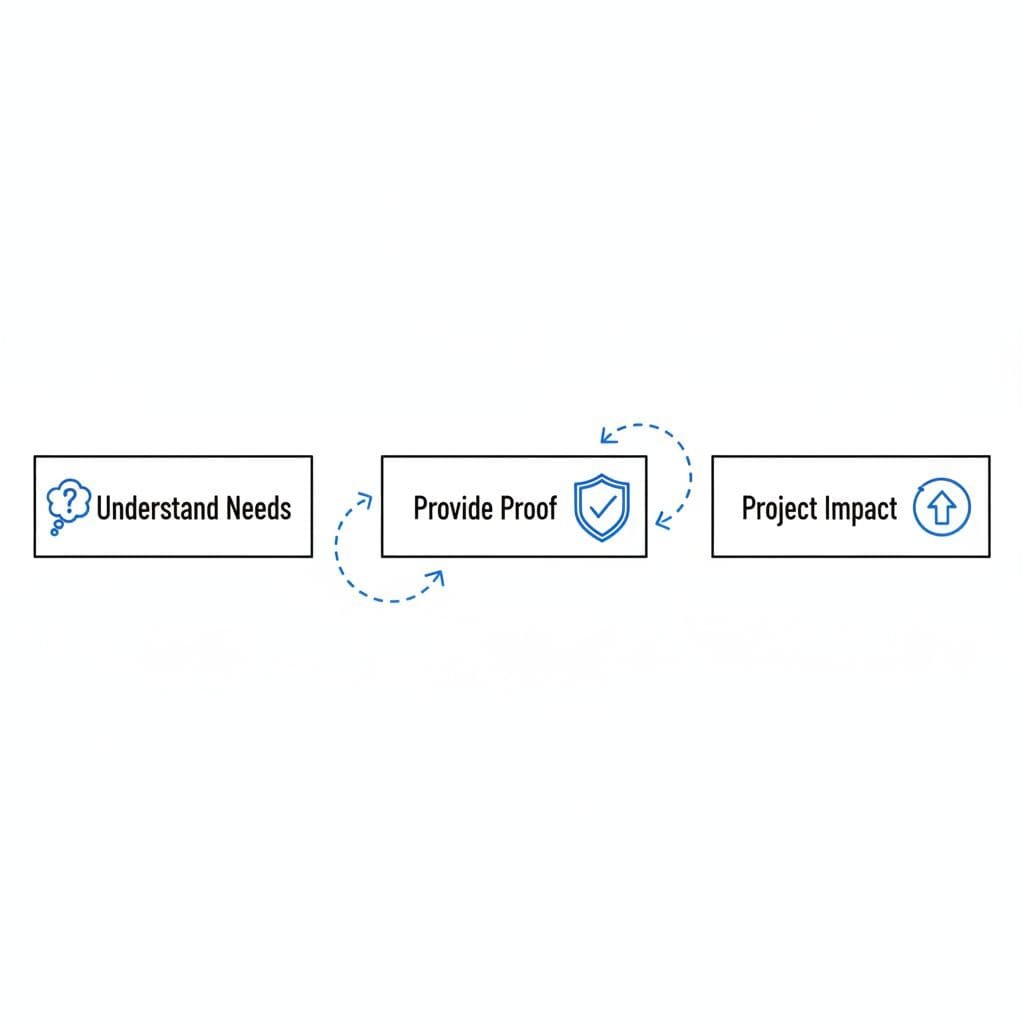
Use this three-part structure to define your value proposition:
- Start with the match. Name the skills or outcomes the role needs most. Use the language in the job description when it sounds natural.
- Add proof. Give specific examples from work, school, freelance work, or volunteering.
- End with forward value. Show how that experience highlights your potential contribution to this employer now.
That structure works because it answers the real question behind the question: “Why you, for this role, at this time?”
For example, if the job calls for client communication, fast follow-through, and comfort with data, your answer should hit those points directly. Don’t talk about every strength you have. Pick the few that align with the job requirements listed in the job description.
If you need help lining up your materials before the interview, CareerScribeAI can provide preparation tips to pull the same themes through your resume, cover letter, and talking points. Its AI Resume Builder and Cover Letter Generator are useful for matching your experience to a job post, and the getting started guide makes the setup easy.
For another take on the same structure, Foundrole’s fit-proof-impact framework matches what strong interview answers already do.
“Why should we hire you” answer examples you can adapt
Use these why should we hire you sample answers as templates, not scripts. The goal is to sound prepared, not memorized.

The weak version stays vague. The strong version links a strength to evidence and then to a business result.
Entry-level role candidate
“I know I’m early in my career, but I bring strong follow-through and a fast learning curve. During my internship, I built a tracking sheet that cut weekly reporting time by about four hours. I can ramp up quickly, communicate clearly, and take day-to-day work off the team’s plate.”
Experienced professional
“You should hire me because my professional experience already solves the kind of problems this role owns. In my last operations role, I reduced late shipments by 18% and improved vendor response times by rebuilding our workflow. I can bring that same process focus here and help your team move faster without losing quality.”
Career changer
“My background is in teaching, but as a career changer, my transferable skills match this customer success role well. I managed communication for more than 100 families, handled conflict, tracked progress, and kept retention high in a demanding setting. I can bring that calm communication and organization to client relationships here.”
Customer-facing role
“I’d be a strong hire because I know how to build trust while still hitting targets. In retail banking, I kept customer satisfaction above 95% and increased product adoption by using my communication skills: listening first, then recommending the right solution. That balance matters in a front-line role like this one.”
Technical role
“You should hire me because my relevant experience combines technical skill with business judgment and problem solving. In my last analyst role, I automated quality checks that cut reporting errors by 30%. I also use AI tools to speed up research and documentation, but I always verify the output, so the work stays accurate and useful.”
When you build your own why should we hire you sample answer, keep it close to the role. If you’re a candidate interviewing with a group, these expert tips for panel interviews can help you keep your answer tight when several people are judging it at once. For more sample phrasing, Qureos’ recent answer guide has extra examples by situation.
Frequently Asked Questions
How long should my “why should we hire you” answer be?
Aim for 45 to 60 seconds to keep it focused and impactful. Longer answers lose attention, while shorter ones might seem underdeveloped. Practice timing it to sound natural under pressure.
What structure works best for this answer?
Follow the three-part framework: name key skills or outcomes from the job description, provide specific proof from your past work, and project how you’ll contribute forward. This directly addresses the employer’s needs and shows thoughtful preparation.
Should I include numbers or metrics in my answer?
Yes, measurable impact like ‘reduced errors by 30%’ or ‘cut reporting time by 4 hours’ makes your proof memorable and credible. Numbers don’t need to be huge—any clear business result counts and beats vague adjectives.
How can entry-level candidates or career changers answer effectively?
Focus on transferable skills with concrete examples, like internships, volunteering, or previous roles. Emphasize fast learning, follow-through, and results achieved, linking them directly to the job’s requirements for a strong fit.
How do I avoid sounding rehearsed?
Use the sample answers as templates, not scripts—adapt phrasing to your voice and the role. Practice until it flows naturally, tying it to the company’s specific challenges from the job description.
Conclusion
This “why should we hire you” question feels hard because it asks you to successfully sell yourself by turning your background into a decision for the hiring manager and addressing their specific business challenges. The best answer makes that decision easier.
Keep it short, tie it to the role, and back it with proof. When your response shows fit, evidence, and likely impact through demonstrated industry knowledge and alignment with organizational goals, it improves your confidence without sounding rehearsed.
Practice until it feels natural. Then walk into the interview ready to make a clear case for why you’re the right hire now.