


A polished job ad can still be a trap. In 2026, fake job postings prey on job seekers in a tight labor market, often looking more convincing than the clumsy scams people used to spot in seconds.
That makes speed dangerous. When you’re rushing your job search and applying fast, it’s easy to miss the small signs that a role isn’t real, or that the “recruiter” wants your money or personal data. A simple screening habit can protect you without slowing your search.
Key Takeaways
- Check job listings for red flags like unusually high pay for entry-level work, vague duties, free email addresses, duplicated ads, or absence from the company’s careers page.
- Verify the employer by searching the exact role on their official website, confirming the recruiter’s company domain email, and researching complaints or scams.
- Follow a simple workflow: refuse any upfront money or sensitive info requests, watch for instant offers or high-pressure tactics, and prioritize transparent hiring processes.
- Verify first before customizing applications to protect your time, data, and focus on real opportunities without slowing your search.
The first warning signs are usually in the listing
Most job scams give themselves away before anyone contacts you. The problem is that the clues often look minor on their own. Together, they tell a different story.
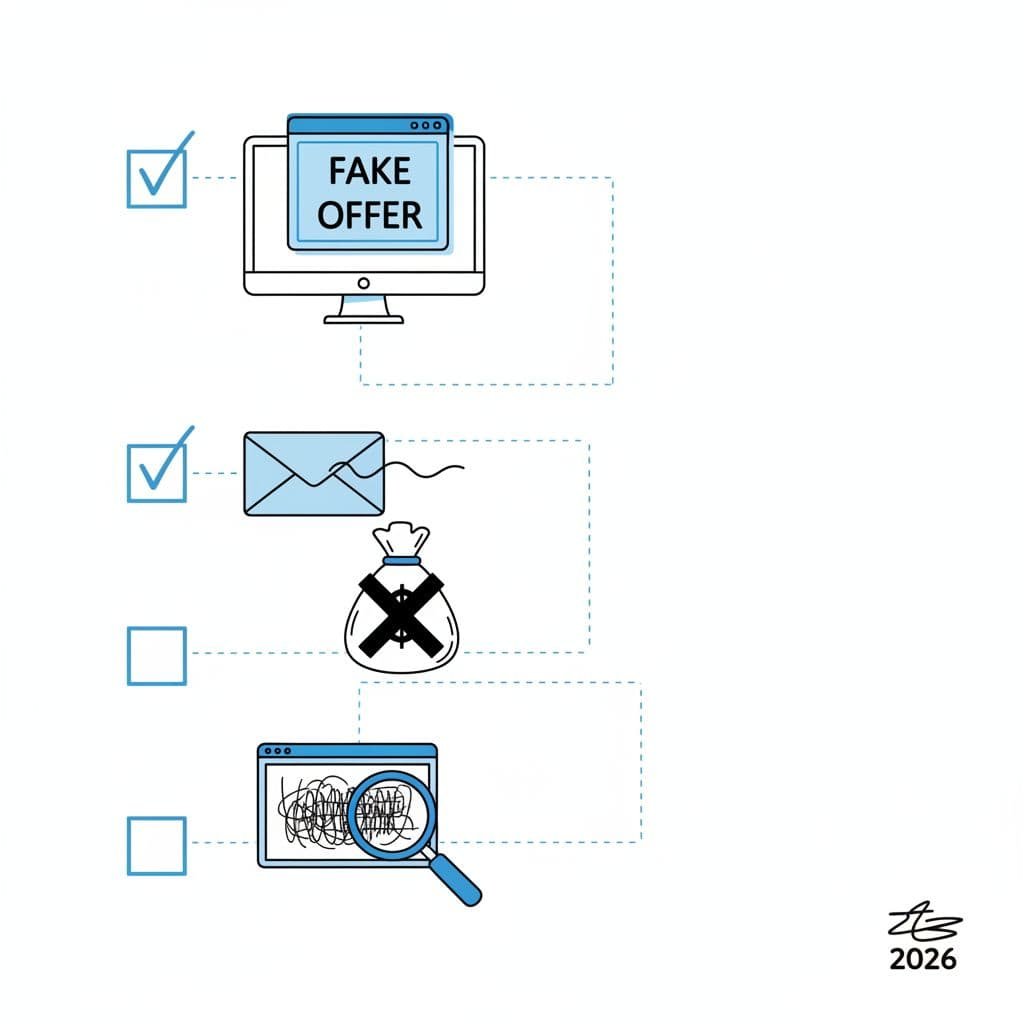
Start with the basics. If the pay promises high pay for simple work, slow down. If the duties are vague, the vague requirements are strangely low, or the ad sounds copied from five other listings, slow down again. Real employers usually explain what the role is, who it reports to, and what success looks like in the job description. Scammers often lure with promises of remote work and flexible schedule too.
A few common signs deserve extra caution:
- High pay is unusually high for entry-level work.
- The job description says almost nothing about daily tasks.
- The posting uses a free email address instead of a company domain.
- The same ad appears across many job boards with identical wording.
- The role never appears on the employer’s careers page.
Also watch for mismatch. A posting that asks for senior-level experience but offers entry-level pay often points to a low-quality or fake opening. The same goes for ghost jobs that stay active far longer than similar jobs. Many real openings move within a few weeks, so an ad that never closes can be a bad sign.
Grammar still matters, but it isn’t enough. Some scammers now use AI to clean up spelling and tone. Because of that, you need to check substance, not only style.
If you want help reading a posting more critically, how CareerScribeAI works is useful context. Its job description analyzer is built to compare role requirements, fit, compensation clues, and red-flag patterns before you put time into an application.
Verify the employer before you send your resume
A job board listing is only the first signal. The real test is whether the company and hiring process hold up under a quick check.
First, go to the employer’s official website. Search the careers page for the exact role. If you can’t find it there, treat that as a serious warning. The Federal Trade Commission’s guidance on hijacked job ads makes the same point: verify the opening on the company’s own site before you apply.
Next, inspect the recruiter. A large company should not be recruiting from Gmail, Yahoo, or a lookalike domain. “acme-careers.co” is not the same as “acme.com.” One missing letter is enough to fool tired applicants.
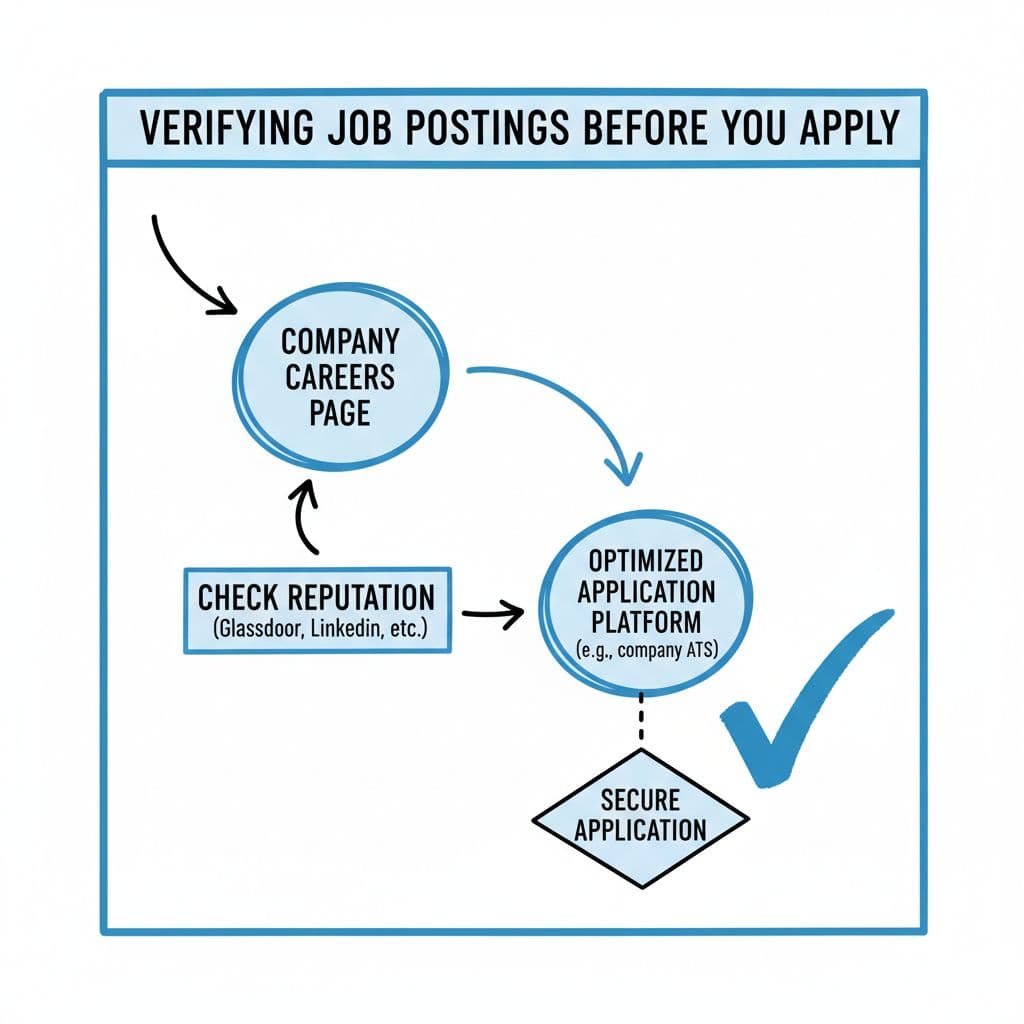
Use this short workflow before you reply:
- Find the role on the official company site.
- Confirm the recruiter’s email matches the company domain.
- Research the company by searching the company name with terms like “scam,” “complaint,” or “review.”
- Refuse any request for money, gift cards, wire transfer, crypto, or early identity documents.
A real employer may ask for payroll and tax details after a written offer. A scammer asks far earlier.
The interview process matters too. Instant offers, text-only interviews, and pressure to act today are major red flags. Most real hiring teams, including hiring managers and recruiters, schedule calls, answer questions, and give you time to think while following professional standards. A legitimate job will have a transparent process. If a company skips that and pushes urgency, walk away.
Privacy is another line you shouldn’t cross early. ProPublica’s reporting on fake job ads warns job seekers to be careful with early requests for personal information like a driver’s license, Social Security number, or bank details. That information belongs much later in the process, not at first contact.
Protect your search without becoming paranoid
You don’t need to treat every opening as a scam. You do need proactive search hygiene with a repeatable filter.
Scammers often mimic recruitment marketing techniques from social media to lure victims into data collection traps. According to the Bureau of Labor Statistics, current employment trends make it essential to prioritize legitimate opportunities over suspicious ones.
A good rule is simple: verify first, customize second. Once a posting checks out, then tailor your materials. That’s where CareerScribeAI can help in a practical way. Its AI Resume Builder can align your resume to the real job description, the Cover Letter Generator can match tone and requirements, and the Interview Prep Tools can help you prepare for actual recruiter calls that may lead to a job offer, instead of suspicious chat-only exchanges.
That order matters because scammers want rushed action. They want your resume, your data, or your attention before you’ve checked anything. A calm workflow keeps you in control.
If a listing starts to look suspicious after you’ve applied, stop contact right away. Don’t open attachments from unknown senders. To report fraud, flag the ad directly on the job board’s reporting tool, alert the real company if its name was used, and consider notifying authorities like the FTC. If you already shared sensitive information, change passwords and monitor your accounts.
It’s also smart to keep your materials organized. Separate tailored resumes by employer, save the original job ad, and note where you found it. If something changes later, you’ll have a record. If you need setup help, learn how to use CareerScribeAI to build resume versions, manage application details, and keep your search tidy.
A careful process does more than block scams. It also helps you focus on jobs worth your time.
Frequently Asked Questions
What are the most common signs of a fake job posting?
Look for high pay promises for simple tasks, vague job descriptions, postings from free email domains, identical ads across multiple boards, or roles missing from the company’s careers page. Mismatches like senior experience for entry-level pay or jobs that linger too long are also warnings. Even AI-polished grammar doesn’t override these substantive clues.
How do I verify a job posting before applying?
Go directly to the employer’s official website and search their careers page for the role. Confirm the recruiter’s email uses the company domain, not Gmail or lookalikes, and research the company with terms like ‘scam’ or ‘review.’ Use this quick check to avoid hijacked ads flagged by the FTC.
What should I do if a ‘recruiter’ asks for money or personal info early?
Refuse immediately and walk away—real employers never request payments, gift cards, or sensitive details like SSNs before a formal offer. Pressure for instant action or text-only interviews are major red flags. Report the scam to the job board, the impersonated company, and authorities like the FTC.
Can tools help spot fakes and streamline safe applications?
Yes, tools like CareerScribeAI analyze postings for red flags, fit, and compensation before you invest time. Once verified, use its resume builder and interview prep to tailor for real jobs efficiently. This verify-first approach keeps your search secure and focused.
Conclusion
Fake job postings work because they create pressure. The best defense for job seekers is a short, repeatable check for trust before you send anything personal.
Look for the job on the company site, verify the recruiter, and slow down when a posting feels off. That small pause can save hours, protect your identity, and keep your energy pointed at real job openings.