
A strong interview starts before you walk into the room or join the call. Thorough interview preparation should reduce interview anxiety, keep your examples close at hand, and help you look prepared without hauling around a suitcase. Using a reliable job interview checklist along with smart interview day tips ensures you make a great impression and fit right in with the company culture.
Knowing what to bring to a job interview also depends on the format. An in-person meeting, a hybrid interview day, and a video call each require a slightly different setup. Start by gathering your interview essentials and reviewing your job interview checklist, then add only what the role and the hiring manager request.
Key Takeaways
- Bring essential physical items for in-person meetings, including multiple copies of your tailored resume, a reference list, a notebook, and a list of thoughtful questions.
- Tailor your checklist with role-specific materials, such as portfolios or project summaries, while keeping your work samples selective and free of confidential data.
- Prepare for virtual and hybrid interviews by setting up your technology in advance, keeping digital copies accessible, and minimizing desktop distractions.
- Leave unnecessary items, heavy clutter, and unrequested personal documents at home to maintain strong body language and focus.
- Complete your interview preparation the night before by packing your items, confirming travel details or meeting links, and planning a prompt thank-you note.
The Essential Job Interview Checklist
For an in-person interview, carrying your materials in a clean folder, portfolio, or slim professional bag is a core part of physical interview essentials. Keep everything flat, easy to find, and free of old paperwork as you finalize your interview preparation.
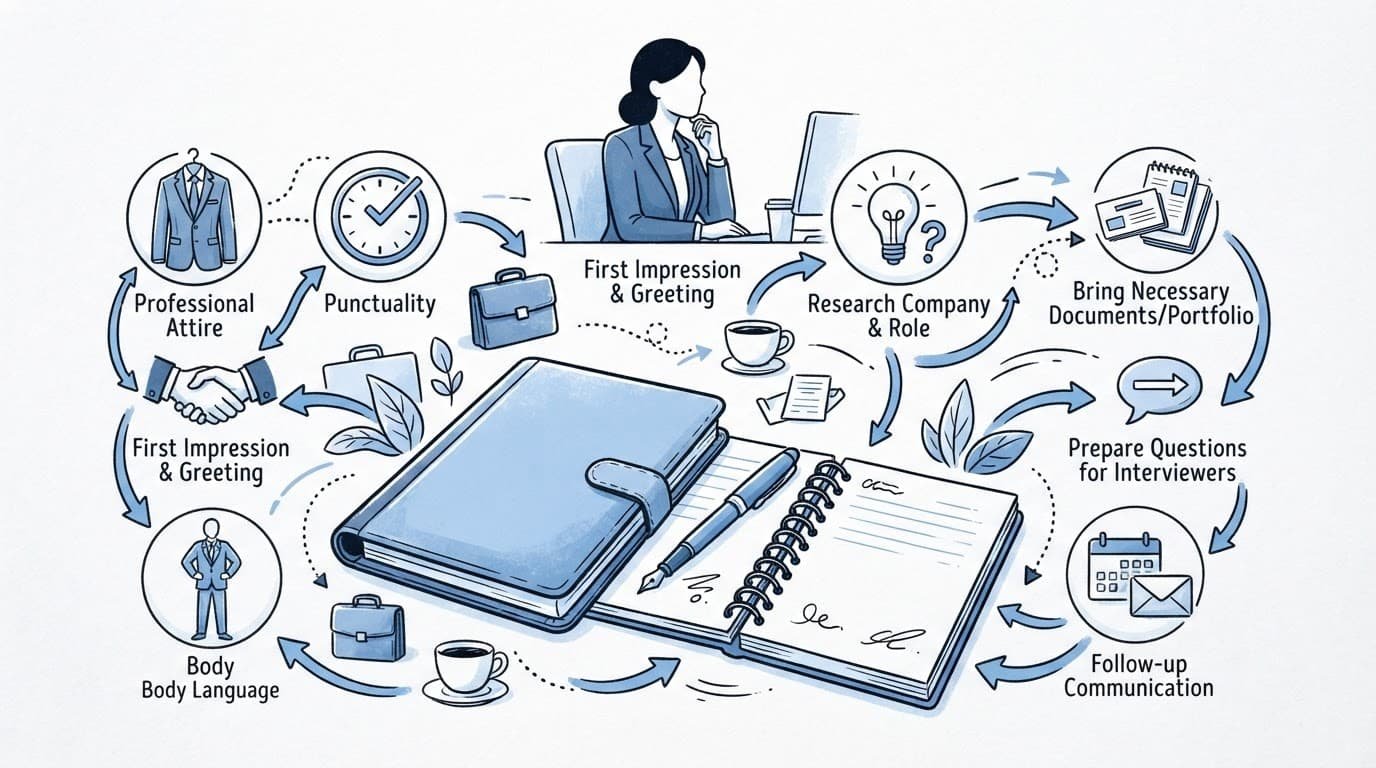
Use this job interview checklist to bring these items to almost every in-person meeting:
- Five copies of your tailored resume. Print on clean, plain paper and check that every version matches the resume and cover letter you submitted. Extra copies help if an unexpected interviewer joins the conversation.
- A reference list, when appropriate. Include each reference’s name, title, company, phone number, and email. Don’t hand it over unless asked, but have it ready.
- A small notebook and working pen. Write down names, next steps, and details about the role. Avoid taking notes on your phone unless the hiring manager invites it.
- A short list of questions. Prepare three to five questions, then ask the ones that haven’t already been answered. Thoughtful asking questions shows you take the time to research the company before arriving. The UC Davis interview preparation guidance recommends bringing two or three questions, including one about hiring timelines.
- Government-issued identification or requested documents. Some offices need photo ID at reception. If the employer asked for certifications, work authorization documents, a license, or transcripts, pack them the night before.
Your resume should do more than repeat job titles. Review the job description and be ready to explain the results behind your strongest bullet points, especially when anticipating common interview questions from the hiring manager. To ace this part of your interview preparation, carefully study the job description again and research the company values. The Indeed interview checklist also recommends practicing answers before the meeting and refining your resume and cover letter details.
A notebook is useful for details you cannot predict, such as the team’s current priorities, the interviewer’s name, and the promised follow-up date.
Add Role-Specific Materials Only When They Fit
A job interview checklist works best when it matches the role. A graphic designer may bring a tablet with a curated portfolio, a sales candidate might carry a one-page account plan, a teacher could bring a sample lesson plan, and a software developer may prepare a brief walkthrough of a public GitHub project. These materials provide tangible evidence of your professional experience, aligning directly with the core requirements listed in the job description.
Keep work samples selective. Two or three relevant pieces create a clearer impression than a thick binder full of old work. Remove confidential client data, internal dashboards, and anything covered by a non-disclosure agreement.
For creative, technical, research, and client-facing roles, bring a printed one-page project summary. Include the problem, your contribution, and the measurable outcome so a hiring manager can easily scan your work without taking control of the conversation.
Your materials should also support your story. The walk me through your resume guide can help you shape a focused 60 to 90-second career summary that highlights your relevant professional experience. Use the same job description to identify likely behavioral interview questions and common interview questions, then rehearse your examples with the STAR approach: Situation, Task, Action, Result. When you prepare for behavioral interview questions and common interview questions using the STAR approach, you give the hiring manager clear proof of your capabilities.
To build extra confidence, practice answers aloud, run through a mock interview, and prepare thoughtful ways to discuss your strengths and weaknesses. CareerScribeAI’s AI Resume Builder and Cover Letter Generator can help align your application documents before the interview. Its Interview Prep Tools can also turn the job posting into practice questions tied to the skills the employer named.
What to Bring to a Virtual or Hybrid Interview
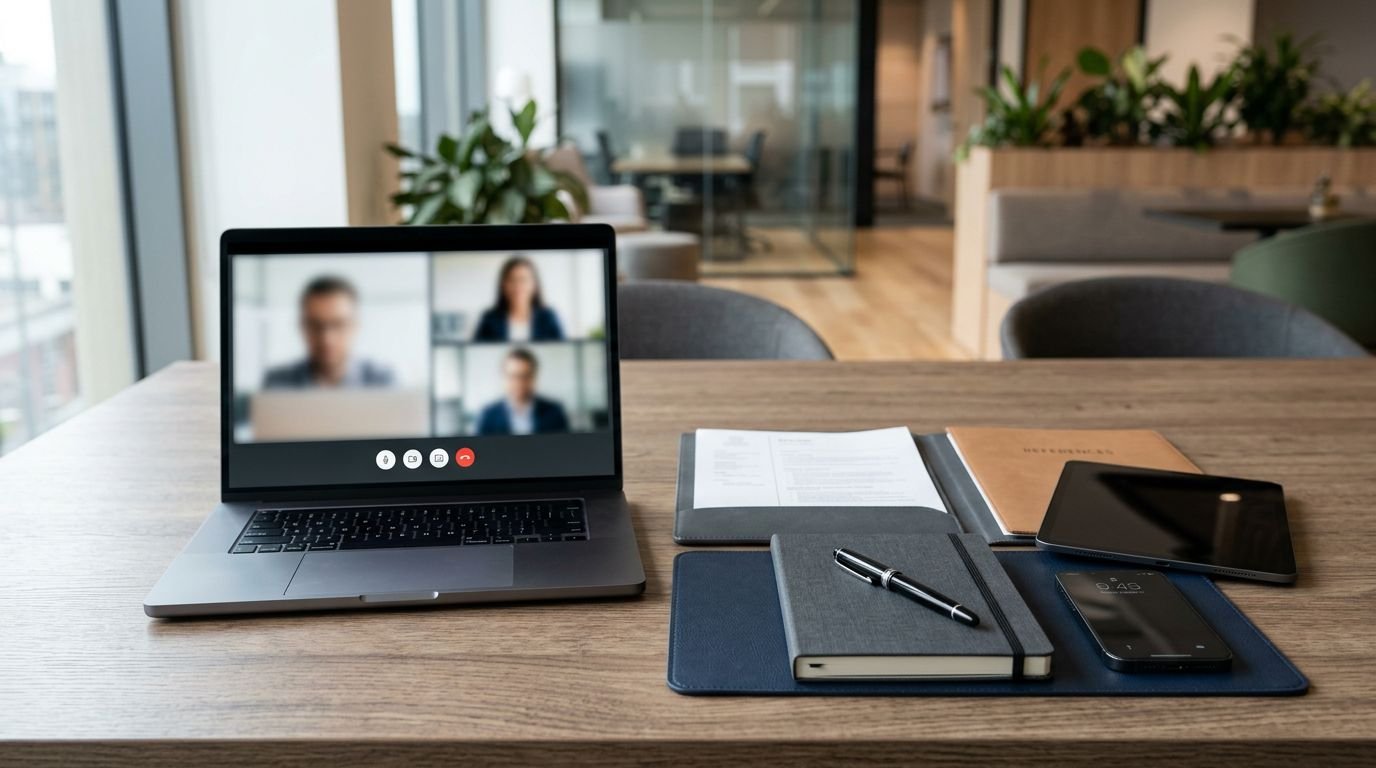
A virtual interview requires fewer physical items, but thorough interview preparation still matters. Set out your resume, job description, notebook, questions, and a glass of water before you join. Keep them beside your computer, out of the camera frame.
Bring charged technology only when the employer requests it. For example, a recruiter may ask you to complete an online exercise on your laptop or share a work sample from a tablet. Otherwise, use the device specified in the invitation and keep a charger nearby as backup.
As part of your video interview setup, test your camera, microphone, internet connection, and meeting link the day before. Join five to 10 minutes early, then silence phone alerts and desktop notifications. A clean background, front-facing light, and proper webcam positioning help the interviewer focus on your eye contact and body language.
For a hybrid interview, follow essential interview day tips by preparing both physical and digital setups. Pack printed resumes and your job description, but also carry your fully charged laptop if the schedule includes a virtual panel, assessment, or presentation. Confirm the itinerary with the recruiter if the format is unclear.
Effective interview preparation means your digital job interview checklist should also include a saved copy of the meeting invitation and the recruiter’s contact details. If your connection fails, you can quickly send a professional update rather than scrambling for an email address.
Leave These Items at Home
Bring items that help you communicate, not objects that distract from you. Even when you dress professionally and match the company culture, carrying unnecessary physical items can hinder your natural body language or eye contact. Gum, strong perfume, noisy snacks, shopping bags, and overstuffed backpacks can pull attention away from the conversation.
Don’t arrive with a pile of unrelated certificates, every job application you’ve made, or personal documents the employer didn’t request. Bringing unneeded clutter or prematurely focusing on complex topics like salary expectations can increase interview anxiety before the conversation even begins. Keep your phone on silent and out of sight. Avoid opening it to check messages during a conversation.
You also don’t need to bring a memorized script. Notes are useful, but positive body language and a natural answer matter more. Prepare several accomplishment stories and adapt them to the question in front of you.
Frequently Asked Questions
How many copies of my resume should I bring to an interview?
It is best to bring five clean, printed copies of your tailored resume. This ensures you have enough for unexpected interviewers or multiple panel members who may join the conversation.
Can I use my phone to take notes during an interview?
Avoid taking notes on your phone unless the hiring manager specifically invites you to do so. Instead, bring a small physical notebook and a working pen to record names and next steps.
What role-specific materials should I include in my checklist?
Depending on your profession, you might bring a curated portfolio, a sample lesson plan, or a printed one-page project summary. Keep these materials selective and ensure they directly align with the core requirements in the job description.
How should I prepare for a virtual interview setup?
Test your camera, microphone, internet connection, and meeting link the day before the interview. Keep your resume, job description, notebook, and a glass of water nearby but out of the camera frame.
Final Check Before You Leave
The best job interview checklist is short enough to use. Pack your tailored resumes, notes, questions, ID, and any role-relevant work samples the evening before. Then confirm the location or meeting link, travel time, and interviewer’s name. Thorough interview preparation gives you room to listen, ask better questions, and explain your experience with confidence.
As part of your post-interview follow-up, remember to send a prompt thank you note to the hiring manager within twenty-four hours. Reviewing your job interview checklist and wrapping up your interview preparation will keep your mind at ease. Bring what supports the conversation, and use these interview day tips so you can follow up with a thoughtful thank you note and let your work carry the day.