


Understanding the difference between a recruiter screen vs hiring manager interview is essential, as these two meetings often happen within days of each other yet serve entirely different purposes. If you prepare for an initial recruiter screen the same way you handle a deep dive with a hiring manager, you can sound polished while still missing the specific details each interviewer needs to hear.
A recruiter phone screen is designed to check whether moving you forward in the process makes sense for both parties. In contrast, a hiring manager interview evaluates whether you have the technical skills to do the job, the cultural fit to work on this specific team, and the resilience to handle real business pressure. Once that distinction clicks, your preparation for every stage of your job search becomes much easier.
Key Takeaways
- Different Goals: Recruiters screen for high-level alignment, such as location, salary, and general qualifications, while hiring managers focus on specific technical skills and your ability to perform the actual job.
- Tailored Communication: Aim for concise, structured answers with recruiters to show you meet the baseline criteria, but provide detailed, story-driven responses to hiring managers to demonstrate your expertise.
- Strategic Preparation: Use the recruiter stage to clarify logistics and timeline, and save your deep-dive examples and targeted technical questions for the hiring manager conversation.
- Building the Picture: While a recruiter determines if you belong in the candidate pool, the hiring manager needs to visualize you succeeding in the role and working effectively with their existing team.
Where each interview fits in the hiring process
Most organizations follow a structured hiring process that begins with an application review, followed by an initial interview process. This usually starts with a recruiter conversation before moving on to one or more rounds with the hiring manager and the broader team. Larger employers may incorporate technical assessments, panel interviews, or executive meetings. While smaller companies sometimes combine these steps to move faster, the core purpose of each stage remains consistent.
A recruiter acts as the first human gate in talent acquisition. Whether they are an external headhunter or an internal recruiter, this individual is tasked with sourcing candidates and screening for baseline requirements. They evaluate compensation alignment, work authorization, location, availability, and general communication skills. Indeed’s breakdown of recruiter and hiring manager roles matches what many candidates experience in practice.
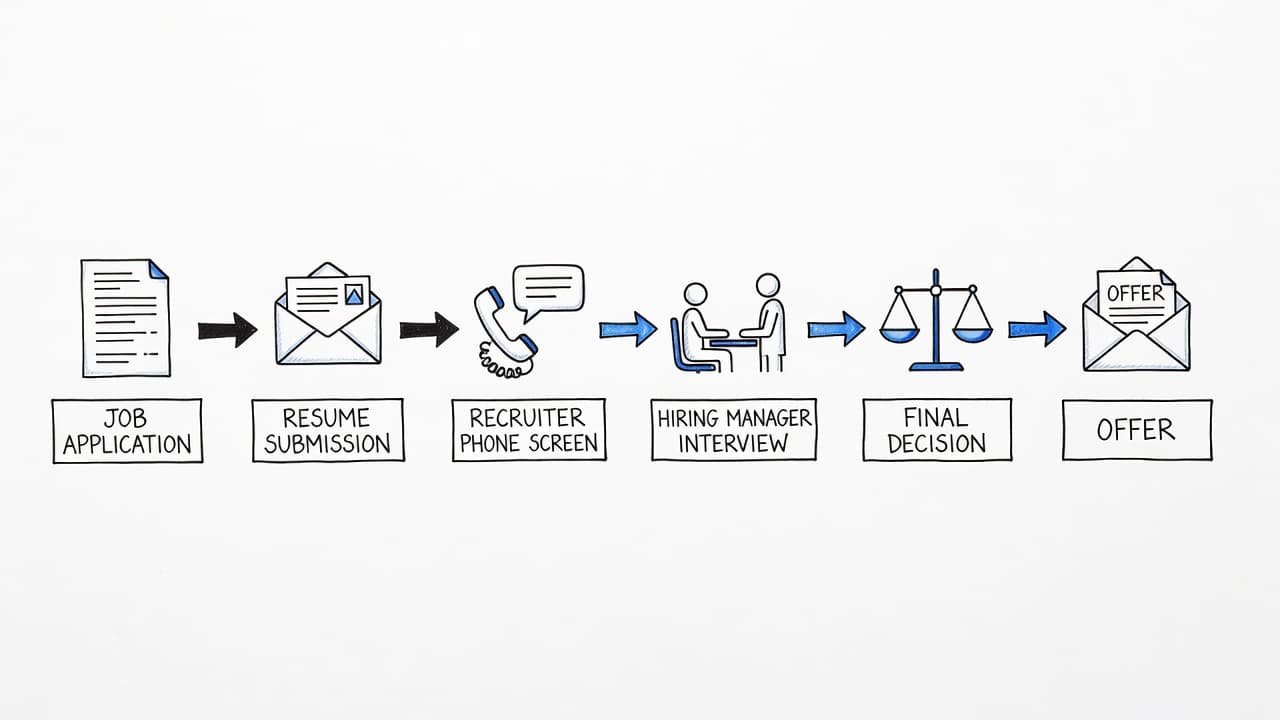
The hiring manager, who serves as the direct supervisor, enters the process later because they own the specific role. They are primarily concerned with whether you can solve the team’s current problems, master the necessary workflows, and collaborate effectively with existing staff. Salary and logistics remain part of the conversation, but they are not the primary focus of this stage.
This distinction is why a recruiter might ask, “Walk me through your background,” while a manager asks, “Tell me about a time you improved this exact process.” One question checks for high-level alignment, while the other requests concrete evidence of your abilities.
When you understand the sequence of these steps, the stress of the job search drops significantly. You can stop trying to prove everything in round one and instead provide each audience with the specific information they need at the right time.
Recruiter screen vs hiring manager, the real differences
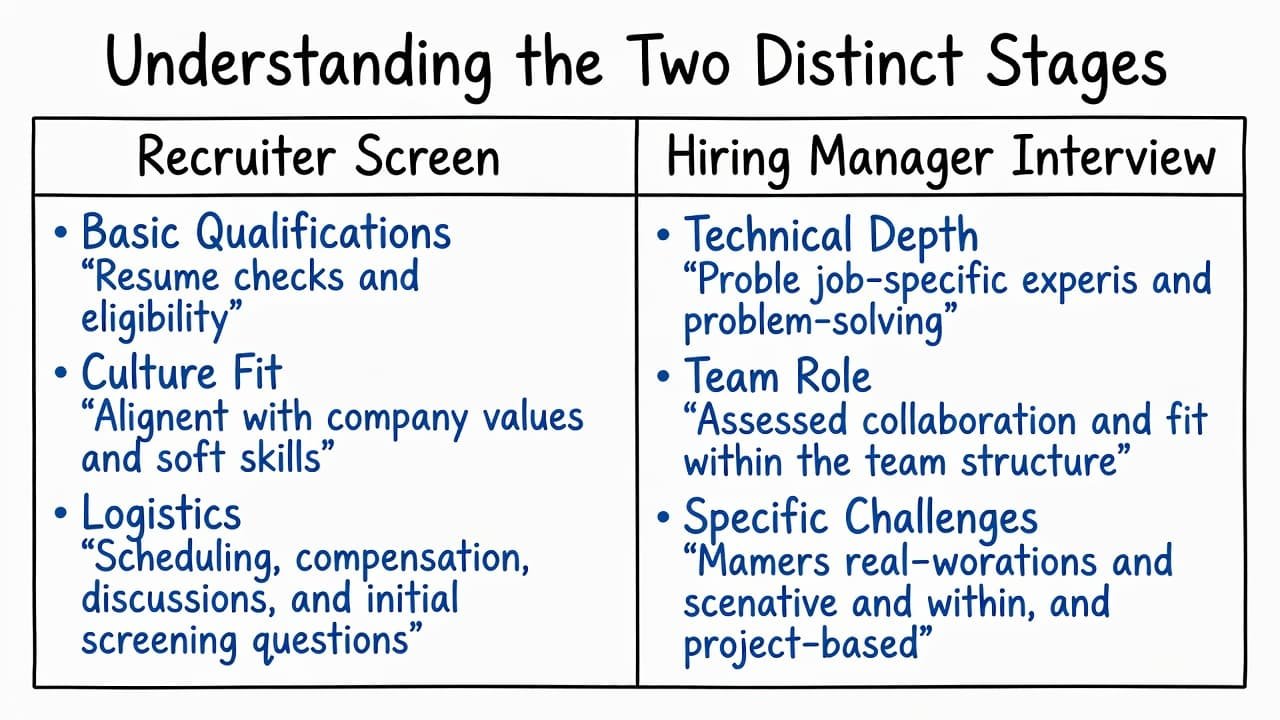
The fastest way to understand the differences between recruiters vs hiring managers is to compare what each stage evaluates during the interview process.
| Stage | Main focus | Typical questions | What matters most |
|---|---|---|---|
| Recruiter screen | Broad fit | Salary, timing, resume highlights, location | Clear match to the posting |
| Hiring manager interview | Job performance | Projects, tradeoffs, results, decision-making | Proof you can do the work |
The short version is simple: recruiters focus on screening candidates for general process fit, while managers screen for fit to the actual work.
A recruiter usually wants concise, structured answers. Rambling hurts you here because they are mapping your background to a checklist. If the role asks for Salesforce, stakeholder management, and three years in SaaS, your answer should surface those points early.
A hiring manager wants depth. They listen for judgment rather than just buzzwords, with a specific focus on your technical skills. Strong answers include context, actions, numbers, mistakes, and lessons. If you say you led a launch, expect follow-up questions regarding team size, deadline pressure, metrics, and what went wrong.
Treat the recruiter as the person checking your alignment, and the manager as the person checking your substance.
For another outside perspective, this LinkedIn comparison from career coach Lucy Gilmour captures why the same answer can land differently when presented to recruiters and hiring managers.
One more difference matters. Recruiters often decide whether you move forward quickly. Hiring managers often decide whether they can picture you doing Monday morning work with their team. That mental picture is what you need to build.
How to prepare for each stage without wasting effort
Good interview preparation starts before the call. Read the job description closely, then pull out the requirements that repeat. Those repeated items usually shape both rounds, but you should talk about them in different ways.
Before the recruiter phone screen or initial screening
Keep your story tight. A 60 to 90-second summary works best for most conversations with recruiters. Lead with your current role, your most relevant experience, and one or two measurable wins that match the posting.
Also, know the basics cold:
- Your target compensation range
- Your location and remote preference
- Your notice period or availability
- Why this role fits your next move
- A few questions about timeline and interview steps
If your resume feels too broad, this is where tailored documents help. CareerScribeAI’s AI Resume Builder can help you align resume language to a job description before the recruiter ever calls. Its Cover Letter Generator can also help when you need to explain a career change, a return to work, or a move across industries.
Before the hiring manager interview
Now go deeper. Study the company, the team, and the job itself. Review the firm’s site, recent news, product pages, and public job posts. Then build four or five stories that prove the skills this role needs.
Use a simple structure: problem, action, result, lesson. Numbers help because they show scale. A manager will trust “cut onboarding time by 18 percent” more than “helped improve onboarding.”
This stage is also where mock practice pays off. CareerScribeAI’s Interview Prep Tools can turn a job description into likely questions and STAR-style answer frameworks. That helps when you need to prepare for technical, behavioral, or cross-functional interviews in a short window.
When preparing your own list of inquiries, remember that recruiters and hiring managers look for different things. Ask the recruiter about process and logistics. Ask the hiring team about priorities, success in the first 90 days, team structure, tools, and what strong performance looks like.
Finally, change your follow-up. After a recruiter screen, send a short thank-you that confirms interest and fit. After the interview with the hiring team, reference a business problem you discussed and restate how your experience applies.
Frequently Asked Questions
Should I ask the recruiter the same questions I ask the hiring manager?
No, you should tailor your questions to the person’s role in the process. Ask the recruiter about logistics, the interview timeline, and team culture, while asking the hiring manager about daily responsibilities, KPIs, and the biggest challenges the team is currently facing.
Can a bad recruiter screen keep me from ever meeting the hiring manager?
Yes, because the recruiter acts as a gatekeeper. If you cannot clearly explain your experience or fail to meet the baseline requirements like salary or work authorization, the recruiter will likely stop the process before the hiring manager is ever involved.
Is it okay to ramble if I have a lot of relevant experience?
It is generally better to avoid rambling with recruiters, as they often use a checklist to screen candidates. Keep your answers focused and concise so you can clearly hit the key requirements they are looking for, which saves time for both parties.
Conclusion
The biggest difference between a recruiter screen and a hiring manager interview is what each person is trying to prove. The recruiter is checking whether you belong in the process, while the hiring manager is focused on evaluating your technical fit and leadership potential to make a final hiring decision that eventually leads to a job offer.
Prepare for both stages with these distinct goals in mind. When your recruiter answers are clear and your manager answers are concrete, the entire interview process begins to feel less like guesswork and more like a strategic match you can actively shape. Mastering these distinctions ultimately improves your overall candidate experience, helping you feel more in control of your journey toward securing a new role.