


When you prepare to ask for reference support, remember that a reference check can shape the final hiring decision, even after a strong interview. If you select the wrong person, or reach out to the right person in the wrong way, you can lose momentum late in the process. Once a hiring manager or potential employer reaches out to verify your qualifications, they are looking for validation that you are the right fit for the role.
In 2026, most hiring teams move fast, screen on mobile, and work across remote or hybrid schedules. That means your reference request needs to be clear, respectful, and easy to answer. Start by choosing the right person.
Key Takeaways
- Select relevant, recent references: Prioritize professional contacts from the last three to five years who can speak directly to your work performance, skills, and accomplishments.
- Prioritize clarity and brevity: Send concise requests that clearly state the role you are applying for, the timeline for potential contact, and a graceful way for the contact to decline.
- Prepare your references: Once they agree, provide a ‘reference packet’ containing your current resume, the job description, and specific talking points to help them advocate for you effectively.
- Maintain communication: Keep your references informed throughout the hiring process, update them on the status of your application, and always send a sincere thank-you note once the process is complete.
Pick the right professional reference before you ask
Choosing the right professional reference is a critical step in your job search. Strong references know your work well enough to speak in detail about your contributions. A former employer or a previous supervisor is usually the best choice, as they can provide specific examples of your performance. If you are earlier in your career, a team lead, client, professor, or internship supervisor can also work if they oversaw your projects up close.
Recency matters when selecting who to include. In most cases, aim for people from the last three to five years. If you are changing fields, choose someone who can speak to transferable strengths like communication, problem-solving, or client work. While it might be tempting to use a personal reference or a character reference, keep in mind that employers prioritize professional interactions over personal ones. Always obtain explicit permission from these individuals before you share their contact information with a hiring manager or recruiter.
Use the contact method that fits the relationship. This quick comparison helps:
| Method | Best when | Why it works |
|---|---|---|
| You have a current address | Easy to scan and answer later | |
| LinkedIn message | You lost their email | Good for first contact, then move to email |
| Phone or video call | You know them well | Better for senior contacts or longer context |
Email is still the best default for requesting a reference. It gives the other person time to consider the request, and it creates a clean record of dates and job titles. Note that a LinkedIn recommendation does not replace a live reference check, so treat LinkedIn as a primary contact channel rather than a substitute for the full process.
Ask early. Two to three weeks before you expect final interviews is a safe window. That matters because many employers review candidates quickly, especially for remote roles. If you are moving fast, CareerScribeAI’s AI Resume Builder can help you tailor your materials quickly, and it helps to know when to send your job application.
Give people an easy way to decline. A polite no is better than a weak yes.
If you need a refresher on current norms, the University of Cincinnati’s reference guide is a helpful overview.
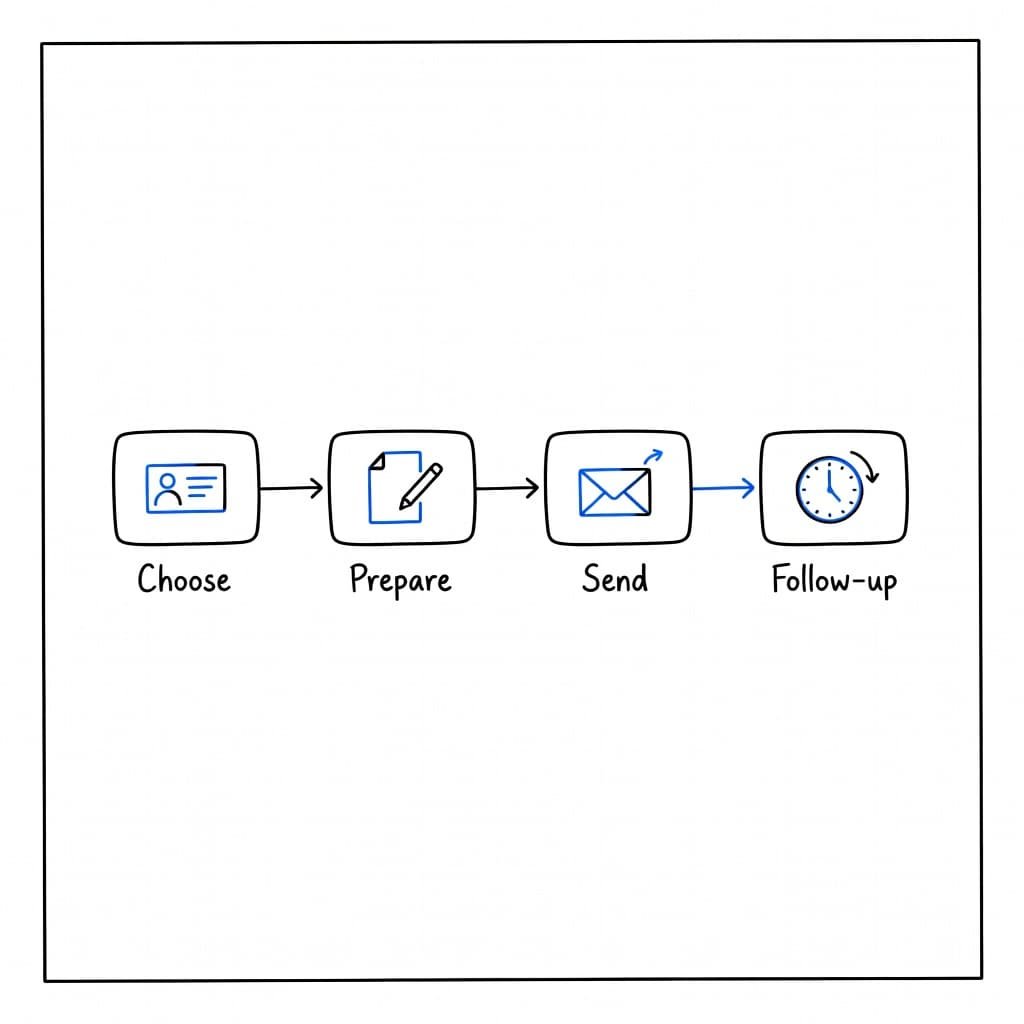
This four-step flow keeps the process clean and low-stress.
Write a reference request email that gets a clear yes
When you ask for a reference, answer the silent questions first. Why are you asking this person? What role are you applying for? When might they hear from the employer? How much effort will this take?
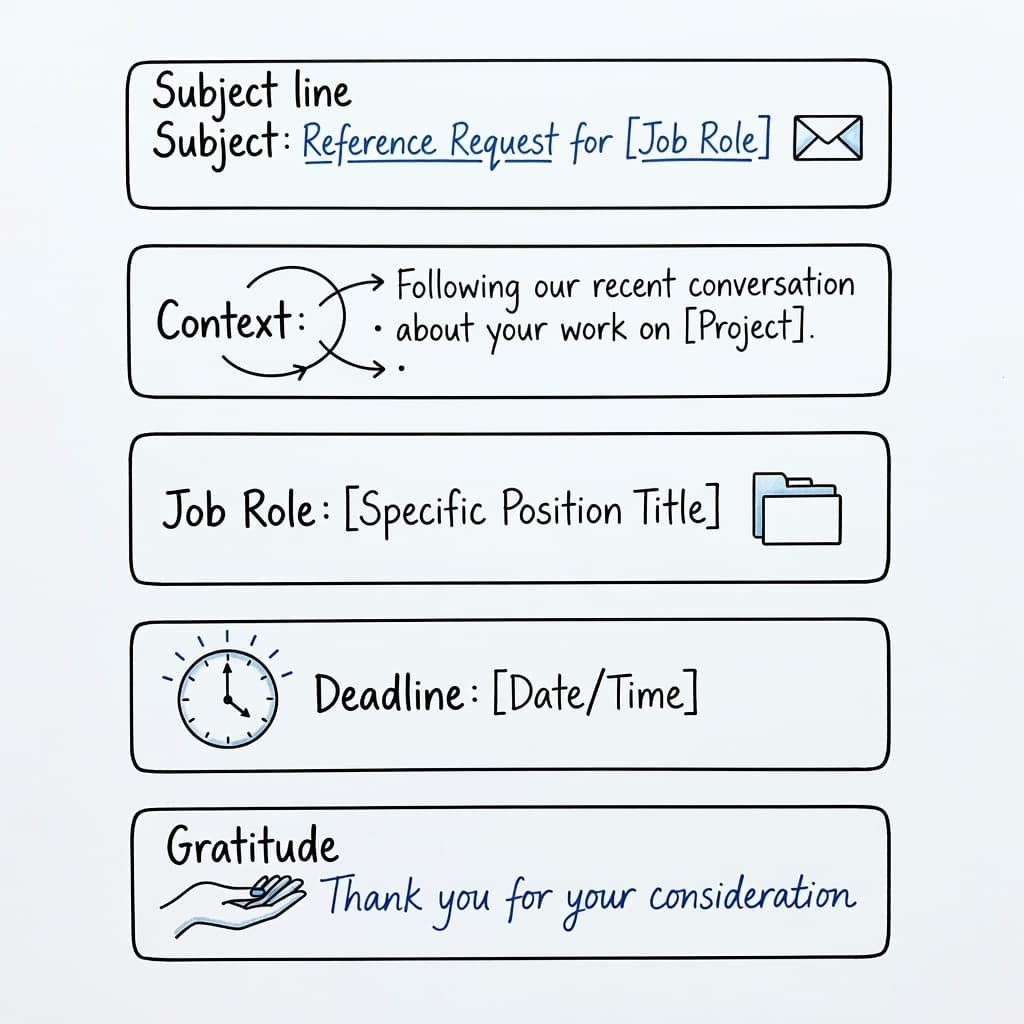
Keep the message short. Most people read requests on their phone between meetings, so a long email works against you. A strong reference request email checklist typically includes five things:
- A clear subject line that mentions the specific role or company.
- A brief reminder of how you worked together.
- A short explanation of why you value their perspective.
- A timeline for when they may be contacted.
- A graceful opt-out if their schedule is full.
Keep these parts in mind when you draft the note.
It also helps to tell references what the employer may care about most. The Illinois Times piece on best practices for requesting professional references makes that point well.
Email template for your request
Subject: Reference request for Product Analyst role at [Company]
Hi [Name],
I hope you are doing well. I am applying for a Product Analyst role at [Company], and I would be grateful if you would consider being a reference for me. We worked together on [project or team], and I believe you could speak to my work ethic as well as my key skills and strengths.
The hiring team may contact references within the next two weeks. If you are open to it, I will send my current resume, the job description, and a short summary of the work we did together to help you prepare.
If your schedule is too busy right now, I completely understand.
Thank you,
[Your Name]
Short LinkedIn message for a former colleague
Hi [Name], I hope you are doing well. I am applying for a new role and wanted to ask whether you would be open to serving as a reference. If so, I will send a short email with the job description and timing for your review.
Once they reply, move the conversation to email. That makes it easier to share your current resume, a tailored cover letter, or notes from CareerScribeAI’s Interview Prep Tools.
Keep references informed during a modern job search
Getting a yes is only the start. Your reference should never feel surprised when a recruiter reaches out to follow up via phone or email.
Before you share their details, always confirm you have their explicit permission. Once they agree, send a small reference packet that includes:
- your current resume
- the specific job description
- a summary of your relevant work experience
- three or four points you would like them to remember to help them vouch for you effectively
- the expected timeline and best contact details
These talking points are crucial because reference calls are often short. You might remind a former manager about a specific launch you led, a metric you improved, or a client issue you resolved. If you are tailoring each application, CareerScribeAI’s Cover Letter Generator can help you keep a consistent narrative across your resume, cover letter, and reference notes.
Remote and hybrid hiring adds another layer of complexity. Recruiters may call from unknown numbers, send a scheduling link, or follow up by email after business hours. Tell your references what to expect, and mention whether the role is remote, hybrid, or in-office. This context helps them accurately describe your communication style and independence to a prospective employer.
Also, keep them updated throughout the process. If you reach the final round, let them know. If you receive a job offer, share the good news. If the company delays, send a quick note to keep them in the loop. If you need help staying organized after interviews, these job application follow-up email templates can help you keep your outreach consistent.
Finally, send a sincere thank you note to every reference after they help. Providing an update on the final outcome keeps the professional relationship strong for your next search.
Frequently Asked Questions
Can I use a personal or character reference instead of a professional one?
It is generally best to prioritize professional references, as employers want to hear about your workplace performance and reliability. If you are very early in your career, you might use an internship supervisor or a mentor, but personal friends or family members are usually not considered strong enough for a professional reference check.
How far in advance should I ask someone to be a reference?
Aim to reach out to potential references two to three weeks before you expect your final interviews to begin. This gives them enough time to consider your request, look at your provided materials, and mentally prepare for a possible call or email from a recruiter.
Is it acceptable to send a LinkedIn message to request a reference?
Yes, a LinkedIn message is a great way to re-establish contact if you do not have their current email address. Once they agree to serve as a reference, you should move the conversation to email to make it easier to share your resume, job descriptions, and specific talking points.
What should I include in a ‘reference packet’ for my contacts?
Your reference packet should include your updated resume, the specific job description for the role you are applying for, and three to four key talking points. These points should remind them of specific projects, metrics, or strengths you want them to highlight when speaking with a potential employer.
Final thoughts
The best way to ask for reference remains consistent in its core principles: be respectful, be clear, and ask early. What has changed in 2026 is the speed of the modern job search and the specific context that professional contacts need to respond effectively.
A quality reference request does not need to sound formal for the sake of it. Instead, it should sound prepared. When you provide your references with the right information, you make it easy for them to say yes and help the hiring team move quickly toward a confident decision. By treating your references as partners in your career, you ensure they can advocate for you when it matters most.