


Strong construction resume examples connect safe work practices with completed work, quality standards and deadlines. Your resume should show what you contributed, using results you can explain honestly.
A credential alone won’t describe your jobsite habits. Start by making your strongest qualifications easy to find, then support them with specific work examples.
1. Put Your Strongest Qualifications First
Plan for an initial scan of about six seconds. Keep a construction worker resume to one page; two pages are reasonable with roughly 10 or more years of relevant experience.
Use reverse chronological order for most applications. A hybrid or functional format can help career changers or workers with employment gaps, but keep employer names and dates visible.
Include your city, state or province, phone, professional email and optional LinkedIn profile. Omit your full address, photo, birth date and marital status.
Use a simple construction resume template with bold section headings, one column and minimal graphics. This clean layout helps an ATS parse the file.
Choose Arial, Calibri or Verdana at 10-12 points.
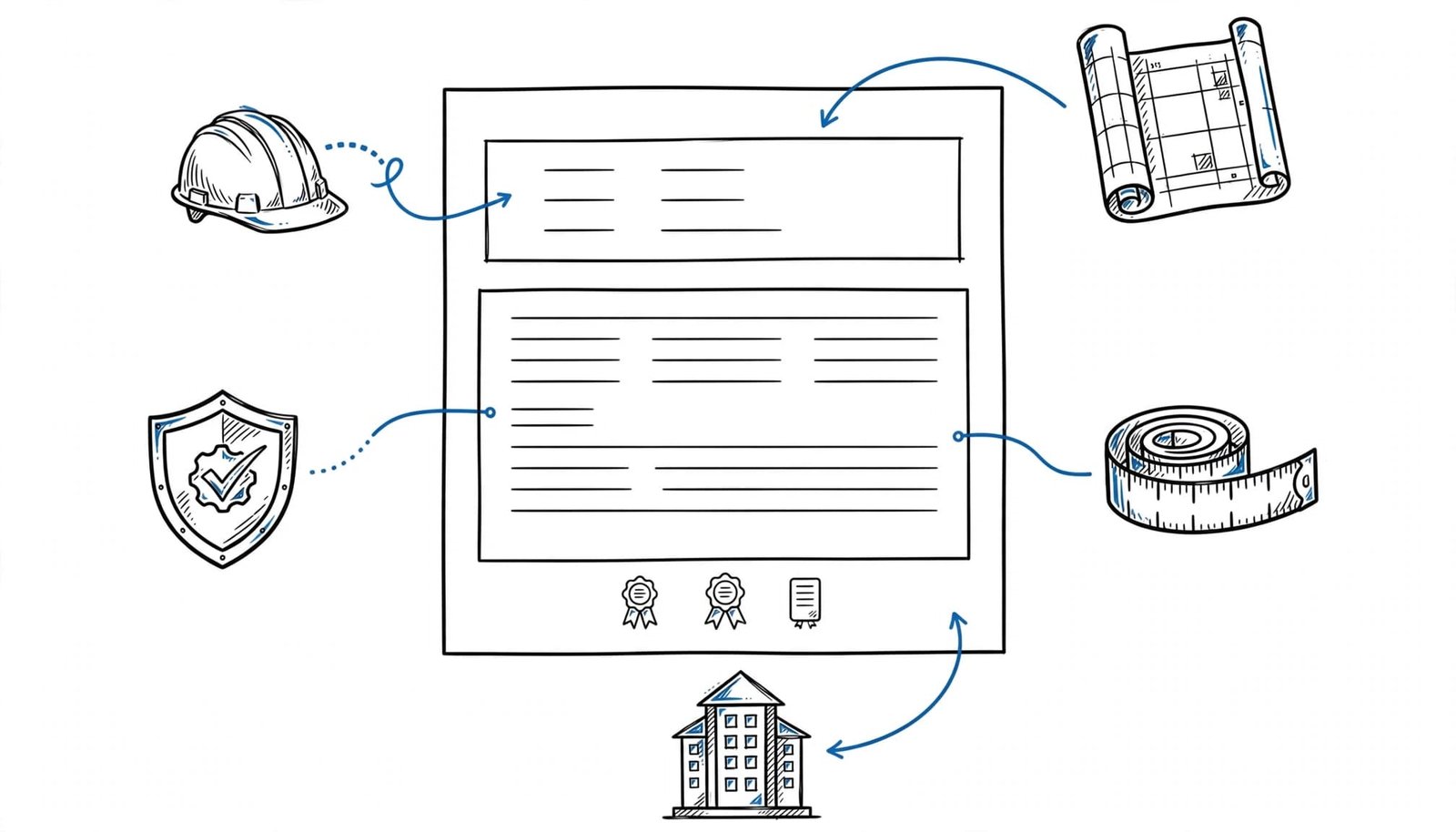
2. Follow This Single-Page Construction Resume Model
Header, Profile and Skills
Arrange your page in this order: contact details, profile, skills, experience, then education and training.
Experienced workers need a two- or three-sentence resume summary. Adapt this wording only when it matches your background:
Carpenter experienced in framing, blueprint reading and renovation work. Coordinates daily tasks with supervisors and maintains clear access routes during material deliveries.
Entry-level applicants can use a short resume objective that names the target company. Focus on relevant training and what you’ll contribute, rather than personal career ambitions.
Work Experience and Qualifications
On a construction worker resume, place your actual job title, employer and dates above three or four bullet points per position. Use up to six when each adds distinct evidence.
These construction resume examples connect actions with observable outcomes:
- Maintained clear access routes during deliveries so crews could move materials without blocked walkways.
- Installed framing to plan dimensions and resolved discrepancies with the foreman before close-in.
- Coordinated material staging with other trades to keep scheduled work areas accessible.
Each bullet starts with an action verb. Add quantities only when your records support them.
Finish with education, apprenticeship status, completed training and relevant credentials.
3. Adjust Your Evidence to Your Experience Level
Entry-Level Workers and Apprentices
On a construction worker resume, include supervised training, shop projects, volunteering, or transferable work relevant to the job. Warehouse experience can demonstrate safe material handling, reliability, and teamwork.
For apprenticeships, list your trade, program, current level, and documented hours. Label ongoing training “in progress”; never present unfinished training as a completed qualification.
Mid-Career Tradespeople
Show safety compliance with a specific action: “Reported damaged extension cords and removed them from service under site procedures.”
Choose work experience that fits the role. Use bullet points for trade-specific evidence: electricians can cite documented conduit runs, circuit identification, or inspection acceptance; plumbers can report pressure-test results; concrete finishers can give placement area and accepted finish quality. Keep every claim within your actual responsibilities.
Superintendents and Project Managers
Show crew size, project scope, schedule performance, and budget responsibility. Distinguish budgets you controlled from the total project value.
Attribute team results accurately. “Coordinated subcontractor sequencing” is more precise than claiming sole credit for an entire project’s completion.
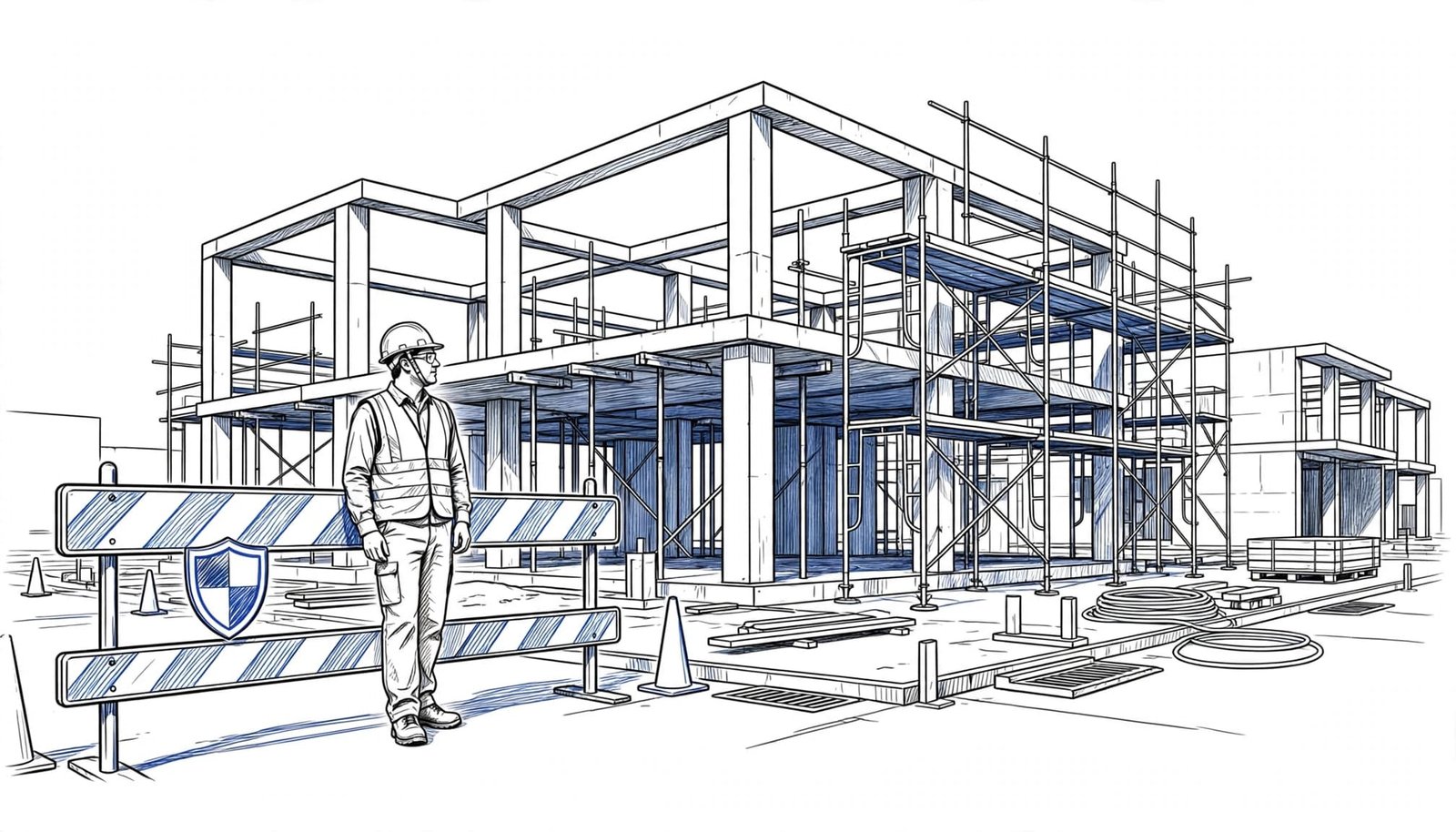
4. Match Skills and Safety Credentials to the Job
Mirror relevant job-description wording in your skills section and experience bullets. An applicant tracking system (ATS) looks for recognizable terms, but keywords can’t guarantee selection. Compare your examples with the job description, and use ATS-friendly wording only when it accurately describes your work.
Ten useful skills, when accurate, are blueprint reading, heavy equipment operation, power tool operation, OSHA safety standards, framing, drywall installation, material handling, measurement, site preparation and equipment inspection.
Demonstrate communication, teamwork, time management, reliability and problem solving through work examples instead of listing them alone.
For U.S. roles, list completed OSHA 10-Hour or 30-Hour Construction training and relevant trade certifications. Connect the training to safe work practices and safety compliance. OSHA’s Outreach Training Program provides hazard-awareness training; its cards aren’t professional certifications.
Canadian postings may request WHMIS or Construction Safety Training System (CSTS) training. Also include relevant forklift operator training and CPR/First Aid, with completion dates.
Management certifications can include Certified Construction Manager (CCM), Project Management Professional (PMP) and LEED Accredited Professional (LEED AP). Avoid the vague label “OSHA Safety Certificate” when you can name the actual course.
5. Find Honest Numbers Before Using AI
Use timecards, daily reports, delivery tickets, drawings and inspection records to recover quantities. These can support crew sizes, installed quantities, square footage and completion dates.
If only a defensible approximation exists, label it “approximately.” Don’t invent percentages or claim “zero incidents” without a defined period and reliable records.
Harvard’s resume guidance recommends highlighting your strongest relevant qualifications. Our AI Resume Builder at CareerScribeAI.com can help organize and strengthen that evidence, then export PDF or DOCX files.
Accept suggested metrics only when they match your records. Use our Interview Prep Tools to practice explaining the situation, your action and the outcome.
Key Takeaways
Prioritize documented scope and results, accurate training names and readable formatting. Every safety claim should describe something you did, while every number should have an explanation behind it.
Frequently Asked Questions
Should I Include a Cover Letter?
Include one when requested or when it adds useful context. Zety reports that 40% of hiring managers consider cover letters mandatory. Our Cover Letter Generator can help connect relevant experience to the specific opening.
How Many Skills Should I List?
Zety reports about 10 skills per construction resume. Treat that as context, not a quota. Choose relevant skills you can demonstrate.
What Do Construction Pay Figures Mean?
Historical BLS figures include a May 2023 median annual wage of $55,680 and roughly 663,500 projected annual openings. These aren’t current salary quotes.
Build a Resume You Can Defend
Your strongest construction resume connects safe practices with work you completed and results you can explain.
Choose your most relevant evidence, tailor it to the posting and keep every claim truthful. That gives you material for both the application and the interview.