


Multiple offers can create more pressure than a long job search. When you’re choosing between job offers, the highest salary may look decisive. Yet it can hide a poor manager fit, an exhausting commute, or limited growth.
Each job offer should be judged by the work, support, and future opportunities it provides. A good decision weighs your weekly experience against the future it creates. Let evidence and personal priorities guide the choice.
Use the written offers, notes from the interview process, and follow-up answers from the recruitment process. Together, they can support a decision you explain clearly to yourself.
Key Takeaways for Comparing Job Offers
- Compare financial compensation, not salary alone. Review the full salary package and benefits package, including bonuses, equity, retirement match, health premiums, PTO, and work-related costs.
- Give extra weight to the direct leader, because their management style will shape your daily experience.
- Assess career progression through the role’s scope, learning access, promotion path, and marketable skills.
- Test company culture and work-life balance against real evidence, not employer branding.
- Use a weighted decision matrix for clarity, then take a final gut check before accepting.
Compare Total Compensation and Real-Life Costs
A higher base salary can lose its advantage after commuting, health insurance premiums, or reduced retirement contributions. Start evaluating a job offer with the written compensation details, including bonus criteria, equity vesting schedules, and employer contributions.
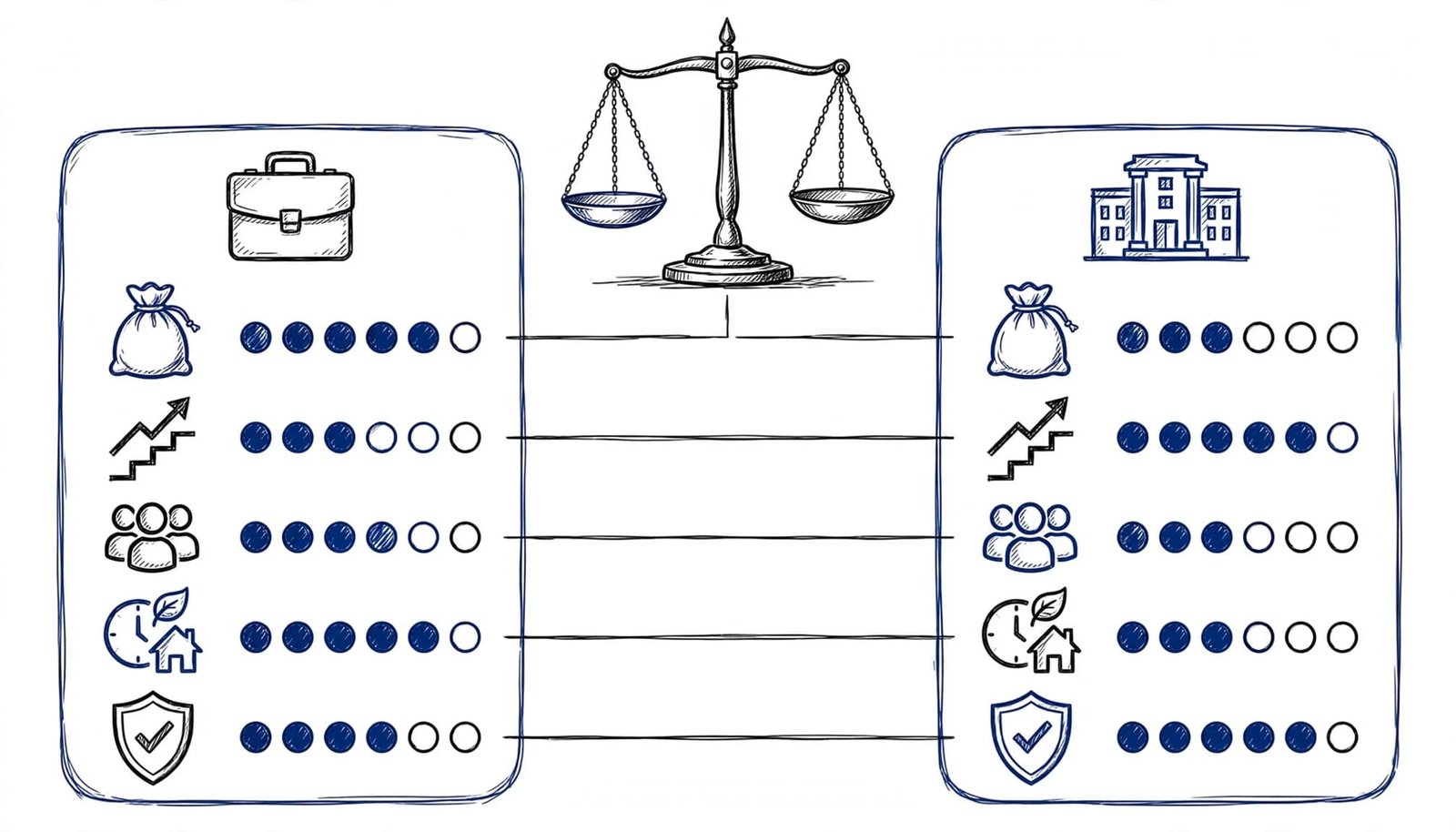
Calculate the full first-year package
Add base pay, realistic annual bonus, signing bonus, employer retirement match, and the estimated value of equity that vests in year one. Then subtract employee health-plan costs and job-specific expenses.
A useful starting point is the job-offer comparison approach, which recommends annualizing compensation components before comparing different salary and bonus structures. Review pay data for your role and location with the 2026 Robert Half Salary Guide before deciding whether an offer is competitive.
Account for time, commute, and flexibility
A $10,000 salary difference doesn’t have the same value in every situation. Calculate parking, transit, fuel, meals near the office, and the time spent on your daily commute each week. Also compare required office days, travel expectations, on-call duties, flexible working options, hybrid schedules, and remote work arrangements.
A role that protects two hours of commuting time each workday may offer more usable value than a modest pay increase.
If the offers differ in location or hybrid policy, make a one-year view and a three- or four-year view. A signing bonus is temporary, while an annual retirement match or recurring equity can compound.
Assess Career Growth, Manager Fit, and Company Culture
Pay matters, but career decisions also determine what experience you can claim in your next interview. Look closely at the problems you will own and the person who will guide your work.
Check the strength of the learning path
Read each job description again. Which offer provides stronger ownership, deeper learning, and a clearer career path with marketable experience you’d be proud to describe on a resume in two years?
CareerScribeAI’s AI Resume Builder and Job Description Analyzer can compare your verified experience with each role’s requirements. Its Skills Gap Analyzer can also identify what you’d need to learn before pursuing your next target role. That makes career growth less abstract.
Ask each employer about promotion criteria, training budgets, internal mobility, and professional development support. Also ask how the team measures success in the first 90 days. Clear answers point to a better-defined opportunity.
Treat the direct leader as a major criterion
Your direct leader has more impact on your workload and development than a polished company mission statement. Ask how that manager gives feedback, delegates work, handles missed deadlines, and supports your growth.
Loyola Marymount University’s offer evaluation guidance recommends considering whether a manager can mentor you and whether their style suits you. During the recruitment process, compare how promptly each leader answered questions and whether their explanations matched other interviewers’ accounts. The interview process should reveal consistent expectations.
Company culture also shows up in details, not just employer branding or stated core values. Notice whether interviewers described collaboration with examples, respected scheduled time, and gave consistent answers about priorities and turnover.
Use a Weighted Decision Matrix, Then Negotiate
A pros and cons list is useful, but it can give minor perks the same importance as job security or career progression. A weighted decision matrix makes your priorities visible without turning your career into a spreadsheet exercise.

Score the factors that matter most
Choose five to seven categories. Assign each a weight from 1 to 5, then rate each offer from 1 to 5. Multiply the weight by the rating and total the columns.
| Category | Weight | Offer A score | Offer B score |
|---|---|---|---|
| Total compensation | 5 | ||
| Career growth | 5 | ||
| Direct leader | 4 | ||
| Work-life balance | 4 | ||
| Team environment | 3 | ||
| Job security | 4 |
The result won’t choose for you. Instead, it exposes trade-offs, such as accepting slightly lower pay for a manager who develops people and a schedule you can sustain.
Negotiate before you decide
Before negotiating a job offer, request a short decision window and identify your strongest priority. Multiple offers can provide leverage, but they don’t guarantee a better package. Your timing may also depend on whether the recruitment process is still active.
State your enthusiasm, cite relevant market evidence, make one focused request, and confirm any revised terms in writing. That sequence keeps the negotiation process clear and professional.
You could write: “I’m excited about the opportunity. I have another offer under review, and your role is my preferred choice. Based on the scope and market range, could we discuss a base salary of $X or additional flexibility in the package?”
Negotiate salary, title, start date, remote days, equity, or professional development funding. CareerScribeAI’s Salary Negotiation Coach offers market data and scripts, while its Interview Prep Tools help you prepare for a follow-up conversation. Review salary expectation strategies before naming a range.
FAQ About Choosing Between Job Offers
Should I always take the higher salary?
No. Choose the higher salary when the full package, manager relationship, work-life balance, and career path also meet your needs. If another role offers stronger skills, stability, or flexibility, it may be the better long-term choice.
What career advice helps when I have multiple offers?
Compare the salary and benefits in writing, manager fit, growth opportunities, and personal constraints. Then set a decision deadline that gives you time to review each option carefully.
How do I decline a verbal job offer?
Act quickly, call if appropriate, and follow up in writing. Thank the employer, state that you’ve decided to pursue another opportunity, and avoid debating every reason.
A short message works: “Thank you for the offer and the time your team invested. After careful consideration, I’ve decided to accept another opportunity that aligns more closely with my current goals.” Review verbal offer questions before accepting before making a final commitment.
Make the Choice You Can Stand Behind
Choosing between job offers becomes easier when you separate lasting advantages from temporary incentives. Review each option against your long-term career goals and the priorities guiding your career decisions.
The strongest choice reflects your core values, personal fit, and sustainable progress, not merely the largest number on the first page.