

A job title tells people where you worked. The right role context can include a linked company page, helping readers identify the employer. An outcome shows why your work mattered.
The strongest LinkedIn experience section examples turn routine responsibilities into proof that you can solve an employer’s problems. That matters when your LinkedIn profile, resume, and application need to support a clear career narrative. Strong results give hiring managers a reason to look closer and can turn profile views into interest.
For job seekers, each role should make your value easy to spot for recruiters and your professional network.
Key Takeaways
- Lead each LinkedIn experience entry with an accomplishment that shows how your work created measurable value.
- Replace duty-based descriptions with action-led statements that include scope, method, outcome, and business effect.
- Use relevant keywords from target job descriptions, but only when they accurately reflect your genuine experience.
- Keep entries selective and readable with three to five outcome-focused bullet points, current role details, and separate positions for promotions.
- Build each role around the job you want next, using metrics or honest indicators of scale that you can explain in an interview.
Why the LinkedIn experience section should lead with results
Most recruiters scan a LinkedIn profile before they read it closely. Job seekers should put a relevant result in the opening line of every role, then support it with the work behind it. Don’t paste your traditional resume wholesale. A resume is built for a job application, while LinkedIn needs concise, searchable proof of your strengths.
Replace duties with accomplishment statements
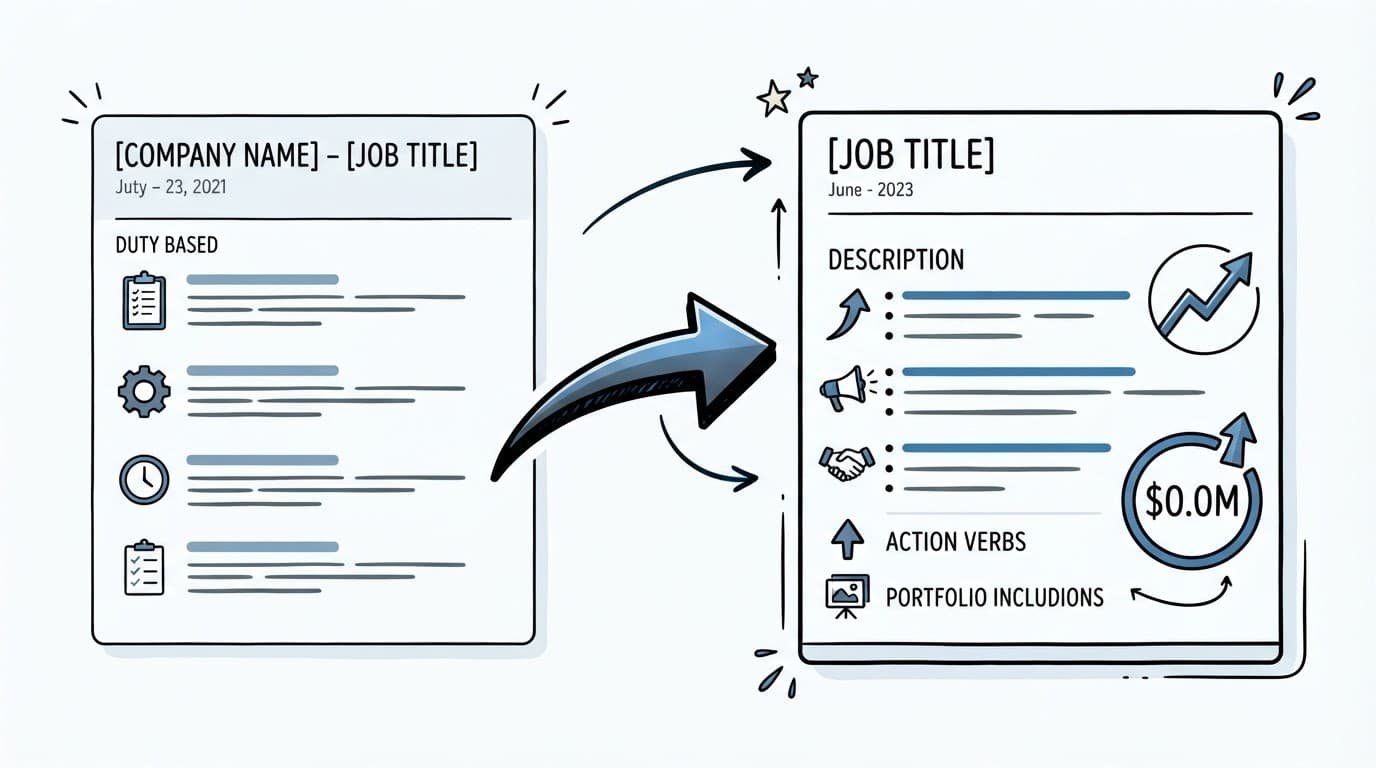
The principle is accomplishments not duties. A duty describes assigned work, while an accomplishment statement uses action verbs to show your decisions, effort, and resulting change.
Duty-based: “Managed social media channels and created weekly content.”
Achievement-focused: “Grew organic LinkedIn engagement 42% in six months by introducing customer-story posts and a weekly analytics review.”
The second version gives hiring managers a reason to ask follow-up questions. It also gives you a stronger interview story because it shows how your work created a result.
A percentage has little value without context. Name the baseline, timeframe, audience, or business result whenever you can.
Write for people and LinkedIn search
Use LinkedIn keywords that appear in your target job description, including tools, specialties, and role names. Keep only terms that match genuine experience.
Before selecting an employer, verify its official company page. The correct company page helps establish the role’s identity and supports search visibility. For example, a data analyst may use “SQL,” “Power BI,” “forecasting,” and “dashboard development” when those terms match real experience.
However, keywords can’t rescue vague writing. Keep bullet points focused on one contribution, and pair them with action verbs such as built, negotiated, reduced, launched, improved, or analyzed. LinkedIn’s Experience section management guidance also allows you to add or edit positions and associate skills with each role. Those associated skills are separate from skill endorsements, so treat them as support for clear evidence, not a substitute for it.
Turn resume achievements into LinkedIn accomplishment statements
Strong resume achievements transfer well to a LinkedIn work experience section, but they need more context on your LinkedIn profile. Use this formula:
Action verb + scope of work + method + measurable outcome + business effect
Use action verbs, keep the language direct, and place the result before background details. These LinkedIn experience section examples show the difference:
| Role | Achievement-focused description |
|---|---|
| Customer Success Manager | “Reduced renewal-risk accounts 28% by building a health-score process for 75 mid-market customers.” |
| Project Manager | “Delivered a $600,000 CRM migration two weeks early after resetting milestones and vendor reporting.” |
| Sales Representative | “Exceeded annual quota by 118% through territory research and a five-step enterprise outreach sequence.” |
| Freelance Designer | “Created conversion-focused landing pages for B2B clients, lifting qualified demo requests by 19%.” |
These examples help hiring managers connect your work to business value. Treat freelance experience like an in-house role by showing client scope, your contribution, and the outcome.
Use numbers you can explain in an interview. Quantifiable metrics may include revenue, cost savings, time saved, customer volume, error reduction, conversion rate, project budget, quota attainment, inbound leads, or customer inbound requests. If you don’t have a precise figure, job seekers can state the scale honestly. Use team size, account volume, delivery deadlines, or relevant industry experience to show honest scope.
- Lead with the achievement that best matches the role you want next.
- Use the employer’s language when it accurately describes your work. Check the company page for official naming, but don’t copy promotional claims.
- Keep each of your bullet points focused on one outcome, rather than joining unrelated tasks.
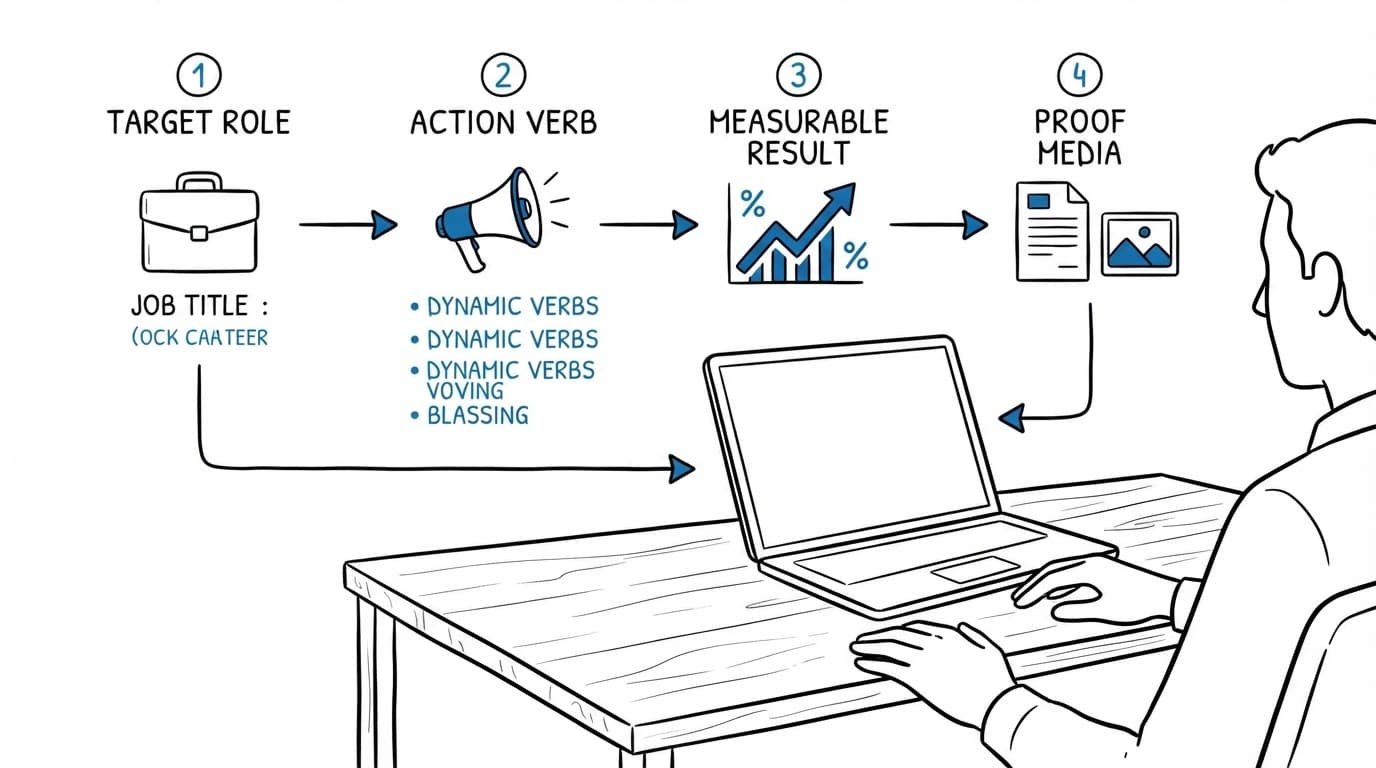
A four-step process for improving each role
Build each entry from the target job backward
Job seekers should build the LinkedIn experience section backward from a target role.
Start with one target job description, then compare it with two or three current listings. Highlight recurring responsibilities, skills, and tools, then review the target employer’s company page and your experience for matching evidence.
- List the projects, customers, budgets, systems, or goals connected to the role. Use the company page to confirm employer terminology, audience, or business context.
- Write every outcome you can support with a number, a deadline, or a concrete result.
- Select two to four accomplishments that fit your target position.
- Edit the first lines of your LinkedIn profile until a recruiter can understand your level and specialty at a glance. A focused entry aligned with the target role may support stronger recruiter inbound.
CareerScribeAI’s AI Resume Builder can compare your background with a job posting and surface useful language for your draft. Its Cover Letter Generator and Interview Prep Tools can then carry the same evidence into your application and interview answers. The job-search plan for full-time workers offers a practical way to keep those materials organized.
Set up the LinkedIn experience section with care
Make the role details credible and current
Keep each LinkedIn experience section entry current and focused. As of 2026, LinkedIn’s character limits allow up to 2,000 characters for each position description, but you rarely need that much. Unlike a work experience section on a resume, LinkedIn works best with shorter, more selective evidence. Three to five short, outcome-led bullet points usually read better than a dense block of text.
List promotions as separate positions when your title or scope changed. LinkedIn can group positions at the same company, which makes career progression easier to see.
Choose the employer’s recognized official company page when entering the company name. LinkedIn explains that the company name and logo display when your entry connects to its LinkedIn company page. The correct company page link can support search visibility. Check the company page result before saving, especially for companies with similar names.
For most job seekers, review your LinkedIn profile regularly and emphasize the latest 10 to 15 years of relevant work. LinkedIn has no hard cutoff, so include older roles only when they add credibility, show a career change, or explain a career break.
Add proof without crowding the role
Keep rich media out of the description when it distracts from the result. Instead, use LinkedIn’s Featured section for portfolio links, presentations, articles, or project samples.
That separation keeps your Experience section readable while giving hiring managers evidence when they want it.
Frequently Asked Questions
How many bullet points should a LinkedIn experience entry include?
Three to five short, outcome-focused bullet points usually work well. Choose the accomplishments that best match your target role instead of listing every responsibility.
What should I write in the LinkedIn experience section if I do not have exact metrics?
Use honest indicators of scale, such as team size, customer volume, project budget, deadlines, or relevant industry experience. Do not invent numbers; choose concrete details that show the scope of your contribution.
Should LinkedIn experience entries copy my resume?
Your LinkedIn experience section should support your resume but does not need to reproduce it word for word. Use concise, searchable proof with enough context to show your contribution and results.
Should promotions be listed as separate positions on LinkedIn?
List promotions separately when your title, responsibilities, or scope changed. LinkedIn can group positions at the same company, making your career progression easier for recruiters to see.
How can I use keywords effectively in my LinkedIn experience section?
Review target job descriptions and include recurring tools, skills, specialties, and role names when they accurately describe your experience. Keywords should support clear accomplishment statements rather than replace specific evidence.
Make Every Role Support Your Next Move
For job seekers, the best entries put accomplishments not duties at the center of a clear career narrative. They show relevant outcomes with facts that hold up in conversation.
A focused story makes your value easier to understand and remember across your professional network. Your accomplishments, not your job duties, should carry the story.