

Time spent caring for a family doesn’t erase your professional ability. A strong stay-at-home parent resume shows your prior experience, current skills, and readiness to contribute.
Your resume doesn’t need to explain family details. When reentering the workforce, use a targeted resume summary instead of a generic resume objective. A hiring manager needs evidence that matches the job description, while relevant homemaker experience can be presented through professional evidence.
Key Takeaways
- Build your resume around the role you want, using a hybrid format that highlights relevant skills before presenting your work history.
- Address your career break briefly and honestly, without including private family details or apologizing for time away.
- Translate caregiving, volunteer leadership, and household responsibilities into professional skills supported by specific scope and measurable results.
- Tailor each resume to the job description, use an ATS-friendly layout, and include recent training, certificates, or projects that show your skills are current.
Build a stay-at-home parent resume around evidence
Begin with the role you want, not the gap you fear. Read several target postings and note repeated tools, responsibilities, and skills. A customer support role may stress CRM software, communication, and issue resolution. An operations role may seek scheduling, reporting, vendor coordination, and budget tracking. Match the strongest evidence to the job description for your chosen role.
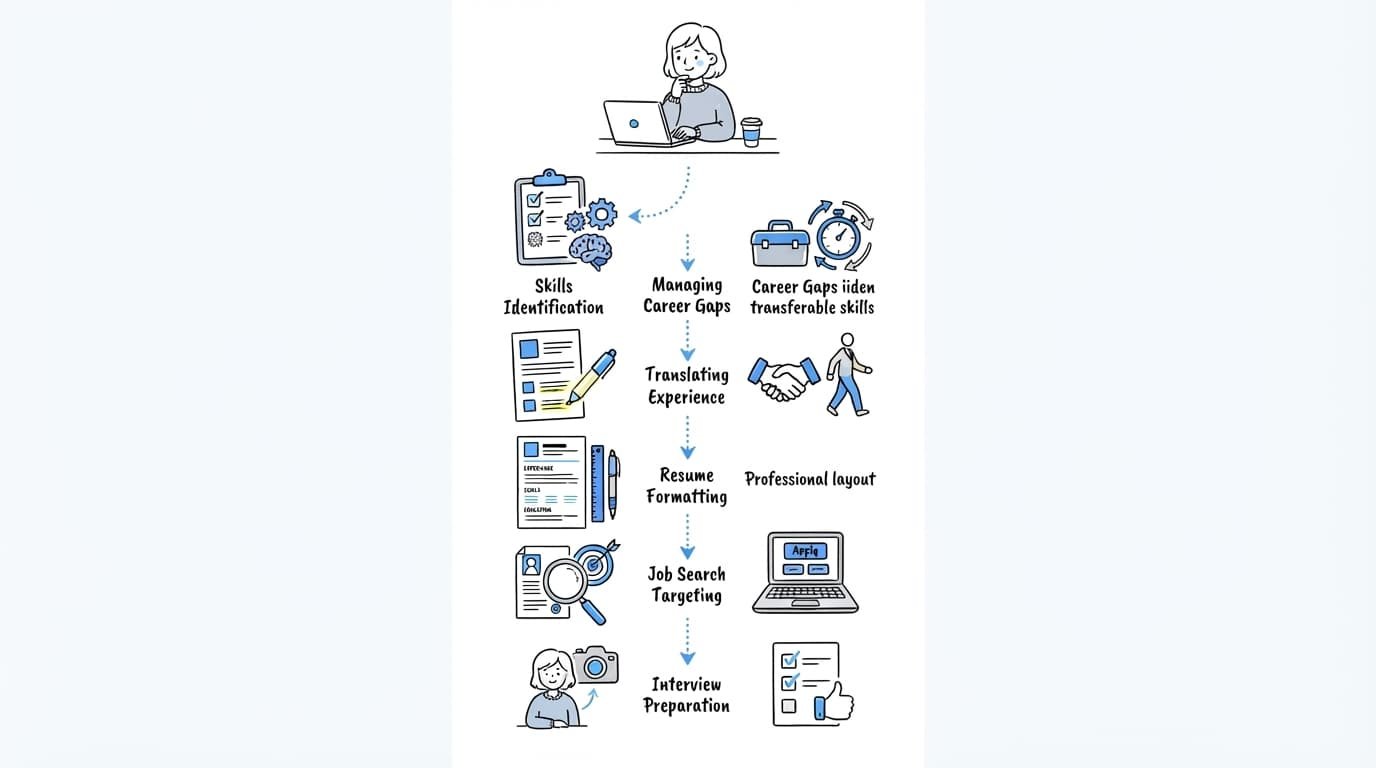
Use a hybrid resume format for most re-entry situations. It puts focused capabilities near the top, then presents your work history in reverse-chronological format. A functional resume may seem simpler, but it can obscure dates and career progression.
A clear order looks like this:
- Contact details and a LinkedIn profile URL.
- A two- or three-line resume summary tailored to the target role.
- A skills section that matches the role.
- Professional experience, followed by a labeled period away if relevant.
- Volunteer leadership, certifications, education, and selected projects.
Your summary should establish direction quickly. Name your target role, relevant background, and a few current strengths. Avoid an apology or a long explanation of your time away. For a major career change, a resume objective is an optional choice, not the default.
Time away from work is common. A LinkedIn survey cited in this report on returning after a resume gap found that more than 60% of workers have taken one. The employment gap may remain visible, but it doesn’t have to dominate the page.
Decide how much caregiving to disclose
You may present homemaker experience as formal caregiving work, but you don’t have to. The best choice depends on whether it strengthens your application and how much personal information you want to share.
| Your situation | Resume approach |
|---|---|
| Caregiving involved substantial organization, budgeting, or advocacy | Add “Career Break, Full-Time Caregiver” with dates and relevant bullets. |
| You prefer privacy or are changing fields | Use “Time Away, Professional Development” with dates and current learning. |
| Volunteer leadership filled much of the period | Give that work its own section with dates, scope, and results. |
You can acknowledge time away without listing children’s names, ages, family circumstances, or marital status.
A labeled career break can prevent unexplained dates. Keep the wording brief, then place the attention on job-relevant experience.
Translate household work into transferable skills
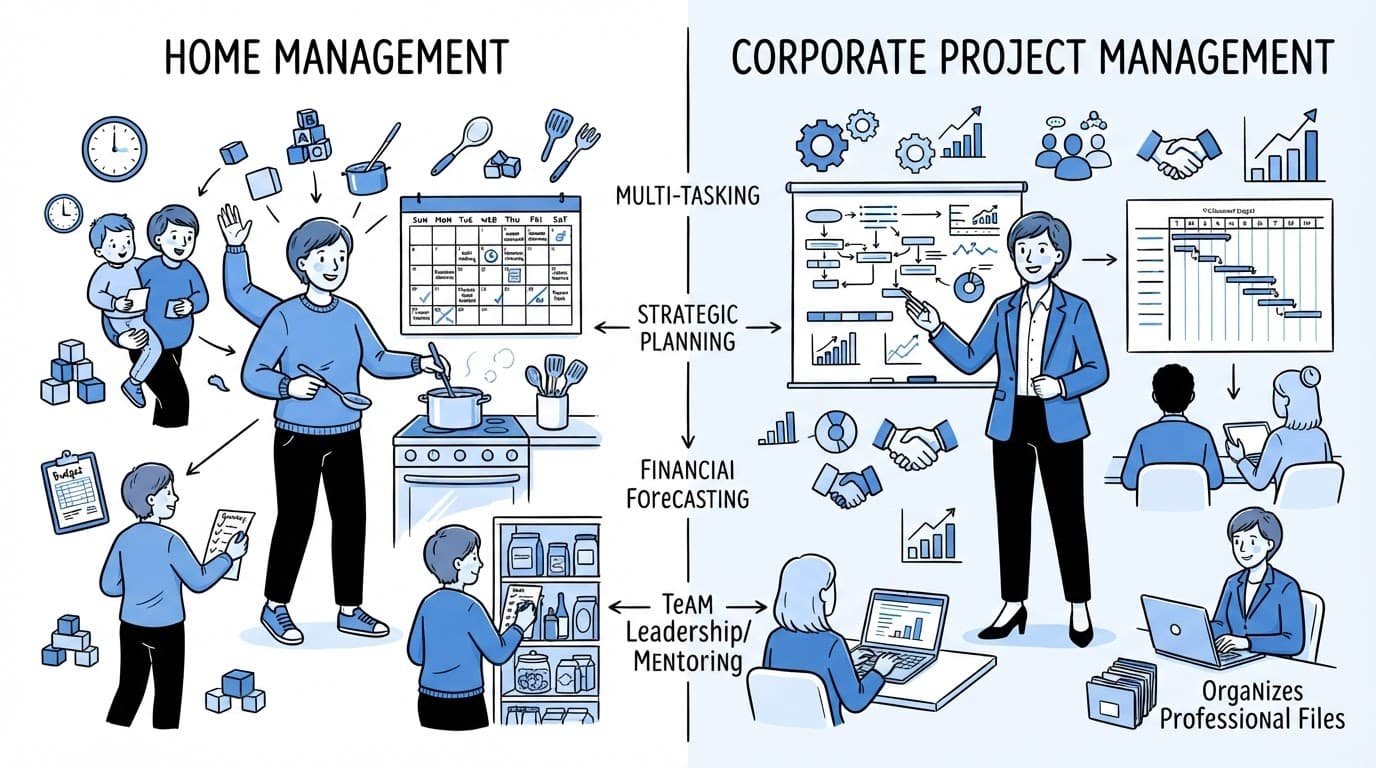
A stay-at-home parent resume should not read like a household chore list. Replace broad duties with business language that matches the role you want.
Relevant homemaker experience can show transferable skills when you translate responsibilities into business language. For example, managing a household budget can demonstrate budget ownership, schedule management, vendor research, supply tracking, negotiation, and conflict resolution.
Start bullets with action verbs, then show the scope of work and a measurable outcome where your records support it:
- Managed a household budget by tracking recurring costs and comparing vendors, keeping spending aligned with annual financial goals.
- Used schedule management to coordinate overlapping medical, school, travel, and activity commitments, resolving last-minute changes without missed obligations.
- Maintained inventory for household supplies and planned purchases, reducing waste and avoiding rush orders.
- Mediated conflicts, communicated expectations, and built routines across competing needs, creating more consistent daily coordination.
Use your actual numbers. State the annual budget you managed, the number of events coordinated, funds raised, volunteers supervised, or families served. Quantifiable results give a hiring manager something concrete to assess.
Keep earlier paid roles prominent if they match the job. Household responsibilities should supplement, not replace, relevant professional achievements.
Add volunteer work and professional development
When it has accountability and produces results, volunteer experience is professional experience. A PTA treasurer, school event coordinator, nonprofit fundraiser, team coach, or community board member can show leadership, budget control, stakeholder communication, and project delivery. Volunteer leadership, freelance work, and recent learning can provide transferable skills that match the target role’s requirements.
Create a separate volunteer experience section when the work was substantial. Use a real title, organization name, dates, and outcome-based bullets. For instance, describe the budget you administered or the event attendance you increased, rather than writing “helped with school activities.”
Recent professional development also signals that your skills are current. Include completed professional certificates, coursework, software training, portfolio projects, and industry association programs. Google Career Certificates, Coursera, LinkedIn Learning, and local workforce programs can provide useful evidence when aligned with the target role.
CareerScribeAI.com’s AI Resume Builder can help compare your experience with a job posting and identify missing terms. Edit every suggestion so the language remains accurate and sounds like you.
Make the resume easy for ATS and recruiters to read
An applicant tracking system scans headings, dates, job titles, and keywords before a recruiter reviews your file. It won’t explain your time away from work for you.
Use a single-column layout, conventional headings such as “Experience,” “Skills,” and “Credentials,” readable fonts, and consistent date formatting. Place professional certificates under a conventional heading so software and recruiters can identify them. Avoid text boxes, graphics, skill-rating bars, and complex columns that may disrupt parsing.
Tailor each stay-at-home parent resume to the opening. Mirror relevant terms from the job description when they truthfully describe your work or training. If an employer requests Excel, project coordination, client communication, or QuickBooks, list those skills only if you’ve used them or completed training.
Prepare a short interview and cover letter explanation
The resume needs one concise gap label. Your cover letter and interview can add a little context, then return to your qualifications.
Use calm, forward-looking language: “I took time away from paid work as a full-time caregiver. During that period, I maintained my professional skills through volunteer leadership and training. I’m ready to bring my prior experience in [field] to this role.”
Relevant professional certificates can provide evidence of refreshed skills during the interview process.
Do not over-explain or sound defensive. Practice the response with CareerScribeAI’s Interview Prep Tools, then use the Cover Letter Generator to connect your return to the employer’s immediate needs. For more wording options, review these career-gap explanation examples.
Frequently Asked Questions
Should I list being a stay-at-home parent on my resume?
You may include a labeled period such as “Career Break, Full-Time Caregiver” when the experience strengthens your application. If you prefer privacy or are changing fields, use a brief “Time Away, Professional Development” entry instead.
How should I explain a career gap on a stay-at-home parent resume?
Use one concise label with accurate dates, then focus the resume on relevant experience, volunteer leadership, training, and results. You do not need to include your children’s names, ages, family circumstances, or marital status.
What skills can stay-at-home parents include on a resume?
Household and caregiving responsibilities can demonstrate scheduling, budgeting, vendor coordination, inventory tracking, negotiation, communication, and conflict resolution. Describe these skills with action verbs, scope, and measurable outcomes when your records support them.
What resume format is best for a stay-at-home parent returning to work?
A hybrid resume usually works well because it places relevant capabilities near the top while preserving a clear reverse-chronological work history. Use a single-column layout, conventional headings, readable fonts, and consistent dates to make the resume easier for ATS software and recruiters to read.
Put Your Experience Back on the Page
A career break is part of your timeline, not a verdict on your ability. Use a clear format, honest dates, relevant evidence, recent learning, and specific results to build credibility.
The strongest version focuses on the capabilities you can offer now. Your experience has value when you describe it with accuracy, context, and results in a stay-at-home parent resume.