

A semester abroad can be a meaningful career boost, not just a memorable line on your resume. A strong study abroad resume shows how your coursework, projects, and problem-solving can help you contribute at work.
Recruiters won’t assume what you learned in another country. Your study abroad experience should show what you did and how it applies. Connect your coursework, projects, and problem-solving to the target role, turning international experience into evidence you can contribute.
The right placement and language make your time abroad relevant in seconds.
Key Takeaways
- List a study abroad program in the education section unless it included professional work such as an internship, research assistantship, or consulting project.
- Turn international experience into evidence by describing your responsibilities, methods, skills, and measurable results.
- Tailor coursework, language proficiency, and transferable skills to the requirements of each job description.
- Use specific action words and concrete examples instead of vague claims about cultural immersion or becoming a global citizen.
How to List Study Abroad Experience on a Resume
Most students should list a study abroad program in the education section. Place it beneath your home university when it was part of your degree or earned academic credit.
Use work experience only when your role qualifies as professional experience. A paid overseas internship, research assistantship, teaching placement, or consulting project can stand alone when you had defined responsibilities and measurable results.
| Your situation | Best resume section | What to emphasize |
|---|---|---|
| Semester or summer program | Education | Host institution, term, relevant courses |
| Overseas internship | Work Experience | Responsibilities, tools, outcomes |
| Research, service, or volunteer program | Projects or Experience | Scope, collaboration, deliverables |
Use a clean, compact resume template. In the education section, list your home university first, followed by the host institution, city, country, and program dates. Include relevant coursework only when it supports the job target. For example, an applicant pursuing public policy could list an international economics or migration policy course. A software candidate might feature data analytics coursework instead.
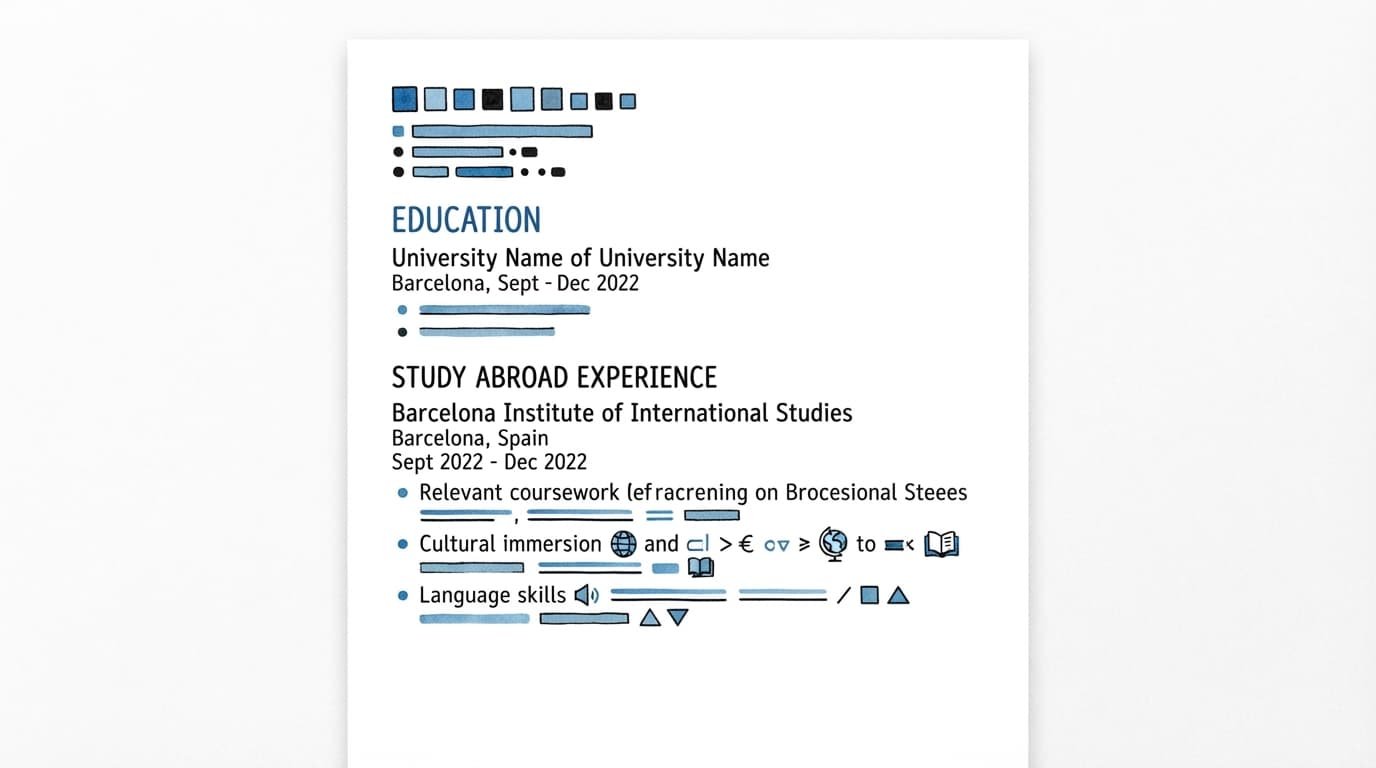
If your program included a competitive scholarship, list the award in an Honors section. Don’t include tuition costs or personal travel expenses. Employers care about the work you completed and the skills you can apply.
A country name alone doesn’t strengthen a resume. Your actions there do.
Turn International Experience Into Resume Bullet Points
A compelling resume follows the same standard as any other entry. Show what you did, how you did it, and what changed because of your study abroad experience. The Forum on Education Abroad’s 2025 report connects education abroad with workplace strengths such as adaptability and communication. Those traits need proof, not labels.
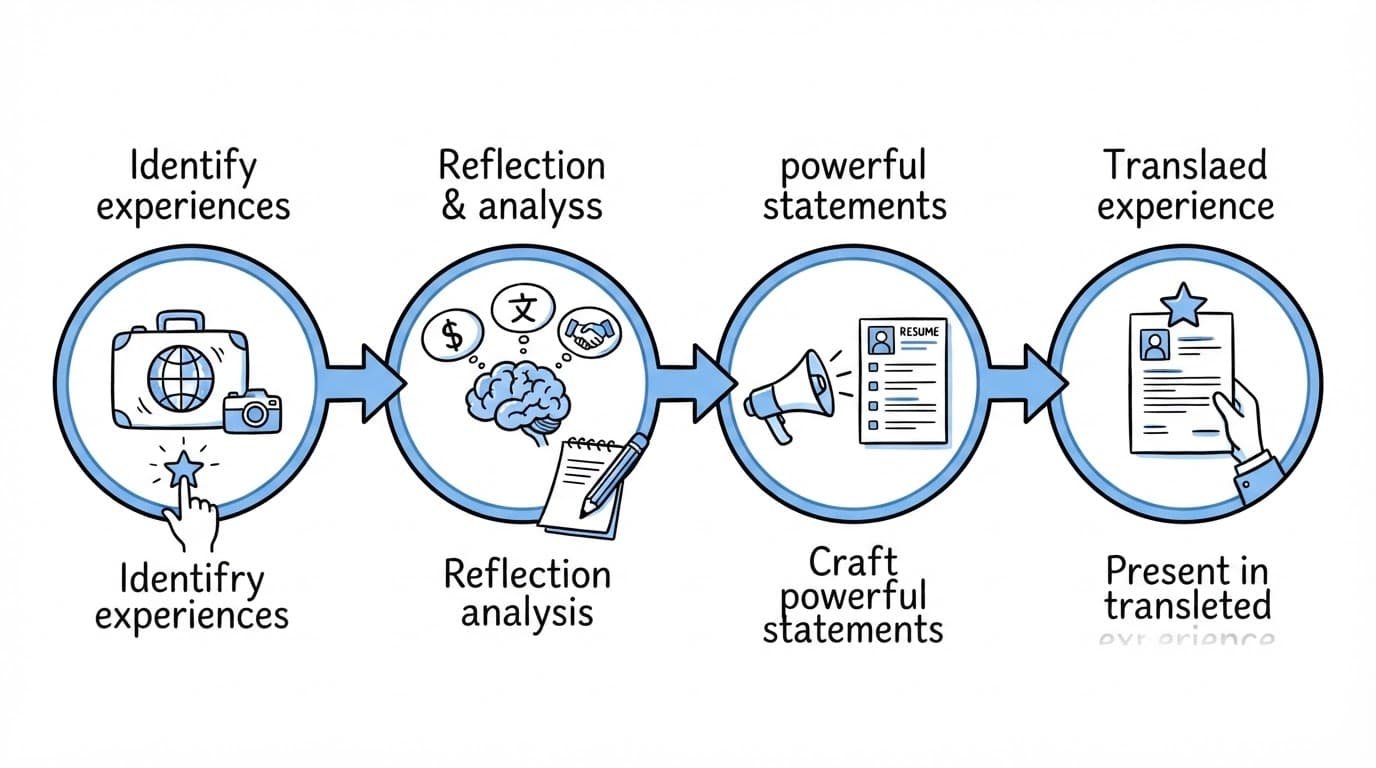
Build each bullet point in four moves:
- Start each bullet with strong action words, such as analyzed, coordinated, presented, negotiated, translated, researched, or developed.
- Name the project, course, client, group, or problem.
- Add the method, tool, language, or cross-cultural setting.
- End with a result, deliverable, deadline, or measurable scope when you have one.
Choose action words that match your actual responsibility, and use only details that accurately describe your work. Resume bullet points can read like these:
- Coordinated a five-person international research team in multicultural team settings across time zones, delivering a final client presentation by deadline.
- Conducted interviews in Spanish for a course research project, then synthesized findings into a written report.
- Analyzed local consumer behavior for a marketing assignment and recommended campaign adjustments for a regional audience.
Avoid vague claims such as “immersed in a new culture” or “became a global citizen.” They may be true, but they don’t show your contribution. Replace them with concrete action words tied to a project, decision, challenge, or result.
Study Abroad Skills Employers Can Recognize
Skills from a study abroad experience matter when they match the job description. For example, a customer-facing role may value cross-cultural communication and interpersonal skills. An operations position may need calm problem solving when plans change. A research role may benefit from foreign language skills or technical skills in software, analysis, or research methods.
The Harvey Mudd College guide to marketing study abroad highlights transferable soft skills such as time management, independence, cultural intelligence, adaptability and flexibility, and language proficiency. Choose only the skills you can support in your experience section, project work, or interview. Describe your contribution in multicultural team settings rather than merely listing collaboration.
Language proficiency deserves a precise description. State the language and level, such as “Spanish, professional working proficiency,” rather than claiming fluency without context. Support the claim with examples of translation, presentations, research, or client conversations.
Earning a competitive grant or scholarship can also demonstrate financial judgment. Put the named award in Honors and explain the selection criteria if it was merit-based. The career value comes from the achievement, not the cost of studying overseas.
Resume Tips: Tailor the Entry to Each Job Application
Treat the study abroad program as a targeted entry, not a travel diary. Read the job description, mirror its legitimate language, and choose relevant action words. If an employer asks for stakeholder communication, highlight your group presentation or client project. If it calls for data analysis, feature the research methods, software, or findings from your course.
For applicants with limited work experience, study abroad experience can carry more weight. Put a strong project beneath the education section, then include relevant coursework, language proficiency, and campus roles. This gives recruiters evidence of responsibility before you have several traditional jobs.
Before applying, use an AI Resume Builder setup guide to organize the entry and compare it against the posting. CareerScribeAI’s Cover Letter Generator can then connect your international experience to the employer’s needs, while Interview Prep Tools can help you practice concise stories about the challenges you handled abroad.
Frequently Asked Questions
Where should study abroad experience appear on a resume?
Most students should list a study abroad program in the education section, beneath their home university. Use the work experience section when the program involved professional responsibilities, such as a paid internship or research role.
How do I describe study abroad experience in resume bullet points?
Start with a strong action word, name the project or problem, explain the method or setting, and finish with a result or deliverable. Focus on what you contributed rather than simply naming the country or program.
What skills from studying abroad should I include?
Include skills that match the target job and that you can support with examples, such as cross-cultural communication, adaptability, language proficiency, research, or data analysis. Describe how you used the skill in a project, course, presentation, or team setting.
Should I include study abroad coursework on my resume?
Include relevant coursework when it supports the job target, such as international economics for a public policy role or data analytics for a software position. Avoid listing every course if it does not show a skill or knowledge area the employer needs.
Make Your Time Abroad Count
Your overseas program earns space when it demonstrates a skill the employer needs. Place it in Education unless the work qualifies as professional experience, then use bullets to show ownership, skills, and results.
A well-written study abroad resume makes your completed work more important than the distance traveled.