


The constructive feedback question can feel like a test you might fail before you answer it. In a job interview, the hiring manager wants evidence that you listen to constructive feedback. They also want to see you assess it fairly and change your work when needed.
If a how to receive feedback interview question catches you off guard, don’t reach for a rehearsed claim that you welcome all criticism. Show that you know how to respond to constructive feedback instead. A credible answer names a real adjustment made after constructive feedback and the result it produced.
Key Takeaways
- Show that you listen to constructive feedback, assess it fairly, and change your work when needed.
- Use the SFAR structure—Situation, Feedback, Action, Result—to keep your answer focused on your response and improvement.
- Describe feedback in neutral, behavior-based terms, using the SBI model to clarify the situation, behavior, and impact.
- Choose one truthful example that includes a specific adjustment and a measurable result, rather than claiming you welcome all criticism.
- Pause before reacting defensively, ask for clarification, and explain how you verified that your change improved the work.
Why Interviewers Ask About Constructive Feedback
Employers use this behavioral interview question to assess coachability, emotional intelligence, and self awareness. They want to see how you process constructive feedback, not whether you’ve never made a mistake. They also want to know whether you’ll turn constructive feedback from a difficult performance review into better work. The hiring manager cares less about the source or tone of critical feedback, or whether you call it constructive criticism, than how you respond.

Good recipients listen first, reflect on constructive feedback, then agree on an action. A growth mindset treats constructive feedback as input for improvement, not a verdict on your ability.
A NIH review of giving and receiving feedback describes open-minded listening and reflection as parts of a learner-centered approach. Feedback can activate a short-term threat response, but that reaction doesn’t define your identity. The SBI model adds a useful behavior-and-impact lens, which the next section will explain. In an interview, make those habits visible through your example.
A strong response does not prove that you were right. It proves that you can improve after someone else spots a gap.
How to Receive Feedback Interview Answers With SFAR
The STAR method works, but SFAR is more useful here because it puts constructive feedback at the center of the story. Use SFAR: Situation, Feedback, Action, Result. Keep the first two parts brief. Let your action take most of the answer.
Strong answers to this behavioral interview question focus on your response, not the person who gave the constructive feedback. The SBI model can sharpen one part of the framework, but SFAR should guide the full answer.
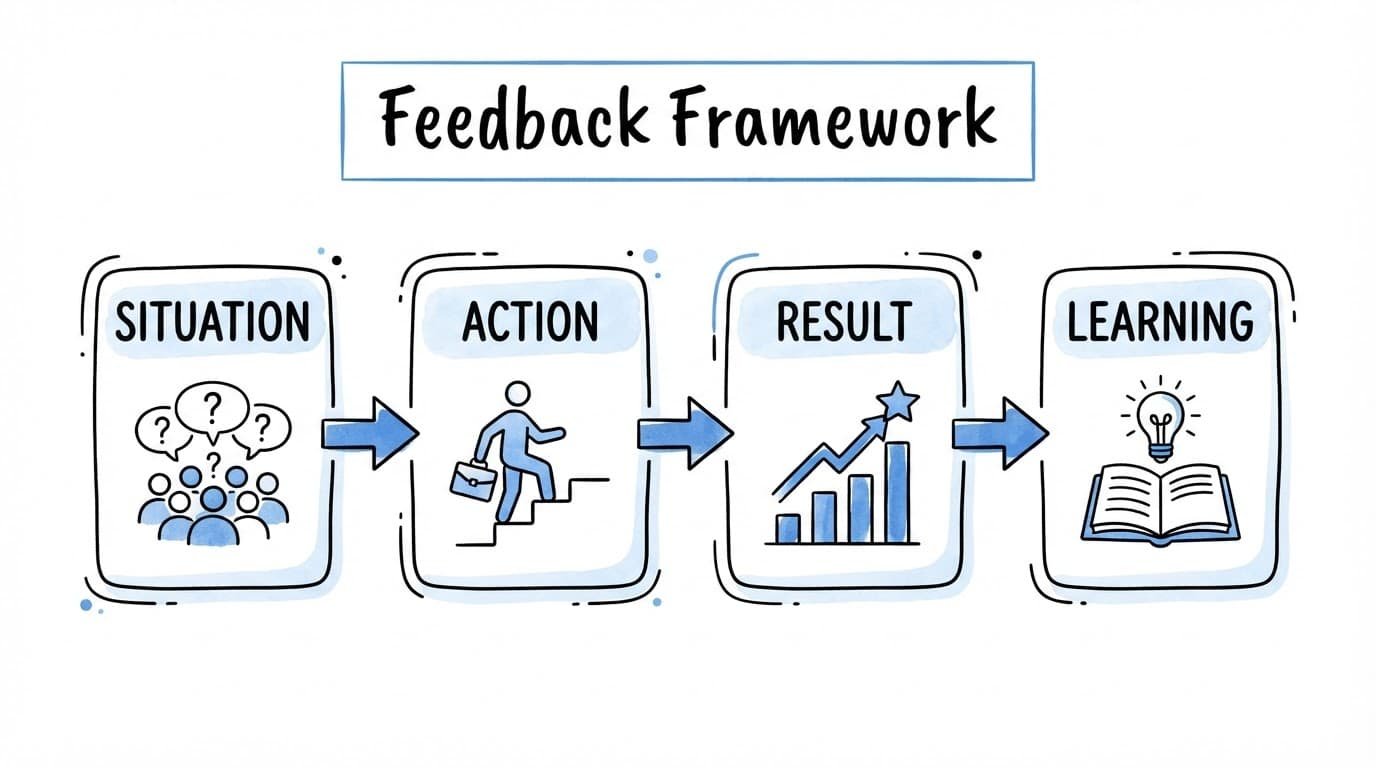
- Situation: Name a work setting and the standard you needed to meet. A weekly client update can show stakeholder management when constructive feedback reveals unclear ownership.
- Feedback: Describe what the person observed and how it affected the work. Use the SBI model to present critical feedback as constructive feedback, naming the situation, behavior, and impact in neutral terms.
- Action and result: Explain how you applied problem solving after a feedback session. Describe the change, how you asked for clarification, and how you verified that it improved the work after receiving constructive feedback.
The SBI model can also sharpen the feedback portion of your story by making constructive feedback specific. State the situation, the behavior that drew feedback, and its impact. Then move beyond SBI. Say what you changed and how you checked that the change worked. That sequence turns constructive feedback into evidence of professional development.
Control the Defensive Reaction Before It Controls You
Critical feedback can trigger a threat response, especially during a high-stakes job interview, and receiving constructive feedback there can intensify it; slow your breathing and relax your jaw. The interview question tests your response, not whether you feel no discomfort. Pause, then label the threat response plainly: “They questioned my updates,” not “They think I am bad at my job”; the pause keeps the threat response from driving a defensive response. Identifying what was actually said makes constructive feedback easier to assess, while framing constructive feedback around behavior, not identity, builds self awareness.
Actionable feedback identifies an observable behavior and its effect, while the SBI model helps you request the situation, behavior, and impact. Critical feedback can sound vague or personal; negative feedback may flag a problem, while constructive criticism and useful constructive feedback guide improvement. Ask for an example, the expected standard, and a next step to make constructive feedback actionable.
Constructive Feedback Answers for Different Career Stages
Keep each answer about constructive feedback between 60 and 90 seconds. For this interview question, choose an event you can explain truthfully.
Adapt each constructive feedback response to your own communication style and experience. Use the SBI model as a guide, but keep the delivery conversational.
Treat these as starting points for a real feedback session, not memorized scripts. Each example demonstrates emotional intelligence through listening, clarification, and follow-through.
Recent graduate or early-career candidate
This constructive feedback example uses a group project to highlight team dynamics and a practical adjustment:
“During a university group project, a teammate told me my research updates were too detailed for our short meetings. I asked which details the group needed to decide next steps. After that, I sent a three-bullet update before each meeting and kept the discussion focused on decisions. Our group met every deadline, and I now adjust the detail level to the audience.”
Career changer
This constructive feedback response shows problem solving through a small documentation change:
“In my first customer-success role after working in retail, my manager said I was solving tickets well but not documenting patterns for the product team. I asked to review two strong examples. I then added a short pattern note to recurring tickets each Friday. Within the quarter, the product team used those notes in its bug-triage meeting.”
Experienced professional
This constructive feedback response could follow a performance review and shows stakeholder management in a reporting context:
“A program sponsor said my status reports listed activity but did not show decisions at risk. I asked for an example of the format they needed. Then I added an owner, due date, and decision line to each risk. At our next check-in, the sponsor could resolve two pending items before the steering meeting.”
Choose the example that best reflects your experience and scope, then connect it to your career growth.
Avoid Red Flags in Constructive Feedback Answers and Rehearse the Evidence
The clearest red flags in a constructive feedback answer are blaming, arguing, and showing no change. Don’t present critical feedback as a dispute, blame an unreasonable manager, or show that you stayed exactly the same. Also skip a harmless humblebrag, such as being told that you care too much; choose a useful correction instead.
- Blaming a former manager makes your response sound like a dispute, not a learning moment.
- A vague outcome, such as “I did better,” weakens constructive feedback; name a measurable behavior or result instead.
- Claiming every critique was unfair suggests you will resist direction when stakes rise.
Rehearse aloud until your answer sounds conversational, not memorized. Build interview preparation around one true constructive feedback story, then record and refine it. For a how to receive feedback interview response, CareerScribeAI.com’s interview-question prediction guide can create practice prompts from a job description. Its AI-powered Interview Prep Tools pair well with an AI Resume Builder and Cover Letter Generator, so your story matches the skills you claim in your application.
Test the answer against the interview question: does it explain what you heard, what you changed, and what improved? Use the SBI model as a checklist, not a script. Note the situation, behavior, and impact, then explain your response and result. This structure makes the story easier to follow during the interview process.
Recording and repeating the answer can reduce a threat response, making it easier to pause before you react. Calm revision, specific ownership, and evidence of change signal professional maturity.
A Clemson study of interview practice and feedback explored their effects on interview performance. Keep feedback stories in a private log, then choose the closest match for each role.
Frequently Asked Questions
What is the best way to answer “How do you receive feedback?”
Use a real example that shows what you heard, what you changed, and what improved. The SFAR structure can keep the answer clear while putting your action and result at the center.
Should I use the STAR method for a feedback question?
The STAR method can work, but SFAR is often more useful because it gives feedback its own step. Keep the situation and feedback brief, then spend most of the answer explaining your action and result.
How can I avoid sounding defensive when discussing feedback?
Pause, separate the feedback from your identity, and focus on the observable behavior and its impact. Asking for an example, the expected standard, and a next step can turn vague critical feedback into an actionable improvement.
What kind of feedback example should I choose?
Choose a truthful example that includes a useful correction, a specific adjustment, and a clear outcome. Avoid blaming the person who gave the feedback or using a harmless humblebrag such as being told that you care too much.
How long should my answer be?
Keep your answer about 60 to 90 seconds. Rehearse it aloud so it sounds conversational while still covering the feedback, your response, and the result.
Turn Constructive Feedback Into Evidence
Choose one true feedback example and show exactly how constructive feedback changed a behavior, decision, habit, or result. State the adjustment plainly, then let the outcome carry the answer.
Interviewers aren’t looking for perfection. They want evidence of a growth mindset and coachability. That evidence also supports stakeholder management, where clear updates, decisions, and follow-through matter. It frames professional development and career growth as continued improvement, not a claim of being flawless.