


Membership dues don’t make you a stronger candidate. The professional associations resume section earns space only when it proves a current connection to the work you want.
A relevant organization can support your expertise, but a long list of unrelated memberships distracts from it. Unlike a resume summary, which states your positioning, an affiliation entry in this resume section supplies proof through meaningful contribution. Select affiliations with the same care you give experience and skills, then describe work that shows results.
Start by choosing what belongs, then test civic affiliations differently before formatting each line for quick review.
Key Takeaways
- Include professional associations only when they relate to the target role, reinforce a specialization, or support relevant leadership and career growth.
- Keep required credentials, such as licenses and certifications, in dedicated sections rather than listing them as memberships.
- Format each affiliation with the full organization name, membership status or office, and dates; add a chapter or location only when useful.
- Turn meaningful committee work, leadership, event management, or projects into evidence-based bullets with clear actions and verifiable results.
- Tailor the section to each job description, removing unrelated memberships and keeping only affiliations you can explain with confidence.
Decide Which Affiliations Deserve Resume Space
Professional organizations include industry societies and trade groups. A professional society advances a field, while a trade association represents businesses or workers within a specific industry. Some affiliations also connect to licensing bodies. They keep members close to standards, training, industry trends, and industry knowledge. Professional affiliations, however, don’t equal certifications or licenses. Put a required credential, such as a state-issued CPA or registered nurse license, in a Certifications or Licenses section where recruiters can find it quickly.
List an association when it relates to the role, reinforces a specialization, or supports leadership roles and career advancement. Include professional memberships only when you’re a current, active member, can discuss the involvement, and can connect it to the role. For example, accountants can name the American Institute of Certified Public Accountants (AICPA); attorneys can name the American Bar Association or a relevant state or local bar association. Engineers may include ASME, while nurses may include the American Nurses Association.
Civic affiliations include neighborhood groups and service clubs. Put civic affiliations in Volunteer Experience when your volunteer work involved organizing programs, managing money, or leading people. Leave civic affiliations off the list when they show no relevant responsibility, and skip former-industry groups unless they explain relevant experience or transferable leadership.
Before paying annual membership dues, look for a practical return. Local chapters, mentoring programs, training opportunities, annual conferences, committee work, networking opportunities, and professional development can support career growth. They don’t guarantee an interview, and a directory entry alone rarely changes a screening decision.
How to Format the Affiliations Section on a Resume
Place a short “Professional Affiliations” or “Professional Memberships” resume section after your experience, education, skills, and certifications. It should support your resume summary, not replace it. Move it higher only when membership is a stated requirement or your organizational role is central to your candidacy.
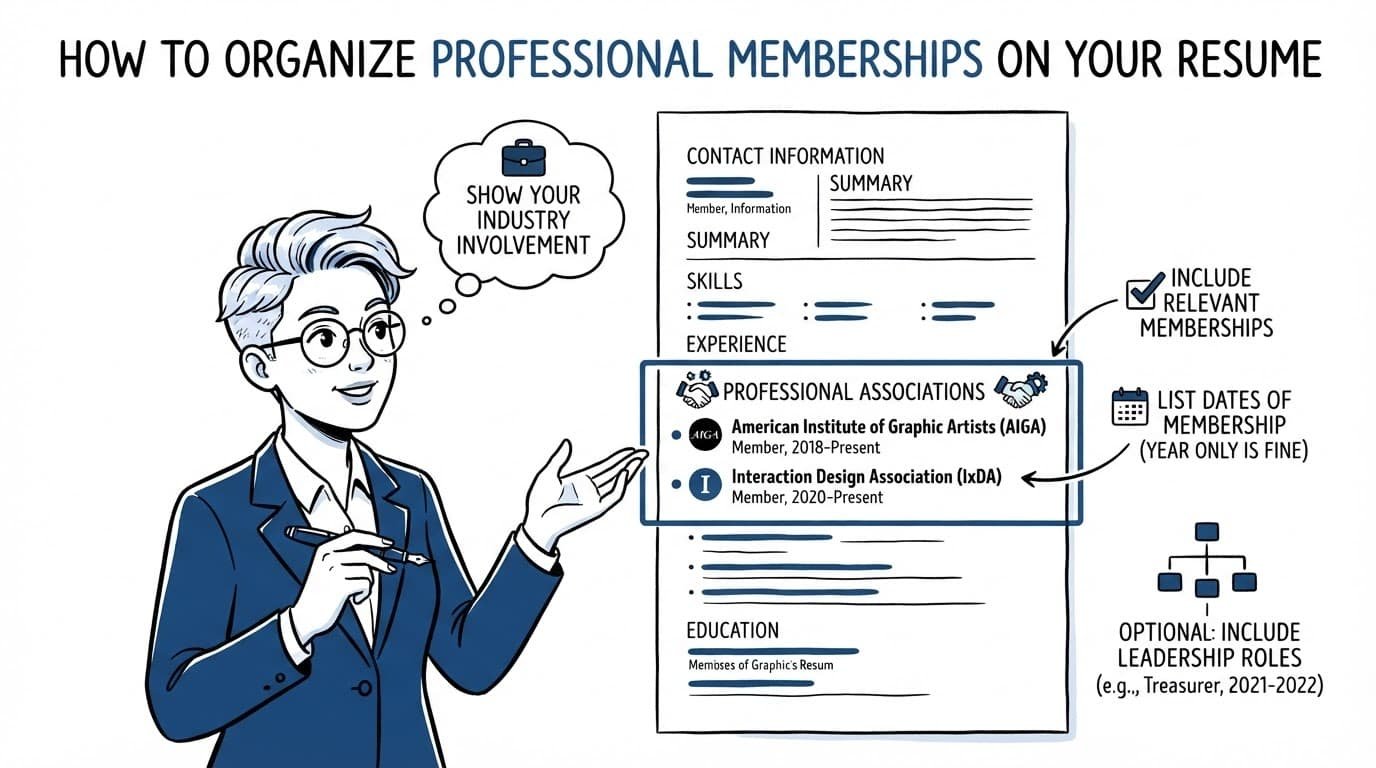
Keep dates and punctuation consistent with the rest of the document. Harvard’s resume layout guidance stresses clear formatting and consistency, which matter more than decorative design.
Use the full organization name, membership status or office, and dates. Add a chapter or location only when it makes the role clearer.
Use reverse chronological order if several affiliations include meaningful responsibility. Otherwise, put the most job-relevant group first. Keep unrelated civic affiliations in a more appropriate section. Don’t add membership numbers, dues paid, or a link to a generic organization profile. Those details take space without showing how the affiliation relates to the job.
Professional Affiliations
American Bar Association, Member | 2022 to Present
Project Management Institute, Member | 2023 to Present
Write “active member” only if that is your official membership status. Don’t use it to imply volunteer service. If you were an officer, use the real title, such as Treasurer or Board Member.
Turn Memberships Into Evidence of Work
A passive membership belongs in a dedicated section. Move meaningful civic affiliations, leadership roles, sustained projects, event management, or professional development efforts into Experience, Leadership, or a detailed affiliation entry, depending on scale. Hiring managers care less about the logo and more about the work you performed.
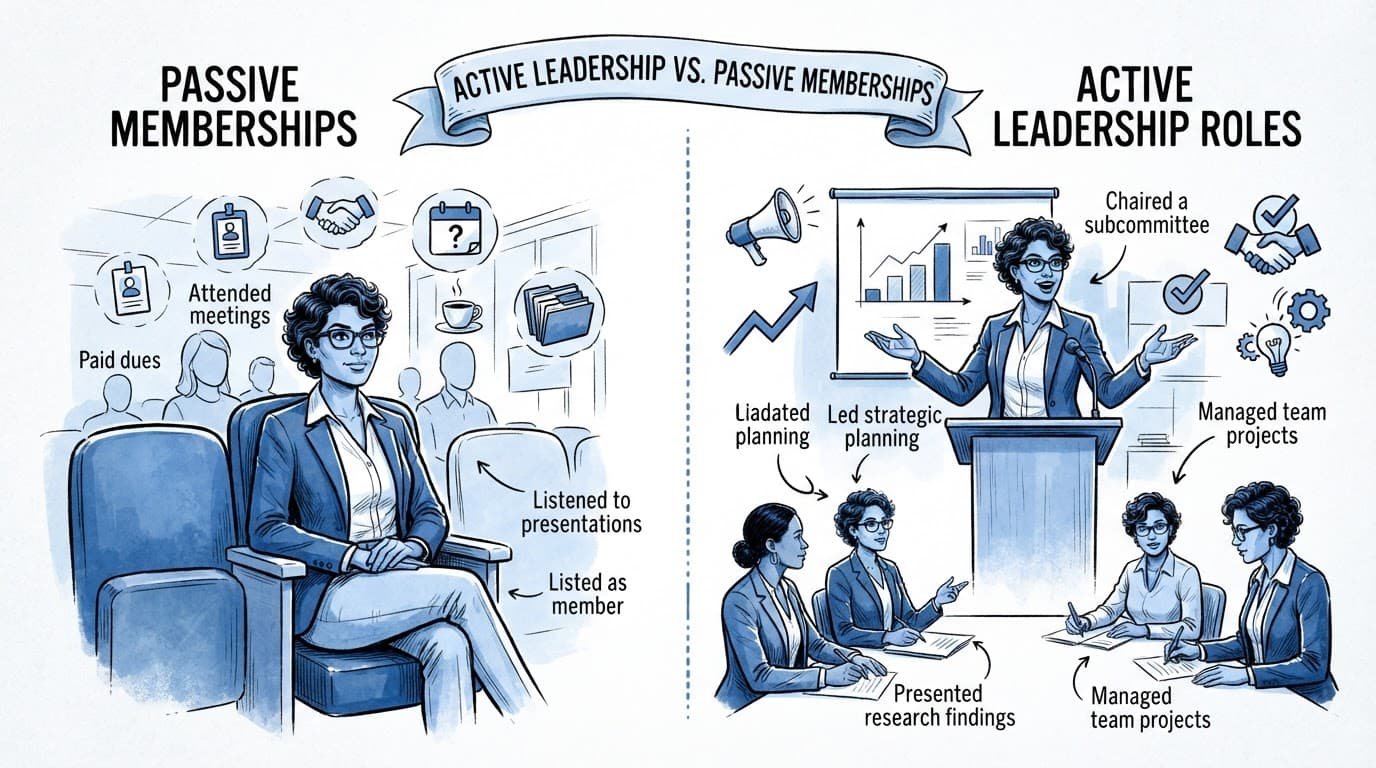
Use bullet points when you held a committee assignment, spoke at an event, recruited members, wrote guidance, or ran a program. Lead with action verbs, then state what you did, who it served, and a verifiable result. Include counts for attendees, funds managed, training opportunities created or delivered, or volunteers only when your records support them. When relevant, connect the contribution to industry trends or the industry knowledge it built.
A membership identifies your professional community. A quantified contribution demonstrates how you work within it.
Keep these bullets proportional. An active member takes substantive action rather than merely attending meetings. Two strong lines for a chapter officer are enough; routine meeting attendance doesn’t need a bullet. If the accomplishment resembles paid work, place it in Experience so it receives proper attention.
Membership can lead to networking opportunities through local chapters and annual conferences, but civic affiliations reflect service rather than professional networking. Attend chapter events, volunteer for a defined task, and follow up with people whose work fits your goals. Never imply that an association endorses you or guarantees an interview.
Tailor Each Entry to the Job Description
Read the target job description before finalizing the section. A compliance role may value an accounting, legal, or risk association; a product role may favor a PMI chapter or market-focused group. Use the full name first, then its acronym in parentheses. This keeps your professional associations resume section clear to reviewers and applicant tracking systems.
Treat your professional organizations as a tailored filter, not a master list. Remove groups unrelated to the opening, especially during a career change. Keep an older entry from your civic affiliations only when it shows transferable responsibility or subject knowledge. Feature organizations when their training opportunities support the role, and align each contribution with your resume summary without repeating it.
CareerScribeAI is an AI-powered job-search platform that supports this tailoring process. Its resume-building guide shows how to import an existing resume and use the AI Resume Builder. The Cover Letter Generator can connect a relevant association contribution to the employer’s needs. Interview Prep Tools can help you explain what you learned, contributed, and brought back to work.
Across versions, keep the basic fields consistent. Yale’s activity-entry guidance recommends an organization, role, location, and dates, details that make a tailored resume easy to compare and scan.
Frequently Asked Questions
Should professional associations be included on every resume?
No. Include an association only when it connects to the target role, supports your specialization, or demonstrates relevant responsibility. A short, focused list is stronger than several unrelated memberships.
Where should professional associations appear on a resume?
Place a concise Professional Affiliations or Professional Memberships section after experience, education, skills, and certifications. Move an affiliation higher only when the membership or organizational role is central to your candidacy.
How should a professional association be formatted?
Use the organization’s full name, your official membership status or office, and the dates of involvement. Add a chapter or location when it clarifies the entry, and keep punctuation and date formatting consistent throughout the resume.
Should leadership work for an association have bullet points?
Yes, when you held a committee assignment, led an event, recruited members, or completed a substantial project. Describe the action, who benefited, and a verifiable result; move work resembling paid employment into the Experience section.
Make Every Line Earn Its Space
An association can give a recruiter useful context in seconds. Yet it must show relevance, currency, or credible work beyond paid dues. A strong affiliation can demonstrate current industry knowledge and awareness of industry trends.
When you list professional or civic affiliations with honest dates and focused detail, they support your larger career story. The strongest entry is one you can explain with clear evidence when the interview begins.