


The first minute of a job interview often sets the tone for the entire conversation. When a recruiter asks you to walk me through your resume, they are not looking for a line-by-line reading of your work history. This request is functionally identical to the common tell me about yourself prompt, and both require a strategic, narrative-based approach.
Interviewers want a clear story about your work, your growth, and your fit for the specific role. In 2026, the strongest answers are short, tailored, and focused on results. A well-crafted response establishes your value proposition immediately, showing the recruiter exactly how your background solves their current business challenges. That starts with knowing what the interviewer is really testing during this opening exchange.
Key Takeaways
- Focus on narrative, not chronology: Avoid reading your resume line-by-line; instead, tell a concise story that connects your past achievements to the requirements of the role.
- Use the Present-Past-Future framework: Structure your response by stating your current focus, highlighting relevant past expertise, and explaining why the new role is the logical next step.
- Keep it brief and results-oriented: Aim for a 60-to-90-second answer that emphasizes impact and measurable results rather than listing every duty from every position you have held.
- Tailor to your career stage: Adjust your narrative focus based on your professional level, emphasizing academic potential for entry-level roles, leadership impact for mid-careerists, or transferable skills for career changers.
What interviewers want to hear in 2026
This interview question sounds simple, but it does a lot of work. It shows whether you can summarize your background, identify your most relevant experience, and speak with confidence under pressure.
Most hiring managers still expect a concise response, usually lasting about 60 to 90 seconds. As Harvard Business Review’s guidance on this question notes, recruiters are listening for a focused narrative, not a laundry list of every duty you have ever held.
In 2026, that narrative needs to showcase more than just job titles. Employers care about results, adaptability, and how you use tools to get work done. They also look for strong communication skills and intentional storytelling, which demonstrate that you can work well across remote or hybrid teams, learn fast, and connect your past to the role in front of you.
So do not start with your oldest internship and march forward month by month. Instead, pull out the pattern. Maybe you solve client problems, improve processes, or turn messy projects into steady results. If your answer sounds like a list, the interviewer will miss the logic behind your career path.
Before you practice, study the job description carefully. Determine which skills are required and which are nice to have. CareerScribeAI helps here. Its AI Resume Builder can sharpen weak bullets, while its Interview Prep Tools help you rehearse answers that emphasize your key highlights. If you need help sorting priorities, this guide to must-have vs nice-to-have job skills makes it easier to focus your story.
Use a simple Present, Past, Future structure
The most effective way to answer “walk me through your resume” is to structure your response using a past present future framework. This approach keeps your career story organized into three parts: where you are now, how you got here, and why this specific role is the right next step.
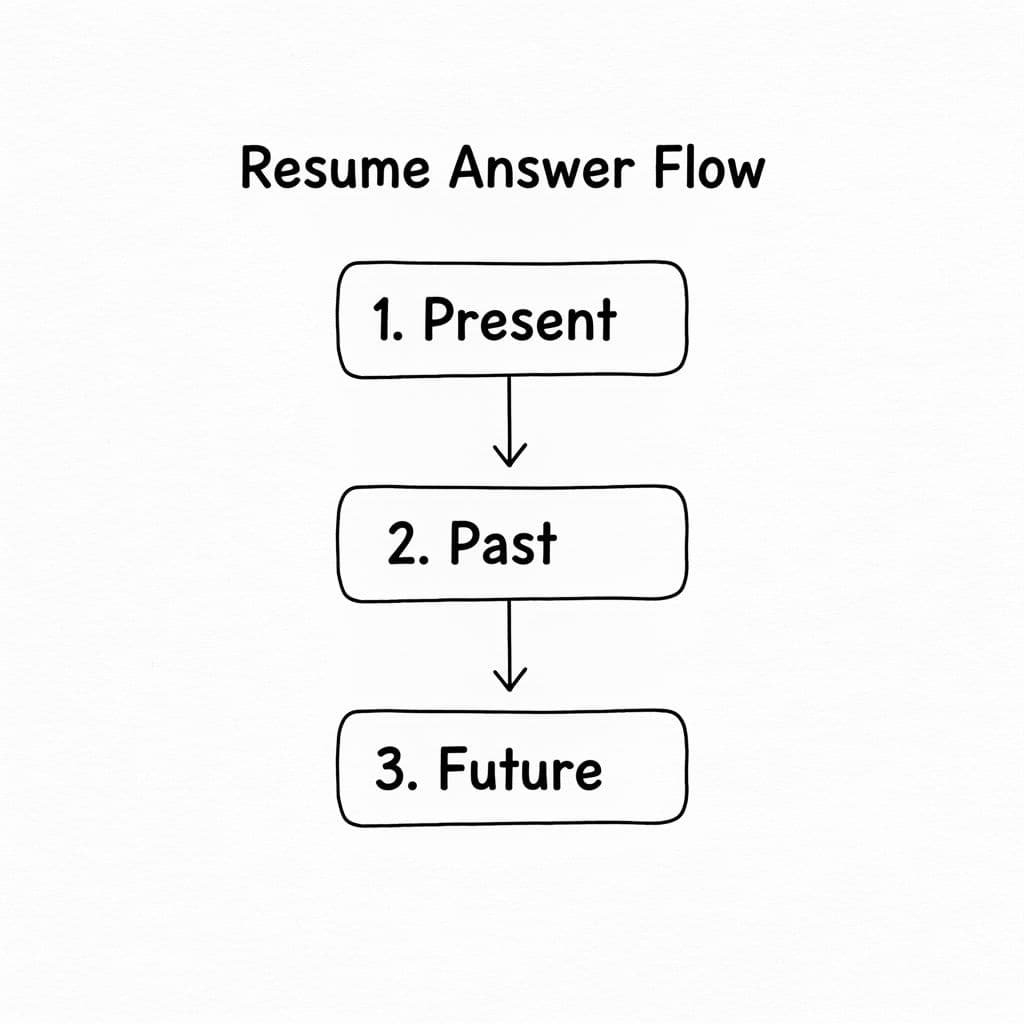
This order works because it provides the interviewer with immediate context, followed by solid proof of your abilities. Finally, it concludes by clearly articulating your motivation for seeking this new opportunity.
- Start with the present. Name your current role or most recent focus, highlighting your professional background and the strongest theme of your current work.
- Move to the past. Select one or two previous roles from your work history that explain how you developed your core expertise.
- End with the future. Connect your background to the target job and explain why this career move makes sense at this stage of your development.
Keep the answer between 60 and 90 seconds. This duration is long enough to show your professional trajectory while remaining short enough to invite meaningful follow-up questions.
Here is a sample answer for a marketing candidate: “I am a digital marketing manager focused on growth campaigns for SaaS teams. Before that, I worked in content and email marketing, where I learned how to tie messaging to pipeline results. Over the last two years, I have leveraged my recent experience to lead campaigns that improved trial conversions, so this role stood out because it combines demand gen, analytics, and cross-team work.”
When you “walk me through your resume” this way, notice what is missing. There is no exhaustive career history, no unnecessary personal backstory, and no monotone recital of bullet points. A 90-second answer framework works because it keeps your narrative tight and focused on the value you provide.
This is where thorough job interview preparation pays off. CareerScribeAI’s Cover Letter Generator can help you align the same core message across your resume, cover letter, and interview answers. That consistency matters, because mixed messages can make even high-quality experience sound weaker than it is.
Tailor your response to your career stage
Your answer should sound different if you are new to the workforce, ten years into your journey, or shifting industries. While the structural framework remains consistent, your focus must shift to ensure your career progression feels logical and intentional.
This quick comparison shows what to highlight based on your current professional standing:
| Career stage | Focus of your answer | Best angle |
|---|---|---|
| Entry-level | academic experience, summer internships, projects | show promise and readiness |
| Mid-career | recent results, leadership, scope | show impact and direction |
| Career changer | transferable skills, proof of learning, reason for shift | show fit and logic |
For an entry-level candidate, summarize your academic experience, summer internships, projects, or campus leadership. Keep the focus on what you learned and how you are prepared to contribute immediately. For a mid-career professional, lead with the last five to seven years of your career progression. Older roles should be minimized unless they directly support your current target. If you are aiming for a role in investment banking, for instance, be sure to emphasize the quantitative nature of your past work. For those undergoing a career pivot, bridge the gap by clearly highlighting your transferable skills. Name the skills that cross over, give one specific example of proof, and explain why your career transition is a deliberate move.
Regardless of your stage, do not simply recite your history in chronological order or a basic reverse chronological list. If you have resume gaps, address them briefly and confidently before moving to your accomplishments.
These interview tips will help you avoid the common mistakes that often sink good candidates.
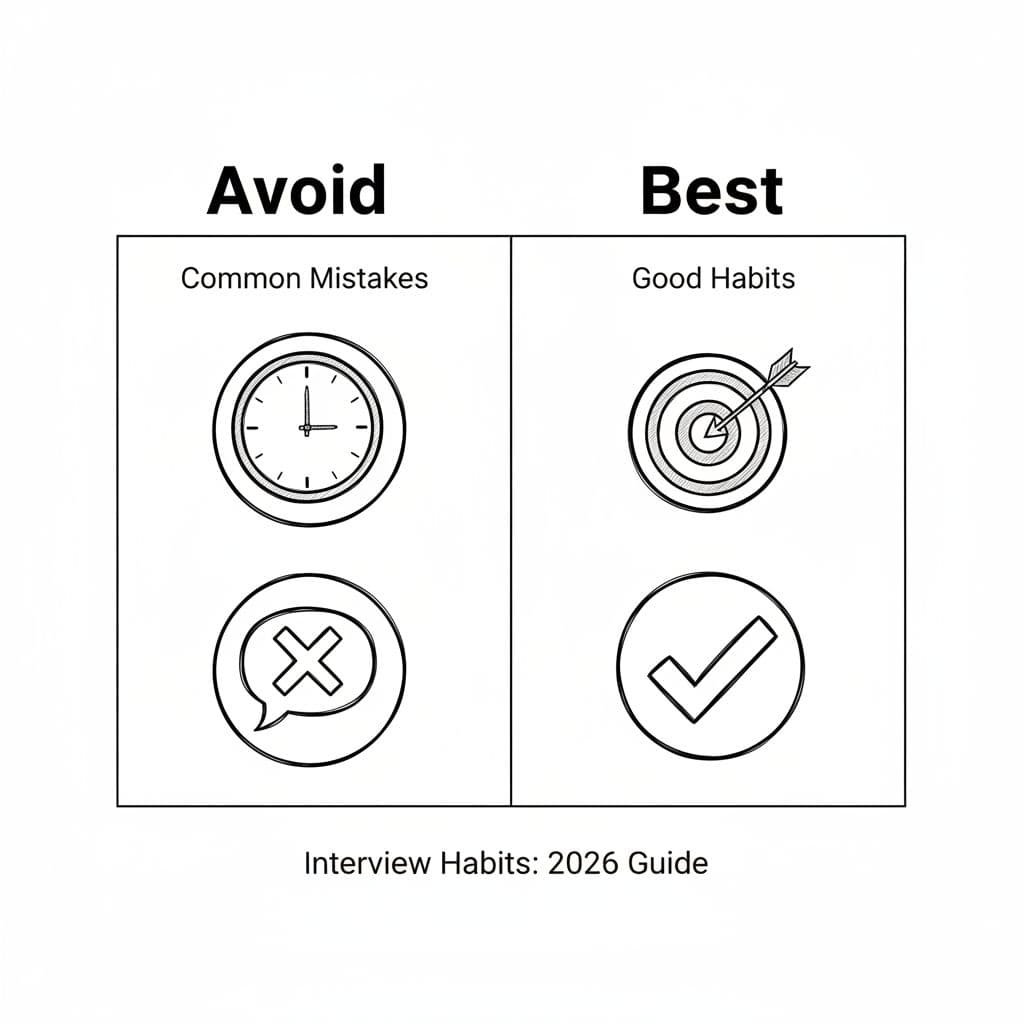
Avoid these habits:
- Going job by job with equal detail
- Using vague claims like “hard worker” or “team player”
- Skipping numbers when you have them
- Ending without linking your background to the new role
- Sounding memorized instead of prepared
A better answer feels natural but pointed. Mention one or two numbers if they matter. Name tools or systems you use, especially if the role values AI fluency, analytics, or remote collaboration. Then, end with a clear bridge: “That mix of client work and process improvement is why this role feels like a strong next step for me.” This is the best way to walk me through your resume and leave a lasting impression.
Frequently Asked Questions
How long should my answer be?
You should aim to keep your response between 60 and 90 seconds. This length is sufficient to provide a clear professional narrative while remaining concise enough to respect the interviewer’s time and invite further questions.
Should I mention my personal background?
Generally, no. Your answer should remain focused on your professional experience and the specific skills that make you a fit for the role rather than personal history or unrelated anecdotes.
What if I have gaps in my employment history?
Be prepared to address gaps briefly and confidently if they arise, then quickly pivot back to your relevant accomplishments. Focus on what you learned or achieved during that time to maintain a positive, forward-looking narrative.
Should I memorize my response word-for-word?
Avoid memorizing a script, as it can make you sound robotic or unnatural. Instead, practice the key themes and the structural framework so that your delivery sounds conversational and prepared rather than rehearsed.
Conclusion
A strong answer to walk me through your resume is not a summary of every line on the page. Instead, it is a short, clear story that highlights where you are now, how you built your professional strengths, and why this specific role is the right fit for your goals.
When you focus on selecting your most relevant experience, this common interview question becomes much easier to navigate and far more useful to the recruiter. To succeed, tighten your resume content, practice your narrative out loud, and ensure that every part of your application tells a consistent story about your career path.