


Sending three applications to one employer can either help or hurt your chances. The difference is fit.
In the 2026 job market, most hiring teams accept that one candidate may match more than one opening. Even when you are applying to your dream company, the hiring manager needs to see focus. What looks bad is a burst of random applications, copied resumes, and mixed messages about your professional goals. A smart plan starts before you hit apply.
Key Takeaways
- Focus your applications on roles that share a similar skill set and career path to avoid appearing unfocused or desperate.
- Tailor every resume and cover letter for the specific job description while keeping your core professional identity and career history consistent.
- Limit your applications to two or three targeted openings at most; quality and relevance are far more important than the quantity of submissions.
- Practice transparency with recruiters by being honest about your interest in multiple roles, framing it as a desire to find the best fit for your skills.
- Maintain a structured tracking system for all submissions, including role titles, dates, and the specific version of the materials you provided.
Choose roles that sit in the same lane
Applying to multiple jobs at the same company works when the roles share a skill base and career path. A product marketer can reasonably apply to lifecycle, growth, and product marketing roles. That same candidate should not also apply to recruiter, sales, and data analyst jobs.
Most recruiters care less about the count than the logic. In most cases, two or three targeted roles are plenty. Indeed’s guidance on applying to different open positions makes the same point: revise your materials for each role and show real interest in every one.
Before you apply, use this quick filter.
| Strong signal | Red flag |
|---|---|
| Roles share the same core skills and experience | Roles sit in unrelated functions |
| You meet most must-haves | You are guessing on fit |
| You’d seriously accept any of them | You’re applying out of curiosity |
| Your story stays consistent | Each version tells a different career story |
If most of your answers land in the left column, your strategy looks focused. If they land on the right, trim your list.
Ask yourself one hard question: would you take any of these jobs if offered? If the answer is no, or if the role does not align with your long-term career goals, do not apply. Hiring teams can tell when interest is thin.
Also check how the company hires. Some employers use one recruiter for a whole function, while others split roles by team. When the same people may see all your applications, consistency matters even more.
Finally, read the job posts line by line. If you meet about 70 to 80 percent of the must-haves, your relevant experience makes the role worth the effort. If the overlap is much lower, skip it. Recruiter advice from InterviewFocus also warns against over-applying inside one company. Your applications should look like branches from the same tree, not separate careers.
Tailor each resume and cover letter, but keep one core story
Every application requires a unique version of your materials because an applicant tracking system and hiring managers both look for specific alignment. You should tailor your resume to highlight the most relevant achievements for each position. Keep your employer names, dates, and job titles identical across all versions. Then, adjust the sections that require specific focus, such as the professional summary, the technical skills, and the top bullet points that match the requirements.
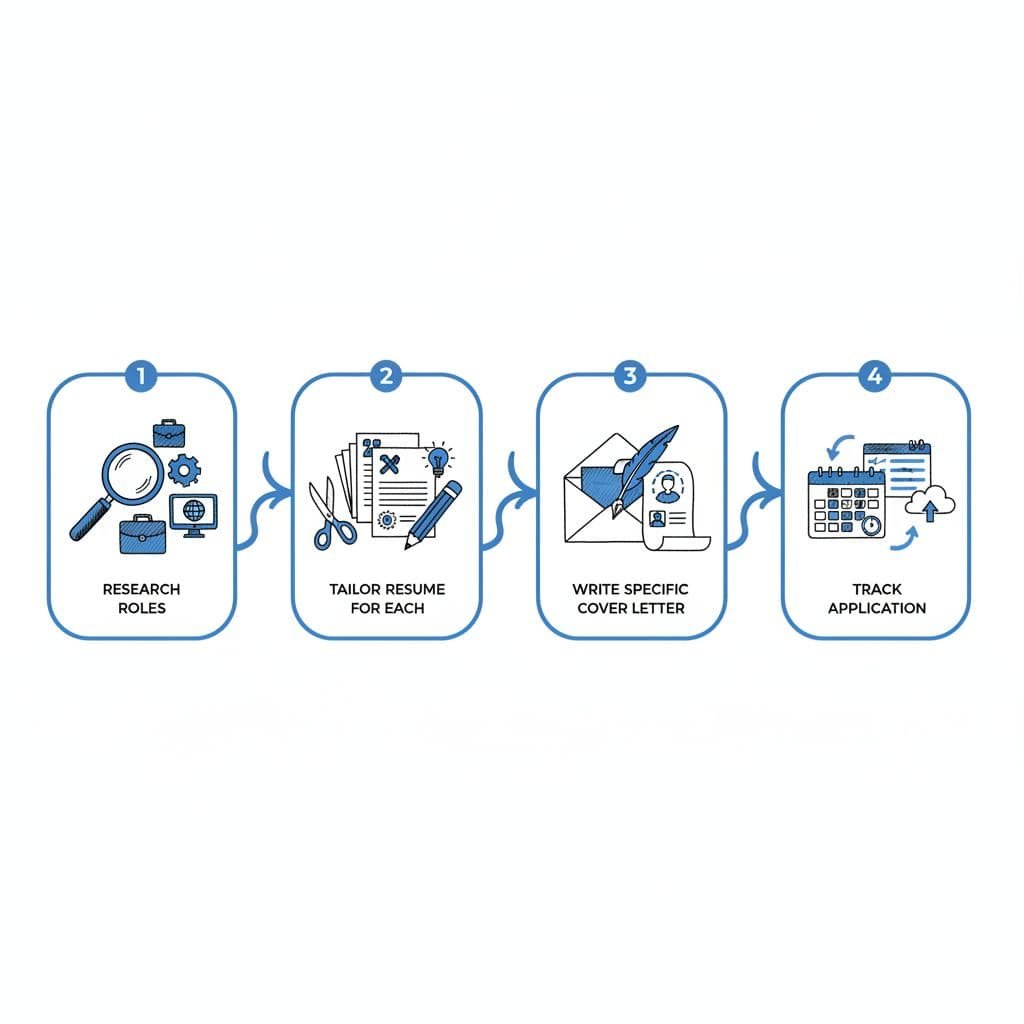
A simple process helps you tailor each application without losing consistency.
Keep the facts fixed. Tailor the evidence.
If you apply to multiple jobs at the same company, the biggest mistake is appearing like a different candidate for every opening. You must remain consistent to show you are truly qualified for the role. One version should not label you as a hands-on operator while another frames you strictly as a people manager, unless both descriptions are clearly supported by your professional record.
Start with the posting that fits your background best. Build that master version first, then adapt it for nearby roles by emphasizing different transferable skills. A job description analyzer or a match score tool can help you rank openings before you spend time rewriting your bullet points.
A separate cover letter matters as well. Even a brief cover letter should explain why a specific role fits your career path and why that team interests you. CareerScribeAI.com can help you manage this process without making you start from zero. Its AI Resume Builder can analyze a job description to match bullet points to each specific posting, and the AI Cover Letter Generator can provide each application with its own unique angle while keeping your background consistent. If you want a second opinion on the balance between customization and consistency, this 2026 guidance on keeping a core identity is useful.
Space out applications, talk to recruiters clearly, and track everything
Timing sends a signal. If you can, do not file every application within ten minutes. Submit your best-fit role first, then send the second or third after you have tailored them. While your application timeline matters, do not wait so long that the posting closes. Speed is helpful, but submitting too many roles at once can make you look like you are looking desperate, which is a risk you should avoid.
If a recruiter reaches out, be open about applying to more than one role. Practicing transparency is the best way to handle this, so keep your explanation short and calm.
“I applied to a few roles that use the same core strengths, and I would be glad to discuss where my background fits best.”
That answer works because it shows focus, not confusion. It also gives the recruiter room to steer you toward the best opening.
Follow-up needs the same discipline. If one recruiter rejects you for role A, do not relaunch the full pitch for role B the next day. Maintain a professional demeanor by adjusting your note, mentioning your continued interest, and keeping it brief.
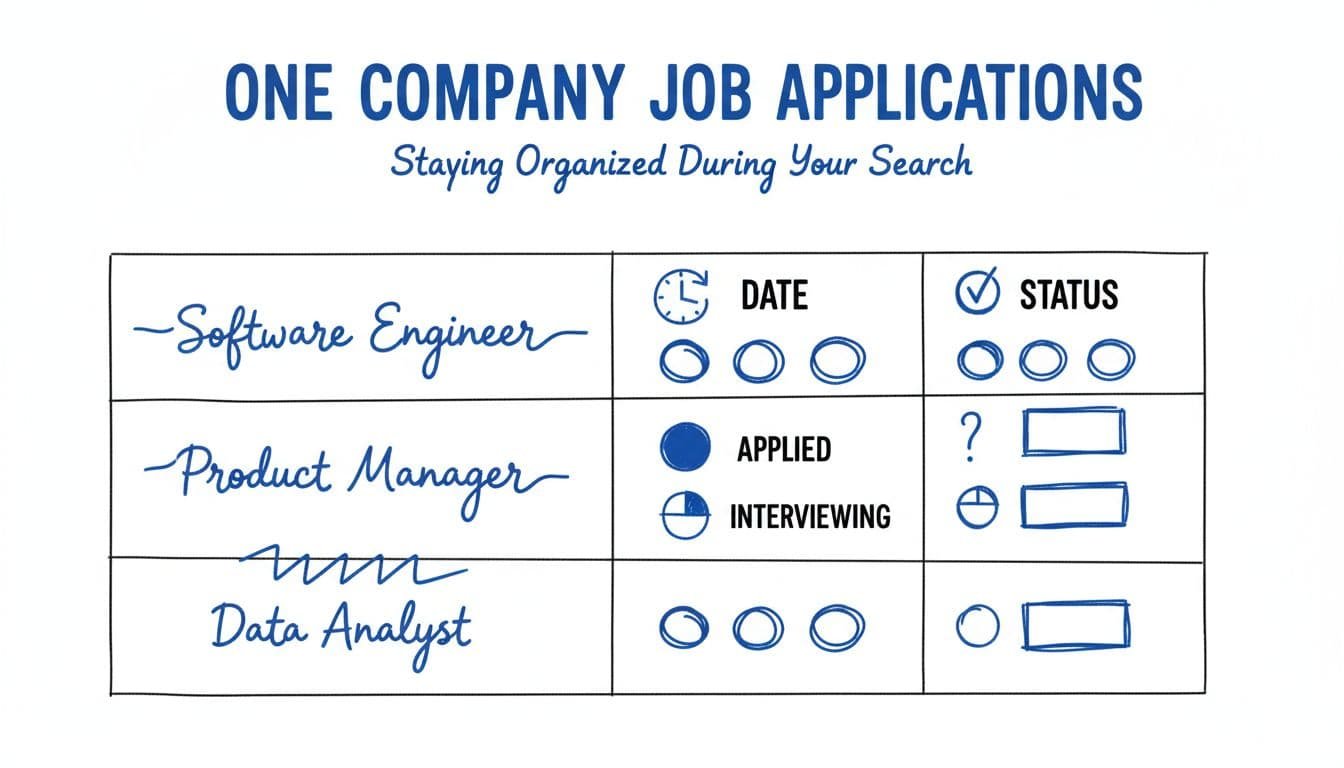
Track each role, resume version, and follow-up date in one place.
Tracking matters more than most job seekers think. Keep one simple record for your job search that includes the role title, requisition number, date applied, resume version, recruiter name, interview stage, and follow-up date. Be sure to log these as separate applications to keep your progress clear. CareerScribeAI.com is useful here too. Its application tracker and reminders help you avoid duplicate outreach, and its Interview Prep Tools can prepare you for role-specific questions while helping you navigate the interview process with consistent examples. If you get interviews for two roles, use the same core stories, but shift which wins you highlight first.
Frequently Asked Questions
Is there a limit to how many jobs I should apply for at one company?
In most cases, you should limit yourself to two or three closely related roles. Applying to more than that can make you appear unfocused and may signal to hiring managers that you do not truly understand your own professional path.
Should I use the exact same resume for every application at the same company?
No, you must tailor your materials for every role to ensure they align with the specific requirements of that job. While your core facts like dates and job titles must remain consistent, you should customize your bullet points and professional summary to highlight the skills most relevant to each specific opening.
What should I do if a recruiter asks why I applied to multiple positions?
Be honest and professional by explaining that your background aligns with the core requirements of those specific roles. Frame your interest as a proactive effort to find the position where you can deliver the most value and best contribute to the company’s goals.
Does applying to multiple roles hurt my chances of getting hired?
It only hurts your chances if the applications feel random, inconsistent, or lack a clear career narrative. When you show a consistent story and target roles that sit in the same functional lane, it demonstrates that you are a versatile candidate who is serious about joining that specific organization.
Conclusion
The safest way to apply to more than one opening at the same company is to show focus. By picking a small set of related roles, tailoring each application, and keeping one consistent story across your materials, you significantly increase your chances of landing an interview.
This strategic approach demonstrates that you understand the company culture and have a clear vision for your career path. Three thoughtful applications will position you as a strong, intentional candidate, whereas ten random submissions can make you appear unfocused. Ultimately, hiring teams notice the difference when a candidate takes the time to align their goals with the needs of the organization.