

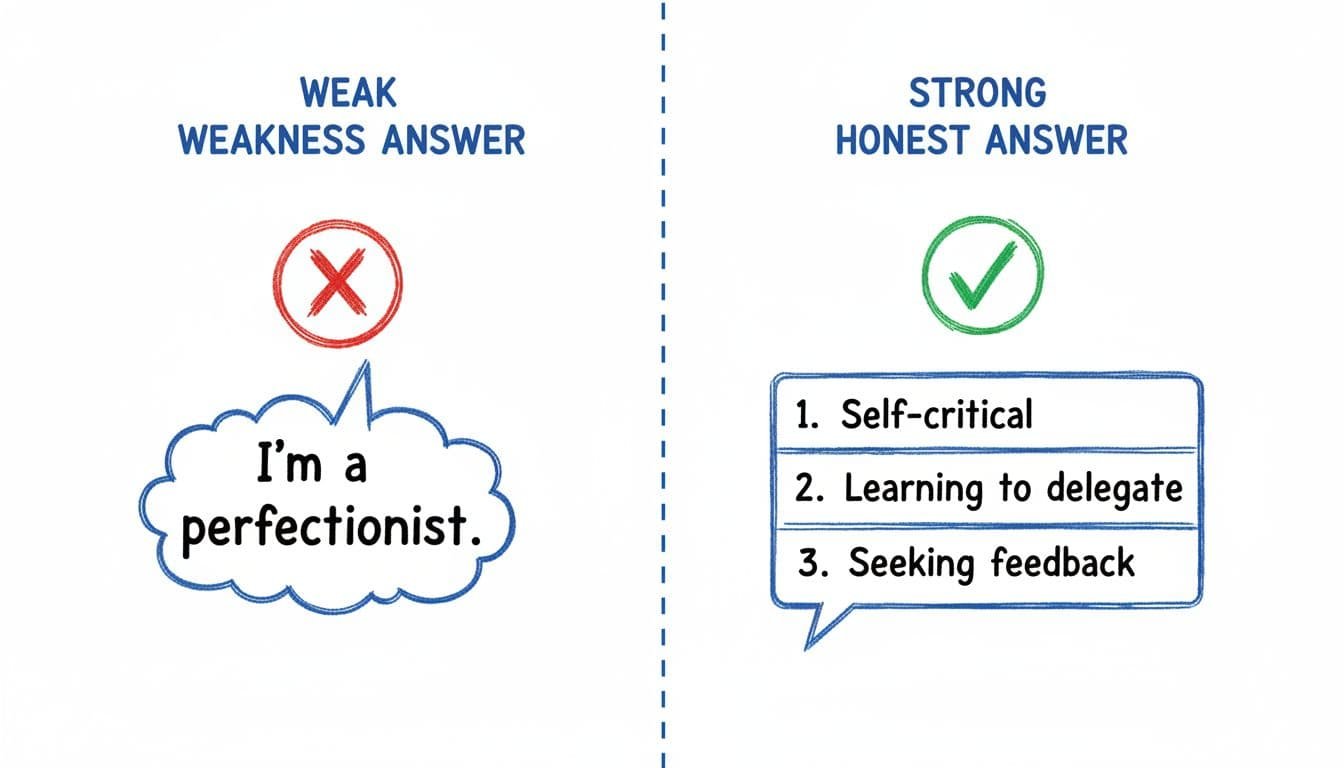
Nothing falls flatter in an interview than claiming your greatest weakness is, “I’m a perfectionist.” Most hiring managers have heard it too many times.
In 2026, weakness interview answers to common interview questions get judged fast because potential employers compare them against your resume, your tone, and the job itself. The good answer isn’t polished for the sake of it. It sounds true, measured, and grown-up.
Key Takeaways
- Interviewers test self-awareness: name a real work habit weakness, explain its impact, and show concrete actions you’ve taken to improve it.
- Follow a simple 4-step formula—pick a safe weakness, describe how it showed up, share your fix, and note the progress—to keep answers honest and structured.
- Avoid clichés like ‘I’m a perfectionist,’ fake strengths-as-weaknesses, or flaws central to the job; strong answers sound specific, grown-up, and growth-focused.
- Keep responses concise (30-60 seconds), believable, and tied to team success; rewrite examples in your voice for authenticity.
What interviewers want to hear now
This question is rarely a trap. It’s a judgment test to demonstrate self-awareness.
Hiring manager wants to know whether you can identify a weakness in a real work habit, explain its impact, and show that you’re improving it. Guidance from Indeed’s example weaknesses and Deel’s interview advice points to the same pattern: honesty works best when it comes with action toward your professional growth.
A strong answer also avoids one big mistake. Don’t name a weakness that blocks the core job. If the role depends on public speaking every day, “presenting” may be a risky choice unless you can show clear progress.
Before you choose your answer, sort the role’s essentials from the extras. This must-have vs nice-to-have job skills guide helps you see what’s safe to discuss, and what could hurt your fit.
The best weakness answer admits a limit, shows control, and proves change.
A simple formula that keeps your answer honest
You don’t need a speech. You need a structure.
Use this four-step flow as your strategic response when building weakness interview answers:
- Pick one real weakness that won’t sink the role.
- Explain how it showed up in your work.
- Share how you improved it by taking action.
- End with the progress you’ve made.
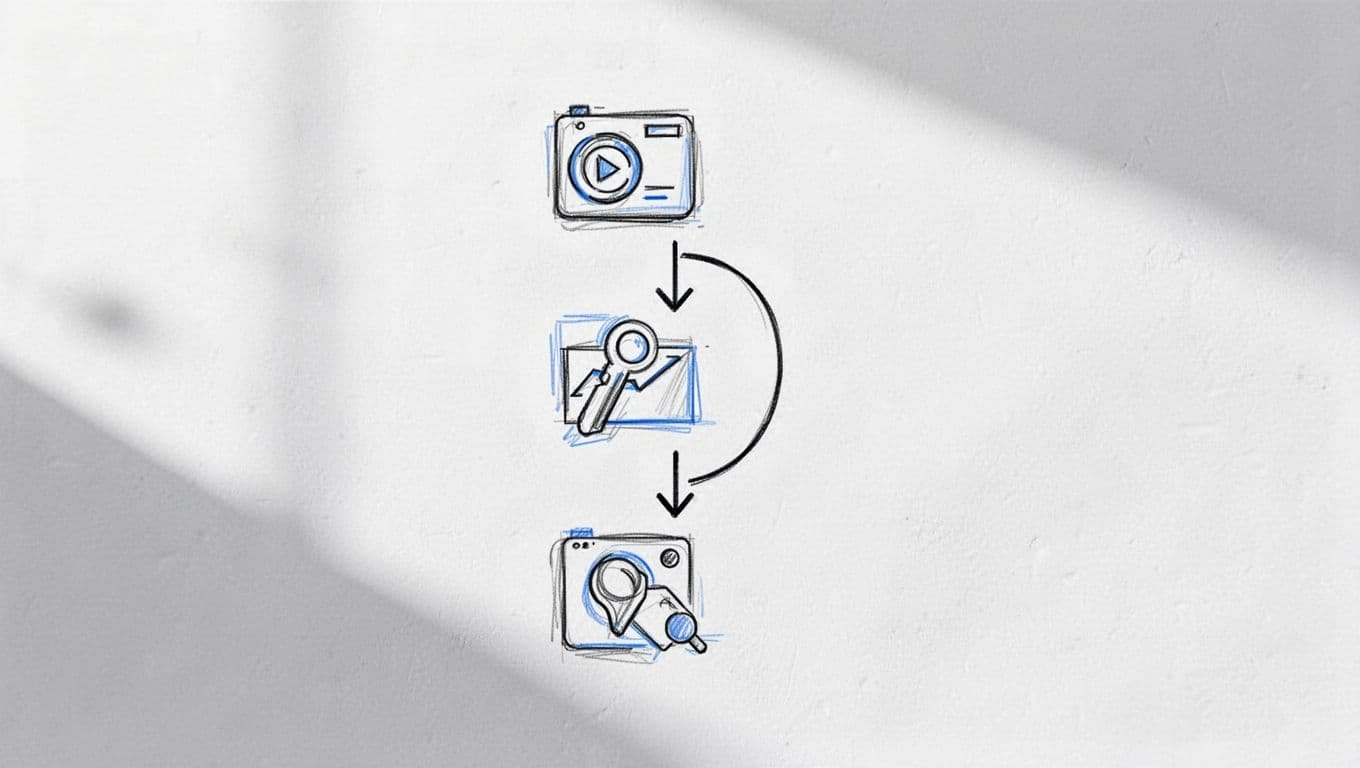
That flow works because it sounds human. It also shows self-awareness without turning into a confession. This method showcases a growth mindset and a commitment to self-improvement.
Keep your answer to about 30 to 60 seconds. Memorize the shape, not every word. If it sounds stiff out loud, trim it.
Your weakness answer should also match the rest of your interview story. If you’re tightening your opener too, these tell me about yourself examples can help you keep the same tone across answers. CareerScribeAI’s Interview Prep Tools are useful for professional development here, especially if you want to rehearse aloud and keep your message aligned with your AI Resume Builder draft and Cover Letter Generator language.
Honest “biggest weakness” interview answers you can adapt
These examples work because they sound specific. Rewrite them in your own voice.
If you tend to stay quiet in big meetings
“I used to hold back in larger meetings, especially early in my career. Confidence issues and feedback from coworkers showed that sometimes slowed feedback because I waited too long to share ideas. I’ve worked on speaking up sooner by preparing two points before each meeting and contributing early. That habit has made me more confident and more useful in team discussions, delivering positive results.”
This works well for early-career roles because it shows growth, not fear.
If you spend too long polishing work
“One weakness I’ve worked on is over-editing written work before I send it. Being detail-oriented helped quality, but it hurt time management and sometimes slowed me down. Now I set a draft deadline, ask what level of detail is needed, and send version one earlier. That’s helped me balance accuracy with speed.”
This answer is strong because the weakness is believable, and the fix is practical, with measurable results.
If you wait too long to ask for help
“I used to try to solve blockers on my own for too long before I involved others. That could delay progress. I’ve changed that by setting time limits on problems and raising issues sooner when I need input. It’s improved my teamwork and kept projects moving.”
Mid-career candidates often do well with this one because it shows maturity.
If you over-explain technical details
“I can over-explain when I’m close to a technical topic. Earlier on, I’d give too much detail on technical skills before the main point. I’ve improved that by leading with the headline first, then adding detail only if it helps the audience. My updates are much clearer now, especially with non-technical teams, and it has boosted my interpersonal skills.”
This is a good fit for analysts, engineers, and project-based roles.
For more phrasing ideas, these strong sample answers can help, but always rewrite them. Borrowed answers sound borrowed. This is your honest answer to adapt.
Frequently Asked Questions
What do interviewers really want from a weakness answer?
Hiring managers seek self-awareness, not perfection. They want you to identify a genuine work habit issue, explain its real impact, and demonstrate proactive steps toward improvement. Honest answers with progress show maturity and a growth mindset.
What’s the best formula for building a weakness response?
Use this 4-step flow: pick a real weakness that won’t undermine the core role, explain how it affected your work, describe specific actions you took to address it, and end with measurable progress. This structure keeps your answer human, concise, and credible. Practice it to 30-60 seconds without sounding memorized.
Can I still say ‘I’m a perfectionist’ as my weakness?
No, it’s overused and sounds insincere to most managers. Opt for specific, believable examples like over-editing or hesitating to ask for help, paired with real fixes. Generic answers hide rather than reveal self-awareness.
How do I pick a weakness that fits the job?
Sort must-have skills from nice-to-haves before choosing. Avoid naming flaws tied to daily essentials, like public speaking for a presentation-heavy role. Safe picks show growth in extras while proving you’re reliable on core duties.
What are the top mistakes to avoid in weakness answers?
Don’t use fake or vague weaknesses without improvement plans, clash with job needs, sound negative, or skip team benefits from your growth. Weak responses hide flaws; strong ones admit limits and prove control.
Weak vs strong responses, and common mistakes to avoid
A quick side-by-side view makes the difference obvious.
| Weak response | Stronger response |
|---|---|
| “I’m a perfectionist.” | “I can spend too long polishing work, so I use draft deadlines now.” |
| “I work too hard.” | “I used to hesitate to ask for help, but I now raise blockers earlier.” |
| “I don’t really have weaknesses.” | “I can over-explain technical details, so I lead with the main point first.” |
The pattern is simple. Weak answers hide. Strong answers admit a personal weakness, explain how you overcome challenges, and improve.
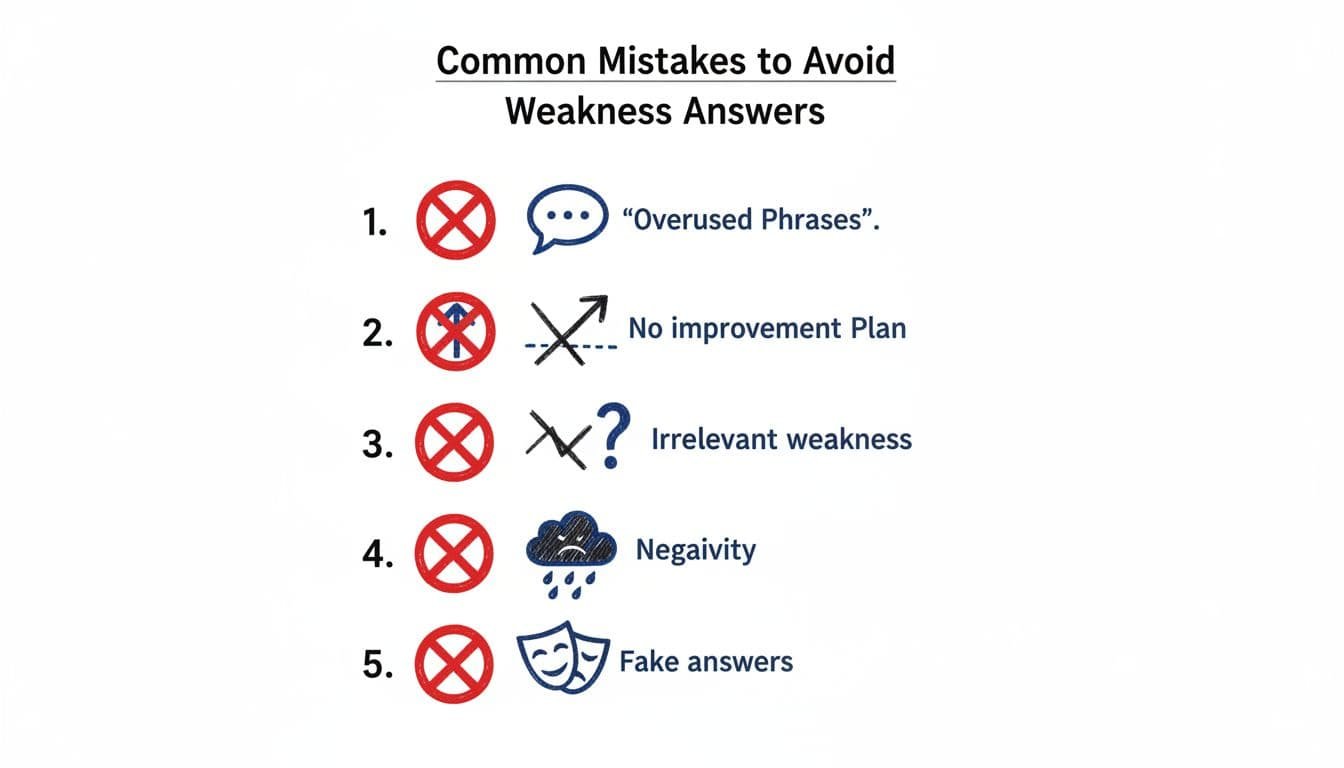
Avoid these common mistakes:
- Using a fake weakness that sounds polished but empty.
- Naming a weakness with no plan to improve it.
- Failing to show how your improvement contributes to team success.
- Picking a flaw that clashes with the job’s main duties.
- Sounding negative, defensive, or embarrassed.
- Giving an answer so vague that anyone could say it.
The best answers don’t try to look flawless. They sound believable.
Self-awareness is what makes this question work for you, not against you. If your answer names a real habit, shows what changed, and fits the role, it will sound stronger than any rehearsed line.
That’s why the best weakness interview answers for 2026 feel calm and plain. They don’t hide the weakness. They show that you can manage it, strengthening your overall job application.