

The fastest apply button is not always the best one. If you are weighing LinkedIn vs company sites in 2026, the smartest answer is to utilize both tools in the right order. Optimizing your job application process requires a strategic approach rather than just clicking the first link you see.
LinkedIn remains one of the best places to find openings, size up potential employers, and get seen by recruiters. However, when a company has its own dedicated careers page, that is often the superior destination to submit your formal application.
Key Takeaways
- Use LinkedIn for discovery: Leverage LinkedIn as your primary engine for finding leads, checking for connections, and gauging the urgency of job postings.
- Prioritize company sites for submission: Submit your formal application through the official company careers page to ensure you answer all required screening questions and integrate correctly with their internal Applicant Tracking System (ATS).
- Balance speed with quality: Avoid the temptation of “spray-and-pray” applications; prioritize a workflow that pairs fast discovery on LinkedIn with tailored, high-effort submissions on employer sites.
- Optimize your materials: Ensure your resume and cover letter are tailored to the specific role, as generic documents often fail to pass ATS filters regardless of which platform you use to apply.
LinkedIn is best for discovery and visibility
Most job seekers start on LinkedIn because it provides unparalleled speed and accessibility. You can search by title, set alerts, filter by location, and check whether you know someone at the company. That matters because a warm connection still beats a cold resume. While other job boards like Indeed and Glassdoor offer similar search capabilities, LinkedIn acts as a live, professional networking hub.
A recruiter can scan your background before they ever open your resume. If your headline, experience, and skills are weak, even LinkedIn Easy Apply will not fix that. LinkedIn itself points people toward stronger profiles and better search habits in its job search best practices.
Another advantage is timing. You can often see whether a role was posted hours ago or weeks ago, which helps you judge urgency. For some roles, a short and relevant note to a hiring manager also helps after you apply.
Use LinkedIn when you need speed, reach, and context. You can compare similar openings, see who works there, and spot active hiring teams. For people changing industries, that extra context is useful.
Still, LinkedIn Easy Apply has limits. It often collects only a resume and a few quick answers. While it might feel efficient, this type of automated application often leads to spray-and-pray applications that fail to capture a recruiter’s attention. It is less helpful when the employer wants work samples, pay expectations, location details, or deeper screening questions.
LinkedIn Easy Apply makes sense when:
- the company site sends you back to LinkedIn
- the posting is fresh and likely to move fast
- you can add a note or follow up after
- your LinkedIn profile is polished
If your profile needs work first, this career coach walkthrough of LinkedIn job search is a useful refresher.
Why company sites often win the actual application
When people compare LinkedIn and company sites, they often mix up two distinct tasks. One channel helps you discover new roles, while the other feeds your information into the employer’s hiring infrastructure.
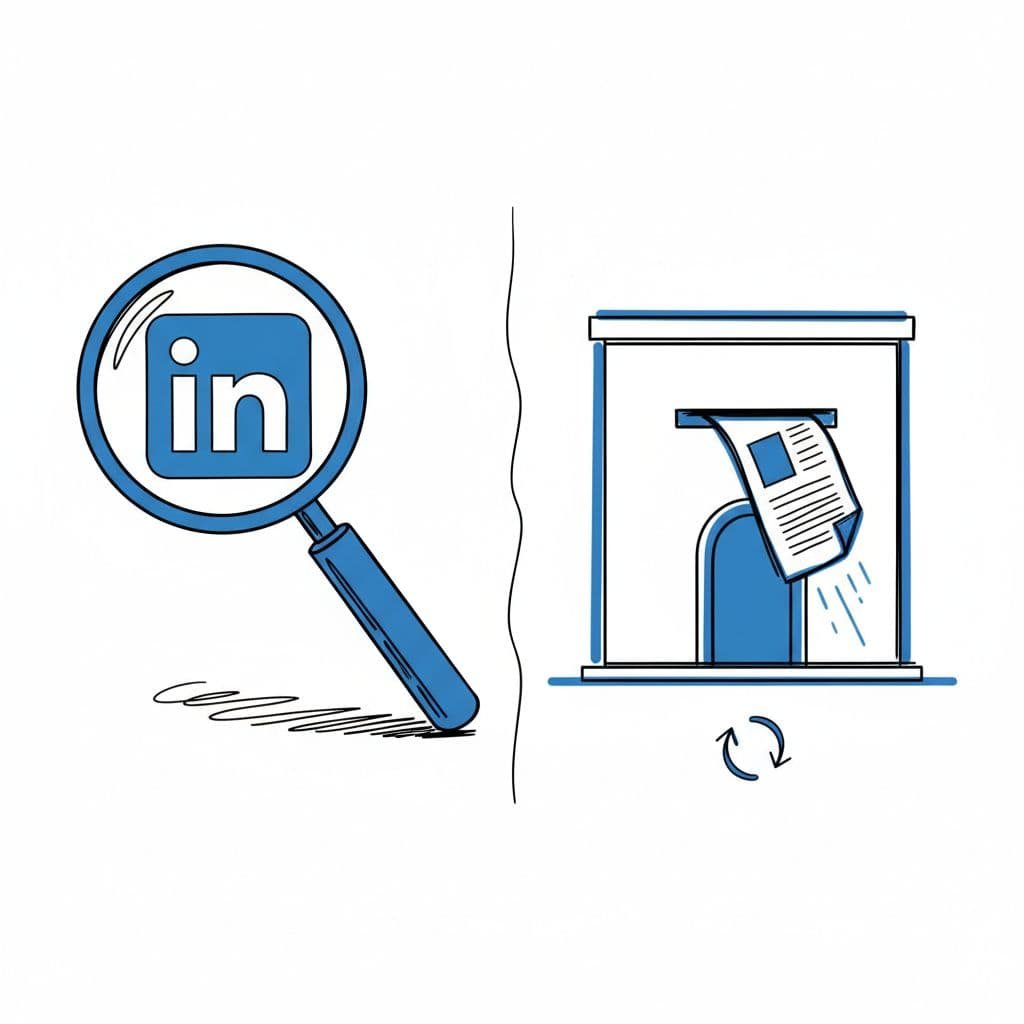
LinkedIn serves as your primary search engine, while the company website acts as the official submission path.
Company career pages usually provide the full posting rather than the shortened version often seen on job boards. You may find specific office policies, pay ranges, travel requirements, or portfolio requests that never appear on LinkedIn. This level of detail helps you confirm if the role is legitimate and worth your time.
Using direct applications through a company portal also reduces confusion. Most employers manage incoming talent through an Applicant Tracking System, or ATS, to streamline candidate screening. If you apply through the wrong channel, you might miss mandatory questions or fail to upload the required materials expected by these integrated systems. Furthermore, checking the official site allows you to spot outdated job listings that might still be circulating on third-party boards, saving you from wasting time on dead-end opportunities.
This comparison helps clarify the typical trade-offs you face:
| Channel | Best use | Main upside | Main risk |
|---|---|---|---|
| Discovery and speed | High visibility | Potential for thin applications | |
| Company site | Official submission | Better alignment with applicant portals | Increased time spent per role |
| Both together | High-intent jobs | Best of both search and submission | Higher effort per application |
The takeaway is straightforward. LinkedIn is ideal for spotting an opening, but the company site often provides a cleaner handoff into the employer’s workflow.
In 2026, the strongest default is simple: find the role on LinkedIn, then apply on the employer’s site when that option exists.
If the company page is broken, outdated, or simply redirects you back to LinkedIn, proceed with the LinkedIn application and move on to the next lead.
A better 2026 workflow for stronger job applications
The most effective job search strategy in 2026 is not based on mass volume. Instead, it relies on fast triage followed by targeted effort. This is where the choice between LinkedIn and company sites moves from an abstract concept to a practical necessity.
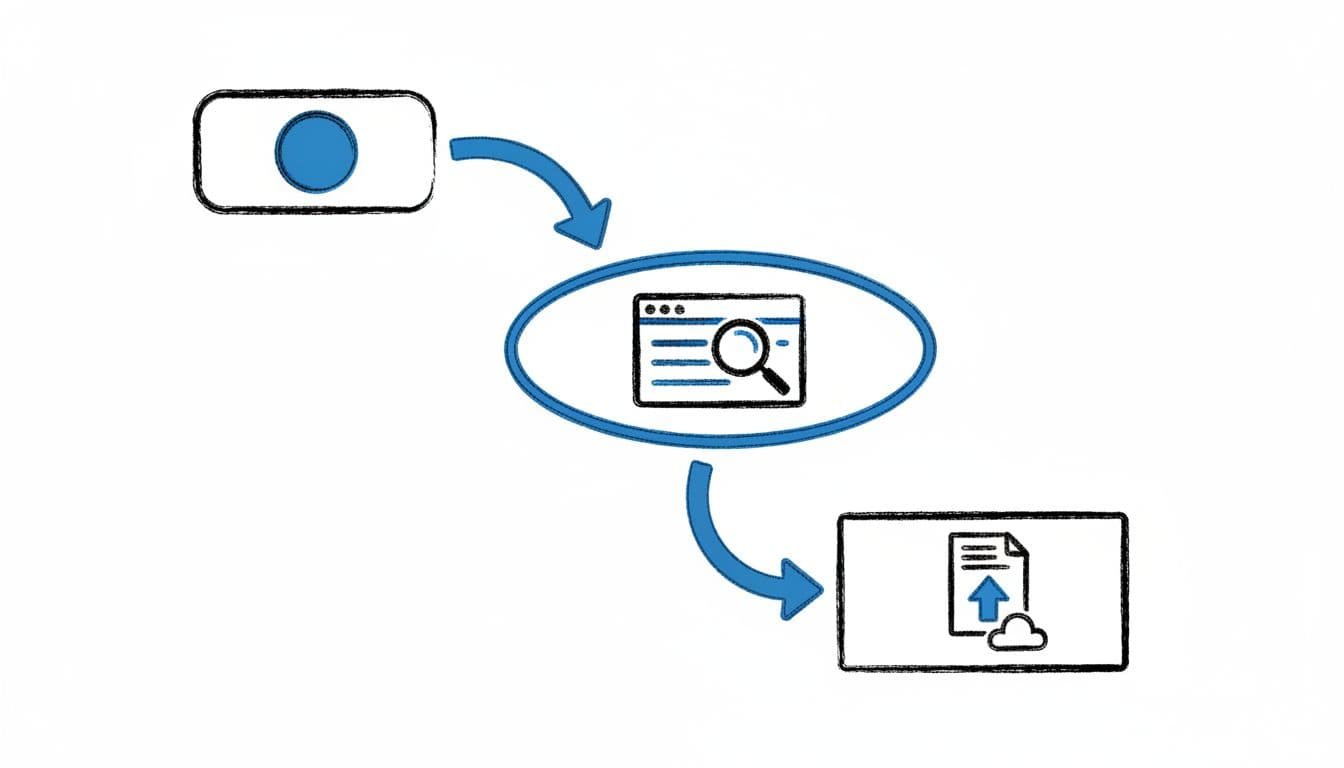
One repeatable workflow keeps your search organized and your materials sharper.
A practical workflow looks like this:
- Find the role on LinkedIn and check whether it was posted recently.
- Open the company careers page and confirm the details match.
- Tailor your resume and cover letter to the specific job posting.
- Apply, then track your progress and send a follow-up message if it makes sense.
That third step is where many searches slow down. A generic resume often fails to pass ATS compatibility requirements, dying in screening even when your background is a perfect fit. Tools on CareerScribeAI.com can help here without turning the process into mindless copy-paste work. Using an ATS optimized resume is essential for getting past automated filters, and the CareerScribeAI.com AI Resume Builder can tighten your bullets around the job post. Furthermore, using the Cover Letter Generator to create a tailored cover letter helps you stand out to hiring managers.
According to internal recruiters, personalizing applications is the single most effective way to improve your callback rates and overall response rates. You do not need to rewrite everything from scratch for each role, but you do need a document that sounds like it belongs in that specific stack. If you are sending the same file to ten employers, your speed may be costing you interviews.
Finally, keep track of your progress. Maintain a simple log with the date, source, resume version, and next step. This process of tracking candidates is a cornerstone of professional recruiter advice. CareerScribeAI.com offers a tracker and reminders for your follow-up message, which is helpful because memory gets messy after the first dozen applications. If company site submissions bring more interviews, spend more time there. If Easy Apply works in your niche, keep it in the mix.
Frequently Asked Questions
Is it ever okay to skip the company website and use LinkedIn Easy Apply?
Yes, Easy Apply is perfectly acceptable if the company site is broken, outdated, or simply redirects you back to the LinkedIn platform. It is also a valid choice for roles where speed is critical or if you have a polished profile that effectively highlights your relevant skills.
Why does my application sometimes get ignored when I apply through a company site?
Application systems often rely on Applicant Tracking Systems (ATS) to filter candidates based on keyword alignment and formatting. If your resume is generic or not formatted for ATS compatibility, you may be filtered out before a human recruiter even sees your information.
Should I apply on both LinkedIn and the company website?
Applying in multiple places for the same role is generally unnecessary and can occasionally create duplicate entries in an employer’s system. It is best to stick to one clear path—using LinkedIn for discovery and the official careers page for your actual submission.
Final thoughts
The fastest application button is not always the best one. While LinkedIn remains the primary hub for your job search, the company website is usually where stronger applications land.
When an employer offers both options, use LinkedIn for discovery, research, and networking. Then, submit your tailored resume through the official careers page whenever you can. Taking that extra step often gives your application a better shot at reaching a recruiter and landing you an interview in the competitive landscape of 2026.