


An optional cover letter rarely feels optional when the job matters. You see the upload box in the job application and wonder if skipping it will cost you the interview.
In 2026, the best answer is not “always” or “never.” Send the letter when it adds context, motivation, or proof that your resume can’t show fast enough.
That distinction matters because recruiters and hiring manager don’t use cover letters the same way.
Key Takeaways
- Submit an optional cover letter when it adds context like career changes, employment gaps, or unique motivation that your resume can’t convey quickly—especially for competitive roles.
- Skip it for high-volume, quick-apply, or hourly jobs where resume keywords and speed matter more; instead, add 2-3 targeted sentences in the application note or email.
- Keep it short (150-300 words): lead with fit for the role, add one strong proof point with results, and close with why this company or team.
- Treat the optional upload as a test of judgment—if it only repeats your resume or feels generic, save your time and focus on a sharper application.
What “optional” usually means now
Most recruiters still screen resumes first. That’s especially true in quick-apply job postings, high-volume hiring, and roles with hundreds of applicants. The resume clears the first gate; the cover letter often helps later, when people compare strong candidates.
A recruiter’s honest take on whether employers read cover letters lands on the answer many job seekers don’t want to hear: sometimes. For operational roles, contract work, and other high-volume openings, a letter may get little attention. For competitive professional roles, it often gets read once you’ve made the shortlist.
That pattern matches a 2026 survey of 553 hiring professionals, which found that 72% still expect a cover letter when the post says it’s optional, and 77% prefer candidates who send one to stand out. So “optional” often means “not required to apply, but useful if you have something worth saying.”
This quick guide helps separate the clear yes cases from the safe skips.
| Situation | Best move | Why |
|---|---|---|
| Competitive white-collar role | Submit one | It shows relevant experience, fit, and intent |
| Career change, gap, or relocation | Submit one | Your resume needs context on suitability for the position |
| Entry-level role with little experience | Submit one | Motivation can carry more weight than limited relevant experience |
| High-volume hourly or quick-apply role | Usually skip | Speed and resume keywords matter more |
| No upload field, but space for a note | Write 2 to 3 sentences | You still show interest in the job application |
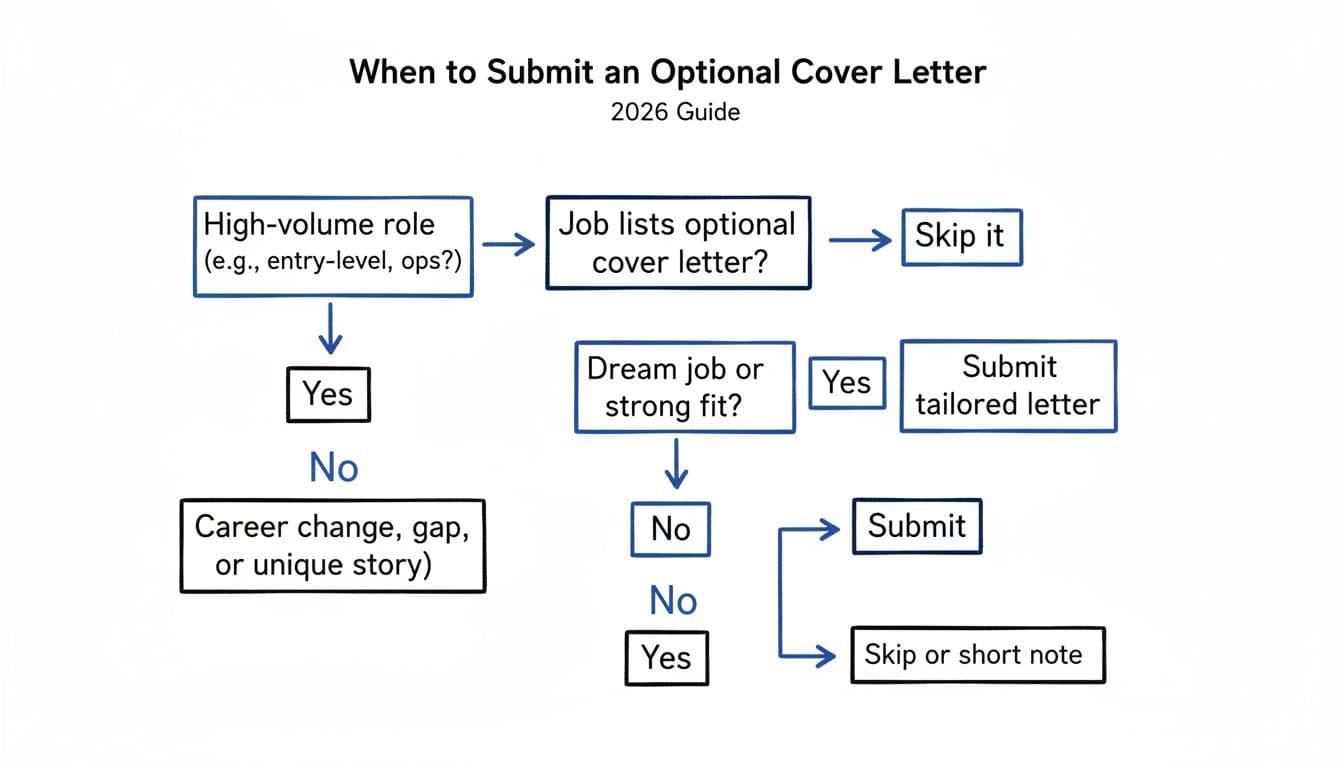
The practical rule is simple. If the letter can answer “why you, why this role, why now,” send it. If it would only repeat your resume, save your time.
When it makes sense to include the letter
If you’re unsure when to include a cover letter, look for roles where a resume leaves obvious gaps. Those are the cases where an optional cover letter earns its place.
It usually helps in a few situations:
- You’re making a career change and need to transfer your skills from past work to the new role.
- You’re early in your career and want to show energy, judgment, and interest.
- You have employment gaps, relocation, return-to-work story, or unusual work history.
- The job involves writing skills, client communication, fundraising, or leadership.
- The company is a top target or you have a referral, and you can explain a real reason for applying.
A short letter helps when it adds additional information. A weak letter hurts when it repeats the resume line by line.
There are also times to skip it. Fast-moving hourly roles, job listings, and one-click applications often reward speed more than explanation. In those cases, a sharper resume usually does more work than a generic letter. A guide on when you can skip a cover letter makes the same point: the letter matters most when it adds additional information, not bulk.
A quick example shows why this matters. If you’re moving from teaching into corporate learning, your resume may look indirect at first glance. A short letter can connect classroom facilitation, curriculum design, and stakeholder communication to the job in seconds. The same logic applies if you’re returning to work after time away.
If you skip the full letter, don’t leave silence behind. Use the application note, email body, or LinkedIn message to add two or three focused sentences. That gives the prospective employer the same core message without extra friction.
How to write one that people might read
In 2026, the best cover letters are shorter, tighter, and more specific. Aim for 150 to 300 words for most roles. That feels more like a smart introduction than a second resume.
Start with a line that sounds like a person wrote it, in a professional tone. “I am writing to apply for…” wastes prime space. If your opening feels stiff, these examples of strong cover letter introductions show how to sound direct without sounding canned.
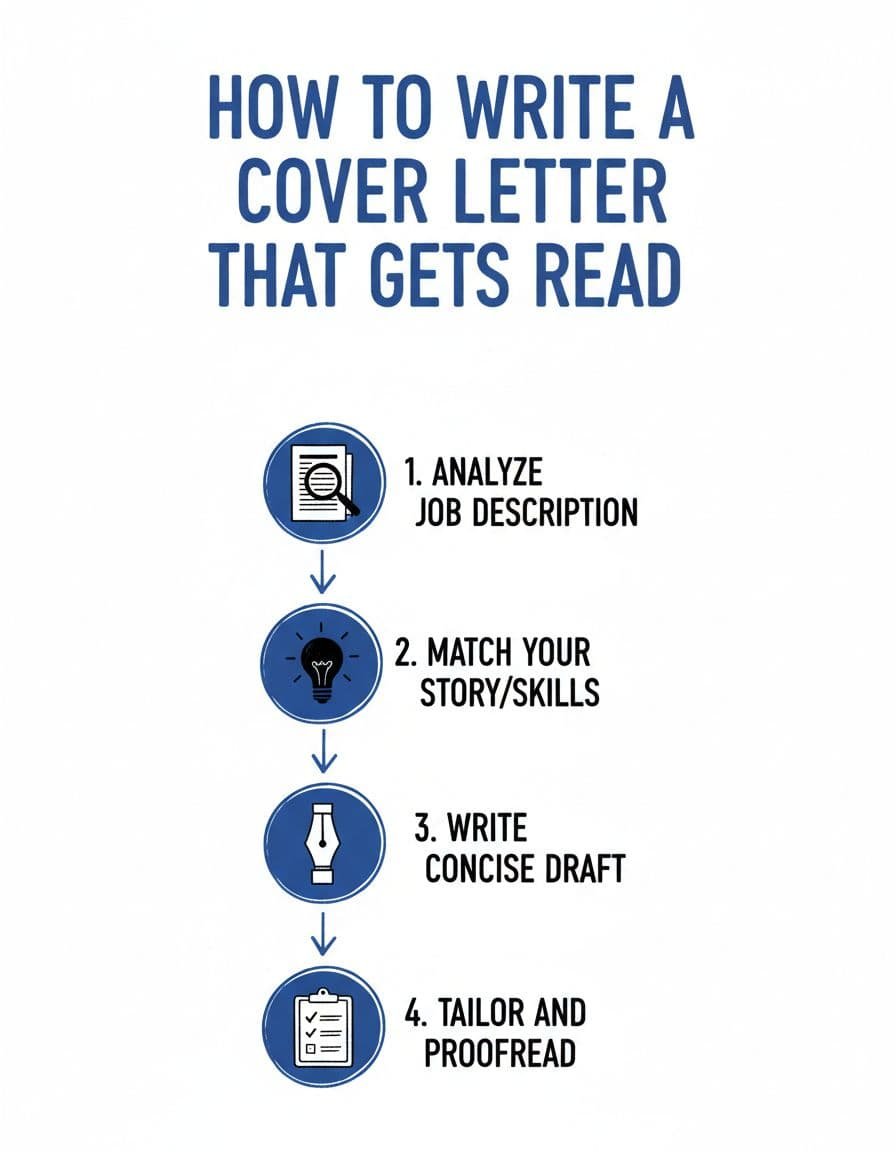
A useful structure is easy to follow. While a cover letter template can be a starting point, it must remain concise and show enthusiasm:
- Lead with fit. Name the role and your strongest match.
- Add one proof point. Highlight your qualifications and communication skills with a result, not a duty.
- Close with intent. Say why this company or team makes sense for you.
For example, compare these two openings. “I am excited to apply for the Customer Success Manager role” is flat. “I’ve spent four years cutting churn for B2B SaaS accounts, and your shift into mid-market growth is work I know well” gives the reader a reason to continue.
Avoid three mistakes. Don’t paste a generic letter into every application. Don’t summarize your whole career. Also, don’t praise the company in vague terms unless you can tie that praise to work you’ve done or want to do.
Do hiring managers read cover letters? Many do, but usually after the resume gives them a reason during the hiring process. That’s why the letter should do one job well: explain something important about your candidate profile, fast. A good optional cover letter can frame your story before someone makes assumptions from job titles alone.
If tailoring takes too long during your job search, CareerScribeAI can help without turning your application into a template. Its AI Resume Builder can pull the strongest match points from the job post. The Cover Letter Generator can turn those into a short draft you can personalize. Then the Interview Prep Tools help you turn the same claims into clearer interview answers, so the story stays consistent from application to interview.
Frequently Asked Questions
Do hiring managers read optional cover letters?
Most screen resumes first, especially in high-volume hiring. Cover letters often get read later for shortlisted candidates in competitive roles. A 2026 survey shows 72% expect one when optional, and 77% prefer candidates who submit.
When should I skip an optional cover letter?
Skip for fast-moving hourly roles, one-click applications, or when it would just echo your resume. Speed and keywords win there. Use the application note for 2-3 sentences to show interest without extra friction.
How long should an optional cover letter be?
Aim for 150-300 words to feel like a smart intro, not a second resume. Shorter keeps attention in 2026. Focus on one job well: explaining your fit fast.
What makes a strong optional cover letter?
Answer “why you, why this role, why now” with specifics—lead with fit, add a result-based proof point, close with intent. Avoid generic praise, full career summaries, or stiff openings. Tailor it or it hurts more than helps.
Should entry-level applicants always send one?
Yes, if you have little experience—motivation and judgment carry weight. It shows energy for the role. Connect any transferable skills or story gaps your resume leaves open.
Conclusion
When the upload box appears in the application process, treat it as a test of judgment, not effort. In your job search, send an optional cover letter when it adds missing context, shows real interest, or gives a hiring team a sharper reason to remember you. This choice lets you follow instructions even when requirements are flexible.
Skip it when the role is high-volume, the process is built for speed, and the letter would only echo your resume. In 2026, the strongest optional cover letter is short, specific, and useful. That is often enough to move from “maybe” to “let’s talk,” helping you land your dream job.