

The first line of your cover letter can help or hurt you fast. When a job description hides the contact name, many applicants still reach for “To Whom It May Concern,” and that dates the letter right away.
A cover letter without a name can still sound thoughtful. In 2026, the best move is simple: try to find the right person, then use a professional salutation that’s precise and role-based if you can’t. This fits the requirements of modern business writing.
Many applications still move through software first and people second. Even so, a hiring manager will notice when your greeting feels copied from a template.
Key Takeaways
- Research the hiring manager’s name first using the job post, LinkedIn, company website, and application details—10 minutes of effort beats any generic greeting.
- If no name is found, use specific, role-based salutations like “Dear Marketing Hiring Team” or “Dear Talent Acquisition Manager” for a targeted, professional feel.
- Avoid outdated options like “To Whom It May Concern” or “Dear Sir or Madam,” which sound distant and dated in 2026.
- Pair the greeting with a tailored opening paragraph mentioning the role and company to make your cover letter feel personal, even without a name.
Start by trying to find the hiring manager’s name
A real hiring manager’s name still beats any generic cover letter salutation. It shows effort, and it tells the reader this wasn’t mass-sent to 40 employers.
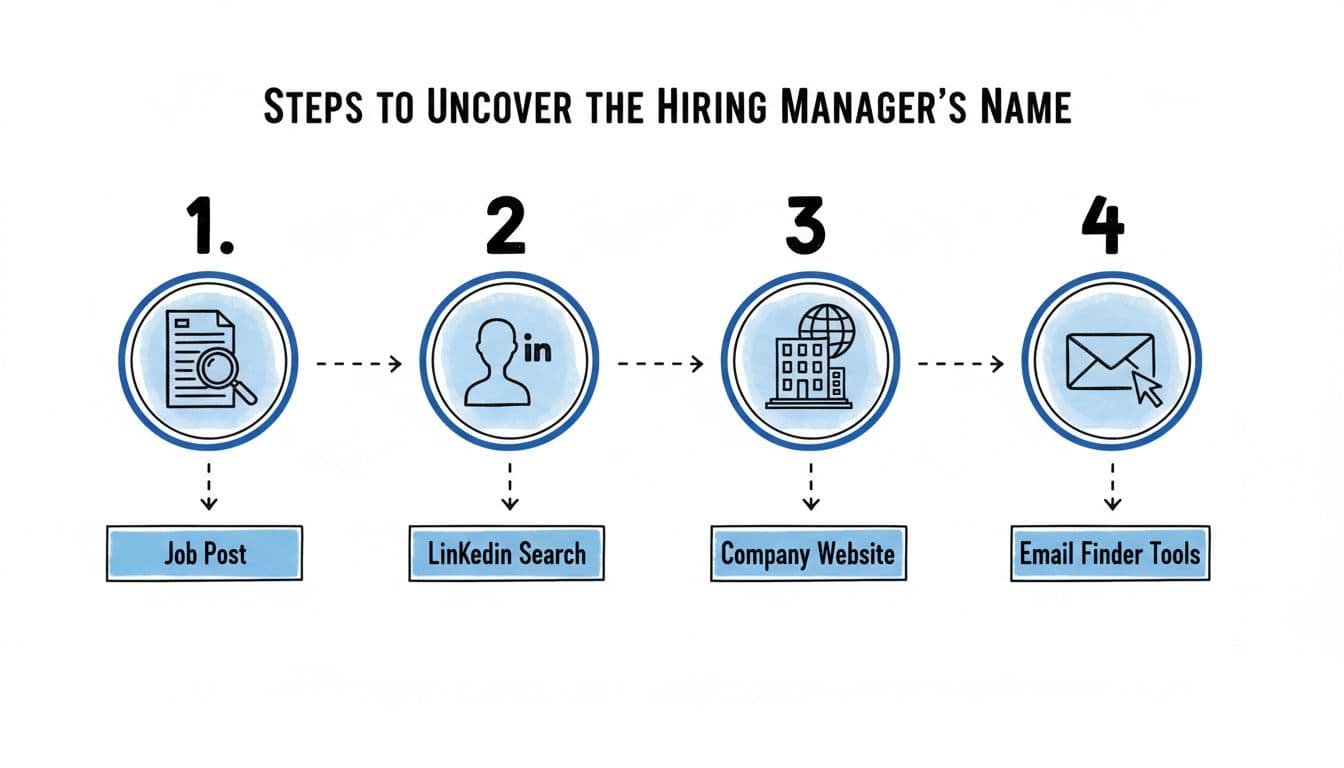
Give yourself 10 minutes before you settle on a fallback. These research strategies for finding contact information usually work:
- Check the job post again. Some listings name the department head or recruiter in the fine print.
- Search LinkedIn for the company, the team, and the job title. Hiring leads often show up there first as a potential boss.
- Visit the company’s website. “Team,” “About,” and newsroom pages often reveal the department head who leads the function.
- Review emails, calendar invites, or the application portal. A recruiter signature may give you the right contact information.
If the posting names a recruiter, but the role sits with another team, address the recruiter only when they appear to be the direct application contact.
Those research strategies line up with recent advice from BeamJobs’ 2026 guide. If you find a hiring manager’s name, use the person’s full name or a standard title plus last name. If you are not sure about gender or title, skip “Mr.” and “Ms.” and write the full name instead.
A wrong name hurts more than a generic greeting.
So don’t guess. Don’t grab a random executive from the leadership page, either. If the VP of Sales has nothing to do with the role, your letter will feel careless.
Best cover letter greetings when you still don’t have a name
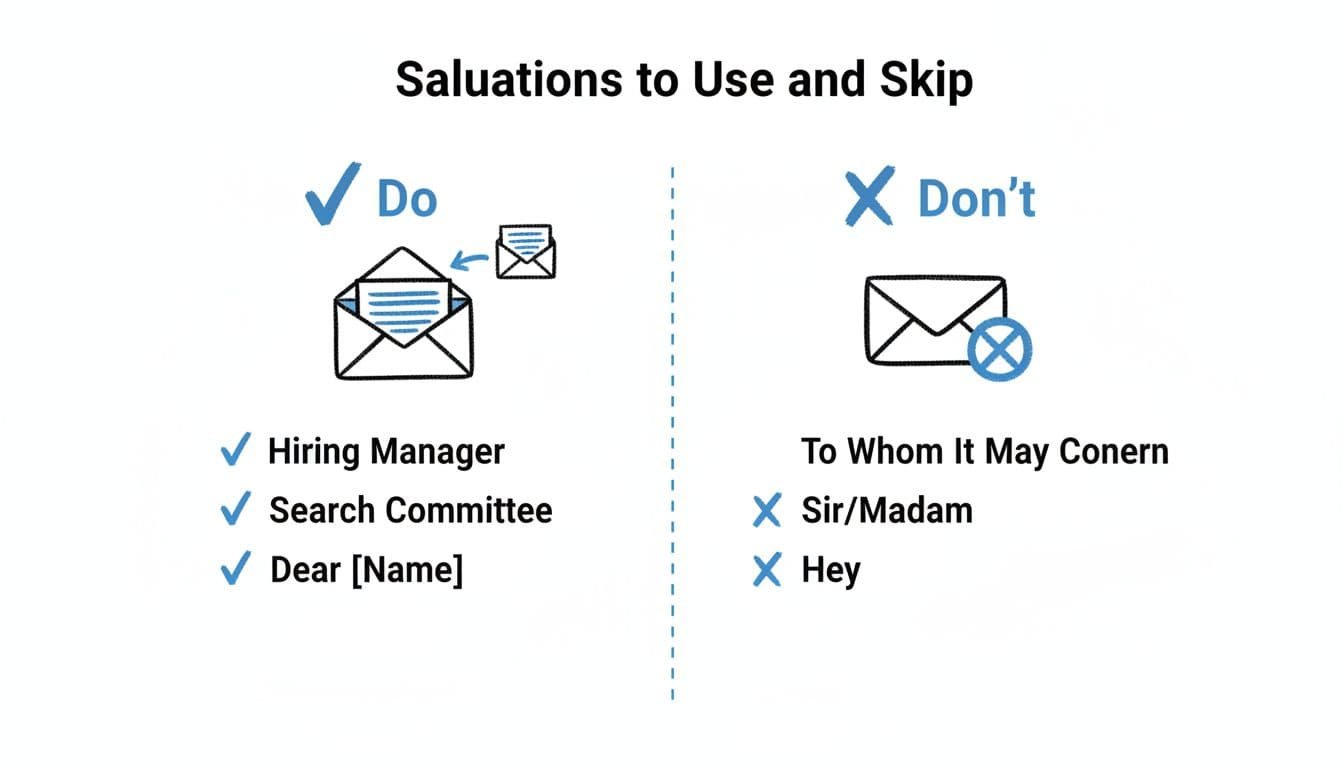
Once you’ve done the search, pick a formal greeting that is specific, neutral, and professional, using gender-neutral language and inclusive language to shift away from outdated gendered titles like Mr. or Ms. In most cases, “Dear” is still the safest opener in 2026, even for tech jobs and remote-first companies.
This quick table shows strong options.
| Situation | Good greeting | Why it works |
|---|---|---|
| You know the department | Dear Marketing Hiring Team, | It sounds targeted without naming the wrong person. |
| You know the function, not the team | Dear Hiring Manager, | It is broad, but still professional and accepted. |
| Talent acquisition is clearly handling the role | Dear Talent Acquisition Manager, | It matches the process when the talent acquisition team screens first. |
| A people team is named in the post | Dear People Team, | It fits companies that use modern HR language. |
| Academic or formal roles | Dear Hiring Committee, or Dear Search Committee, | They suit structured hiring processes in universities or government positions. |
Recent examples from Zety’s 2026 cover letter guide and QuillBot’s greeting examples point to the same pattern: role-based or team-based greetings work best when a name is missing.
For example, if the job post is for a data analyst on a finance systems team, “Dear Finance Hiring Team,” is stronger than “Dear Hiring Manager,”. It tells the reader you paid attention to where the role lives.
End the greeting with a comma, then start your first paragraph on the next line. That format still reads best in most 2026 cover letters, whether you send a PDF or paste the letter into an application form.
A few notes matter here. First, keep the tone formal enough. “Hello Hiring Team” can work in an email to a startup, but “Dear Hiring Team” is safer for uploads through an ATS. Second, make the greeting as narrow as you can. “Dear Engineering Hiring Team” beats “Dear Hiring Manager” because it shows you identified the right part of the business.
Your cover letter greeting also sets up the first paragraph. If the salutation is generic, the opening line has to carry more weight. A sharper first sentence, like the examples in these cover letter opening lines, can quickly show that you researched the company and role.
Outdated salutations to avoid, and what to do next
Some greetings still appear in templates, but they make your letter sound old or impersonal. Skip these unless the employer explicitly asks for them.
- “To Whom It May Concern” sounds distant and dated.
- “Dear Sir or Madam” assumes gender and feels old-fashioned.
- “Hi” or “Hello” without a name sounds too casual for most cover letters.
- “Dear HR Professional” is vague and rarely matches who will read the letter.
Modern hiring practice also shapes the choice. In 2026, many companies use ATS workflows, recruiting team screens, and shared review panels. Checking a company’s social media or company culture pages can help determine the appropriate tone. That means a team-based cover letter salutation often fits the process better than forcing a single hiring manager name you are not sure about. It also ties into the full job application package, including your resume and cover letter header. However, the salutation is only the start. Your next lines should mention the exact role from the job description, a company detail, or a recent project so the letter feels directed, not recycled. A well-addressed letter even makes a future follow-up email to the hiring manager easier.
Skipping the salutation entirely is a last resort. It can work in a short email note to a small startup, but it often looks unfinished in a formal attachment.
If you want help keeping that message consistent, CareerScribeAI can be useful. Its AI Resume Builder can keep your resume clean and ATS-safe, the Cover Letter Generator can tailor language to the job post, and the Interview Prep Tools can help you carry the same story into interviews. If you want to compare those options, see CareerScribeAI’s plans.
Frequently Asked Questions
Should I always try to find the hiring manager’s name?
Yes, spend 10 minutes checking the job post, LinkedIn, company website, and emails for the right contact. A real name shows effort and makes your letter stand out from mass applications. Guessing or using a random executive hurts more than a solid generic.
What is the best greeting without a name?
Opt for role- or team-specific options like “Dear Finance Hiring Team” or “Dear Hiring Manager,” which feel precise without risking a wrong name. Use “Dear” followed by a comma for a formal, ATS-safe start in 2026. Make it as narrow as possible to show you understand the role’s context.
Why avoid “To Whom It May Concern”?
It sounds impersonal, dated, and like a template copy-paste. Modern hiring favors thoughtful, targeted greetings that align with team-based or ATS processes. Switch to something like “Dear People Team” for companies using contemporary HR language.
Can I skip the salutation entirely?
Only as a last resort for short emails to startups—it often looks unfinished in formal attachments or ATS forms. A professional greeting sets a strong tone and eases follow-up emails. Always end with a comma and jump into a tailored first paragraph.
Does the greeting matter if the rest of the letter is strong?
It sets the first impression, especially when ATS or teams screen first, but a generic one won’t ruin a tailored letter. Pair it with company-specific details in the opening to keep it personal. In 2026, precision across the whole application wins.
Final thoughts
The best way to address a cover letter without a name has not changed much in 2026. Research the hiring manager first, and if you cannot find one, use a professional salutation like a specific, role-based greeting that still sounds human.
A generic salutation will not ruin your application. A lazy one can. When the greeting is careful and the first paragraph is tailored, your cover letter without a name still feels personal.