


A career change cover letter falls flat when it sounds like an apology. Hiring managers do not need a defense of your past. They need a clear reason to believe your background fits the job in front of them.
If you’re shifting your career path, your letter has one job. It must connect what you’ve done to what you want to do next. The fastest way to do that is a simple bridge, a short line of logic that makes your experience feel relevant.
Key Takeaways
- Build a simple bridge connecting past responsibilities, transferable skills, and the new role’s needs with concrete examples like project management or client handling.
- Answer the recruiter’s silent question—”Why does this person’s past work matter?”—early with proof from achievements, avoiding apologies or vague passion claims.
- Map job description needs to your past wins before writing, using quantified results like “cut response time by 20%” for stronger impact.
- Follow a focused 4-part structure: career change statement, bridge paragraph, brief company fit, and confident close.
- Align your cover letter story with resume and interview answers for consistency.
Why most cover letters for career changers miss the mark
Many people write too much about passion and too little about proof. Others repeat their resume in paragraph form. Both approaches leave recruiters viewing the job application with extra work, and that is a problem when applications move fast.
A strong cover letter for a career change should answer one silent question from the job description early: “Why does this person’s past work matter here?” That answer belongs in the opening paragraph, not buried near the end. If you need help with the first lines, these examples of strong cover letter introductions show how to start with relevance instead of filler.
Also, avoid opening with what you lack. Do not lead with “Even though I do not have direct experience…” Lead with overlap by showing soft skills and interpersonal skills, which provide the overlap necessary for a successful transition. Monster’s career change cover letter advice makes the same point: show transferable skills with evidence, not vague claims.
The tone matters, too. You are not asking for a chance out of kindness. You are showing a hiring team that your past work prepared you for this move.
The simple bridge that makes your experience make sense
The bridge is easy to build. Start with a past responsibility, name the transferable skills behind it, then connect those skills to the new role, such as project management duties.
For example, a teacher moving into customer success should not focus on “wanting a change.” While they may lack hard skills or specific technical skills in software, they possess management expertise. That person should connect classroom leadership, parent communication, and problem-solving to client onboarding, account support, and retention.
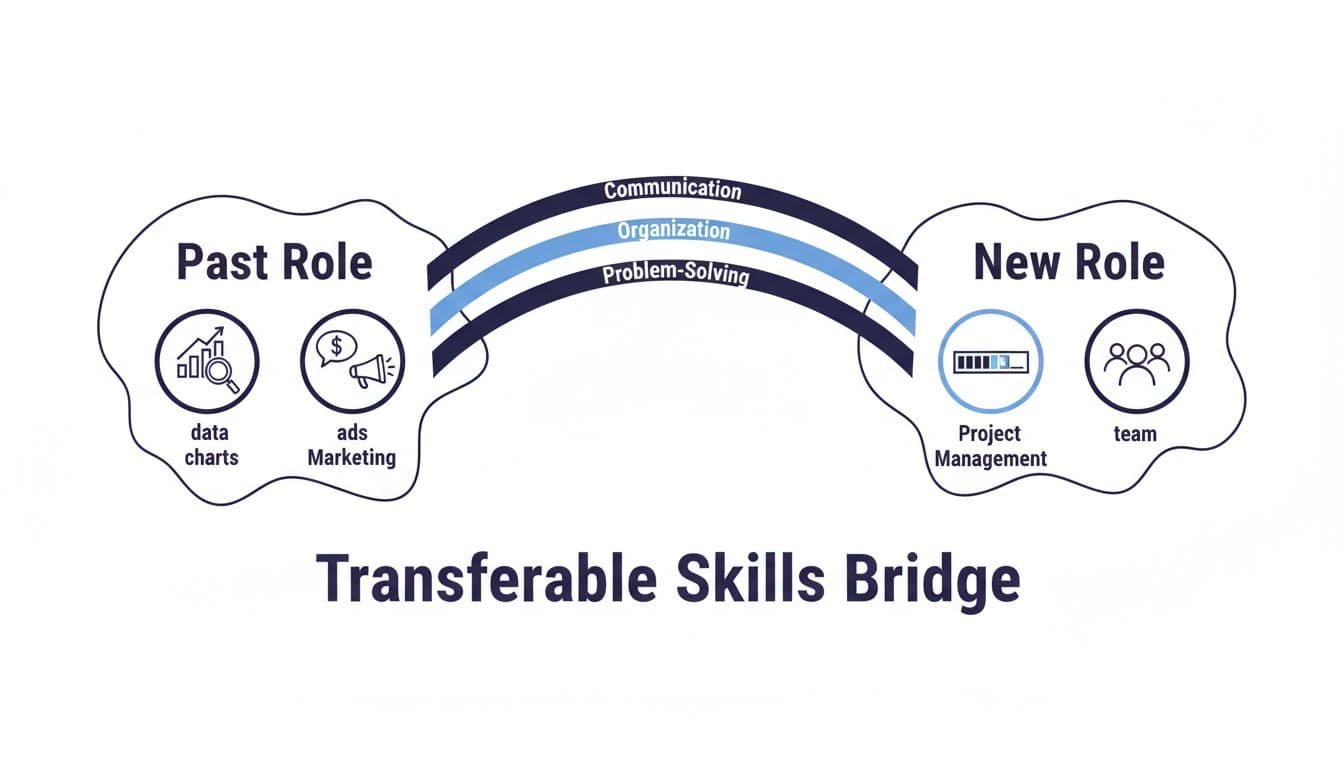
Coursera’s explanation of transferable skills is useful here because it frames these abilities as portable. That is the right mindset. Your old title may not match, but your skills can.
Use a cover letter template like this:
“In my previous role as a retail supervisor, I coordinated weekly schedules, handled customer escalations, and trained new hires. That experience built the organization, calm decision-making, and team communication needed for an office manager role.”
That is the simple bridge in action. It is short, specific, and easy for a hiring manager to follow. A good cover letter example does not force the reader to guess.
Find the proof before you start writing
Before you draft, pull out the top needs from the job description. Then look for matching wins from your past work. This step matters more than clever wording.
The comparison below shows how old work can map to a new target role.
| Past work | Transferable skills | New role need |
|---|---|---|
| Managed store schedules | Planning and prioritization | Coordinate team calendars |
| Resolved customer issues | Conflict handling | Support clients under pressure |
| Trained new staff | Coaching and communication | Onboard employees or users |
Each row can become one sentence in your cover letter.
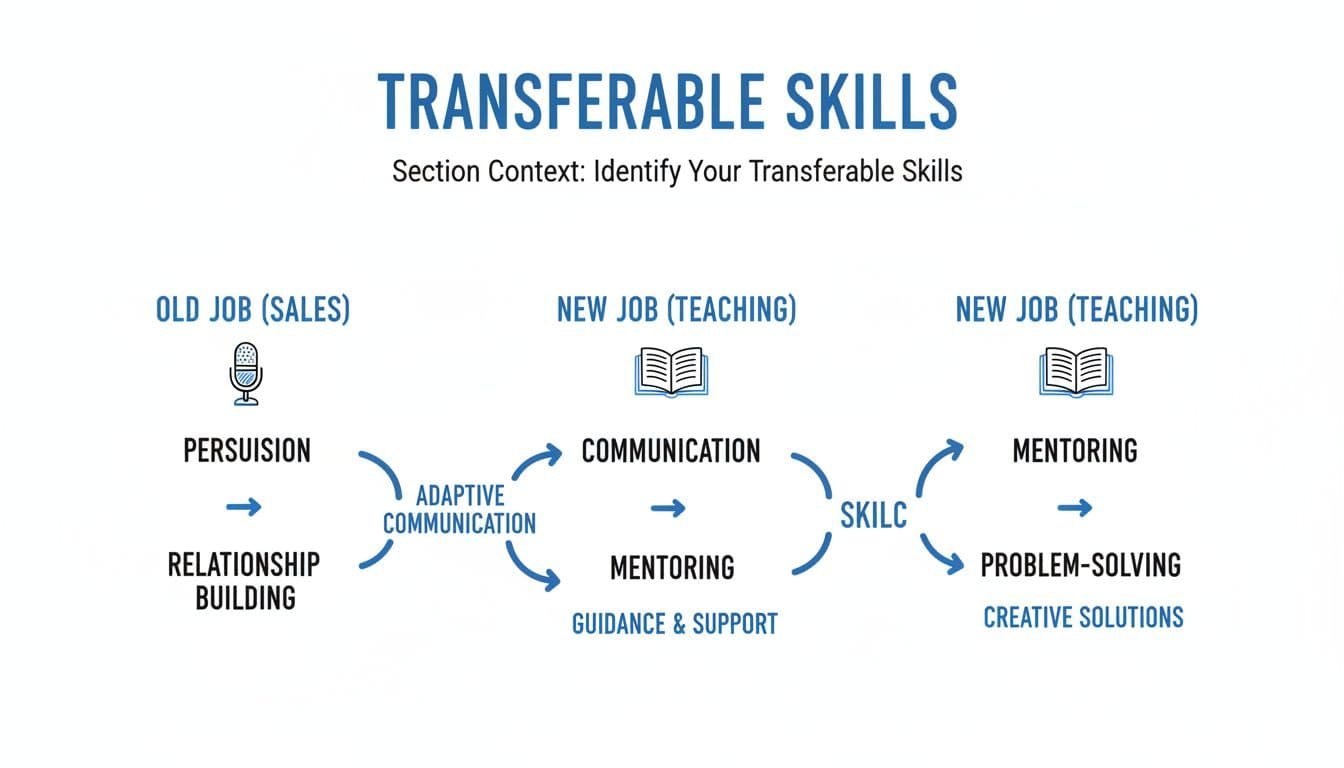
If you are changing careers, even candidates for an entry-level position benefit from this approach. Achievements with action words from your previous experience help even more. “Led a team of eight” is stronger than “worked well with others.” “Cut response time by 20%” is stronger than “improved service.” The Muse’s sample advice for career changers also points toward matching evidence to the role instead of listing general strengths.
This is where tools can help without taking over your voice. CareerScribeAI’s AI Resume Builder can pull stronger, quantified bullets from your past roles. Then the Cover Letter Generator can reshape those bullets into a targeted story for the new job.
A 2026 structure that keeps the letter focused
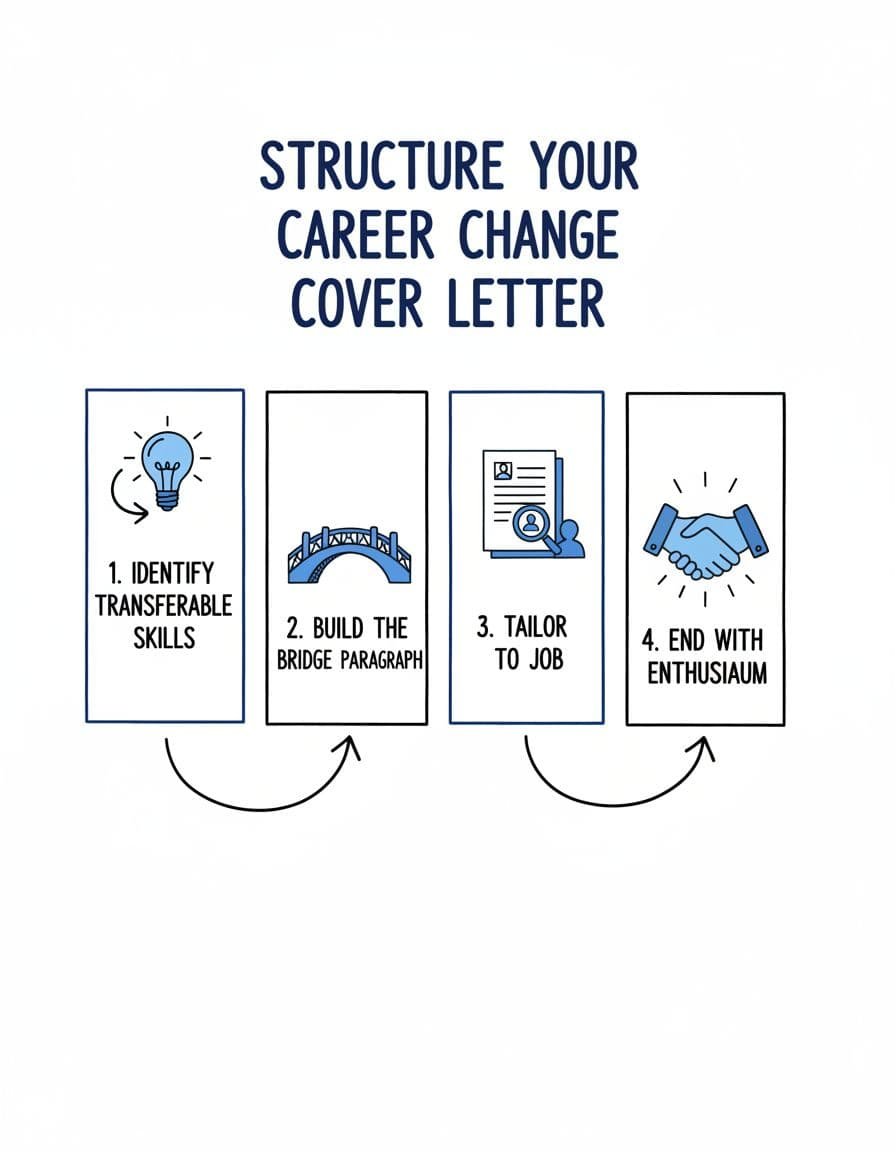
When people ask how to write a tailored cover letter for a career change, the answer is usually simpler than they expect. Unlike a standard resume objective, this approach provides more context and keeps it to four clear moves.
First, open with a career change statement. Name the target role and one relevant strength.
Next, build the bridge paragraph. This is the core of the letter. Connect past work to the employer’s needs with two or three concrete examples, such as recent professional training or professional certificates that demonstrate your commitment to industry trends.
Then, show why this company makes sense for you through company research. Keep it brief. Mention a product, mission, client base, or team focus if it is genuinely relevant. This helps in building a connection.
Finally, close with confidence. Express interest in discussing how your background can help. Recruiters respond well to this approach. Do not end with a plea.
If you get stuck, consider consulting a career consultant for personalized guidance.
If you want more sample language, ResumeLab’s career change cover letter examples can give you extra formats to study. On CareerScribeAI, the Cover Letter Generator can speed up the first draft, while the AI Resume Builder keeps your resume aligned with the same story. After that, the Interview Prep Tools help you carry the same message into interviews. If you want to compare access levels, you can view free and premium options.
One more point matters. Your written story and interview story should match. When hiring managers ask why you are leaving your current field, use the same bridge you used in the letter. This framework for job change interview questions helps keep that message consistent.
Frequently Asked Questions
What is a “simple bridge” in a career change cover letter?
The simple bridge is a short line of logic that links a past responsibility, transferable skills like organization or conflict resolution, and the new role’s needs. For example, a retail supervisor might connect scheduling and customer escalations to office manager duties. It makes your background feel relevant without forcing the reader to guess.
How do I avoid common mistakes in career change cover letters?
Skip apologies like “Even though I lack direct experience” and vague passion statements—lead with overlap via soft skills and proof. Do not repeat your resume; instead, answer why your past matters early. Focus on evidence from achievements, not general claims.
What structure works best for a career change cover letter?
Open with a career change statement naming the role and a strength, then build the bridge paragraph with 2-3 examples. Add brief company research showing fit, and close confidently expressing interest in discussing your value. Keep it to these four moves for focus.
How can I identify transferable skills for my cover letter?
Pull top needs from the job description and match them to past wins, like mapping store conflict resolution to client support. Use tables or lists to compare, focusing on portable skills such as planning, coaching, or communication. Quantify where possible, like “trained new hires” becoming onboarding proof.
Do I need direct experience for a successful career change cover letter?
No—hiring managers value transferable skills and proof over exact matches. Show how your unique background provides a fresh perspective through concrete bridges. Tools like CareerScribeAI can help reshape past bullets into targeted stories.
Conclusion
A good career change cover letter does not try to hide the shift. It explains the shift with clear proof. That is what the simple bridge does.
When you connect past results, transferable skills, and the employer’s needs, the bridge aligns your career goals with the role and highlights your unique perspective as a career changer. Your background stops looking unrelated. It starts looking useful.