

Most job emails in your job search fail before the resume ever gets a look. Recruiters scan crowded inboxes, and a weak subject line or rambling message gets skipped.
That matters more in 2026 because application volume is still high. By early 2026, 64% of large employers were getting 51 or more applications per job opportunity, up from 49% in 2023. When inboxes are busy, clarity beats cleverness.
A strong email for a job application doesn’t need flair. It needs the right details, in the right order, with no friction.
Key Takeaways
- Prioritize clarity over creativity: Use a simple subject line with the job title, your name, and job ID, and keep the body short (90-150 words) to stand out in crowded inboxes.
- Follow a proven structure: Greeting with name if possible, state the role, highlight 1-2 relevant results, and close with attachments and contact info.
- Tailor to the job: Connect your experience to the posting’s needs, match tone across resume and cover letter, and address instructions exactly.
- Final checks matter: Send from a professional address, use clear PDF file names, verify mobile view, and reread the posting before hitting send.
Why your application email matters more now
Your email is not a mini memoir. It’s a bridge between the job description and your attached resume.
Hiring teams are dealing with more noise because applying is easier than ever. One-click forms, mass applications, and AI-written messages have raised the number of submissions, but not the quality. That means the hiring manager pays more attention to signals that show care, relevance, and basic judgment. Your email is the first step in the application process.
A good job application email does three things fast. First, it helps the recruiter identify the role. Next, it shows that you followed directions. Finally, it gives them a reason to open the attachment.
The goal is simple: make your resume the easiest file to open in a crowded inbox.
Your email should also match the rest of your application. If your resume says “results-driven operations leader” but your email sounds vague, the message feels stitched together. That’s why many job seekers tailor your application with CareerScribeAI’s AI Resume Builder and Cover Letter Generator together, so the language stays consistent. If you’re still working on the opening of your letter, these effective cover letter opening lines can help you line up the tone.
The structure of a job application email that works
A strong job application email template follows a concise and professional structure that is short, direct, and easy to scan. Keep the body between about 90 and 150 words unless the employer asks for more.
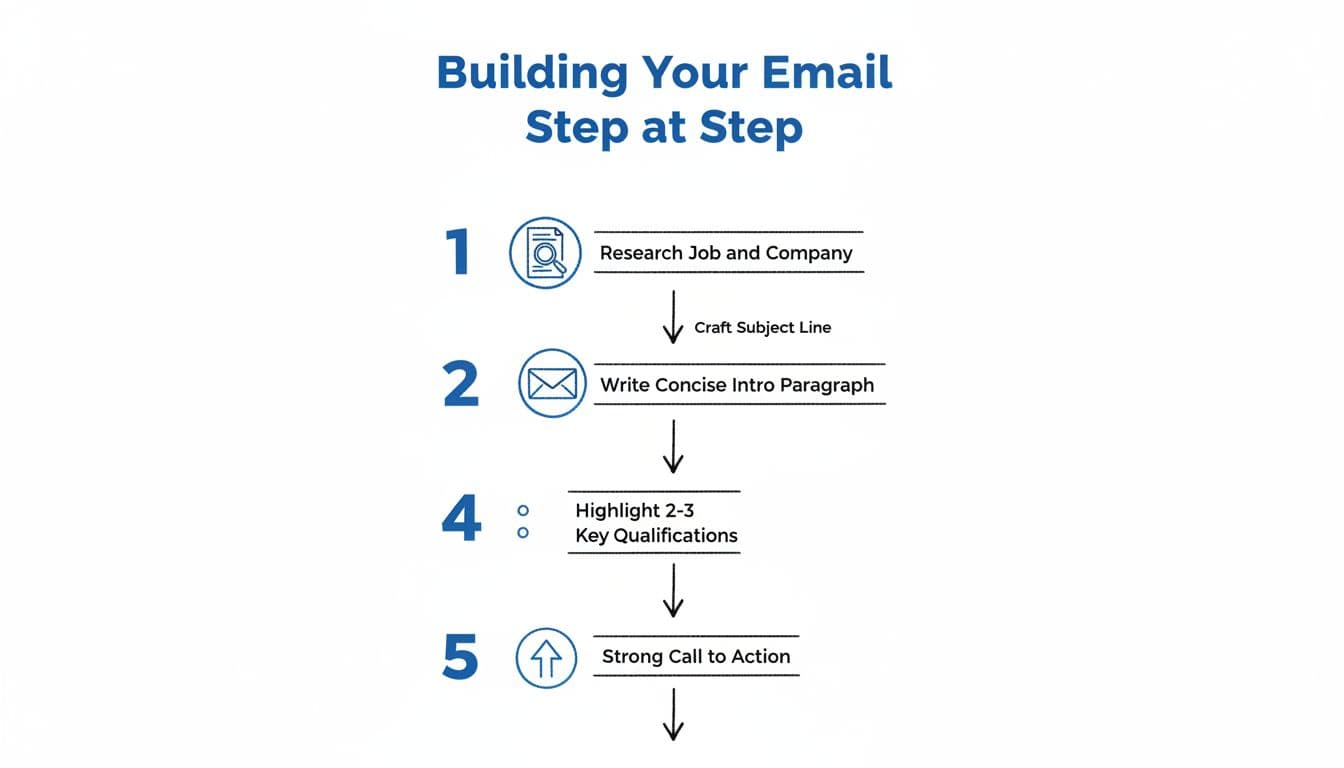
Use this order:
- A clear subject line with the exact job title
- A formal greeting, preferably with the hiring manager’s name
- One sentence that states the role you’re applying for
- Two or three sentences that connect your fit to the role
- A short closing that mentions attachments, contact information, and invites next steps
Keep the tone professional, but not stiff. “Hi Ms. Lopez” works well. So does “Hello Hiring Team” if no name is listed. Then get to the point. Don’t paste your whole cover letter into the email body unless the posting asks for it.
If you’re missing skills and experience, address it briefly and move on. This guide on addressing skill gaps in applications shows how to do that without sounding defensive.
For extra format ideas, Grammarly’s email job application guide is a solid reference.
Subject lines for job applications: simple wins
The best subject line for a job application is usually the least creative one. Recruiters need to sort, search, and forward messages fast. So give them the job title, your name, and the job ID if one exists.
This quick comparison shows the difference:
| Weak subject line | Better subject line |
|---|---|
| Resume attached | Application, Marketing Coordinator, Elena Ruiz |
| Job inquiry | Application, Staff Accountant, Job ID 4172, Marcus Lee |
| Looking for work | Referral, Product Designer, Nina Patel |
| Experienced candidate | Application, Registered Nurse, Taylor Brooks |
That format works because it mirrors how recruiters organize email. Several current subject line examples for job applications follow the same pattern.
Add a referral only when you truly have one, such as through networking. Add the company name if you’re emailing an agency recruiter or a shared HR inbox. Using a clear format like this helps potential employers find your file quickly. Skip all caps, jokes, emojis, and phrases like “urgent” or “please read.” Those lines don’t increase trust.
A ready-to-use job application email sample for 2026
Below is a job application email sample you can adapt for most roles:
Subject: Application, Customer Success Manager, Jordan Kim
Hi Ms. Rivera,
I’m applying for the Customer Success Manager role posted on your careers page. I bring five years of account management experience, including a 96% renewal rate and a 22% increase in expansion revenue in my current role.
Your posting’s focus on onboarding and retention matches my recent work leading a new client launch program for mid-market accounts. I’ve attached my resume and cover letter for review, and I’d welcome the chance to discuss how I can support your team.
Best,
Jordan Kim
555-123-4567
LinkedIn profile
This template works because it stays focused. It names the role, highlights your qualifications with one or two concrete results that align with your career goals, and closes cleanly. A strong email like this leads to an interview.
If the posting says “send resume only,” trim it further. Remove the cover letter mention and keep the email to four or five lines. If you’re changing fields, swap one achievement for a transferable strength. If your first paragraph still sounds flat, CareerScribeAI’s Cover Letter Generator can help you match the email tone to the attached letter, while the AI Resume Builder can tighten the evidence you mention. After that, the Interview Prep Tools help you turn the same proof points into spoken answers.
For more variations, including referral and no-name versions, these 2026 job application email examples are useful.
Final checks before you hit send
Send from a professional email address. A polished message can still fail on small details. Open the email attachments, confirm they are in PDF format if requested, and make sure the file names are clear, such as “Jordan-Kim-Resume.pdf.” Also check the email on your phone. If it looks messy on mobile, a recruiter may move on.
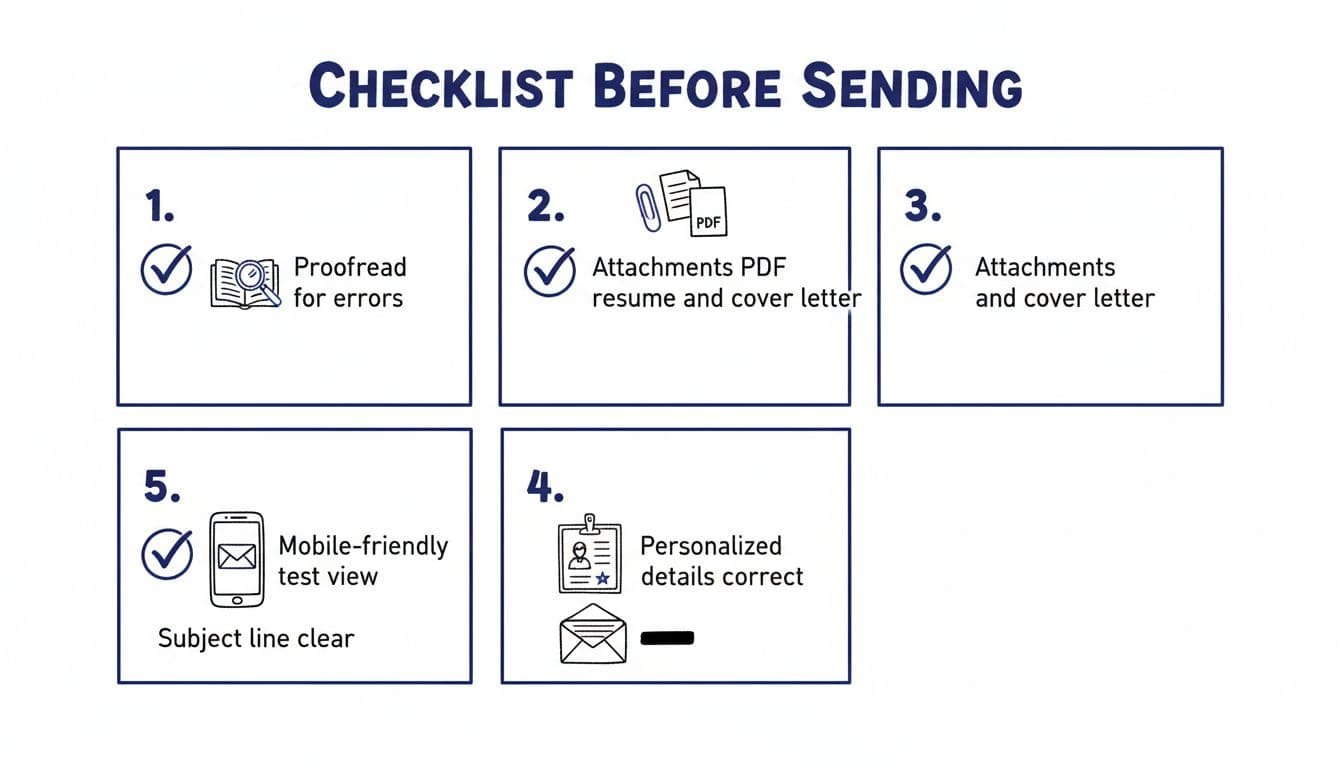
Read the posting one last time before sending. Many employers still filter applicants by who followed instructions during the hiring process, even before they judge experience. A perfect email can’t rescue a weak fit, but a sloppy one can sink a strong fit.
Frequently Asked Questions
What makes a strong subject line for a job application email?
The best subject lines are direct and scannable, like “Application, Marketing Coordinator, Elena Ruiz” or include a job ID if available. Avoid jokes, emojis, or vague phrases—they reduce trust and make sorting harder for recruiters. Stick to job title, your name, and any referral or company details.
How long should the job application email body be?
Aim for 90-150 words unless the posting specifies otherwise; shorter is better for busy inboxes. This length lets you state the role, show fit with concrete results, and close cleanly without rambling. Trim further to 4-5 lines if they say “resume only.”
Should I include a cover letter in the email body?
Don’t paste the full cover letter unless asked—mention it as an attachment instead. Keep the email focused on bridging the job description to your resume. Use tools like CareerScribeAI to ensure consistent tone across both.
What if I don’t know the hiring manager’s name?
Use “Hello Hiring Team” or “Hi Recruiting Team” for a professional, safe greeting. Research on LinkedIn if possible, but avoid guessing. The goal is a polite start that gets to the point fast.
How do I handle missing skills or experience in my email?
Address gaps briefly with transferable strengths or a plan to learn, without defensiveness. Focus on your strongest alignments first. See guides on must-have vs. nice-to-have skills for phrasing that keeps momentum.
Conclusion
A job application email template only works if it feels precise, not pasted. The best version is short, tailored, and easy to process at a glance. These tips apply whether it is a cold email or an internship application.
When inboxes are crowded, the small things carry more weight. A clear subject line, a brief body, and one strong proof point give your application its best chance of getting opened. The strategy does not end with the application, though; a follow-up email or thank you email are next steps toward a job offer.