

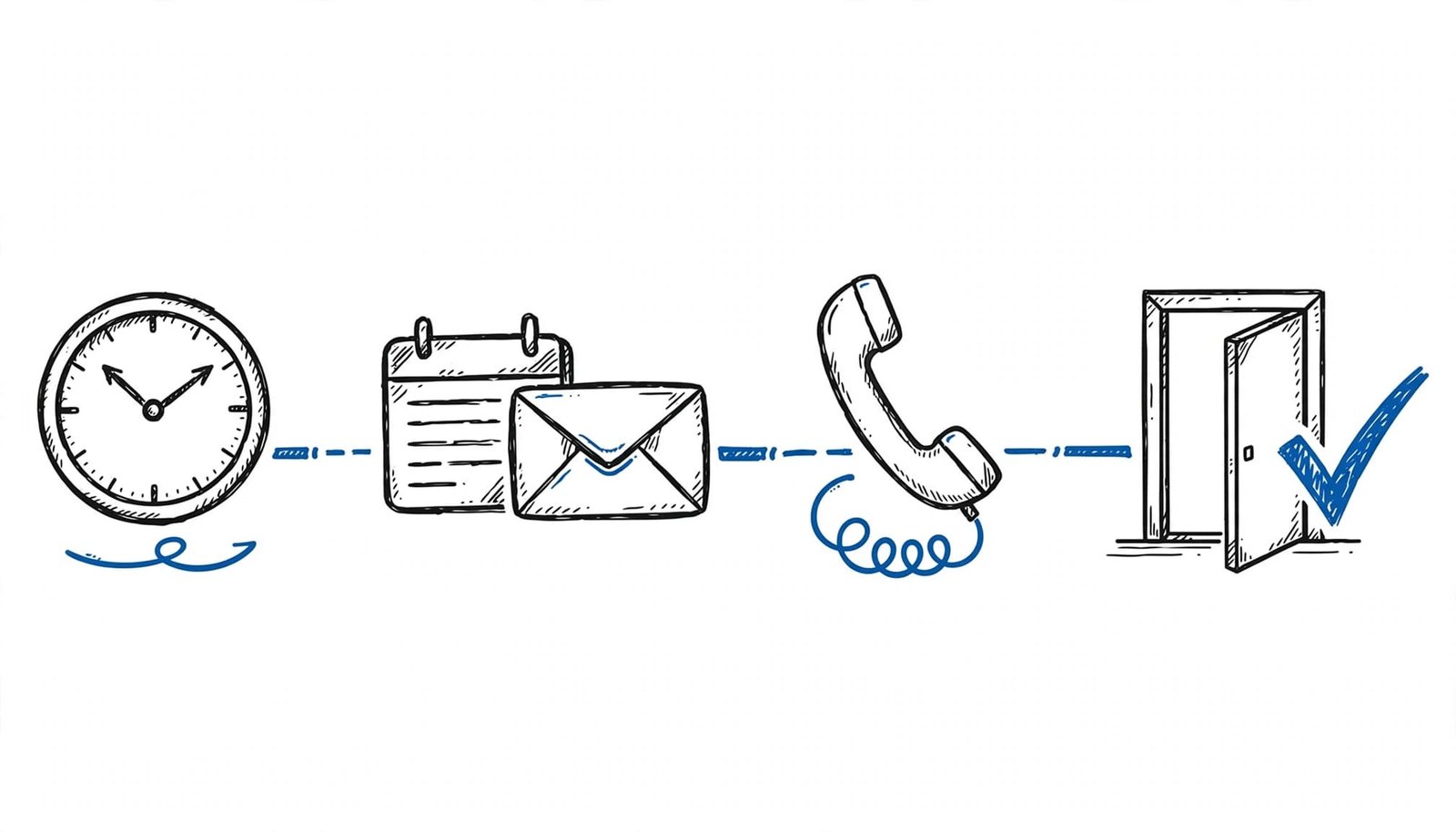
For an “interviewer late to interview” situation, check the meeting details first. Contact them after 15 to 20 minutes, and set a 30-minute limit if nobody responds; then leave or politely ask to reschedule.
Short delays happen, but you don’t owe employers unlimited availability. Start with a clear waiting limit and a calm response.
Key Takeaways
- Count your wait from the scheduled start, not your early arrival.
- Contact the interviewer or recruiter before leaving.
- Judge the employer’s response to the delay alongside the delay itself.
The First 15 Minutes: Rule Out a Mix-Up
Minutes 0 to 10: Stay Ready
Wait through the first 10 minutes. An interviewer may be held up by back-to-back meetings or work emergencies, causing a five- to 10-minute delay. Indeed also lists personal news and internet problems as possible causes.
As the interviewee, review your notes, keep your phone nearby, and avoid sending repeated messages.
Minutes 10 to 15: Check the Details
Between 10 and 15 minutes, check your email, spam folder, and calendar invitation. Confirm the date, time zone, platform, and meeting link. Indeed’s interviewer no-show guidance recommends checking your inbox once 10 minutes have passed.
For video, rejoin the correct meeting if necessary. In person, ask reception to contact your host. For phone interviews, confirm who’s calling whom. Turn off silent, vibrate, and airplane mode; raise the volume and enable mobile data.
At 15 to 30 Minutes: Contact Them and Set a Limit
At 15 to 20 Minutes, Call First
Indeed’s late phone interview advice recommends waiting 15 to 20 minutes before making a phone call to the provided number. If you only have a recruiter’s details, contact them instead. Without a number, email.
After calling, send a short follow-up confirming the scheduled time, reporting your call, and suggesting another time. For example:
Hello, we were scheduled to speak at 10 a.m. today. I called but couldn’t reach you. I’m still interested in rescheduling. Should I call again, or would tomorrow at 2 p.m. work?
At 30 Minutes, Decide Whether to Leave
After 30 minutes without communication, it’s reasonable to leave, disconnect, or walk out. If you haven’t called and have a number, try once before moving on.
If you can’t keep waiting, tell the interviewer by phone or email. You may also leave earlier because of work, childcare, or another commitment.
Since we haven’t connected, I need to leave now. I’m interested in rescheduling. Please suggest a new date and time, and I’ll confirm my availability.
Rescheduling requires an agreed replacement slot. Don’t assume arriving later that day counts as rescheduling.
When the Interviewer Arrives, Protect Your Remaining Time
You don’t need to apologize for protecting your schedule: “Thanks for joining. I have until 11 a.m. today. Is the remaining time enough for a full discussion, or should we book another slot?”
Indeed notes that phone interviews usually take 30 minutes or fewer, so a delay can remove much of your discussion time. If you’re rushed, ask for another conversation rather than accepting an incomplete discussion.
You can remain courteous without saying the delay was fine. If the interviewer apologizes and offers a workable solution, consider whether continuing suits your schedule.
Afterward, Follow Up and Keep Your Search Moving
If the interview happens, send a thank-you within 24 hours. Mention a specific discussion point and confirm any remaining questions or next steps. If nobody responds after a no-show, send one follow-up email the next business day to reschedule, then continue applying.
At CareerScribeAI, our Interview Prep Tools suggest questions based on your resume and target role, with STAR frameworks for behavioral answers. Use them to prepare for a replacement interview and rehearse before your next interview.
For other applications, our AI Resume Builder and Cover Letter Generator help tailor your materials. Our industry-specific resume examples can help you describe relevant experience.
Frequently Asked Questions
Is It Wrong to Leave After 25 Minutes?
No. Send a brief departure message rather than disappearing. A popular r/recruitinghell comment favors rescheduling after 15 minutes and leaving at 30, even after an apology. That’s one perspective, not a universal standard. Your existing commitments can justify leaving sooner.
How Late Is Too Late for a Candidate?
Ask a Manager discussions describe some managers turning away candidates beyond 15 minutes, even after a call; other commenters allow a 15-minute buffer. Being punctual helps make a good first impression, and arriving 15 minutes behind schedule cuts a 60-minute interview by 15 minutes.
Calling ahead is basic courtesy, not special credit. If traffic threatens your ability to arrive on time, contact the employer as soon as you know.
Does a Late Interviewer Signal a Bad Employer?
One delay doesn’t prove an employer is unprofessional or dishonest. Judge the broader interview process by whether the interviewer acknowledges your wait, protects your interview time, and follows through.
Repeated no-shows, dismissive responses, or blame-shifting give you stronger reasons to withdraw. The interview also gives you information about the employer’s communication and organization.
Keep Your Response Professional and Your Boundary Clear
A late interviewer deserves a reasonable chance to reconnect. Your time still matters, so check the details, make contact, and say when you need to leave.
The strongest response combines professional courtesy with a firm limit. You can show respect for the process without staying available indefinitely. The employer’s response can help you decide whether to invest more of your time.