

Your preparation should match the assessment, whether you’re debugging code or explaining a business metric. For a technical job interview in 2026, confirm the format, the technical interview questions you’ll face, and AI-use rules.
Then focus on the skills the employer needs, as outlined in the job description, rather than studying every possible topic. Build your preparation around the work you’ll discuss and the decisions you’ll need to explain.
Key Takeaways
- Confirm the interview format, evaluation criteria, permitted tools, and AI-use rules with your recruiter before you plan your preparation.
- Focus on the technical skills and responsibilities in the job description, and use relevant projects to show how you approach real work.
- Practice technical problems out loud: explain your assumptions, compare approaches, discuss trade-offs, and test edge cases.
- Prepare behavioral examples with the STAR method, keeping your contribution and results accurate and specific.
- If you get stuck, be honest about what you don’t know, clarify constraints, and explain how you would investigate or make progress.
Find Out What Your Technical Job Interview Will Test
Ask your recruiter about the interview process, who conducts each round, and whether you’ll meet the hiring manager. Clarify permitted programming languages, time limits, and evaluation criteria. Ask whether rounds include live coding, a take-home task, system design, or a technical case discussion, and what technical interview questions to expect.
The job title alone doesn’t tell you which technical skills to practice. Different roles call for different preparation:
| Role | Skills to rehearse |
|---|---|
| Software engineering | Coding, debugging, data structures, architecture |
| Data and analytics | SQL, statistics, data quality, business metrics |
| Product and business operations | Technical requirements, integrations, workflow troubleshooting |
Next, research the employer’s product, customers, and engineering documentation. Connect that research to responsibilities in the job description. For Google applicants, Google Careers resources provide development materials, but your recruiter should confirm the interview requirements.
Prepare questions about the team’s technical challenges, too. These help you assess the role while showing that you’ve considered its actual work.
Build a Focused Preparation Plan
Match Your Preparation to the Posting
Separate must-have skills from nice-to-have qualifications in the job description. Then identify which technical skills you can demonstrate confidently and which need practice.
CareerScribeAI.com’s AI Resume Builder and Cover Letter Generator can help align your application with the posting. As part of resume preparation, review the resulting claims before your interview. You may need to explain every project, skill, and outcome.
Choose a relevant project that connects to responsibilities listed in the job description, and prepare to discuss your contribution, constraints, and results. If your resume mentions SQL, practice queries. If it emphasizes production systems, review reliability and incident handling. Let your technical preparation support what you’ve told the employer.
Organize Your Remaining Time
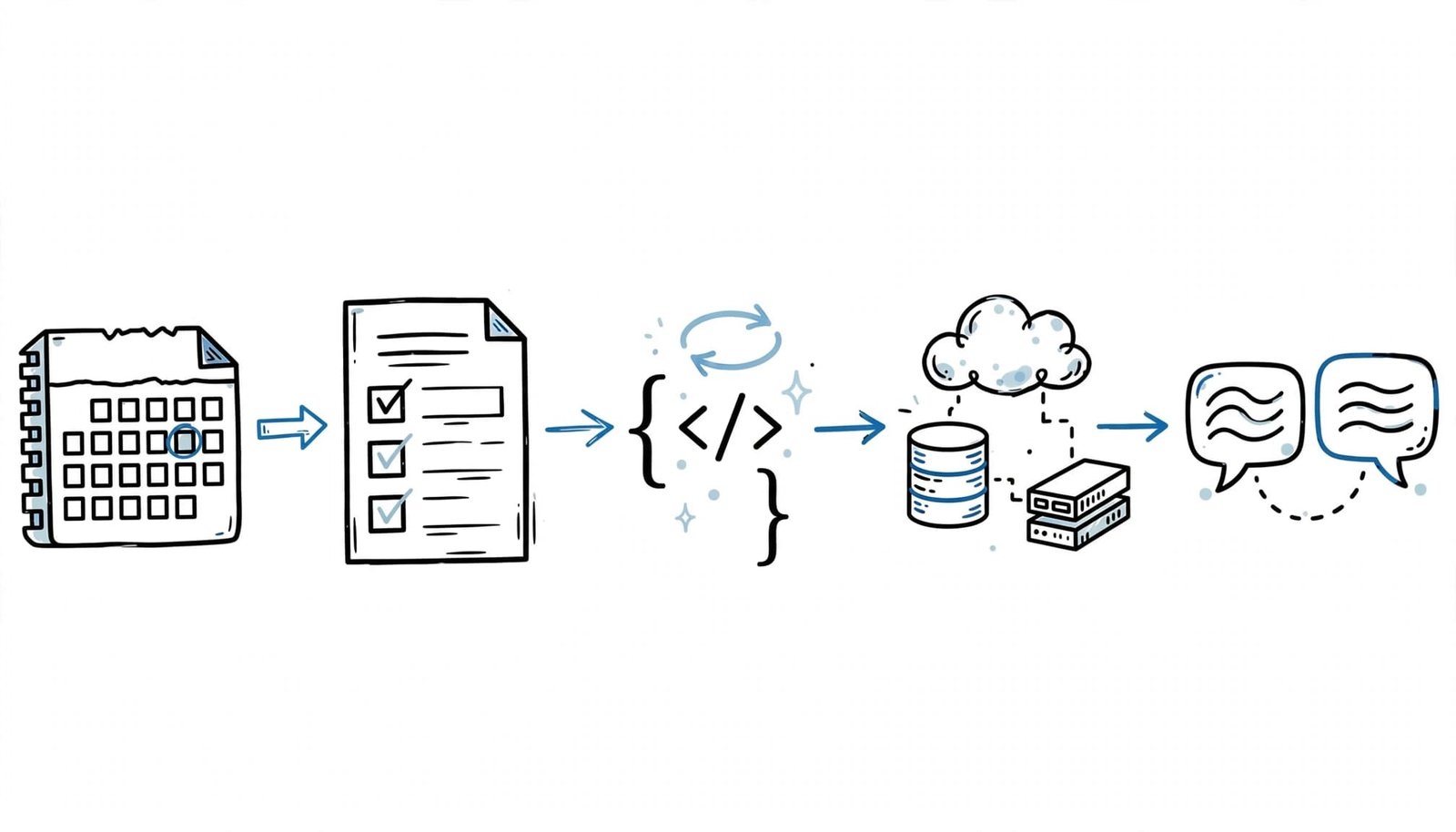
If you have a week, use this sequence as a starting point:
- Spend the first day confirming the format and identifying your largest skills gaps.
- Use the next three days for focused technical practice and project review.
- Use likely technical interview questions in timed mock interviews, then revisit the weaknesses they expose.
- Reserve the final day for behavioral rehearsal, equipment checks, and lighter review.
Adjust the schedule to your available time. A short preparation window calls for prioritizing likely topics rather than rushing through an entire course.
Rehearse Technical Skills and Behavioral Answers
Practice Coding With Explanations
For a coding interview, review data structures and algorithms, including arrays, strings, hash maps, stacks, trees, and common search techniques. Use LeetCode, HackerRank, or CodeSignal for coding practice. Choose technical interview questions that match the job description and strengthen problem solving skills.
Solving a problem silently isn’t enough. Explain your assumptions and compare approaches, such as using a hash map for quick lookups. Discuss time and space complexity, too.
Then test empty inputs, duplicates, and boundary conditions, including cases that reveal how hash maps behave.
Review HackerRank’s explanation of sample test cases to understand how visible examples help validate solutions. Also write your own tests rather than relying entirely on supplied cases.
Prepare for Design and Role-Specific Cases
For algorithms and system design interviews, practice clarifying requirements before drawing architecture. Explain choices around storage, caching, failure handling, and scale.
For senior roles, connect those choices to systems you’ve worked on. Discuss what failed and how you changed the design.
Meanwhile, analysts should rehearse metric definitions and data-quality checks. Product and operations candidates should explain technical dependencies, implementation constraints, and the business impact of proposed solutions.
Build Behavioral Answers With STAR
Use the STAR method for behavioral interview questions: Situation, Task, Action, Result. Keep the background brief and give most attention to your actions.
CareerScribeAI’s Interview Prep Tools can suggest prompts based on your resume and the posting. Use technical interview questions as cues for rehearsing behavioral answers about relevant projects. Its story bank can help you adapt examples across applications.
Treat predicted questions as practice questions, not guarantees. Edit every draft before rehearsing, and remember that architecture questions need requirements, reasoning, and trade-offs.
Use only outcomes you can substantiate, separate your contribution from the team’s work, and stay within your technical knowledge.
Handle Live Questions Without Bluffing
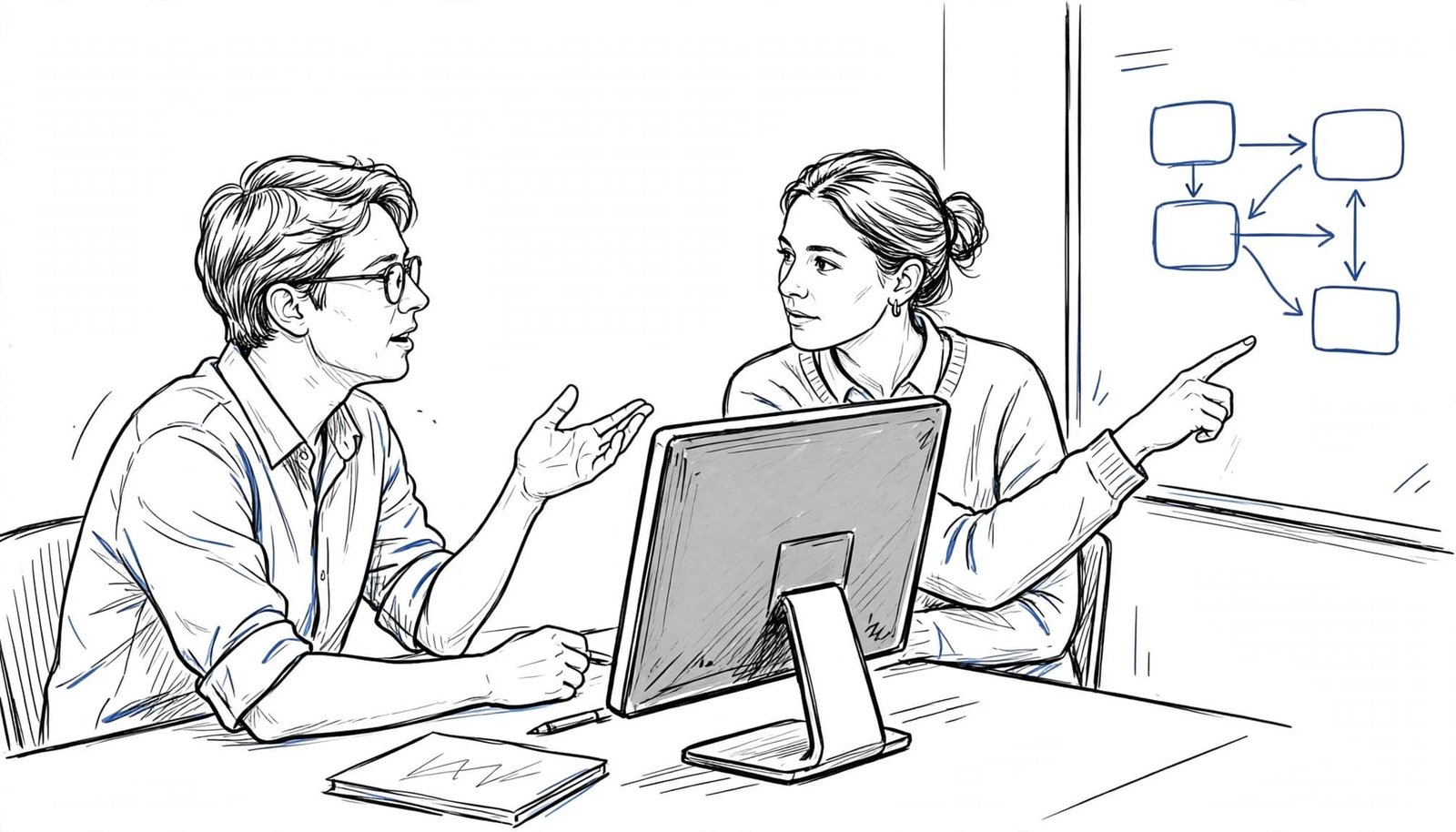
During pair programming, confirm the goal before editing code. Explain meaningful decisions, invite feedback, and respond to hints. This makes pair programming a conversation rather than a silent test.
When technical interview questions feel unfamiliar, state the gap clearly and show how you’d investigate it:
“I haven’t implemented that approach. I can explain the closest method I know, then identify what I’d need to verify.”
If you get stuck, walk through a small input or propose a straightforward solution first. Then discuss improvements.
When requirements conflict, identify the conflict and ask which constraint takes priority. Don’t pretend an impossible request has a complete solution.
In mock interviews, ask your partner to use practice questions that introduce ambiguity or challenge an assumption. That practice helps you stay composed when the real conversation changes direction.
Check the Setup and AI Rules
Before the interview, confirm whether AI assistants, documentation, or external search are allowed during a technical assessment. Rules can differ between take-home assignments and live sessions.
If your technical tests use HackerRank, follow its candidate onboarding guidance and try the sample test to get familiar with the environment.
Also test your microphone, camera, screen sharing, and required software. Keep the interview invitation accessible, and know whom to contact if the assessment platform fails.
Frequently Asked Questions
What should I ask the recruiter before a technical interview?
Ask about the interview format, who will conduct each round, time limits, permitted programming languages, and evaluation criteria. Clarify whether you’ll have live coding, a take-home task, system design, or a technical case discussion, along with any AI or external-resource rules.
How should I prepare for a technical interview with limited time?
Prioritize likely topics based on the job description and the interview format instead of trying to study everything. Practice your biggest skills gaps and review a relevant project you can explain clearly.
How can I show my reasoning during a coding interview?
Explain your assumptions and approach as you work, and compare alternatives when it helps clarify your choices. Discuss time and space complexity, then check edge cases such as empty inputs, duplicates, and boundary conditions.
What should I do if I don’t know the answer to a technical question?
Be clear about the gap rather than bluffing, then explain what you do know and how you would investigate the problem. You can also work through a small example or start with a straightforward solution before discussing possible improvements.
Should I use AI tools during a technical assessment?
Use AI assistants only if the employer explicitly allows them, since rules can differ between take-home tasks and live interviews. Confirm the rules in advance and follow them throughout the assessment.
Prepare to Explain Your Decisions
Strong technical preparation connects the employer’s requirements in the job description to evidence of your technical knowledge and experience. Clear reasoning helps you discuss solutions, accept feedback, and handle gaps honestly.
Choose your highest-priority weakness and rehearse it with realistic technical interview questions, building your technical skills. Check that your examples align with the job description. Be ready to explain your approach to technical questions, even when the answer isn’t immediately obvious.