


In a group interview, your answers matter, but so does how you respond to other candidates. Effective group interview preparation helps you show sound judgment without competing for every second of airtime.
For job seekers, group interviews are one step in the recruitment process. Good group interview preparation means contributing clearly without dominating. As in any job interview, confirm the format and rehearse behaviors interviewers can observe.
Key Takeaways
- Confirm the group interview format and prepare concise examples that connect your experience to the role.
- In shared exercises, clarify the task, divide work collaboratively, and reconnect before agreeing on a recommendation.
- Show leadership by contributing useful ideas, listening actively, inviting others in, and handling disagreement respectfully.
- Check interview logistics, rehearse your introduction and STAR stories, and send a specific thank-you within 24 hours.
Group interview preparation: research and rehearsal
First, ask the recruiter whether you’ll meet other candidates, complete a shared task, or meet with hiring managers on a panel. A panel interview involves multiple interviewers; a group interview involves multiple candidates, so clarify the job interview format. The University of Connecticut’s panel and group interview guidance covers both formats.
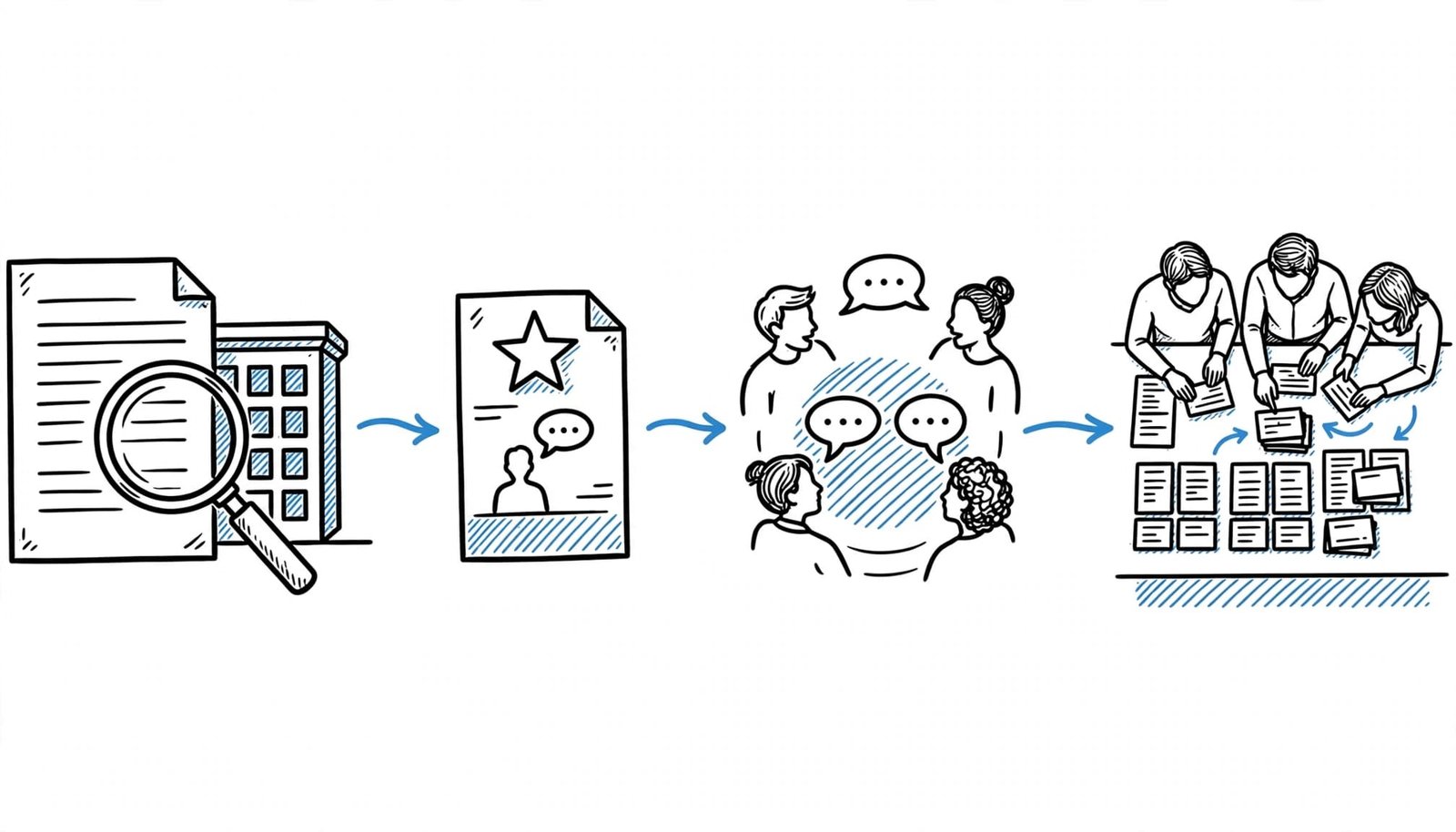
Research the work behind the company values
Read the job description, company website, and recent company announcements. Identify the role’s main responsibilities and connect each to evidence from your experience.
Then translate company values into observable behavior. For example, collaboration means listening, sharing information, and resolving disagreements constructively.
CareerScribeAI.com’s AI Resume Builder can help compare your experience with the job requirements and guide a resume update. Review its proposed edits yourself. If you’ve used the Cover Letter Generator, revisit your letter’s motivation statement so your spoken explanation stays consistent with your application.
Rehearse specific stories, not memorized speeches
Prepare a brief introduction covering your current work, relevant experience, and interest in the role. Keep it concise enough to leave others time.
For competency-based interviews, select true stories that show your communication skills, teamwork, ability to handle disagreement, and performance under pressure. The University of Washington’s STAR answer model organizes behavioral answers into Situation, Task, Action, and Result.
Include emotional intelligence in the action: explain what you noticed, how you listened, and why you adjusted your approach. For interview prep, CareerScribeAI’s Interview Prep Tools suggest interview questions based on your resume and the role. Edit story-bank drafts before rehearsing; never invent results or responsibilities.
How to prepare for a group interview exercise
Exercises can include case discussions, role-plays, and shared presentations. A group case can reveal your analysis, teamwork skills, and presentation skills. For each format, establish the objective before proposing a solution. In a role-play, clarify your assigned role and respond to the other person’s concerns rather than rushing through a script.
For a group case, rehearse this sequence:
- Clarify the task together. Confirm the deliverable, constraints, and deadline. Say, “Before we divide the work, can we agree on what the final recommendation needs to answer?”
- Divide work without creating silos. Suggest roles such as reviewing evidence, comparing options, and tracking time. Ask about preferences rather than assigning everyone a job. Brief individual brainstorming can give quieter candidates time to develop ideas.
- Recombine and rehearse. Compare findings before building the presentation. Agree on one recommendation, supporting evidence, and speaking order. Practice handoffs so each speaker knows where to begin.
For a 20-minute practice case, try two minutes clarifying, eight analyzing, six agreeing, and four rehearsing. Adjust that schedule to the actual task.
Dividing tasks only helps when everyone reconnects before the final recommendation. Otherwise, the presentation can contain conflicting conclusions.
Show leadership without dominating the discussion
Leadership skills mean helping the group make progress, not taking over. Colorado State University’s group interview advice stresses respect and avoiding interruptions. Pair that restraint with communication skills and substantive contributions: identify a constraint, explain a trade-off, or summarize a decision.
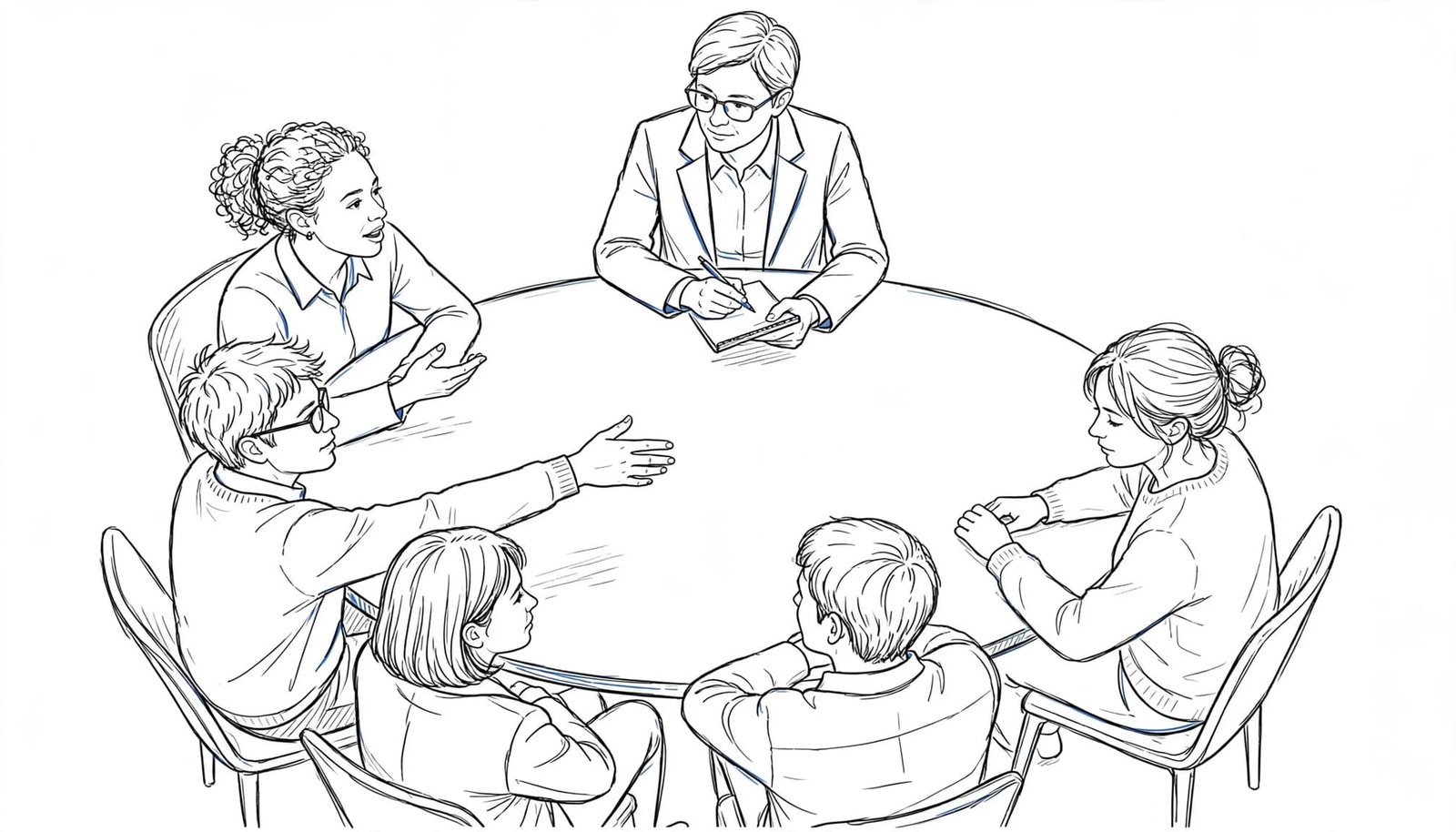
Enter the conversation and include others
Introverted candidates can prepare entry phrases instead of waiting for a perfect opening. Try, “Building on that point, there’s another constraint we should consider.” Then explain your reasoning briefly.
Show active listening by accurately referring to someone else’s idea. Invite a quieter participant with, “Alex, would you like to add anything before we decide?” Give them room to decline.
Avoid repeating a point merely to claim airtime. If another candidate makes your argument first, add evidence, identify a limitation, or connect it to the task.
Handle dominant peers and disagreement calmly
If someone monopolizes the discussion, redirect attention to the work: “We have several options now. Could we compare them against the brief before choosing?”
For disagreement, acknowledge the reasoning before stating your concern: “That approach could save time. My concern is the budget limit. Could we test both options against it?”
If interrupted, calmly finish your contribution: “I’ll complete this point briefly, then hand over.” However, don’t spend the exercise policing everyone. Return to the task and help the group reach a decision. Interviewers can observe how you respond under pressure, including your interpersonal skills and whether you stay respectful.
Check logistics and follow up promptly
The final step in group interview preparation is practical. Use this interview checklist to confirm the location, start time, expected duration, dress guidance, and anything you need to bring. Before the job interview, review your resume so you can explain every claim.
For a virtual interview, test your microphone and camera, check your display name, and practice brief pauses before speaking. Use chat or hand-raising features only when the interviewer permits them. Avoid live AI-generated answers unless the employer explicitly allows assistance.
Afterward, record the questions and feedback while they’re fresh. Send a short thank-you within 24 hours, referencing a specific discussion and your interest in the role. CareerScribeAI’s Application Tracker can keep interview notes and follow-up reminders alongside the application.
Frequently Asked Questions
How is a group interview different from a panel interview?
A group interview involves multiple candidates meeting together, while a panel interview involves multiple interviewers. Ask the recruiter which format to expect so you can prepare appropriately.
How can I stand out in a group interview without dominating?
Make concise, relevant contributions and build on other candidates’ ideas. Show active listening, explain your reasoning, and help the group move toward a decision.
What should I do during a group interview exercise?
Clarify the objective, constraints, and deadline before suggesting a solution. Divide tasks collaboratively, then bring the findings together and agree on a clear recommendation.
How should I prepare for a virtual group interview?
Test your microphone and camera, check your display name, and practice pausing briefly before speaking. Use chat or hand-raising features only if the interviewer permits them.
Make your contribution easy to evaluate
Strong preparation gives you evidence to share and a plan for working with unfamiliar people. You don’t need the most airtime; you need useful contributions that interviewers can connect to the role.
Before your interview, rehearse one introduction, several truthful STAR stories, and a timed group exercise. During the session, help the group reach a clear answer while making your own reasoning visible.