
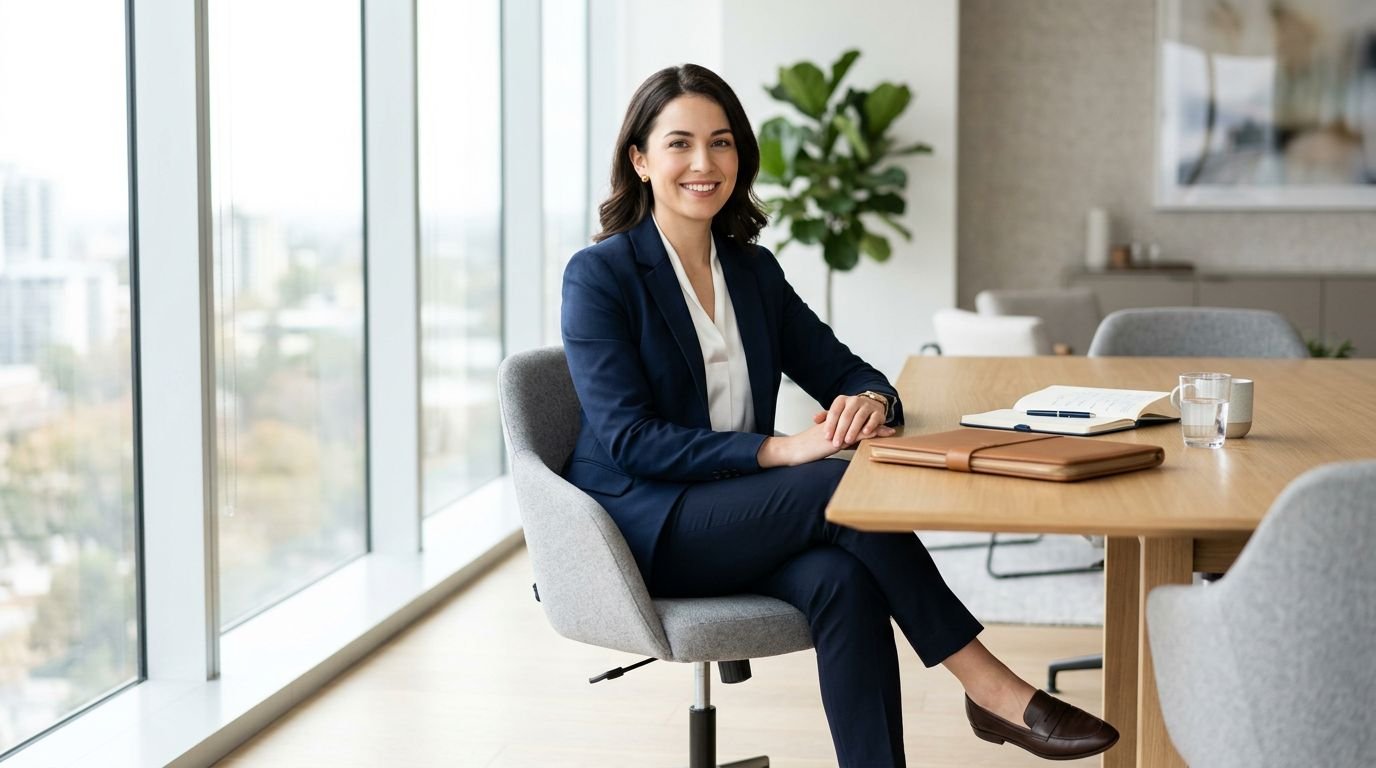
A well-chosen interview outfit creates a positive first impression on the hiring manager without becoming a distraction after the first handshake or video greeting. It shows that you understand the setting, prepared with care, and can represent yourself professionally.
In 2026, job interview attire is less about following a rigid uniform and more about reading the employer’s culture accurately. Modern interview attire should signal readiness while meeting professional attire expectations, and it doesn’t need to look expensive, but it should fit well, feel comfortable, and match the level of the role.
Key Takeaways
- Choose job interview attire that is one level more polished than the company’s everyday dress code.
- Research the company culture, role, and interview format before selecting between business formal, business casual, or smart casual clothing.
- Prioritize proper fit, clean presentation, neutral colors, comfortable footwear, and restrained accessories over expensive labels or bold trends.
- Wear the full outfit for video interviews, test the camera view and lighting, and avoid patterns or colors that may distract on screen.
- Prepare your outfit in advance and avoid common distractions such as wrinkles, poor fit, strong fragrance, noisy jewelry, and overly casual clothing.
Job Interview Attire Starts With the Company’s Dress Code
The most reliable rule is to dress one level more polished than the company’s normal workday standard. Start by reviewing the company dress code policy and consider whether the company culture leans toward business casual or business formal. A blazer and tailored trousers can work for a business-casual office, while a coordinated suit is better suited to a formal environment.
Look for dress code clues before choosing your outfit. Review the employer’s website, LinkedIn posts, staff photos, and the interview invitation to understand the company culture. A recruiter can also answer a direct question: “Could you share the usual dress code for interviews at your office?”
Finance, law, consulting, and many executive roles still call for business formal clothing, particularly in a formal workplace or client-facing role. A tailored suit with a crisp dress shirt or button-down shirt, polished leather shoes, and restrained accessories are reliable choices. A tie can make sense in formal, client-facing fields, especially for senior roles.
For tech, marketing, nonprofits, education, and many startups, smart casual or business casual options often fit better than a full suit, particularly in a casual workplace. Consider tailored trousers or a midi skirt with a refined knit, collared shirt, blouse, or blazer layered over a button-down shirt or dress shirt. Current workwear favors softer tailoring and clean lines, but the outfit should still look intentional. Coursera’s interview clothing guide offers practical examples of professional and business-casual combinations.
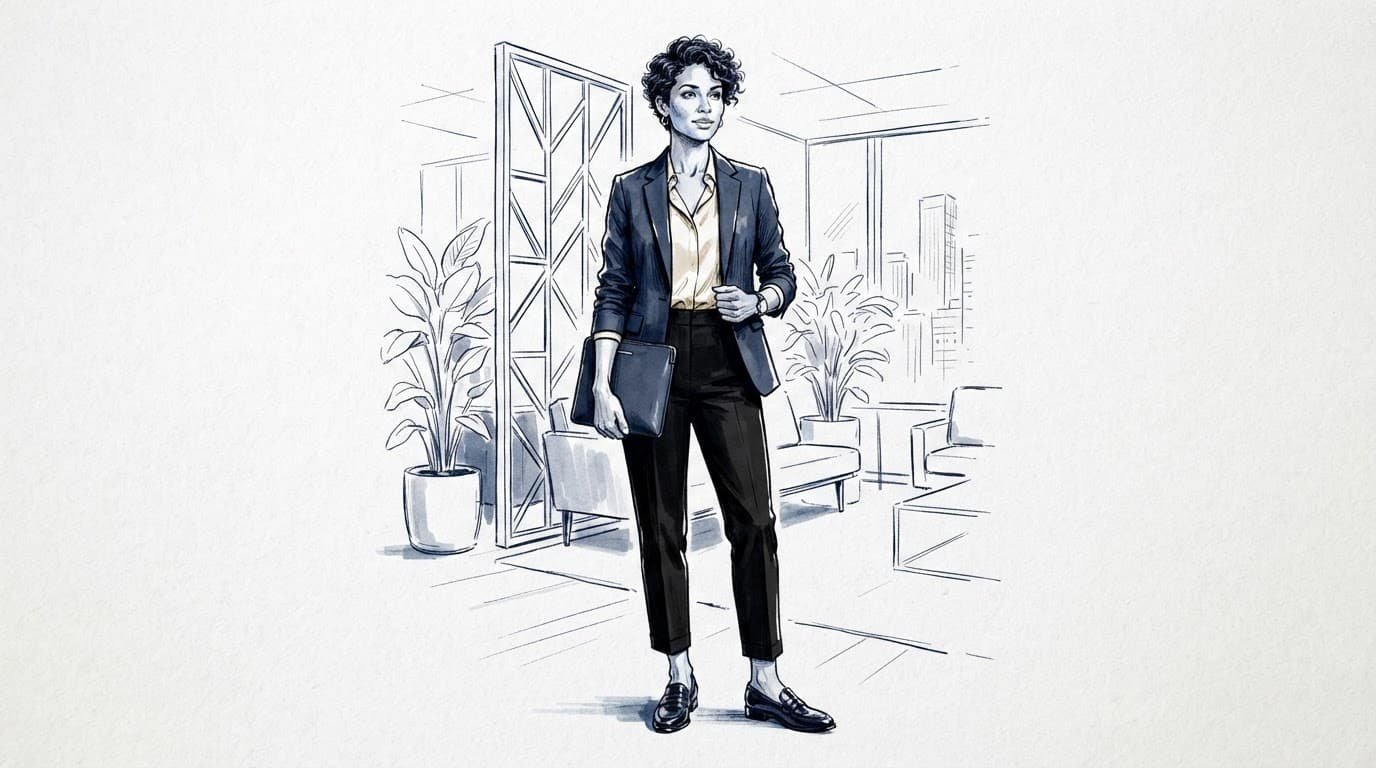
When company culture is unclear, choose tailored, neutral separates over casual clothes. Being slightly overdressed is easier to recover from than looking unprepared.
Build a Modern Interview Outfit Around Fit and Finish
Fit matters more than a fashion label. Your interview outfit should reflect your personal style while still looking polished and appropriate for the role. A clean blazer that sits properly at the shoulders will make a better impression than an expensive jacket with sleeves that cover your hands. Try on the complete outfit several days ahead, including your shoes and outerwear.
For most in-person interviews, these combinations work across industries:
- Tailored dress pants with a structured blazer, a simple shirt or fine-knit top, and clean loafers, flats, boots, or dress shoes.
- A modest, well-fitted dress or jumpsuit with a blazer and professional closed-toe footwear.
- Chinos, tailored dress pants, or dark jeans with a crisp collared shirt and an unstructured blazer for a smart-casual workplace.
Navy, charcoal, black, gray, white, cream, and soft blue are neutral colors that look composed under office lighting and on camera. A muted forest green or burgundy can also work as one accent piece. Avoid neon shades, loud logos, distressed denim, and busy prints that compete for attention.
Shoes deserve a final check. Keep your footwear neat and clean by wiping scuffs, replacing worn laces, and choosing a pair you can walk in comfortably. Polished loafers are a strong option for many roles, while leather shoes, clean oxfords, flats, pumps, ankle boots, and minimal dress shoes may fit the employer’s culture. Sneakers belong only when you have clear evidence that the workplace is highly casual.
A structured tote, briefcase, or messenger bag keeps copies of your resume, a notepad, and essentials together. Bring one bag, not a handbag plus an overstuffed backpack. Small details, such as lint, wrinkles, or a noisy bracelet, can distract you during a close conversation.
For more interview outfit ideas built around blazers, chinos, and neutral shoes, see this 2026 interview attire guide. A polished interview outfit should help you feel prepared without making your clothing the focus of the conversation.
Match Your Clothes to the Interview Format
A video interview requires the same care as an office visit, especially when you’re preparing for a remote interview. Wear the full outfit, including trousers or a skirt, because it changes how you sit and carry yourself. Test the camera view before the meeting, then check for glare, strong patterns, and colors that fade into your background.
Solid medium-toned colors usually look best on screen. Navy, blue, green, and muted jewel tones provide contrast without appearing distracting. Keep jewelry subtle, and position lighting in front of you rather than behind you.
For a remote interview, the interviewer may only see your upper half, but proper job interview attire still signals the same respect you would show in person. A neat dress shirt or button-down shirt under a business casual jacket works well for many roles, while a polished blouse or fine-knit top may be enough for a casual organization. Choose a blazer when the position or company culture is more formal.
Your preparation should align, too. The job description often shows the same signals that shape both your outfit and your answers, making it a useful starting point for interview preparation. Use tools that help you predict interview questions from the posting, then practice clear examples from your experience as part of your overall interview preparation. A tailored resume from an AI Resume Builder and a focused Cover Letter Generator can keep your application materials consistent with the story you tell in the interview.
Avoid These Common Interview Clothing Mistakes
Comfort should never mean careless. Clothing that pulls, pinches, slips, or needs constant adjustment can distract the hiring manager and undermine your first impression. Poorly fitted dress pants or inappropriate clothing can also break your concentration, so choose pieces you have worn before and sit down in them during your outfit test. Follow the company’s dress code policy, and avoid overly casual choices such as graphic t-shirts.
Skip fragrance if possible, or use very little. Interview rooms are often small, and scent sensitivity is common. Grooming should look neat and clean rather than overly styled, with clean nails and tidy hair that doesn’t require frequent touching.
Do not buy a whole new wardrobe for one meeting. If your budget is limited, prioritize a well-fitting pair of dress pants, a neutral top, clean shoes, and basic alterations. A local tailor can shorten sleeves or hem pants for far less than the cost of replacing an outfit.
Frequently Asked Questions
What should I wear to a job interview in 2026?
Choose an outfit that is slightly more polished than the company’s usual workwear. Tailored separates, a blazer, clean shoes, and neutral colors are reliable choices when the dress code is unclear.
Is a full suit necessary for every interview?
No. A full suit is usually most appropriate for formal, client-facing, or senior roles in industries such as finance, law, and consulting. Business casual or smart casual clothing may be a better fit for tech companies, startups, nonprofits, and other relaxed workplaces.
What should I wear to a video interview?
Wear the complete outfit, including trousers or a skirt, and choose solid colors that contrast with your background. A dress shirt, blouse, fine-knit top, or blazer can work depending on the role and company culture.
Are jeans acceptable for a job interview?
Dark, clean, non-distressed jeans may be acceptable in a clearly casual workplace when paired with a crisp shirt and structured blazer. If you are unsure, choose tailored trousers instead.
How can I make interview clothes look professional on a budget?
Focus on a few versatile essentials, such as well-fitting dress pants, a neutral top, clean shoes, and basic alterations. Proper fit, wrinkle-free clothing, and careful grooming often create a stronger impression than expensive brands.
Final Thoughts on Interview Dressing
The right job interview attire and overall interview attire should frame your qualifications without becoming the subject of the meeting. Read the company’s cues, choose clothes one step above the everyday norm, and focus on fit, clean presentation, and comfort.
Your experience and preparation should remain the main event. Thoughtful professional attire gives them the clear, polished frame they deserve and helps create a memorable, positive first impression.