


A recruiter asks whether you are interviewing with other companies, and the wrong response can make a strong job interview feel awkward. You don’t need to reveal every application, name competitors, or pretend you have no options.
A clear, truthful answer shows that you are conducting a focused job search and taking this role seriously before any potential employer. The goal is to give enough context, then bring the conversation back to fit.
Key Takeaways
- Be honest about active interviews, but keep employer names and details private.
- Describe the roles, industry, or work you are pursuing instead of listing companies.
- State your timeline if you have one, while keeping the interview process moving without using pressure tactics.
- Always connect your answer and your career goals to why this specific opportunity interests you.
- If your search is early, say so plainly rather than inflating your activity, especially if this company is your top choice.
Why Employers Ask About Other Interviews
When a hiring manager or internal recruiter asks about your job search, they are trying to understand your timeline for the hiring process. They want to know whether an offer process may need to move faster, how serious your search is, and whether the role fits your broader goals.
This is one of those standard interview questions that also tests your judgment. A candidate who shares confidential details about another employer may raise concerns about discretion. On the other hand, claiming this is your only interview when it isn’t can create problems later.
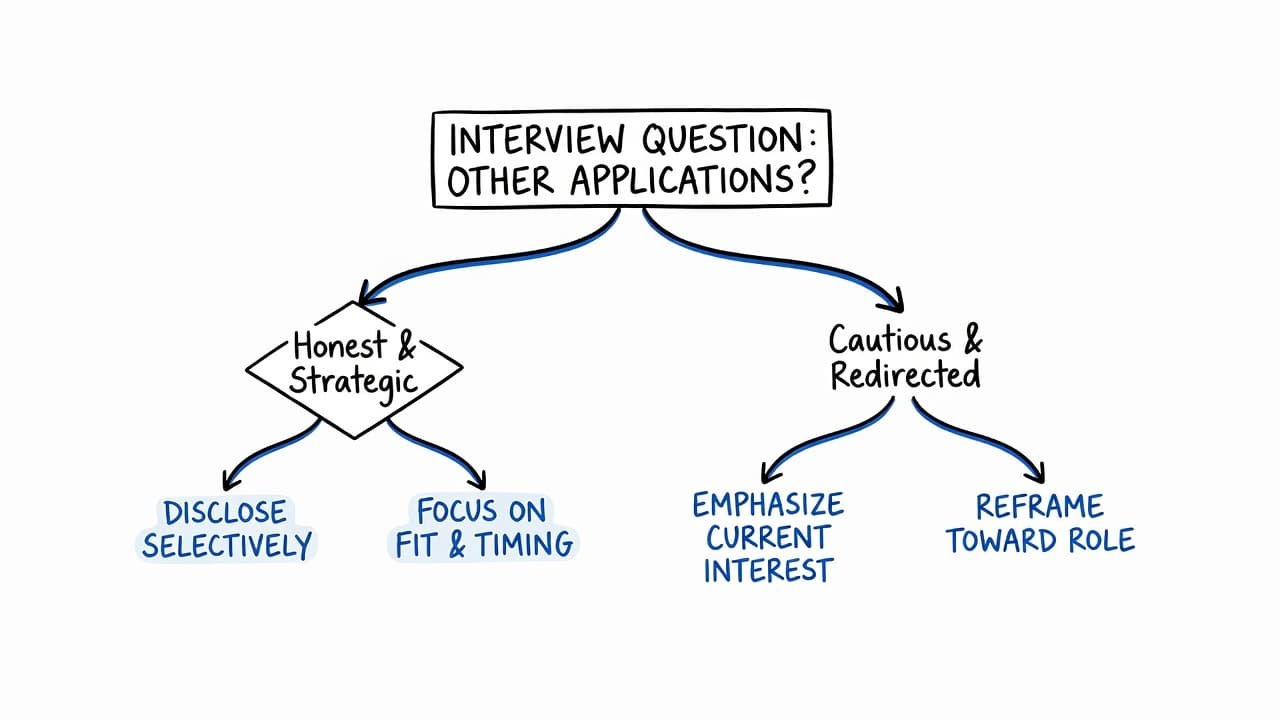
When you are interviewing with other companies, treat the question as a short professional update. Mention the general type of roles you are pursuing, then explain why this position belongs on your list.
A useful response has three parts:
- Confirm your situation truthfully.
- Give high-level context about your search.
- Reconnect your interests to the employer in front of you.
You are not required to disclose company names, interview notes, compensation figures, or another employer’s hiring timeline.
Being open about active opportunities can sometimes influence your bargaining power, but transparency works best when it is paired with a clear statement of interest in the role at hand. A candidate discussion about active interviews captures this sound principle, showing how to navigate the broader interview process with a potential employer without oversharing.
How to Answer When You Are Interviewing With Other Companies
Use a calm, matter-of-fact tone. Avoid sounding secretive, but don’t turn your active job search into a scoreboard.
Start with the truth: “Yes, I’m interviewing with other companies right now.” Then add a useful boundary: “They are mostly roles where I can lead customer onboarding for B2B software teams.” Finally, make the connection: “This position stands out because your product serves a market I know well, and the scope matches what I want for my next role.”
The phrase “a few organizations” is enough. Only offer a number if it helps clarify a deadline. For example, if you expect a final-round interview elsewhere next week, say so when the recruiter asks about timing.
Your answer should also match the stage of your search. A person who has submitted several applications does not need to claim active interviews. A person with an offer should not hide it if a decision date affects this employer’s process. When handling common interview questions about your timeline, frame your current conversations carefully so this employer remains your top choice. Mentioning how the company culture aligns with your values helps reconnect your response to the specific organization.
Before the interview, review your resume against the job description and prepare a two-sentence explanation of your search focus. CareerScribeAI’s getting started guide shows how its AI Resume Builder, Cover Letter Generator, and Interview Prep Tools can help you tailor that preparation to each role.
Sample Scripts for Common Situations
The strongest scripts sound specific without volunteering details that are not yours to share.
| Your situation | A professional response |
|---|---|
| You have several active interviews | “Yes, I am speaking with a few companies about active interviews in operations and program management. I am focused on positions where I can improve cross-functional delivery, and this role is especially interesting because of its ownership and customer impact.” |
| You are early in your search | “My job application process is still early, so I am being selective about the conversations I begin. I am exploring roles that use my financial analysis background, and this opportunity caught my attention because of the team’s growth plans.” |
| You have a late-stage process elsewhere | “I am in later-stage discussions for another position, alongside a pending job offer, although I have not made any decisions. I remain very interested in this role because the responsibilities align closely with the work I want to build on next.” |
| You have an offer | “I have received a job offer with a decision date of Friday, but this remains my top choice. However, I would welcome the chance to continue here because this position is a strong match for my experience in enterprise account management.” |
| You are not interviewing elsewhere | “I am not in other active interview processes right now. I have been selective, and I applied because this role fits my candidate qualifications and career aspirations.” |
Don’t memorize these word for word. Recruiters can hear when an answer has been rehearsed too tightly. Instead, keep the structure and use language you would normally say.
A separate job-seeker conversation about this question also reflects a common concern: candidates worry that any admission of other interviews will hurt them. In most cases, a composed, high-level answer reads as normal market behavior.
What to Avoid Saying
Avoid naming every company in your pipeline, especially specific industry competitors. The hiring manager may ask follow-up questions during the interview process, but a simple boundary is professional: “I’d prefer to keep those conversations confidential, but I can share the kind of work I’m considering.”
Don’t exaggerate demand. Claiming you have several offers or final rounds may create urgency for a moment, yet it can damage trust if your story changes. Hiring managers also know that serious candidates often have choices.
Keep negative comments out of your answer. Saying you are interviewing elsewhere because you dislike the company culture makes the conversation about conflict. Focus on the work you want next, and save discussions about salary negotiations for later.
Finally, when you answer difficult interview questions, don’t make the employer guess whether you care about the role. If you are interviewing with other companies, name one real reason this opportunity fits your goals. That detail turns a generic answer into a credible one.
Frequently Asked Questions
Should I name the other companies I am interviewing with?
No, you should keep employer names, specific competitors, and confidential details private. Instead, describe the general type of roles, industry, or work you are pursuing to give high-level context without oversharing.
What if I am not interviewing with any other companies right now?
Be honest and say so plainly without feeling pressured to inflate your activity. You can explain that you are being selective and chose to apply because the role fits your career aspirations and qualifications.
Will admitting I have other interviews hurt my chances?
In most cases, a composed and professional answer reads as normal market behavior and shows you are in demand. As long as you connect your response to a genuine interest in the role, transparency is viewed positively by hiring managers.
Final Thoughts
This question is not a demand for your full job-search record. It is a chance to show good judgment, realistic momentum, and a focused interest in the position while navigating the hiring process.
Tell the truth, keep details at the right level, and return to the value of the role in front of you. Whether you are actively interviewing with other companies or simply evaluating your career goals, a concise answer prepares you for every job interview. Ultimately, framing your next role correctly leaves room for the conversation that matters most: whether you and the employer are a strong match.