


A resume is expensive space for any job application in 2026. Every line should prove your fit, not list people an employer may never contact.
For most roles, resume references do not belong on the resume itself. You should keep a polished separate reference list ready to share, as many employers ask for these details later in the hiring process.
Key Takeaways
- Most resumes should not include references in 2026 unless an employer explicitly asks for them.
- Keep a separate, one-page reference sheet containing three to five references from your list of professional references.
- Match your reference page to your resume header, font, and overall formatting.
- Skip the line references available upon request because employers already expect that information to be ready.
Should you put references on a resume in 2026?
The short answer is no. If you are asking, should you put resume references on a resume, the modern answer is to leave them off unless the job posting or application form says otherwise.
That advice is consistent across career guidance sources. The University of Cincinnati’s advice on references says most candidates should not place references on the resume, and SEEK’s guide to resume references makes the same point.
Why has this become the norm? Because resumes work best when they focus on your achievements, skills, and work experience. A hiring manager wants quick proof that you can do the job. References matter, but they usually matter later in the hiring process.
This quick comparison helps:
| Situation | What to do |
|---|---|
| The job posting does not mention references | Leave them off the resume and keep a separate document ready. |
| The application asks for references | Submit a separate reference sheet or fill in the portal fields. |
| You reach the final interview stage | Send your list after confirming each person agrees to be contacted by the hiring manager. |
A resume is not a storage bin for every career document. In 2026, it is a tight sales page, and resume references usually live in a separate document.
When employers ask for job references
Most employers ask for job references after they determine you are a serious candidate. This milestone typically occurs later in the hiring process, often after a screening call, one or two interviews, or as you approach the offer stage. In other words, references support your candidacy, but they usually do not open the door at the start of your application.
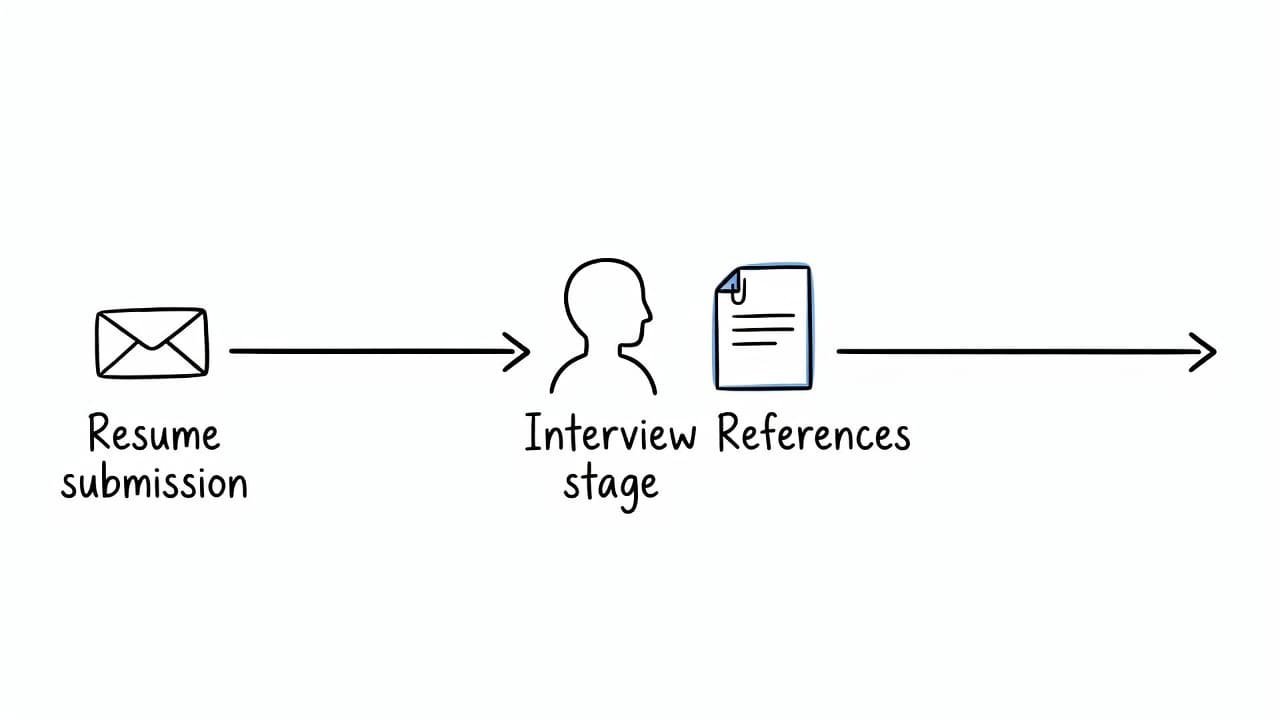
There are a few exceptions. Some employers ask for references directly in the application portal, and some recruiters collect them early. When that happens, follow the instructions exactly. Still, even in those cases, you should provide them in a separate document or online form rather than inside the resume body.
This timing matters for another reason. You do not want a former manager getting surprise calls while you are still in the first round of interviews. Always prioritize asking permission before sharing contact details, then give each reference context about the specific role. CareerScribeAI’s Interview Prep Tools can help at this stage, because reference checks often come immediately after the interviews where your references are asked to vouch for skills and verify the claims you made during your discussion.
How to format a reference list for your resume
A good reference list for your resume should feel like part of the same application package. Use the same name header, contact information, font family, and spacing as your resume. Keep it clean, single-column, and easy to scan.
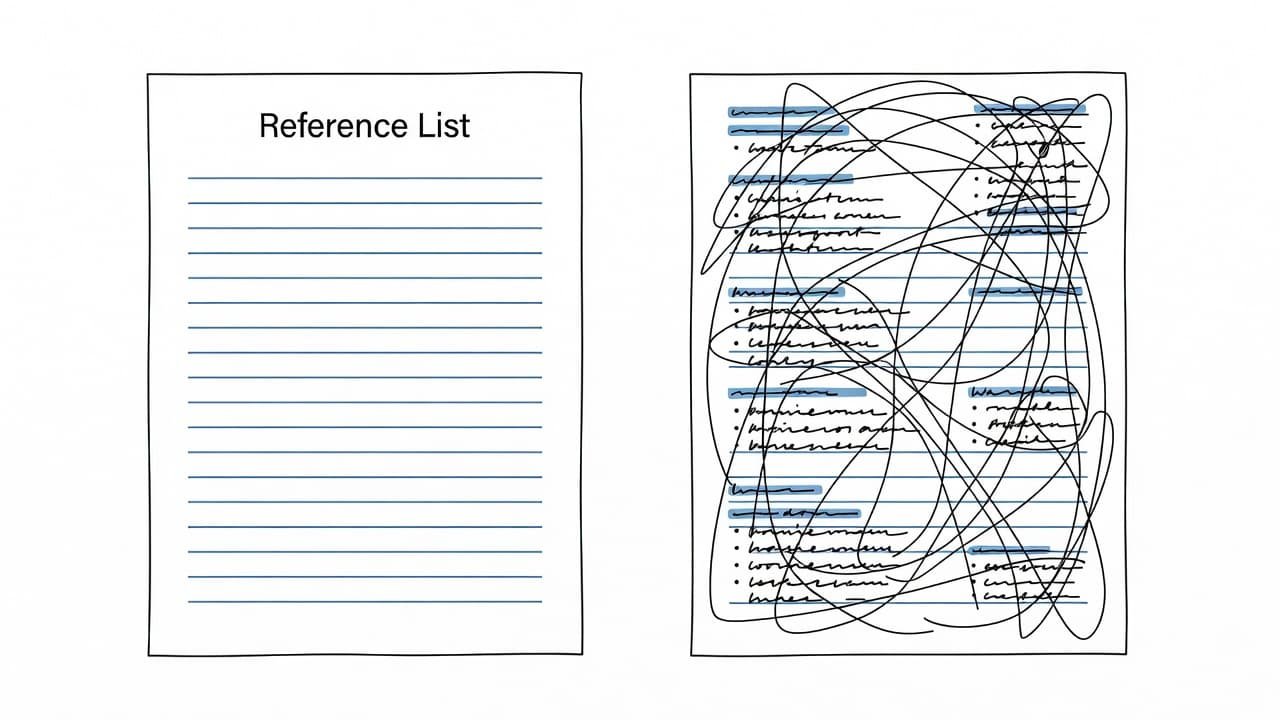
A strong resume references format is simple. List 3 to 5 professional references on one page. Start with the most recent or most relevant working relationship, then move down. Save the file as a PDF unless the employer asks for a Word document.
What each reference entry should include
Each entry should include the person’s full name, job title, company name, city and state, phone number, and professional email address. Every entry must clearly display the contact’s full name, job title, company name, phone number, and email address for quick recruiter access. Add one short line on your relationship, such as “Former manager, worked together from 2022 to 2024.”
Keep these details in mind:
- Use people who can speak to your work, such as a former supervisor or a trusted colleague, rather than just character references.
- Get permission before you share any contact details.
- Use city and state only, not a full street address.
- Avoid graphics, rating bars, photos, and multi-column layouts.
- Make sure every phone number and email address is current.
If you are rebuilding your application materials, CareerScribeAI’s AI Resume Builder can help you keep your resume lean, so accomplishments stay on the main document and references stay on their own separate document. Its Cover Letter Generator also helps keep tone and formatting consistent across files, which makes your whole application look more polished.
Skip “references available upon request”
This phrase used to be a staple on many resumes. However, in 2026, including “available upon request” simply wastes valuable space and provides no useful information to the recruiter.
“References available upon request” tells employers what they already assume.
Every hiring manager knows you can provide references if they ask. Including this line does not make your application stronger, and it unnecessarily consumes space that could be used for metrics, technical tools, professional certifications, or career results. If a job posting specifically asks for references, provide a separate list. If the job posting does not mention them, keep your list prepared separately and leave the phrase out entirely.
The same rule applies to crowded resume footers and sidebars. You should always save that room for content that moves your application forward, rather than including outdated filler like “available upon request.”
Frequently Asked Questions
Should I include a personal reference on my list?
It is best to stick to professional references who can speak directly to your work performance, skills, and reliability. Former managers, supervisors, or direct colleagues are significantly more valuable than personal or character references when you are applying for a job.
How many references should I provide?
Providing three to five professional references is the standard for most job applications in 2026. This number gives the hiring manager enough options to choose from without overwhelming them with unnecessary contact information.
Do I need to include street addresses for my references?
No, you should only include the city and state for each reference’s location. A full street address is unnecessary, outdated, and potentially a privacy concern for the people you are listing.
What if I am a recent graduate with no professional experience?
If you lack extensive work history, you can include professors, academic advisors, or supervisors from volunteer roles or internships. The goal is to provide contacts who can professionally vouch for your work ethic and character in an academic or volunteer setting.
Conclusion
Your resume should focus on highlighting your professional experience, allowing your skills to take center stage. When it comes to resume references, the cleanest approach for 2026 is to provide them only when the employer specifically requests them.
By keeping a separate, well-formatted reference sheet ready at all times, you ensure that you are prepared for the next stage of the hiring process. When the request comes, you will look organized, professional, and much easier to hire.