


Is “application under review” a good sign or does it mean you are rejected? Seeing an application under review meaning can feel like a half-open door. You are not rejected, but you are not moving forward yet, either.
For job seekers in 2026, that specific job application status usually means your resume is being processed by an ATS or is currently being evaluated by a recruiter. The hard part is that one status can cover several steps, so timing and your next moves matter.
Key Takeaways
- Active Status: Being “under review” signifies your application has cleared initial automated filters and is currently in an active queue, though it is not a guarantee of an interview.
- Variable Timelines: Review durations depend heavily on company size and process complexity, typically ranging from one week for smaller firms to several months for government or public-sector roles.
- Maintain Momentum: Because portals are not always updated, you should treat long periods of silence as a “soft no” and continue applying to other positions to keep your pipeline healthy.
- Proactive Waiting: While waiting, optimize your resume for ATS compatibility, prepare your interview talking points, and send a single polite follow-up after 7 to 10 business days.
What “under review” usually means now
In plain language, having your job application under review means the employer has not closed your file and has not reached a final decision. This status is a standard part of the modern hiring process, indicating that your application successfully passed an initial filter and moved into an active queue for further assessment.
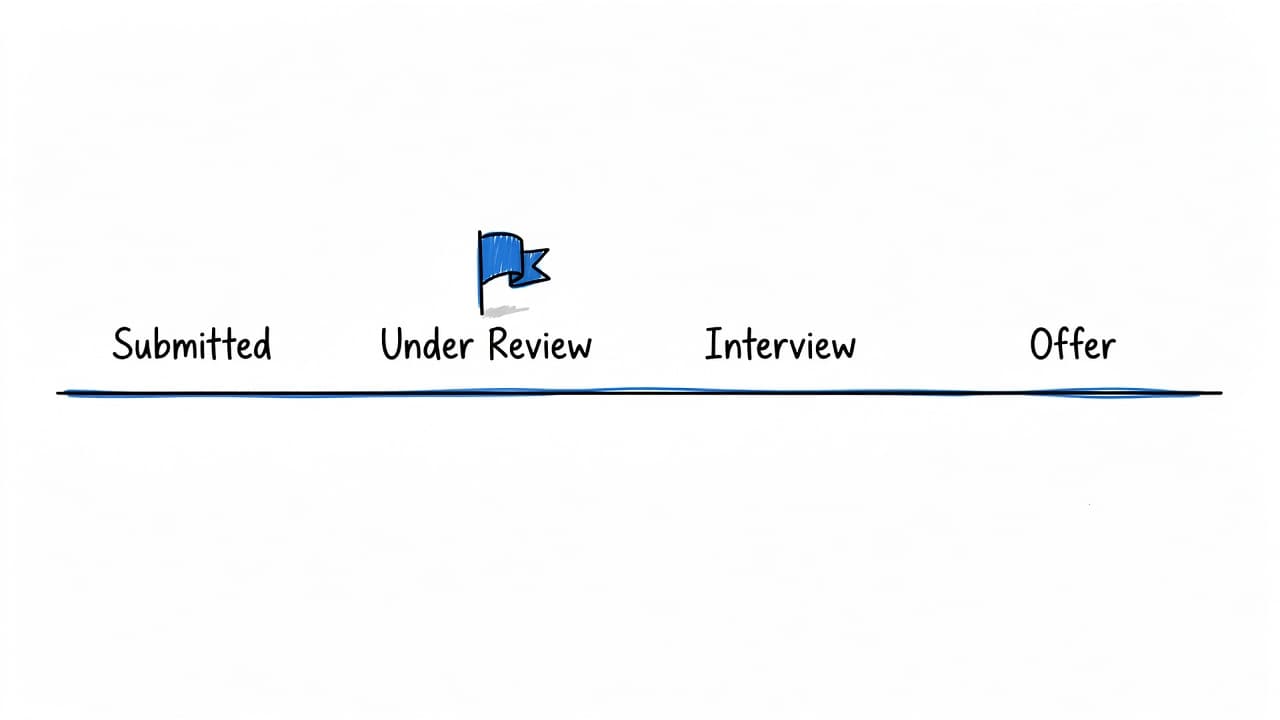
In 2026, that early filter is often an applicant tracking system (ATS). Popular recruitment platforms like Greenhouse or Workday often trigger this status automatically once your profile meets the baseline requirements for the position. During this phase, an initial screening occurs where a recruiter evaluates your resume to ensure your qualifications align with the job description. A recruiter will typically look for a stable work history and clear evidence of job fit at this stage.
Once you pass the initial screening, your file may transition into a human review. This is where a hiring manager takes a closer look at your credentials to determine if you are a strong candidate for an interview. If the role draws hundreds of applicants, delays are common because a hiring manager may need to coordinate with the team, secure budget approval, or compare internal candidates before proceeding.
Treat “under review” as active, not final.
An application status under review can also act as a broad label. Some portals use it for any file that has not been rejected yet. When you ask what does application under review mean, the most accurate answer is that you are still being considered for the role, though an interview is not guaranteed. Because you are officially under consideration, the best strategy is to remain patient while the internal team completes their assessment. A practical guide from LoopCV describes this same pattern of evaluation.
How long under review takes in 2026
If you are wondering how long an application stays under review, the answer depends more on the employer than the phrase itself. Several factors, including company size, role urgency, the volume of interviews, and the complexity of internal approvals, determine the hiring timeline for your specific industry.
This table provides a realistic range for how long you might wait for an update:
| Hiring situation | Common review time |
|---|---|
| Smaller company or simple role | 3 to 7 days |
| Most standard jobs | 1 to 2 weeks |
| Large company or high-volume role | 2 to 6 weeks |
| Government or public-sector role | 4 to 16 weeks or more |
Most private-sector jobs move within one to two weeks if the employer is interested in your profile. Smaller firms often move faster because they have fewer internal approvals required to reach the next step. In contrast, large companies frequently move slower because more screens, administrative meetings, and coordinated calendars are involved in the selection process.
If your status stays unchanged for four to six weeks and you have not received a reply, treat it like a soft no. The hiring process may be on hold, the position might already be filled, or the information in the careers portal may simply be stuck in a system that no one is updating. Keep the role on your tracker for reference, but do not wait on it; instead, you should continue your job search without pause.
What to do while your application is under review
Waiting does not have to mean standing still. Use the gap to improve your odds, both for this role and the next one.
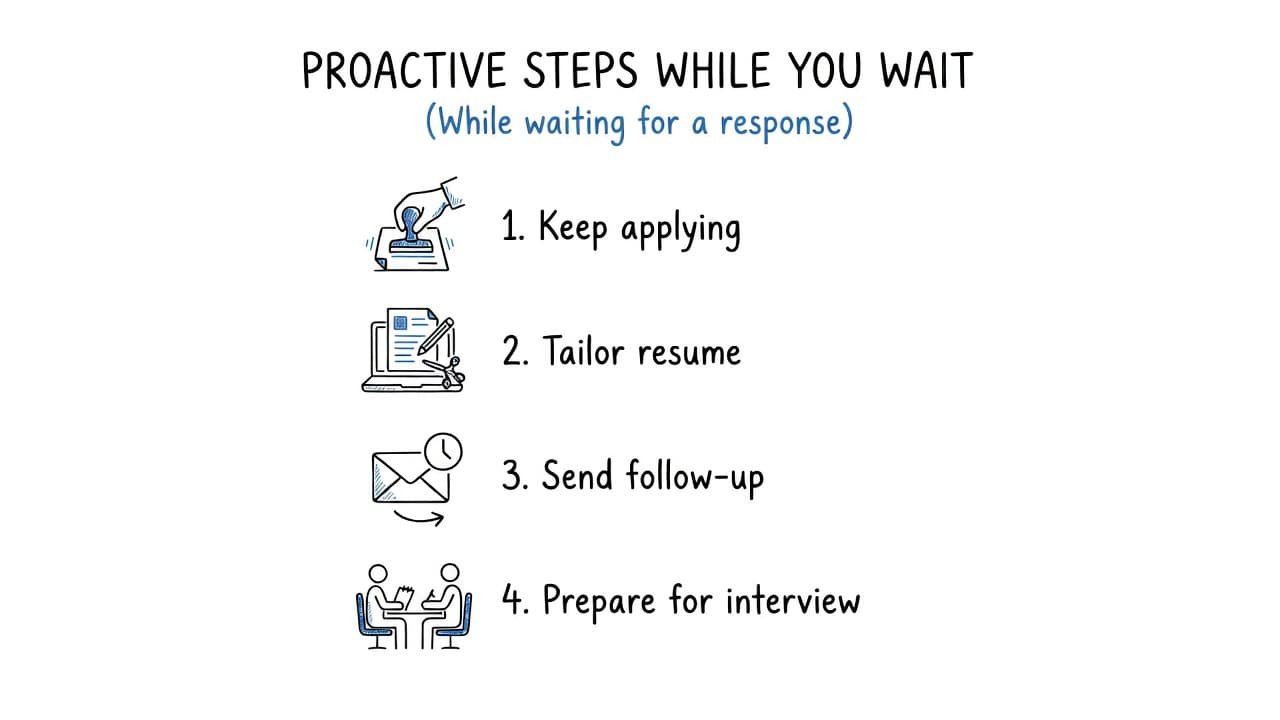
- Track every application in one place. Save the job title, company, date applied, and your current job application status. A clean record stops you from missing follow-ups or applying twice.
- Send one polite follow up after 7 to 10 business days if you have a recruiter email or a listed contact. When you follow up, keep it short. Mention the role, the date you applied, and your continued interest to ensure you stay on the recruiter radar.
- Re-check your resume against the posting. If the job stresses specific skills, use keyword optimization to ensure your resume reflects those requirements honestly. Because ATS filters and human readers both scan for alignment, you should also consider whether a tailored cover letter can better highlight your specific qualifications for the role.
- Prepare for an interview before one is scheduled. Review your results, metrics, and project stories now so that you are ready for your next interview. Having your talking points ready ensures you will not scramble if you are invited to move forward on short notice.
- Keep applying elsewhere. This is the most important move. A healthy job search pipeline lowers stress and gives you options if one employer goes silent.
This is also a good time to tighten your materials. If you notice that many applications stall at review, CareerScribeAI’s AI Resume Builder can help you match your resume to a job description and sharpen ATS wording. If an employer asks for a letter, the Cover Letter Generator can help you produce a targeted draft faster. Its Interview Prep Tools are useful when you want likely questions and stronger STAR-based answers while you wait.
If you prefer a system over a spreadsheet, CareerScribeAI’s job application tracker can help you log dates, contacts, and reminders. Small habits like that make the whole search feel less chaotic.
Final thoughts
An under review status is a holding pattern, not a final verdict. In 2026, it usually means your application is moving through the hiring process, whether it is currently undergoing ATS screening, recruiter review, hiring manager assessment, or internal approval. Remember that the hiring process is rarely linear, so try to view this status with patience rather than just anticipation.
Continue to stay active in your job search, as your next interview could be right around the corner. Keep tracking your progress, refining your resume, and sending out new applications, because the opportunity you are waiting for may come from the very next application you submit.
FAQ
Is “under review” a good sign?
Usually, yes, but only in a limited way. While an “application received” notification simply confirms your documents arrived, moving to “under review” suggests that you have successfully bypassed initial filters. It may mean you are being shortlisted for further evaluation or that your file is currently in progress, but it does not guarantee that you are a finalist or that you will definitely receive contact from a recruiter.
Should you follow up when an application says under review?
Yes, but only once, and only after 7 to 10 business days have passed. Keep your follow up message short and professional. If you do not hear back after that outreach, do not assume you will receive a formal rejection email. It is often best to move on and focus your energy on other active openings.
Does under review mean a human saw your resume?
Sometimes yes, and sometimes no. In many automated systems, the status updates after you pass the initial ATS screening, which often precedes a phone screen or a formal interview with the team. In other cases, the status remains generic until a hiring manager manually opens your file. Candidate reports on PrepLounge reflect that same uncertainty regarding when human eyes actually touch your application.
What if the portal never updates?
That happens often. Many employers never bother to change the job application status after the initial screening phase. If several weeks pass with no contact, it is wiser to trust the silence than the label in the portal. Keep your job search active and continue applying to other roles rather than waiting for a status change that may never come.