


You apply for a role, wait, and then see the same listing again. That can feel like a public rejection, but understanding the job reposted meaning is essential for navigating today’s market.
Most of the time, a reposted job listing suggests that the company is still working through their hiring process. In 2026, many organizations are hiring more carefully, taking longer to approve offers, and refreshing their ads to maintain visibility while they finalize their decision. Ultimately, a repost simply signals that the employment opportunity remains open, and the details surrounding the repost often matter more than the repost itself.
Key Takeaways
- A reposted job is rarely a definitive rejection; it often indicates that a company is refreshing its listing to maintain visibility or expanding its search for additional talent.
- Technical factors, such as automated refreshing by applicant tracking systems, often cause older listings to reappear as new without any changes to the hiring process.
- Before reacting, compare the new posting to the original; look for changes in skills, salary, or location, as these signal a shift in the role’s requirements.
- Avoid reapplying with the exact same resume, as this can trigger duplicate file alerts; only submit a new application if you can provide a significantly stronger version that highlights new skills or results.
- If you have already interviewed, prioritize a professional follow-up email over submitting a new application, as this maintains your presence without cluttering the employer’s database.
Why companies repost jobs
When people look up the meaning behind a reposted job, they are usually trying to answer one fear: did I already lose my chance? In many cases, the answer is no.
Companies repost jobs for a variety of common reasons. Frequently, the hiring manager or a recruiter is simply looking to expand their candidate pool to find a more qualified candidate for the role. They may have updated the job description to reflect changes in salary, location, or core duties. Sometimes, the team still likes a few individuals, but delays in budget approvals or the interview cycle mean the hiring process is taking longer than expected.
Technical factors play a large role as well. Automatic reposting features within an applicant tracking system can make an older role look newly opened, and sites like LinkedIn often refresh listings to keep them visible. Additionally, a repost can signal that the employer is still active and adjusting their hiring needs in real time.
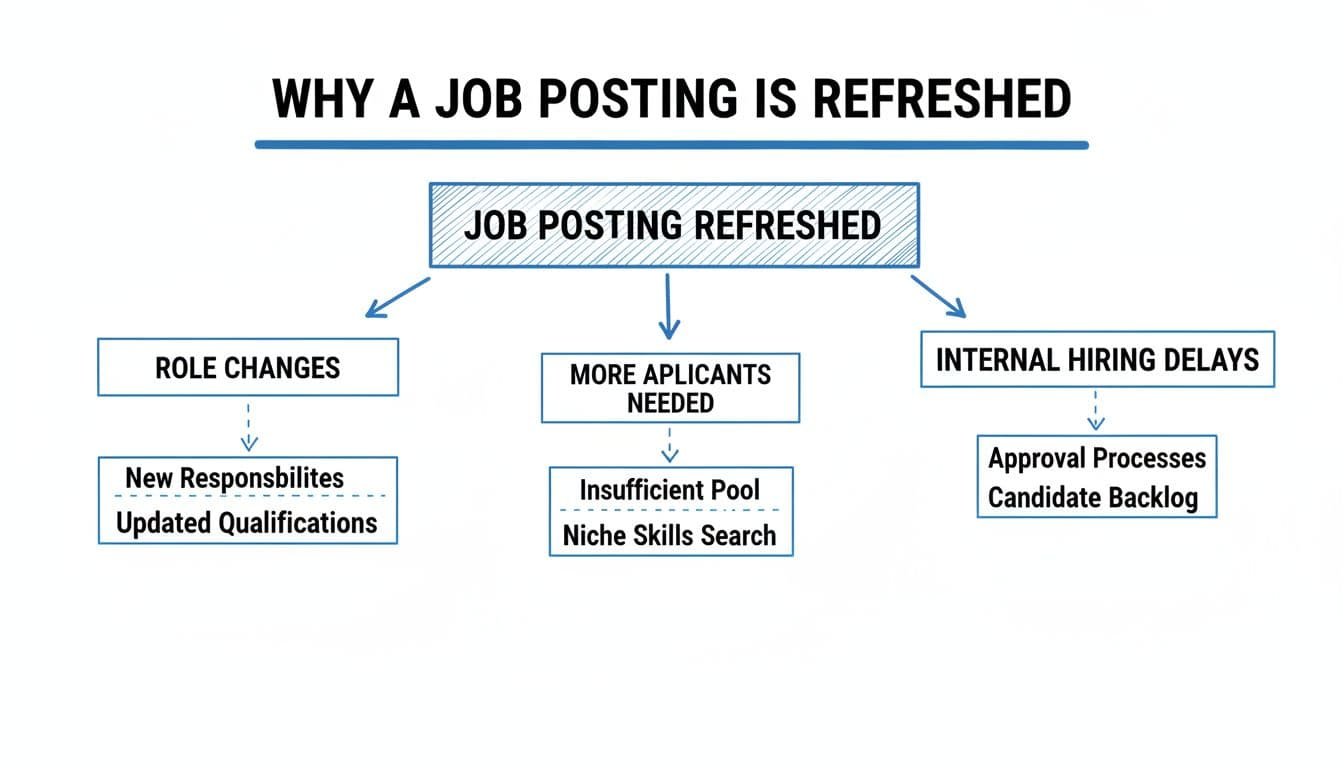
As noted in professional career guidance, employers may reopen a position even after an interview if their business requirements shift or they feel they need a broader selection of talent.
A repost is usually a process signal, not a final verdict on your application.
How to read the repost before you react
The smartest first step is to compare the new post with the old one. A fresh date means less than a changed job ad. This quick guide helps job seekers judge what they are seeing in a new job listing:
| What you see | Likely meaning | Best move |
|---|---|---|
| Same title and same wording, new date | Visibility refresh or auto-renewal | Follow up once, don’t panic |
| New skills, salary range, or location | Role changed | Re-check fit before reapplying |
| Repost right after your interview | Search still open, no job offer finalized, or more interviews needed | Send a short follow-up |
| Same role keeps returning for months | Hard-to-fill job or weak hiring process | Research the company before trying again |
If the repost appears a day after your interview, do not assume the worst. Many employers keep ads live until a job offer is signed or background checks clear. When the repost uses the same URL or job ID, it may be a simple refresh to boost visibility. A new title with revised duties is much closer to a new search, indicating a shift in the internal hiring process that might require a fresh approach to your application.
Should you reapply to a reposted job?
You should only reapply if you can submit a significantly stronger application. Sending a second version with the exact same resume rarely helps, and the applicant tracking system may automatically merge it with your original entry. Furthermore, an ATS often flags duplicate files, which might not improve your standing with the hiring team.
A fresh submission makes sense when:
- The job post now highlights specific skills you possess that you failed to feature previously.
- Your initial attempt was several weeks ago, and you never heard back.
- You have stronger professional results, a new certification, or a more optimized resume.
- A recruiter explicitly told you to submit your materials again after making updates.
If you have not submitted your materials yet, speed still matters. This guide on applying within 48 hours for better odds explains why job seekers who prioritize tailored, early submissions are more likely to reach the first review batch.
If you have already completed an interview, a professional follow-up is almost always better than sending a new application. A short, polite email to the recruiter shows good judgment and keeps your name active without creating unnecessary clutter in the hiring system.
How to make a reapplication stronger
If you decide to reapply, do not send the same package twice. Treat the repost as an opportunity to tighten your case.
Start by comparing the new ad with your first application. This article on how to analyze job requirements helps you sort essential needs from preferred ones, which is often where a weak first draft fails to highlight the right qualifications.
Then, improve the documents that matter most. On CareerScribeAI.com, the AI resume builder can help you align bullet points with the posting and spot missing keywords. The Cover Letter Generator can help if the role changed and you need to explain why you are still a fit. If the repost leads to fast outreach, the interview prep tools can help you practice likely questions and tighten your STAR examples.
Recruiters remember evidence, not effort. Swap vague lines for proof with numbers, scope, and outcomes. “Managed client projects” is easy to ignore, but “Led five launches and cut delivery time by 18%” gives the recruiter something concrete to compare.
Reposting can also happen because another finalist backed out or the role shifted late in the recruitment process. These LinkedIn insights on why jobs get reposted show how talent acquisition teams often have reasons that have nothing to do with the initial candidate pipeline.
When a repost is a warning sign
While some job reposts are routine, others may point to a disorganized employer. It is important to watch for red flags, such as when the same role returns to the board every few weeks, the salary information disappears, or the core duties keep shifting. These patterns often stem from volatile market conditions, high turnover, or a hiring manager who is struggling to define the requirements of the position.
If you have completed your final interview and the company reposts the role without providing any updates, read that as a vital piece of information regarding their recruitment process. If you have been left waiting without meaningful feedback or a formal job offer, it is often best to remain professional, keep your expectations realistic, and continue your search elsewhere.
Frequently Asked Questions
Does a job repost mean I was rejected?
Not necessarily. In most instances, a repost is a logistical action taken by recruiters to attract more applicants or keep a role visible while they finalize their decision-making process.
Should I send a new application if a job I applied to is reposted?
Only reapply if you can offer a substantially improved resume or cover letter that better aligns with the job description. Simply resubmitting the same application usually does not improve your chances and can occasionally lead to duplicate profile flags in the company’s system.
What should I do if a job is reposted right after my interview?
Stay calm and refrain from immediately submitting a new application. The best approach is to send a polite, concise follow-up email to your recruiter or hiring contact to reaffirm your interest and request an update on the hiring timeline.
How can I tell if a repost is a red flag for the company?
Repeatedly reposting the same role over several months with shifting duties or missing information can indicate internal disorganization or high turnover. If you notice these patterns, proceed with caution and consider it a sign to maintain your search for other opportunities.
Conclusion
A reposted job listing does not automatically signal a rejection. In most cases, it simply means the employer is still searching, has faced delays, or is currently adjusting the requirements for the role.
The best approach is to remain proactive. By carefully reading the changes in the listing and understanding the job reposted meaning within the context of your specific application, you can decide whether to follow up, refine your materials, or move on to another prospect. Every employment opportunity presents a unique set of circumstances, and by staying informed, you can navigate these situations with confidence and clarity.