


Facing the common interview question of where do you see yourself in five years can shake even strong candidates. You may feel pressure to predict your entire future, when the recruiter simply wants to see a clear, believable career trajectory.
When preparing for a job interview in the modern era, you should aim to provide a response that demonstrates ambition, cultural fit, and genuine self-awareness. It is helpful to structure your answer in a way that highlights your professional evolution.
A strong answer should show that you are ready to grow alongside new tools, changing workflows, and an artificial intelligence shaped workplace. By framing your goals this way, you prove that you are forward thinking without sounding vague or robotic.
Key Takeaways
- Focus on growth, not predictions: Interviewers aren’t asking for a crystal ball; they want to see a clear career trajectory that demonstrates ambition, self-awareness, and a commitment to the role.
- Align goals with the position: Ensure your five-year vision connects directly to the specific job requirements and company objectives to show you are invested in providing long-term value.
- Embrace adaptability: Highlight your readiness to evolve alongside new tools and an AI-integrated workplace, showing that you value continuous learning over holding a fixed job title.
- Structure your response: Use a formula that moves from short-term learning and skill-building to long-term leadership or subject matter expertise to keep your answer focused and professional.
What interviewers want to hear in 2026
When a hiring manager asks this common interview question, they are not looking for a perfect forecast of your future. Instead, they want to understand your career goals, gauge your long-term stability, and assess how your presence might help reduce employee turnover. They need to know whether you think ahead, whether this role fits your professional trajectory, and whether you will grow in a way that provides lasting value to the company.
That matters even more now because a modern career path is fluid. People switch teams, pick up new tools, and build skills faster than they did a decade ago. A rigid answer can sound dated, but a grounded response shows you are serious about your development. Companies want to see that you are genuinely invested in the role, rather than viewing the position as a mere stepping stone for your next move.
Your response should demonstrate four things:
- You have a clear direction
- Your professional goals connect to the role
- You want to build useful skills
- You can adapt as the job changes
Good answers show direction and flexibility, not a fixed title carved in stone. Understanding what genuinely motivates you is a helpful starting point for shaping that direction.
For example, saying “I want to become a senior product marketer who can lead go-to-market work and mentor newer teammates” is stronger than saying “I want to be a VP.” The first answer sounds earned and practical. The second can sound detached from the role in front of you.
If you want a broad baseline, Indeed’s interview advice gives a solid overview. Still, the best answers are personal. They reflect your field, your level, and the job you are trying to win.
A simple formula for answering the question
A short structure keeps your answer focused and makes it easier to craft high-quality example answers when preparing for your interview. By breaking your response into logical parts, you can clearly communicate where do you see yourself in five years without sounding rehearsed.
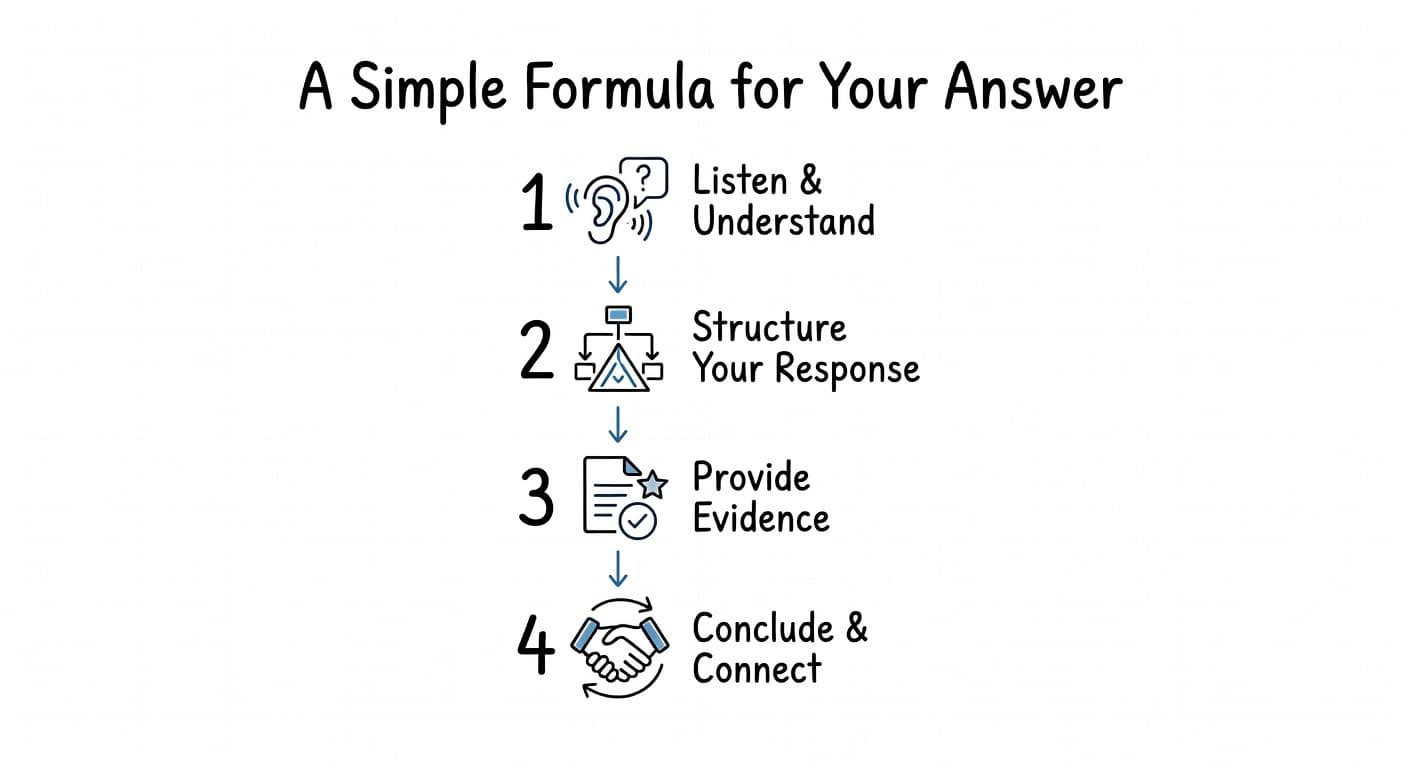
Use this four-step formula to structure your response:
- Start with the kind of work you want to grow into, using short-term goals as the building blocks for your long-term vision.
- Tie that growth directly to the requirements found in the job description.
- Mention the technical skills you plan to build, such as AI literacy, and the soft skills you want to refine.
- End by connecting your personal growth to the company goals and the overall value you hope to bring to the team.
Here is a strong example for 2026:
“I would like to grow into a senior analyst who can own larger projects, improve decision-making with data, and act as a mentor to newer team members. This role stands out because it gives me room to sharpen my technical skills, master advanced project management, and contribute to initiatives that drive company goals. Over the next five years, I want to become an industry expert whom the team trusts with both complex analysis and execution.”
Using SMART goals within this framework can make your answer feel more concrete and achievable. This strategy works because it is clear, realistic, and directly connected to the position. It does not lock you into a narrow job title, but instead highlights your commitment to ongoing career development. It also shows a genuine interest in learning, which remains essential as workflows and tools continue to evolve.
If your answer still feels fuzzy, CareerScribeAI can help you tighten it. Its Interview Prep Tools can turn a rough idea into a polished response, and its story bank makes it easier to match your answer to real examples from your experience.
For a short, skill-first version of this idea, Erin McGoff’s LinkedIn example captures the tone well.
What to say, what to avoid, and how to map five years
Your answer does not need to be long. It simply needs to sound thoughtful.

This quick table shows the difference between a strong answer and a weak one:
| Do | Don’t |
|---|---|
| Connect your goals to the role | Give a goal unrelated to the job |
| Mention skills you want to build | Name a dream title with no path |
| Sound confident and flexible | Send a red flag by sounding bored or uncertain |
| Keep it practical | Turn it into a life story |
The pattern is simple. Every hiring manager wants to see a future that includes their company, at least for the next stage of your professional journey. They are specifically looking for how you plan to handle new responsibilities as you grow within the organization.
A five-year plan also helps if you struggle to answer on the spot.
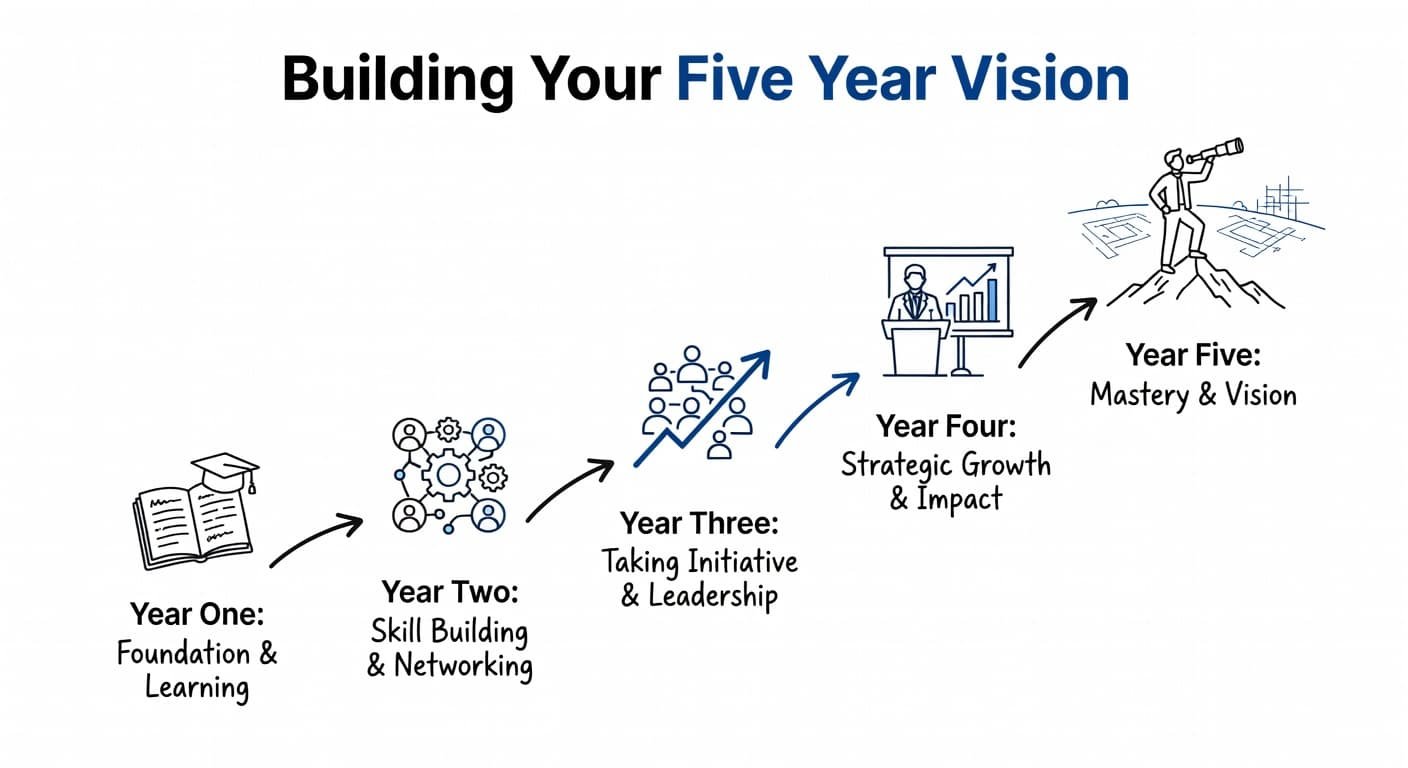
Use a simple timeline like this:
| Time frame | Focus |
|---|---|
| Year 1 | Learn the role, team, tools, and optimize job performance |
| Year 2 | Own projects with less oversight |
| Year 3 | Build depth, earn trust, add measurable results |
| Year 4 | Mentor others or lead part of a process |
| Year 5 | Step into a leadership role or become a senior-level subject matter expert |
This approach works for those starting in entry-level positions, career changers, and experienced professionals. If you are changing fields, swap “deepen expertise” for “build a strong foundation.” If you are already senior, focus on scope, leadership, and impact.
Your answer should also match the rest of your application. If your resume says one thing and your interview says another, employers notice. CareerScribeAI’s AI Resume Builder and Cover Letter Generator can help keep that career story consistent as you prepare for your next job interview.
Frequently Asked Questions
Should I mention if I want to switch careers within five years?
It is generally best to keep your answer focused on the professional growth relevant to the role you are interviewing for. If your long-term goals are completely unrelated to the industry, it may signal that you aren’t fully committed to the position, which can be a red flag for recruiters.
What if I don’t know exactly where I want to be in five years?
That is perfectly fine; you don’t need a rigid plan carved in stone. Instead of focusing on a specific job title, frame your answer around the types of skills you want to master and the kind of impact you hope to have within the team.
How much detail should I provide about my personal life?
Keep your response strictly professional and focused on your career evolution. While your personal growth is important, hiring managers are primarily interested in your professional trajectory, your ability to handle new responsibilities, and how you will contribute to the company’s success.
Conclusion
This question feels difficult when you treat it like a prediction, but it becomes much easier when you treat it like a career direction statement.
The best answer outlines your long-term goals, explains why this role is the right fit, and demonstrates how you plan to evolve alongside a 2026 workplace shaped by artificial intelligence. By maintaining a growth mindset, you show interviewers that you are adaptable and ready for future challenges. To ensure you communicate your professional goals with confidence, consider scheduling mock interviews to practice your delivery. If you sound clear, useful, and realistic, you will leave a lasting impression that sets you apart from other candidates.