


In a competitive job search, a referral can accelerate your career growth by moving your application out of the pile, but a bad message can close the door fast. On LinkedIn in 2026, people ignore vague asks, copy-paste notes, and strangers who want a favor in the first line.
The good news is that a strong LinkedIn referral request doesn’t need insider status. It needs context, one clear role, and a message that respects the other person’s time. Start with the work you should do before you send anything.
Key Takeaways
- Prepare your LinkedIn profile, resume, and one specific role details first to respect the referrer’s social credit and make your ask credible.
- Target connections with a real tie like former colleagues, alumni, or shared interests, and time your request after building some rapport.
- Craft a brief, personalized message: start with your link, name the exact role, share 1-2 results-based proof points, make a polite ask, and offer your resume.
- Follow up once after 5-7 business days, then move on; stick to etiquette by asking for one role at a time and thanking them promptly.
Get your LinkedIn profile and materials ready first
When someone refers you, they spend social credit. So your LinkedIn profile, resume, and target role need to be ready first.
Your headline should say what you do, not that you’re “seeking opportunities.” Your About section should show your focus, and your relevant experience should prove it with results from your skills and experience. If your profile and resume tell different stories, the referral loses force.
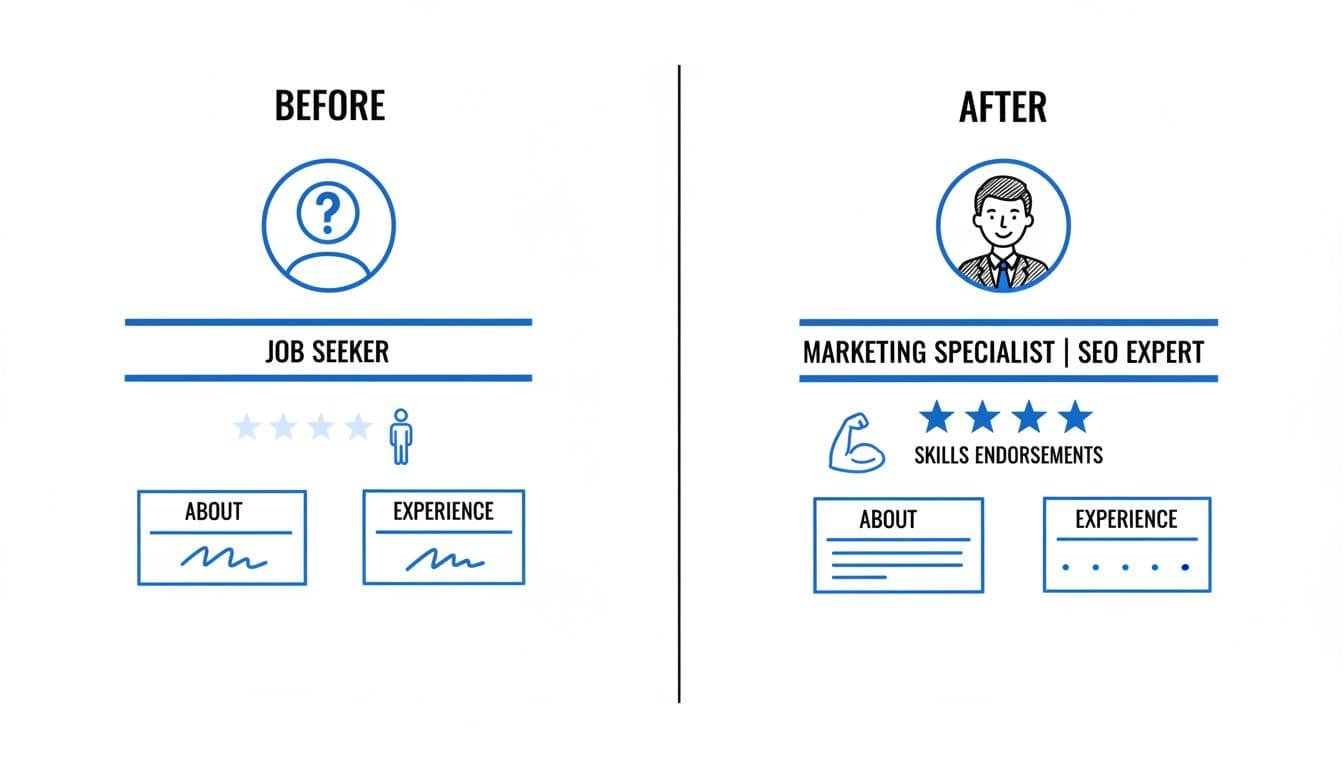
As a job seeker, have one specific role ready before you ask. Include the title from LinkedIn Jobs, posting link, and a brief line on why you fit. This keeps the ask small and saves the employee time, advancing your job search.
If your resume still reads like a duty list, clean it up first. CareerScribeAI’s AI Resume Builder can tighten bullets around results, and its Cover Letter Generator can keep your application aligned with the role. This ATS-safe resume format guide is a useful check before anyone forwards your name. After you apply, CareerScribeAI’s Interview Prep Tools can help you turn those bullets into clear stories for recruiter outreach and interviews.
Ask the right person at the right moment
In 2026, networking tips for LinkedIn favor meaningful connections and building trust over mass requests. Start with people who have some reason to reply, even if the tie is light.
- A former co-worker or manager who knows your work
- An alum from your school or training program
- A second-degree contact who can be reached through mutual connections
- An employee in the target team who shares a real point of common ground
Professionalism and warmth matter more than seniority. A peer who knows your work is often better than a director who doesn’t when you ask for a referral.
Timing matters, too. As Refer.me’s referral templates note, asking for a referral the minute someone accepts your connection feels transactional. Because connection notes are short on many accounts, Purshology’s 2026 guide recommends using them only when the context is real. A quick exchange, a shared group, an informational interview, or a mutual intro gives you enough footing.
Write a referral message that makes saying yes easy
A good referral message is brief and personalized, superior to a generic referral template. You’re not telling your life story. You’re giving someone enough information to decide whether they can help.
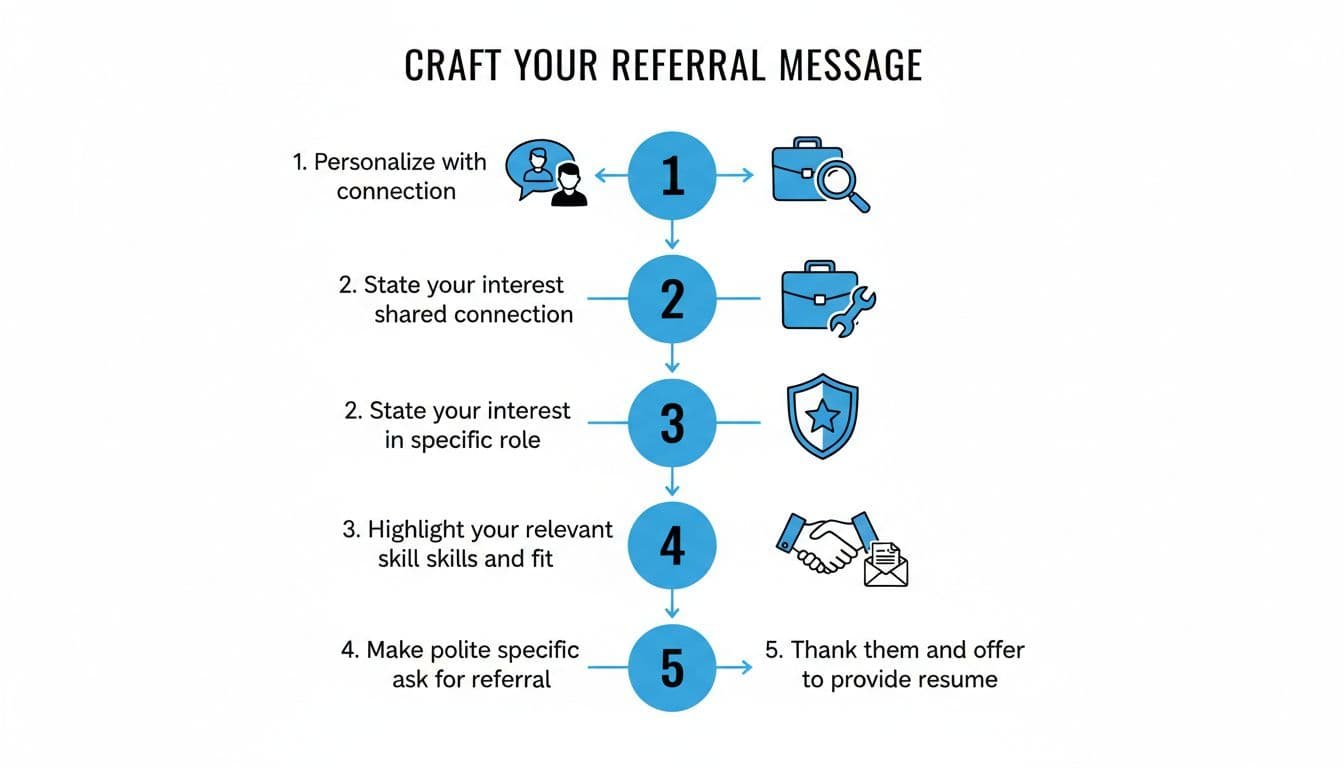
Keep the ask narrow: one role, one reason you fit, and one easy next step.
Use this order when you write the note:
- Open with the link between you, such as a shared team, school, post, or mutual contact.
- Name the exact role and company, including the job id or job link if available.
- Give one or two proof points on your skills and experience. Pick results, not traits.
- Make your request for referral politely, and give them room to decline.
- Thank them, then offer your resume attachment or any other info they need.
LinkedIn’s own tips for asking for referrals also say to make a direct ask that’s easy to accept or decline.
For a warm contact, try this:
“Hi Maya, I hope you’re doing well. I’m applying for the Senior Content Strategist role at BrightLoop. My last role focused on SEO content, and I grew non-brand traffic by 38 percent. If you’re comfortable referring me, I’d appreciate it. If not, no pressure at all. I’m happy to send my resume attachment and the posting.”
For a weaker tie, ask for fit first:
“Hi Jordan, we’re both UT Austin alumni, and I liked your post about product marketing at Asana. I’m looking at the Product Marketing Manager opening, and my background in launches and messaging seems close. If you’re open to it, would you mind sharing whether the role looks like a fit? If it does, I’d be grateful for a referral.”
When reaching out to an employee, use the templates above. For a recruiter or hiring manager, change the ask, since they usually don’t provide the same kind of job referral as employees. Ask whether your background matches the role, then mention that you’d welcome advice on next steps.
Follow up once, then move on
Follow up once, then stop. Five to seven business days is enough space. If they don’t reply after that, move on without taking it personally.
A simple follow-up works: “Hi Sam, following up on the Data Analyst role I sent last week. If you’re not able to refer me, I understand. Thanks for taking a look.”
A few etiquette rules protect the relationship, while upholding your personal credibility and professionalism:
- Don’t ask for several referrals at once.
- Don’t send large blocks of text, extra files, or repeated nudges.
- Don’t disappear after they help. Thank them, apply fast, and share a brief update on the hiring process if you interview.
Once a referral is in, your job search materials need to match the promise your contact made. That’s a good time to use CareerScribeAI’s Cover Letter Generator and Interview Prep Tools so your resume, message, and interview answers tell the same story.
Frequently Asked Questions
Should I optimize my LinkedIn profile before asking for a referral?
Yes, your headline, About section, and experience must showcase results and focus on the target role. A mismatched profile weakens the referral and wastes the contact’s effort. Tools like CareerScribeAI’s AI Resume Builder can align your materials quickly.
Who is the best person to ask for a LinkedIn referral?
Prioritize those with a connection like former coworkers, alumni, or mutual contacts over high-seniority strangers. Peers who know your work often refer more effectively than distant executives. Build light rapport first through comments or shared groups.
What structure should my referral request message follow?
Open with your shared context, specify the role and link, add 1-2 skill proof points with results, politely ask for the referral, and thank them while offering your resume. Keep it short to respect their time and make yes easy. For weaker ties, first ask if the role fits your background.
How do I follow up on an unanswered referral request?
Wait 5-7 business days, then send one polite nudge referencing the role and understanding if they can’t help. Avoid multiple follows-ups or large attachments to preserve the relationship. If no reply, move on without resentment.
Can I ask for referrals for multiple roles or companies at once?
No, focus on one role at one company per person to keep the ask narrow and professional. Mass requests feel pushy and reduce response rates. This builds trust for future networking.
Conclusion
Referrals still work because trust still works. The strongest requests feel respectful, prepared, and easy to answer.
Follow this referral process: Put in the setup first, keep the message short, and ask one person for one role at your target company at a time. When your note sounds like a person, not a campaign, LinkedIn becomes a better place to ask for help. This career advice supports long-term career growth on LinkedIn jobs.