


Strong cover letter opening lines can turn a generic application into one that grabs a hiring manager’s attention in seconds. Too many cover letters still open like a form someone forgot to personalize, but the best openers make the reader feel this letter could only come from you.
That matters because hiring teams skim fast, and the first few words are vital for creating a positive first impression; failing to grab the reader’s attention makes the letter feel disposable. The best cover letter opening lines do one simple thing well: they make the reader feel that this letter could only come from you.
Key Takeaways
- Strong cover letter openers connect a specific accomplishment from your background to a detail from the job or company, making the letter feel personal and relevant rather than generic.
- Avoid empty phrases like “I am writing to apply for the position”; instead, lead with proof, context, or a clear value fit to grab attention from skimming hiring teams.
- Use a simple frame: one relevant result + one reason the role fits + a plain connection, keeping it to 1-2 sentences that sound like only you could write them.
- Back up your opener throughout the letter, resume, and LinkedIn with matching details, and read it aloud to ensure it feels human and true to your story.
Why generic openers fall flat now
As a job seeker addressing the hiring manager, a weak opener tells them you want a job. A strong opener tells them why this job fits your background through your value proposition.
That’s why lines like “I am writing to apply for the position” rarely help. They aren’t wrong. They’re empty. They use the opening paragraph to say something the recruiter already knows, since a recruiter sees hundreds of these without referencing the specific job posting.
Here’s a quick side-by-side view:
| Weak opening | Stronger opening |
|---|---|
| “I am excited to apply for your marketing manager role.” | “After leading a launch that lifted trial signups 28%, I was drawn to your marketing manager role because product education is central to the team’s work.” |
| “Please accept my application for the analyst position.” | “My senior capstone focused on building a reporting dashboard for a campus clinic, so your analyst opening felt like a direct match.” |
| “I believe my skills align with your company.” | “Your focus on patient access stood out to me because my last nonprofit role centered on outreach for underserved communities.” |
The pattern is clear. Strong openings start with proof, context, or connection to a specific job title. Weak ones start with ceremony.
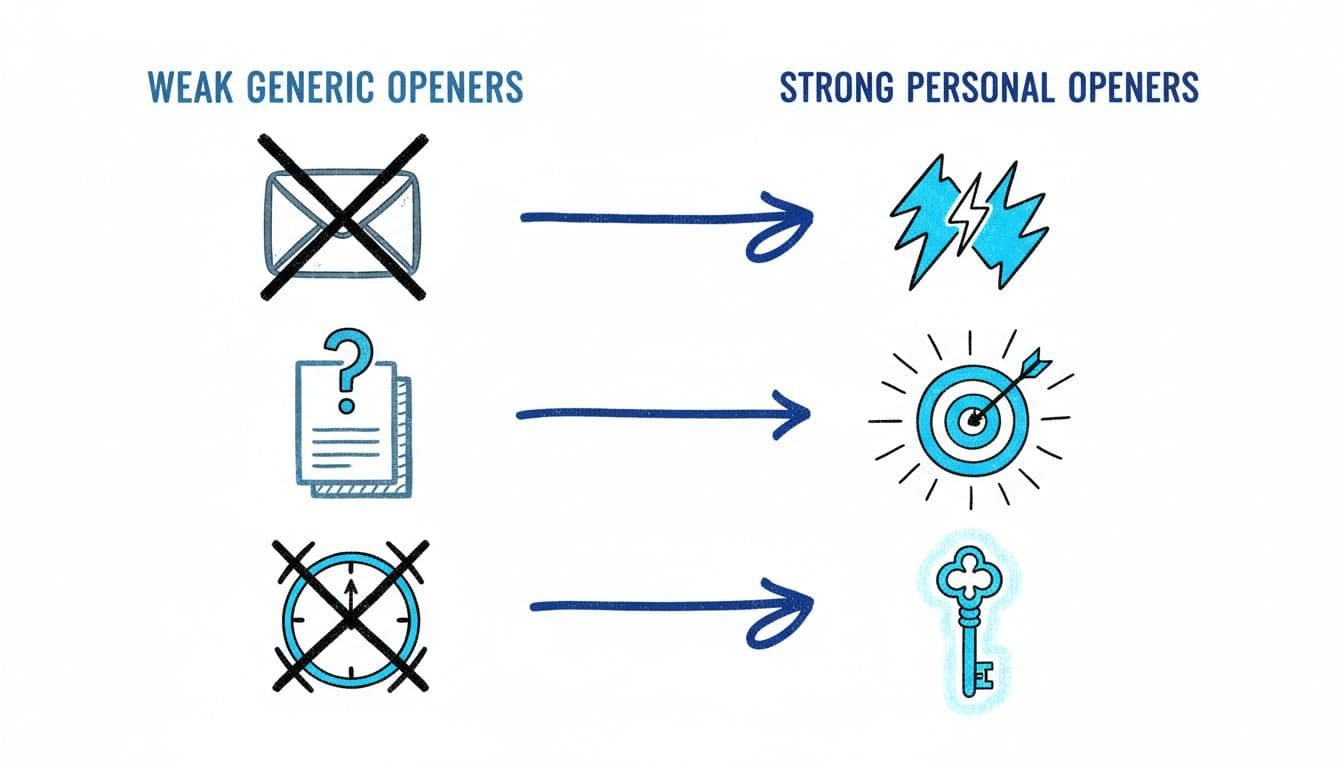
The goal isn’t to sound impressive. It’s to sound relevant.
If you want more current cover letter examples, CareerBldr’s 2026 opener roundup and ResumeAdapter’s opening line guide both point to the same truth: generic interest is weaker than clear fit.
How to Start a Cover Letter: A Simple Way to Write Opening Lines That Feel Personal
Personalized cover letters don’t need dramatic stories. Most of the time, one job detail and one real result are enough to stand out.
Use this basic frame to stand out: start with relevant work experience, add one reason the role caught your attention tied to the company’s organizational goals, then connect the two. Think of it like matching a key to a lock. The key is your proof. The lock is the company’s need.
If a posting feels overloaded, it helps to first separate what’s required from what’s preferred. This guide on spotting required vs preferred qualifications to match your skills to the specific job posting makes that easier, and it gives you better material for a sharper opening line.
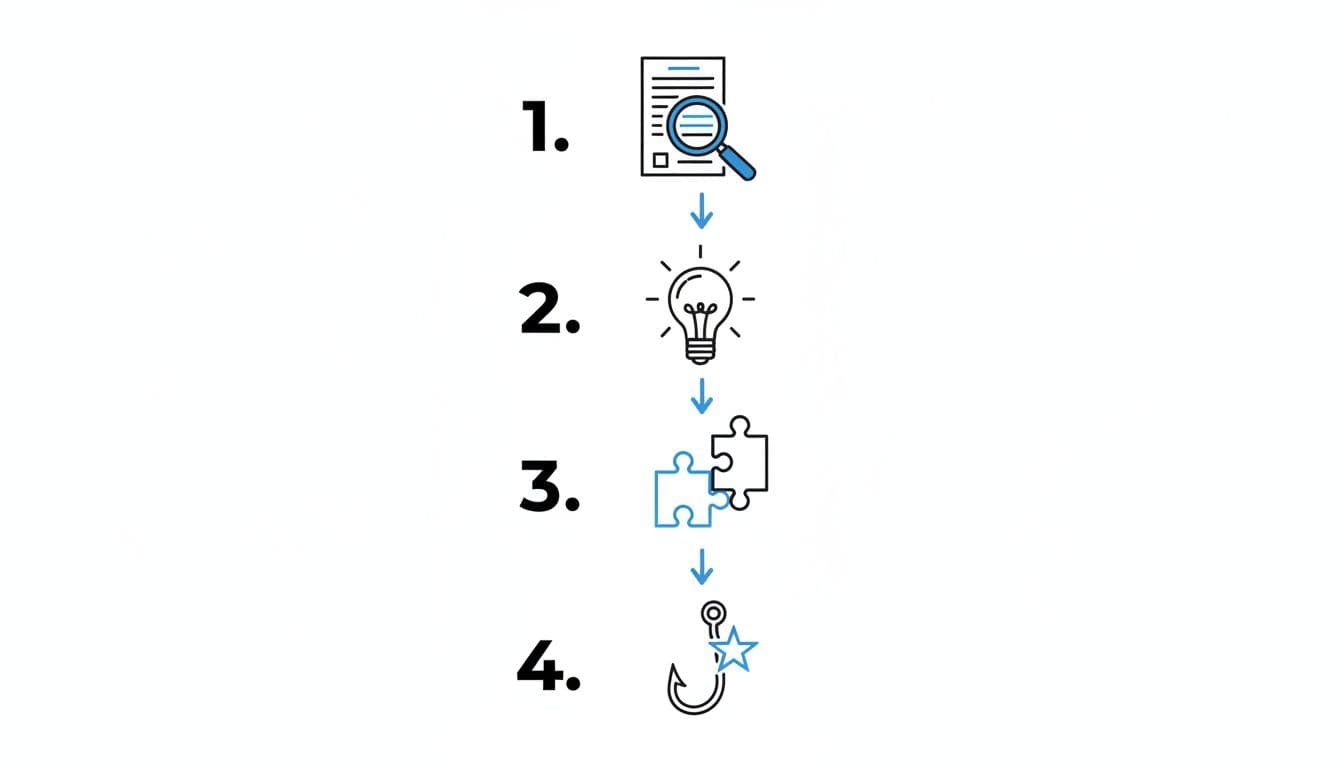
A good opener usually includes these elements:
- Specific accomplishments highlighting your skills from a role-related background
- A detail from the company, team, or mission
- A plain-English connection between the two
Keep it to one or two sentences. That’s enough. You’re opening a door, not telling your whole story.
Personal cover letter opening line examples for 2026
Below are original examples of creative opening lines for common job search situations, along with why each one works.
For a career changer
“After five years translating policy into clear client guidance, I was drawn to your customer success role because trust-building and plain-language support sit at the center of the work.”
This works because it doesn’t apologize for the career shift. Instead, it leads with a transferable strength and ties that strength to the new role, aligning your career goals with the position’s demands.
For a recent graduate
“While finishing my senior capstone, I built a reporting dashboard for a campus clinic, which is why your junior analyst opening stood out to me right away.”
This line avoids the classic “I recently graduated and am eager to learn” trap. It shows proof from school and connects it to the job in one move, offering a strong how to start a cover letter.
For an experienced professional
“In my current operations role, I reduced vendor delays by 18%, so your opening caught my eye because you’re scaling the same kind of cross-team process work I lead today.”
Numbers like these, which should also appear on your resume and LinkedIn profile under that job title, give the sentence weight. The second half shows relevance, so it doesn’t read like a random brag. This approach demonstrates an effective how to start a cover letter.
For an applicant using a referral
“When Maya Chen on your product team described how your group tests ideas before scaling them, I recognized the same working style that helped me grow activation in my current role.”
A referral works best when it sounds natural, not name-droppy. This line uses the referral to show shared working style, not borrowed credibility.
For a mission-driven company
“Your expansion of mental health services to rural communities stood out to me because my last nonprofit role focused on building access for patients who often got left out of care.”
This opener shows research without sounding forced. It also proves value alignment through actual experience, which is much stronger than saying you “admire the mission.”
A personal opener doesn’t mean personal in the emotional sense. It means the sentence contains real evidence from your background and a real reason the role fits. Potential employers value this level of detail in these creative opening lines, and the same specifics strengthen your resume and LinkedIn profile.
Frequently Asked Questions
Why do generic openers like “I am excited to apply” fall flat?
They tell recruiters what they already know without showing why this job fits you specifically. Hiring teams see hundreds of these, so they feel disposable. Strong openers instead lead with a real result or connection that proves relevance right away.
What’s the best way to structure a personal cover letter opening?
Start with a specific accomplishment, add a job or company detail that drew you in, then link the two in plain English. This “key to lock” frame keeps it simple and focused. Limit it to one or two sentences—you’re opening the door, not telling your full story.
How can recent graduates or career changers craft strong openers?
Pull proof from school projects, transferable skills, or past roles without apologizing for your status. For example, tie a capstone dashboard to an analyst role or policy translation to customer success. This shows fit through evidence, avoiding eager-but-vague traps.
Should I include numbers or referrals in my opening line?
Yes, numbers from your experience add weight if they match resume details, like “reduced delays by 18%.” Referrals work best when natural, using them to highlight shared styles rather than name-dropping. Both make the opener more credible and personal.
How do I ensure my whole application matches the opener?
Repeat the key proof points in your resume, LinkedIn, and body paragraphs. Use tools like AI builders for consistency, choose ATS-friendly formats, and add a personalized greeting. This turns your strong start into a cohesive story that impresses the hiring team.
Make the rest of the letter match the opening
Your compelling introduction sets a promise. The rest of your job application has to back it up.
If your opener mentions better reporting, lower churn, or stronger outreach, your resume should show the same story. That’s where tools can help. CareerScribeAI’s AI Resume Builder can tighten proof points, the Cover Letter Generator can help rewrite flat first paragraphs, and the Interview Prep Tools can turn that same opener into an answer you can say out loud.
It also helps to keep the rest of the job application easy to read after upload, with clear contact information, a professional font, and a personalized greeting rather than a generic “to whom it may concern.” If formatting breaks in an ATS, this guide to ATS-friendly resume tips for Recruitee is a useful check before you submit. For consistency, make sure your LinkedIn profile aligns with the narrative to impress the hiring manager and hiring team.
Your opening line isn’t a warm-up sentence. It’s your first piece of evidence.
Start with something true, relevant, and a little more human than “I am writing to apply.” Then read it out loud. If it sounds like anyone could’ve written it, add one more detail until it sounds like you. This is a key part of how to start a cover letter that stands out.